The Story
Plant Bio
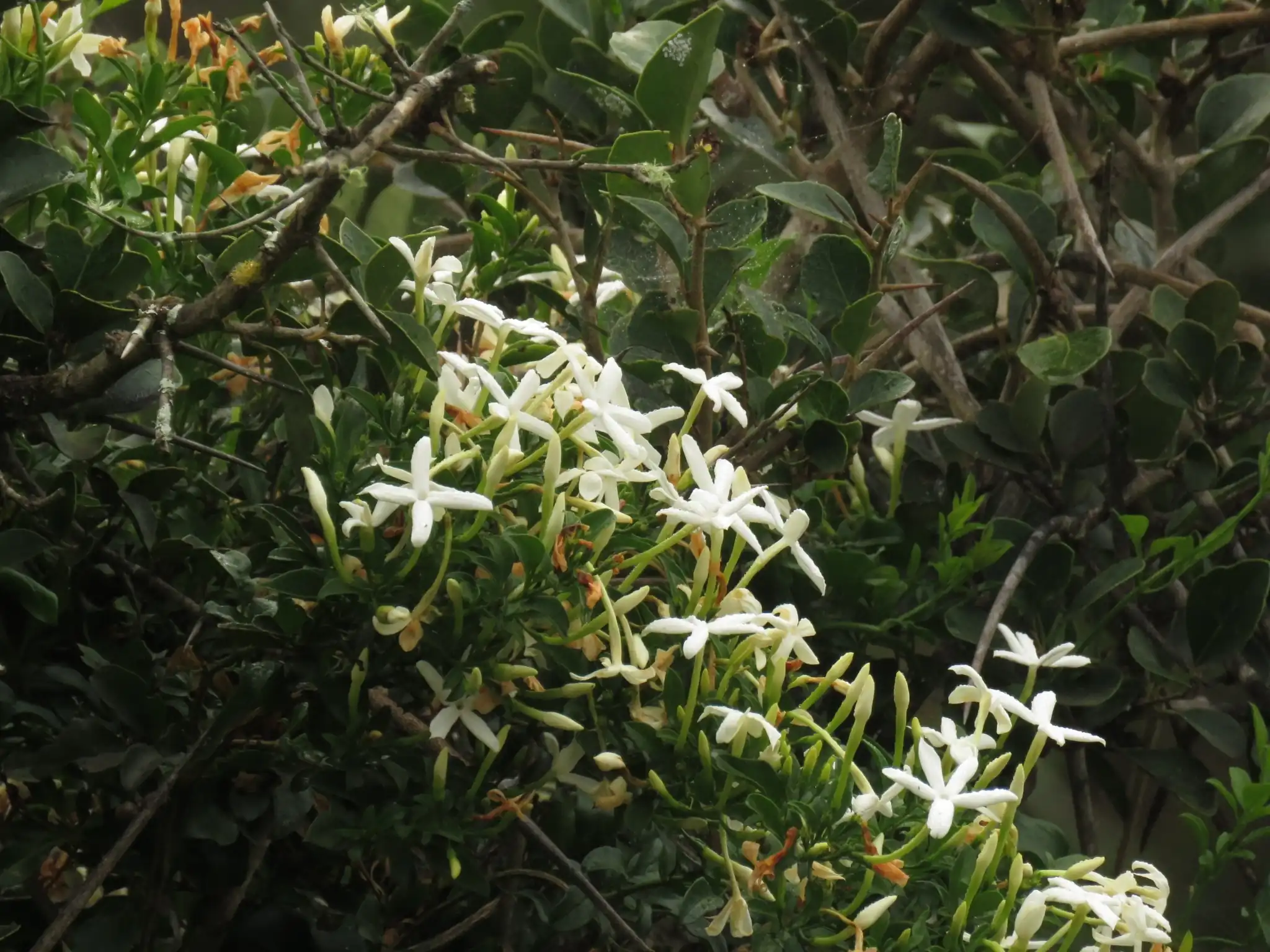
Jasminum angulare is an evergreen scrambling shrub from South Africa that climbs by twining stems to 15 to 20 feet with support. It carries dark green glossy leaves divided into three small lance-shaped leaflets and bears flat-topped clusters of star-shaped white flowers.
It holds its foliage year-round and blooms from summer into fall, with 1 to 1.25 inch flowers held facing upward in groups of three to seven. The blooms release sweet fragrance in warm air, and without support the plant forms a broad mounding bank cover 8 to 10 feet tall and 12 to 15 feet wide.
Uses & Benefits:
Essentials
At a Glance
Plant Type
Vine
Height
240"
Width
96"
Light
Full Sun, Partial Sun
Zones
9, 10
Water
Moderate
Humidity
Unknown
Lifespan
Woody perennial
Native To
South Africa
Toxicity
Toxic to livestock
Bloom period
Summer – Fall
In flower about 6 months of the year
Planting
How to Grow
- Plant in spring after frost risk passes in full sun to partial sun with light afternoon shade in hot-summer areas.
- Set into fertile loamy soil that is moist but well drained, providing a trellis, fence or arbor for climbing or space for a bank mound.
- Water deeply after planting, then water regularly and allow the surface to dry to visual dryness before watering again.
- Feed moderately during the growing season only and stop feeding in winter.
- Prune after flowering by shortening flowered stems to a side shoot; do not prune in winter.
Pro Tip
Prune after flowering by cutting each flowered stem back to a strong side shoot, and leave winter growth uncut to protect next summer's buds.
Keep It Thriving
Care Guide
Do
- Provide a trellis for climbing or space for a broad mound
- Grow in fertile composted loam that drains freely
- Allow the soil surface to dry between waterings
- Keep roots warm and sheltered near a warm wall at the cold edge
Don't
- Do not prune in winter
- Do not feed in winter
- Do not plant in waterlogged soil
- Do not cut back hard into old bare wood
Seasonal Care Calendar
| Task | Jan | Feb | Mar | Apr | May | Jun | Jul | Aug | Sep | Oct | Nov | Dec |
|---|---|---|---|---|---|---|---|---|---|---|---|---|
| Fertilize | ||||||||||||
| Pest Check | ||||||||||||
| Plant | ||||||||||||
| Prune | ||||||||||||
| Winter Prep |
Watch Out For
Pests & Diseases
Common Pests
Common Diseases
In the Garden
Landscape Uses & Companions
Landscape Uses
Multiply
Propagation Methods
Good to Know
Common Questions
South African Jasmine questions
What zones can South African Jasmine grow in?
South African Jasmine is hardy in USDA Zones 9–10: in that range it survives winter in the ground. Colder than Zone 9, grow it in a container you can move to shelter for the winter, or as an annual.
When does South African Jasmine bloom?
South African Jasmine typically blooms from summer to fall. Exact timing shifts a week or two with your zone — Sow's bloom calendar maps it to your garden.
Does South African Jasmine need full sun?
South African Jasmine does best in full sun to part shade. In hot climates, afternoon shade keeps blooms fresher longer.
More Jasminum to compare
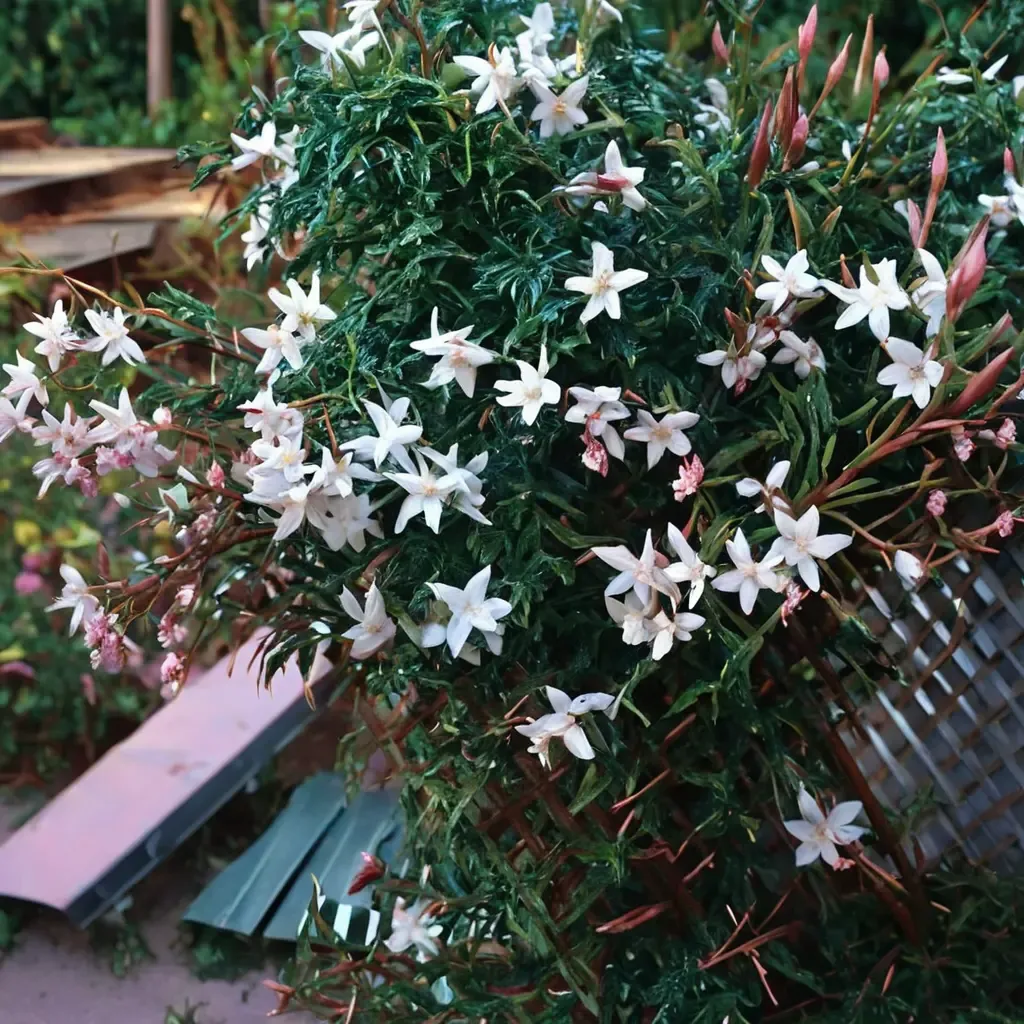
Pink Jasmine
Jasminum polyanthum
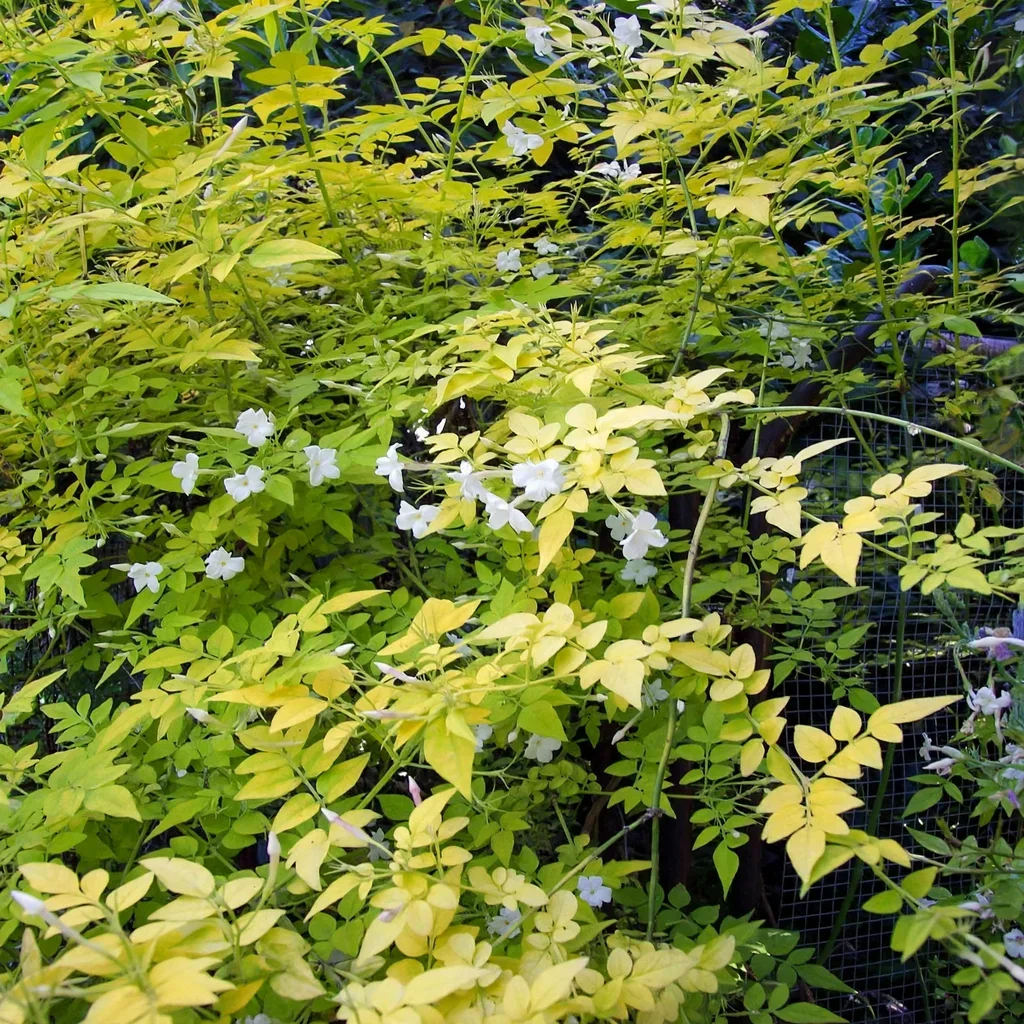
Fiona Sunrise Common Jasmine
Jasminum officinale 'Frojas'
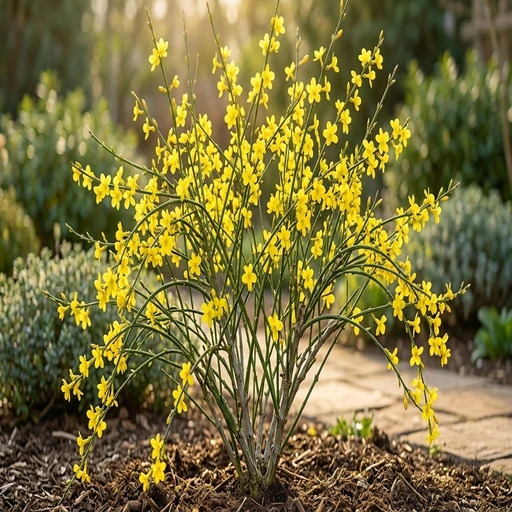
Winter Jasmine
Jasminum nudiflorum
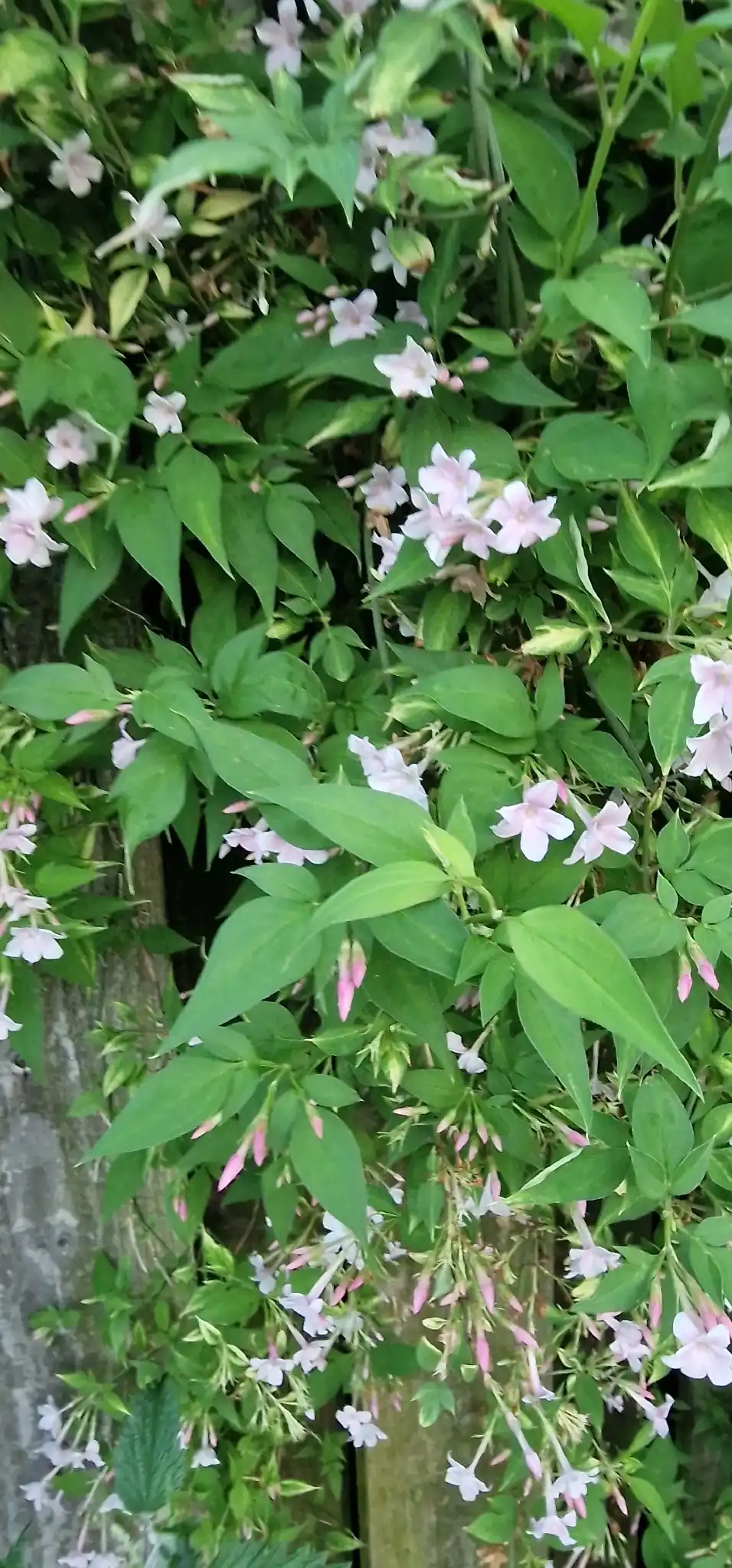
Common Jasmine
Jasminum officinale
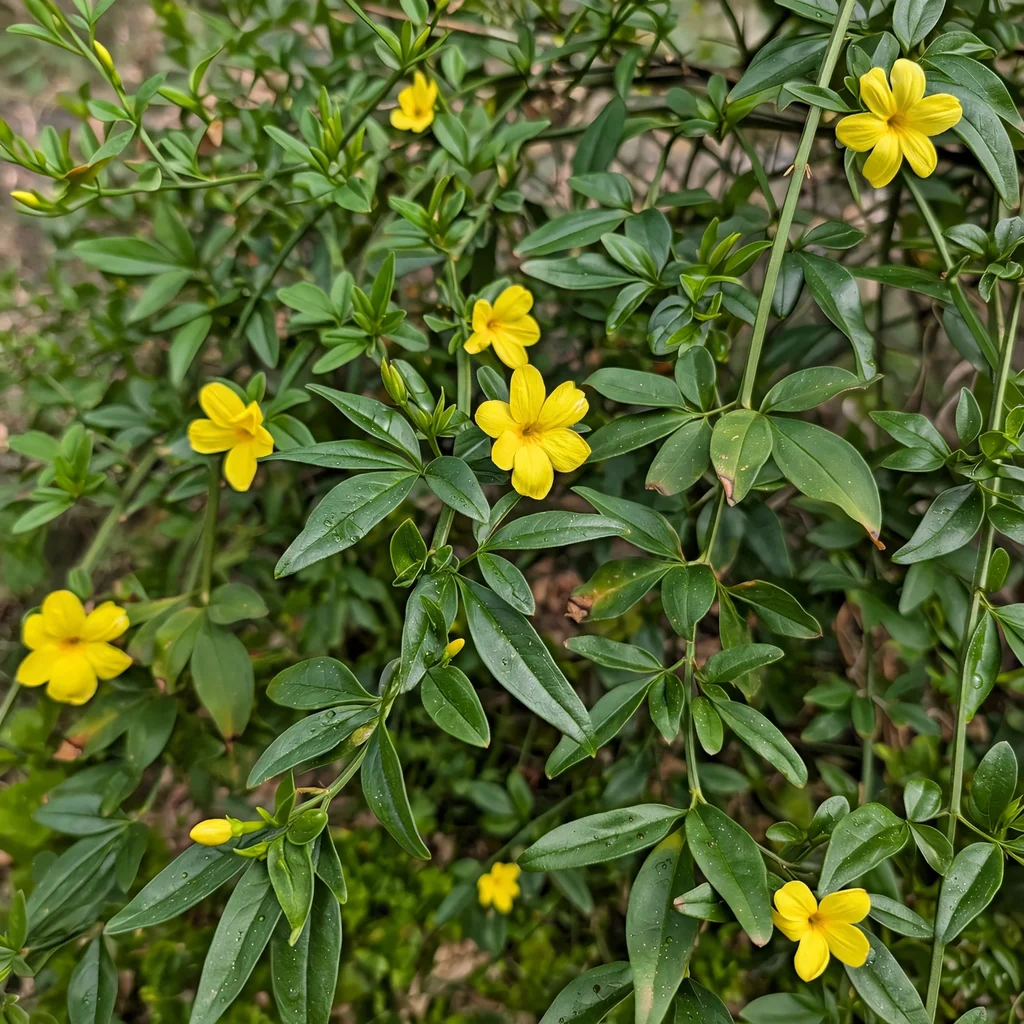
Primrose Jasmine
Jasminum mesnyi
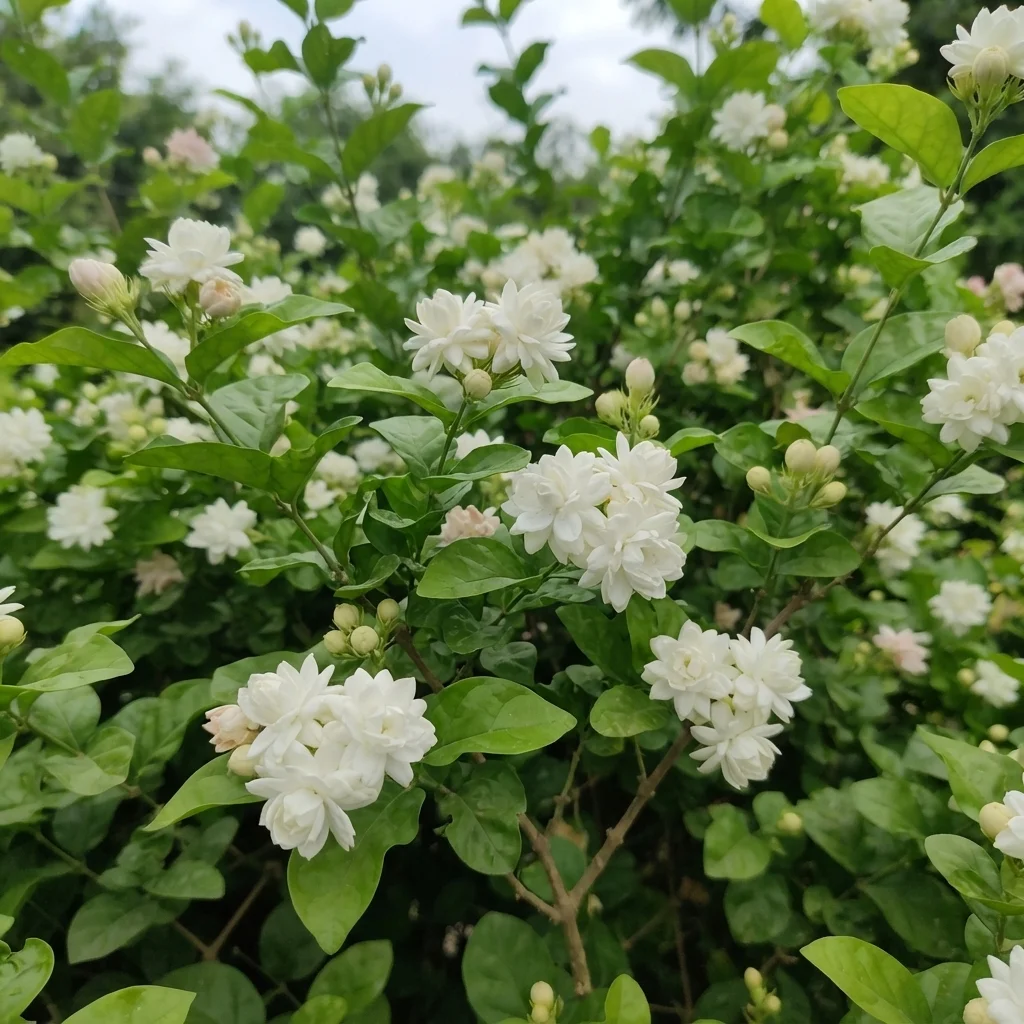
Arabian Jasmine
Jasminum sambac
Keep exploring
Explore the genus
Hardy in your zone?
Grow South African Jasmine with confidence
See it in a design of your actual yard, get zone-matched care reminders, and track it season by season in your garden journal.