The Story
Plant Bio
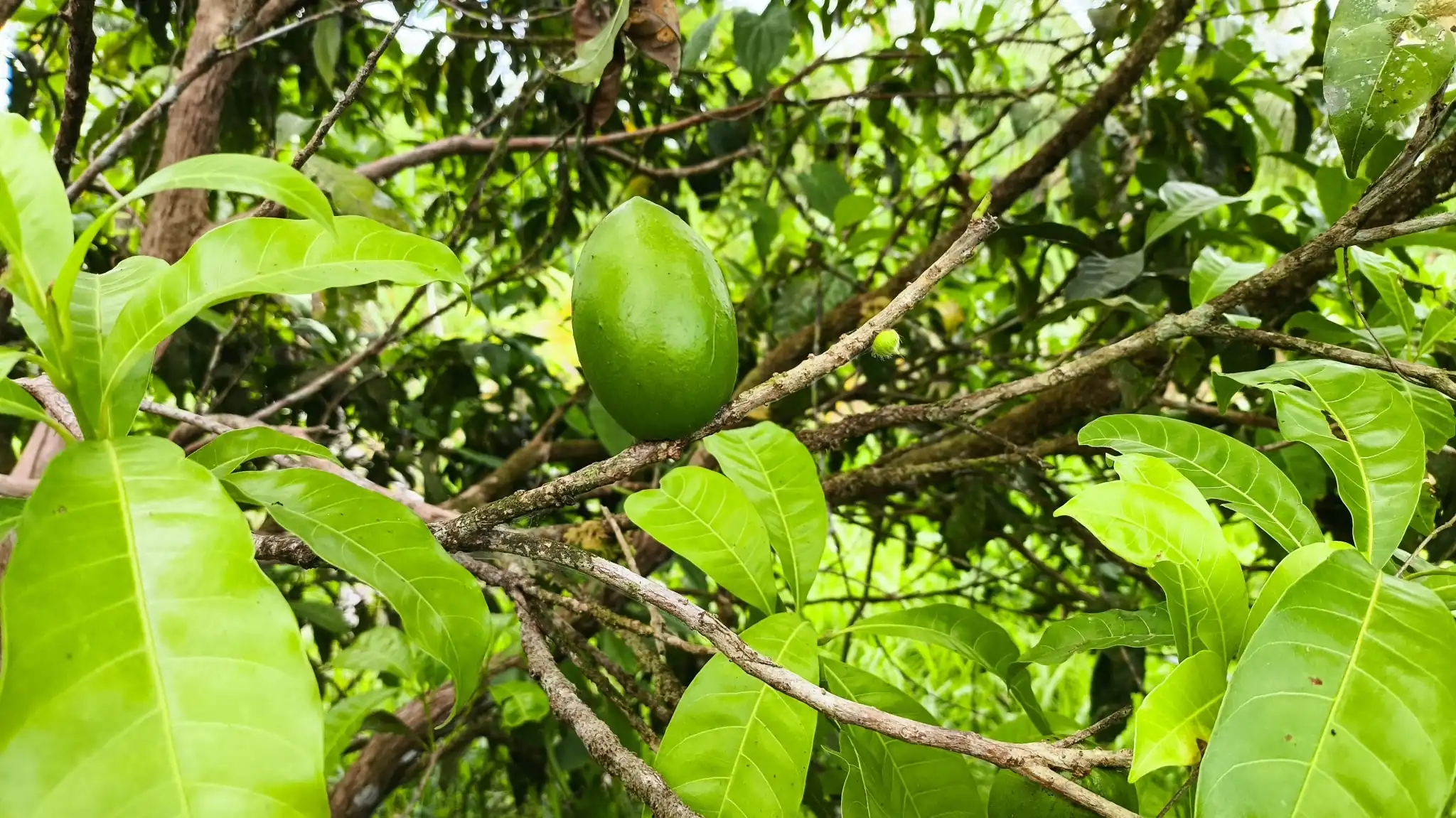
Pouteria caimito is a medium-large evergreen tree with a pyramidal to oval crown and secondary branches that droop like willow. Leaves are alternate, oblong-elliptic and glossy, 4 to 8 inches long, and small cylindrical white to greenish flowers with four to five lobes open singly or in clusters of two to five in the leaf axils.
The fruit ripens from green to partial yellow to deep gold, with ripe pulp carrying little to no sticky white latex while unripe skin and pulp exude latex that gums the lips and mouth. Seedling trees are highly variable in flavor and yield, so named grafted selections fruit in one to two years and bear more reliably than seedlings that take two to five years.
Uses & Benefits:
Essentials
At a Glance
Plant Type
Tree
Height
360"
Width
240"
Light
Full Sun
Zones
10
Water
Moderate
Humidity
High
Lifespan
Long-lived tree
Native To
Amazon Basin, South America
Toxicity
Skin irritant
Bloom period
Summer – Fall
In flower about 6 months of the year
Marketplace
Where to Buy
Shipping costs Year-round shipping Free shipping
Planting
How to Grow
- Plant in full sun with 25 feet clearance from structures and pavement, in a sheltered spot out of strong wind.
- Set into fertile, well-drained soil at pH 5.5 to 7.5; mound the planting area if the water table is within 7 feet.
- Water every other day for the first month, then 1 to 2 times per week, twice weekly during dry spells for trees under 3 years.
- Spread 2 to 6 inches of mulch, kept 8 to 12 inches clear of the trunk, and train to 3 to 5 scaffold limbs in years 1 to 3.
- Fertilize young trees every 1 to 2 months with 4 to 16 ounces per application, then feed mature trees 3 to 4 times per year up to 20 pounds per year of 6-6-6 to 8-3-9 plus copper, zinc, manganese and boron sprays.
Pro Tip
Pick fruit at color break when partially yellow and ripen indoors at room temperature for 1 to 5 days; fruit left to darken to deep gold on the tree turns overripe fast and draws Caribbean fruit fly.
Keep It Thriving
Care Guide
Do
- Water deeply on schedule and mulch to hold soil moisture in heat.
- Feed through the growing season and correct alkaline yellowing with iron chelates.
- Prune each year by selective removal of upright limbs to keep shape.
Don't
- Do not plant in soggy soil or under lawn sprinklers that keep roots wet.
- Do not cut back hard into old bare wood.
- Do not eat unripe fruit or let latex contact skin and lips.
Seasonal Care Calendar
| Task | Jan | Feb | Mar | Apr | May | Jun | Jul | Aug | Sep | Oct | Nov | Dec |
|---|---|---|---|---|---|---|---|---|---|---|---|---|
| Fertilize | ||||||||||||
| Mulch | ||||||||||||
| Pest Check | ||||||||||||
| Plant | ||||||||||||
| Prune |
Watch Out For
Pests & Diseases
Common Pests
Common Diseases
In the Garden
Landscape Uses & Companions
Landscape Uses
Companion Plants
Multiply
Propagation Methods
Good to Know
Common Questions
Abiu questions
What zones can Abiu grow in?
Abiu is hardy in USDA Zone 10: in that range it survives winter in the ground. Colder than Zone 10, winters are too cold for it to survive outdoors.
When does Abiu bloom?
Abiu typically blooms from summer to fall. Exact timing shifts a week or two with your zone — Sow's bloom calendar maps it to your garden.
Does Abiu need full sun?
Abiu does best in full sun (6+ hours).
Is Abiu drought tolerant?
Yes — once established (usually after the first full season), Abiu handles dry spells with minimal watering. Water deeply its first year to build the root system that makes that possible.
More Pouteria to compare
Keep exploring
Explore the genus
Hardy in your zone?
Grow Abiu with confidence
See it in a design of your actual yard, get zone-matched care reminders, and track it season by season in your garden journal.