The Story
Plant Bio
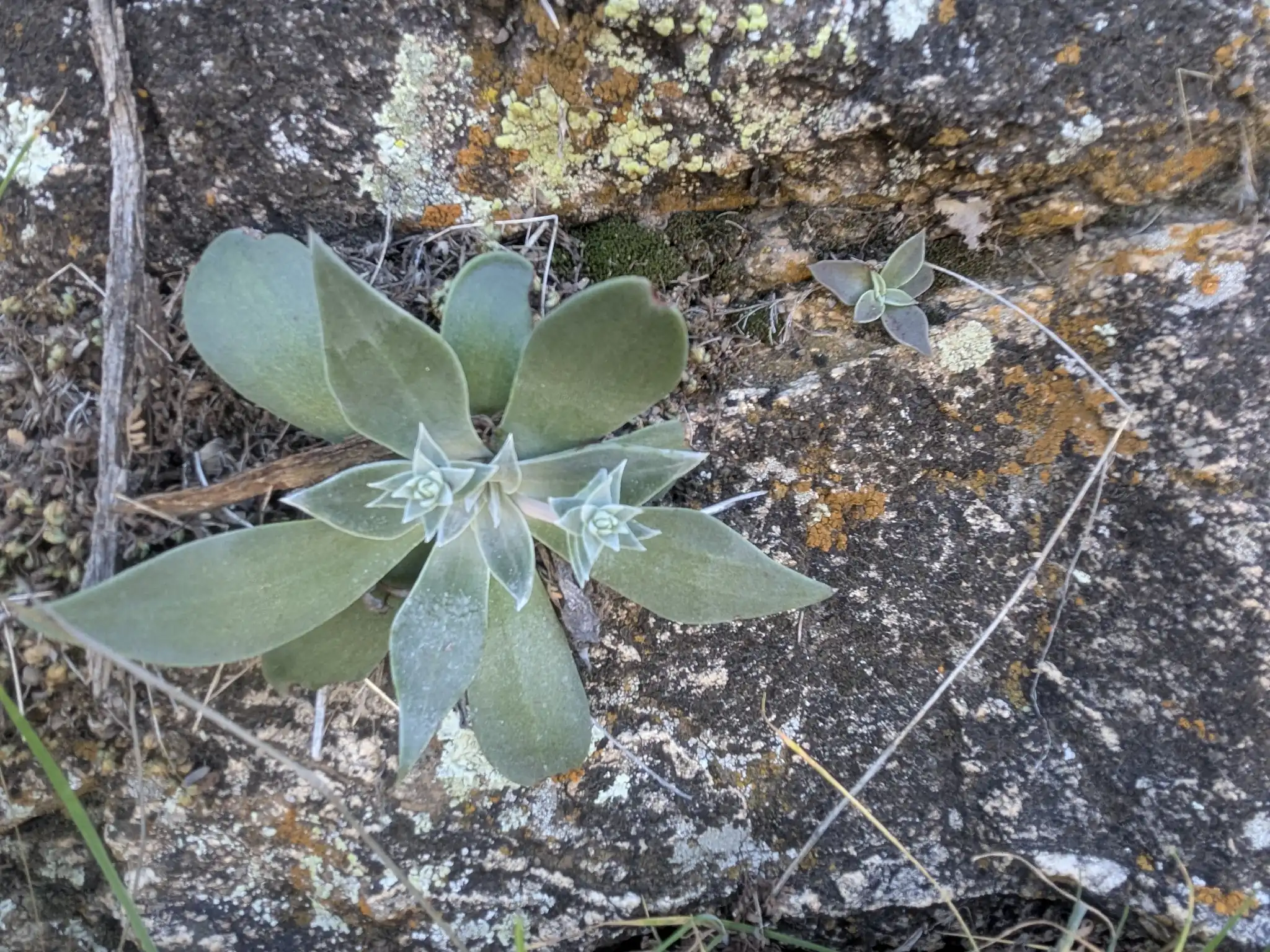
Dudleya arizonica is an evergreen desert succulent forming a single chalk-white rosette of thick oblong leaves on a short caudex. The leaves carry a waxy farina that reflects sun and sheds water, and the plant sends up branched cymes of tubular red to apricot-yellow flowers in spring.
This species stays solitary, holding one 10- to 35-leaved rosette on a thick caudex without axillary branches. Its chalky oblong leaves age red at the tips and are easily confused with Dudleya pulverulenta as seedlings, so buy intact farina-covered rosettes and never wipe the bloom.
Uses & Benefits:
Essentials
At a Glance
Plant Type
Cactus Succulent
Height
24"
Width
12"
Light
Full Sun
Zones
9, 10
Water
Very low
Humidity
Low / dry
Lifespan
Perennial
Native To
Southwestern USA, NW Mexico
Toxicity
Unknown
Bloom period
Spring – Early summer
In flower about 4 months of the year
Planting
How to Grow
- Plant in full sun in very sharp sandy or rocky soil with pH 6.0-7.5.
- Set the caudex high so the rosette sits above the soil and water drains away from the crown.
- Water sparingly only during spring growth and keep completely dry in summer dormancy.
- Feed rarely or never; rich mix and wet crowns cause rot.
- Grow in a pot, trough, or rock crevice where humidity stays low and air moves freely.
Pro Tip
Do not touch the white farina; plant high in sharp mineral grit and keep water off the crown.
Keep It Thriving
Care Guide
Do
- Provide full sun and sharp drainage in poor sandy or rocky soil.
- Keep the crown dry and handle only by the pot to preserve farina.
- Remove only the spent flower stalk at the base.
Don't
- Do not wipe, wash, or touch the chalky white bloom.
- Do not overwater, overhead water, or let water sit in the rosette.
- Do not cut the rosette or feed to force growth.
Seasonal Care Calendar
| Task | Jan | Feb | Mar | Apr | May | Jun | Jul | Aug | Sep | Oct | Nov | Dec |
|---|---|---|---|---|---|---|---|---|---|---|---|---|
| Deadhead | ||||||||||||
| Pest Check | ||||||||||||
| Plant | ||||||||||||
| Propagate |
Watch Out For
Pests & Diseases
Common Pests
Common Diseases
In the Garden
Landscape Uses & Companions
Landscape Uses
Multiply
Propagation Methods
Good to Know
Common Questions
Arizona Chalk Dudleya questions
What zones can Arizona Chalk Dudleya grow in?
Arizona Chalk Dudleya is hardy in USDA Zones 9–10: in that range it survives winter in the ground. Colder than Zone 9, grow it in a container you can move to shelter for the winter, or as an annual.
When does Arizona Chalk Dudleya bloom?
Arizona Chalk Dudleya typically blooms from early spring to early summer. Exact timing shifts a week or two with your zone — Sow's bloom calendar maps it to your garden.
Does Arizona Chalk Dudleya need full sun?
Arizona Chalk Dudleya does best in full sun (6+ hours).
Is Arizona Chalk Dudleya drought tolerant?
Yes — once established (usually after the first full season), Arizona Chalk Dudleya handles dry spells with minimal watering. Water deeply its first year to build the root system that makes that possible.
More Dudleya to compare
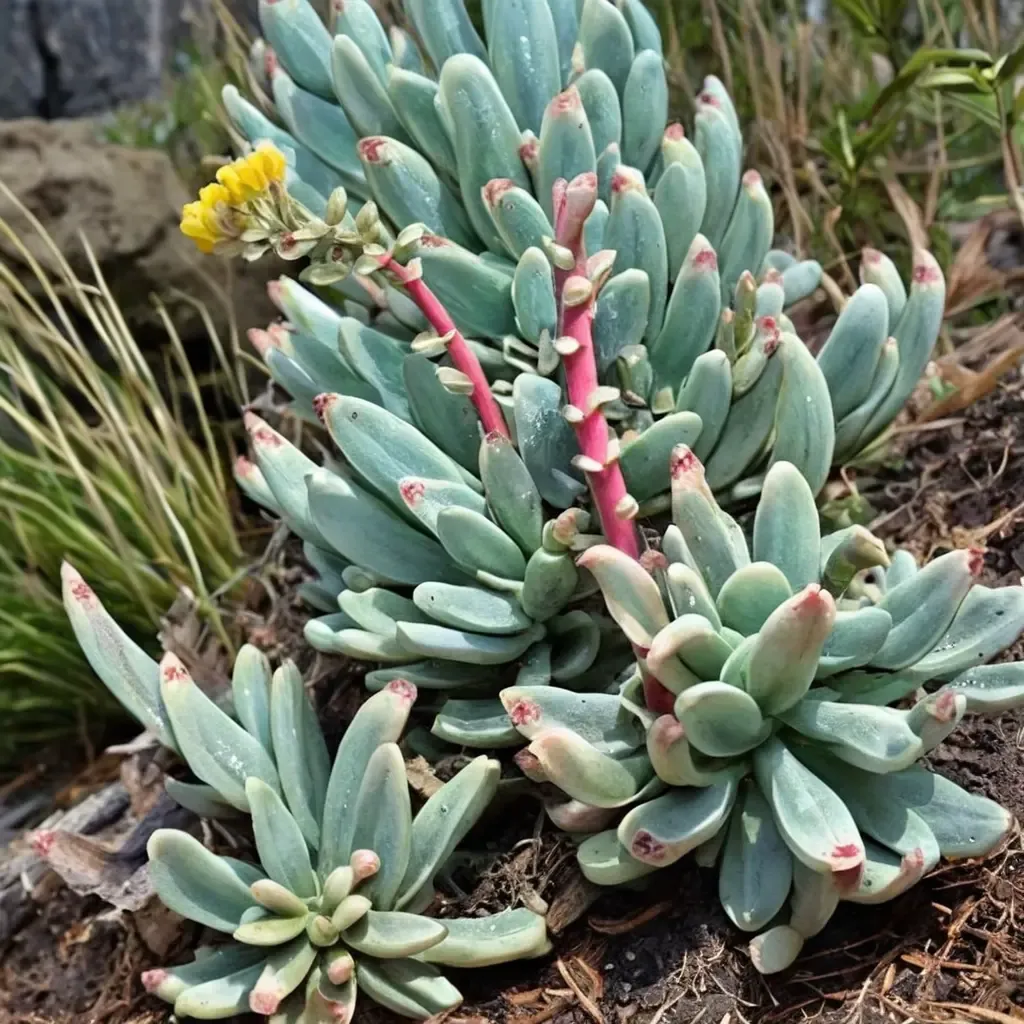
Sea Lettuce
Dudleya caespitosa
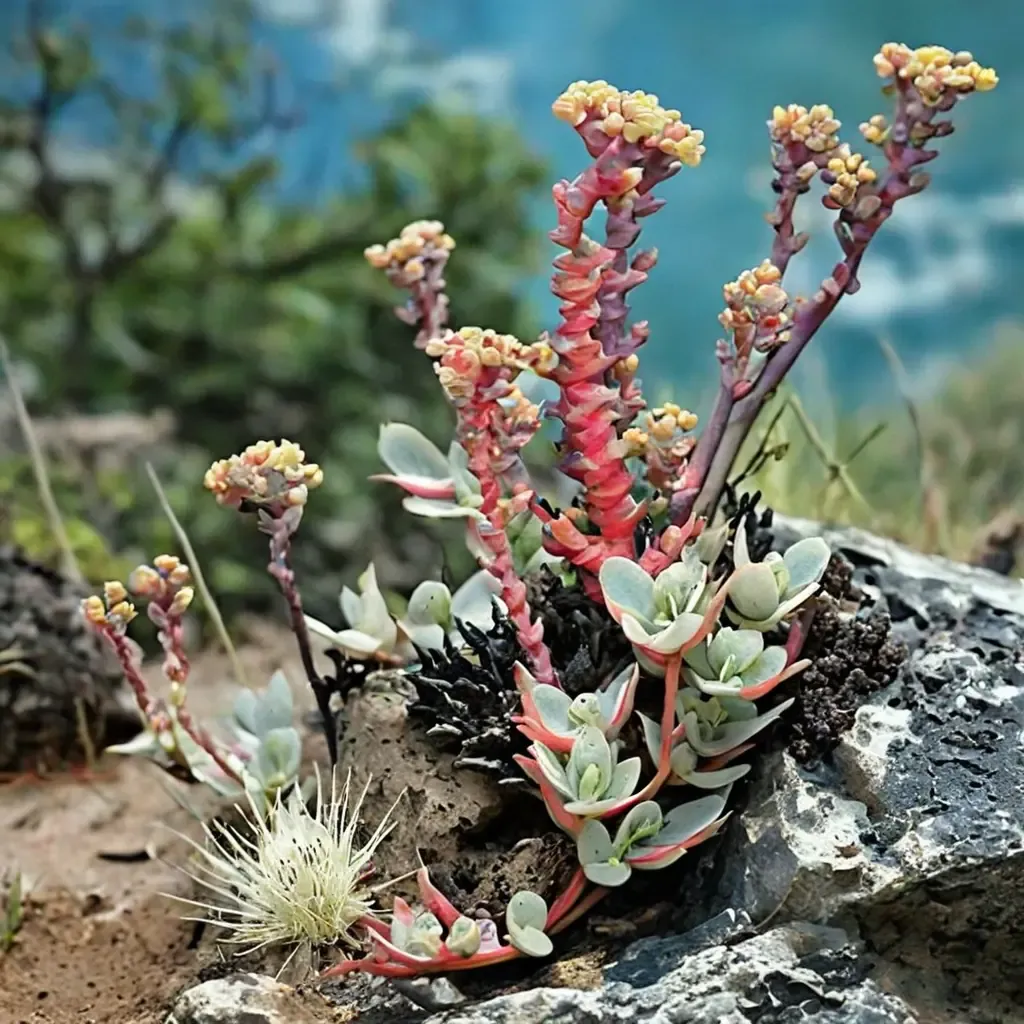
Powdery Liveforever
Dudleya farinosa
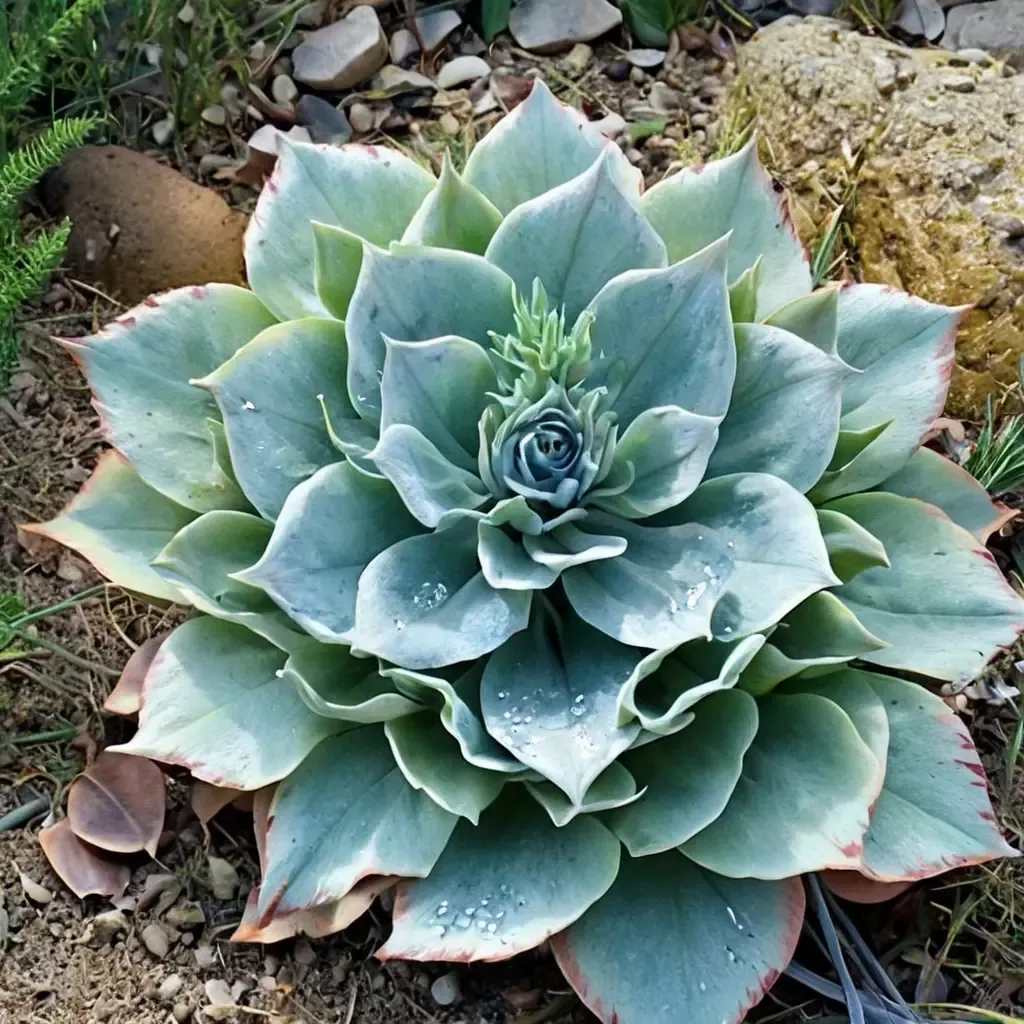
Chalk Dudleya
Dudleya pulverulenta
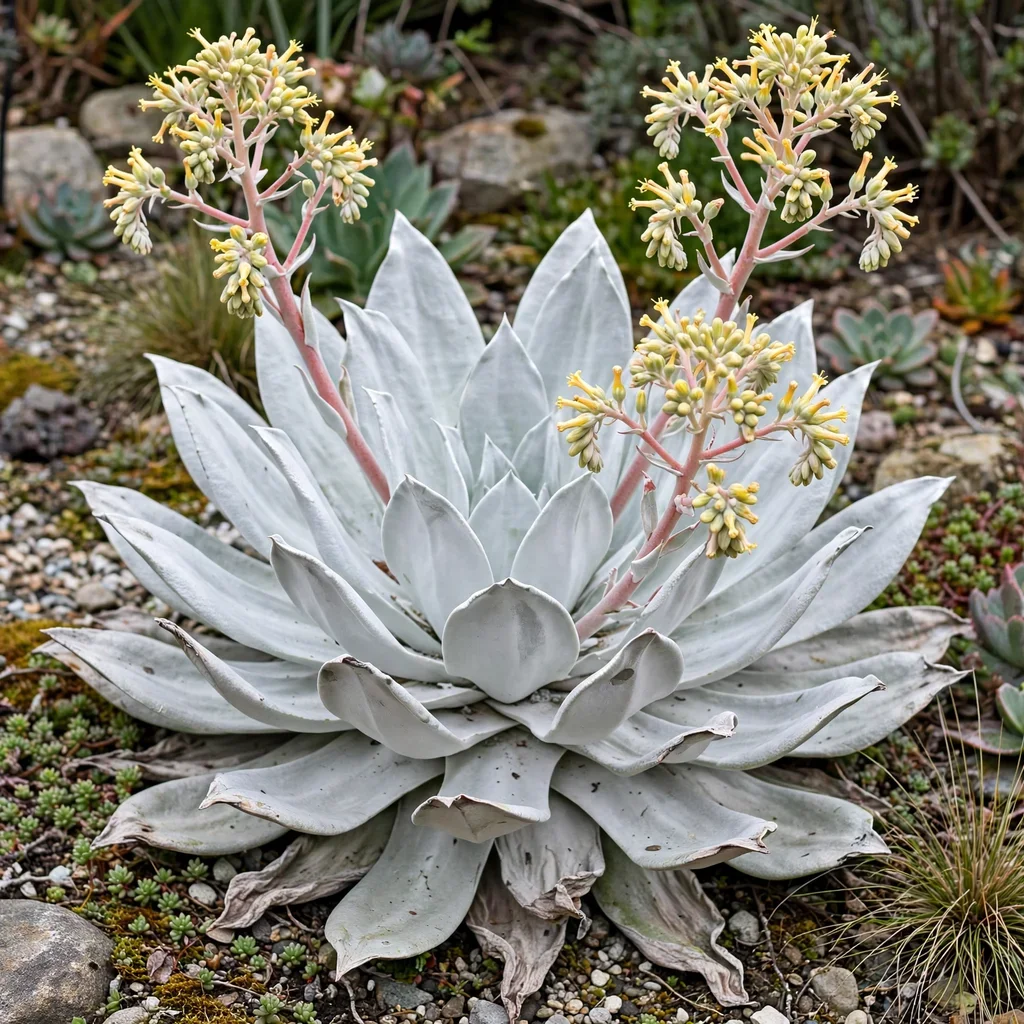
Giant Chalk Dudleya
Dudleya brittonii 'Giant Chalk Dudleya'
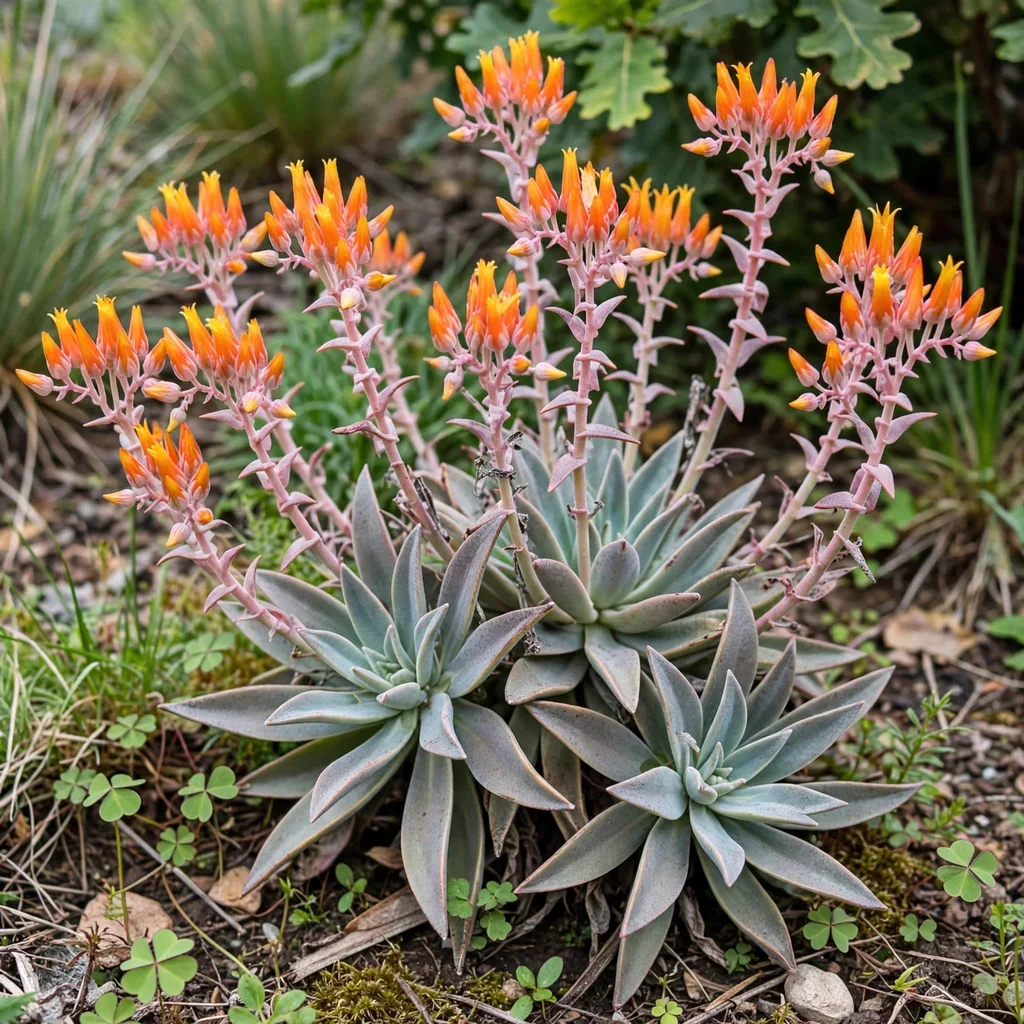
Canyon Liveforever
Dudleya cymosa 'Orange Form'
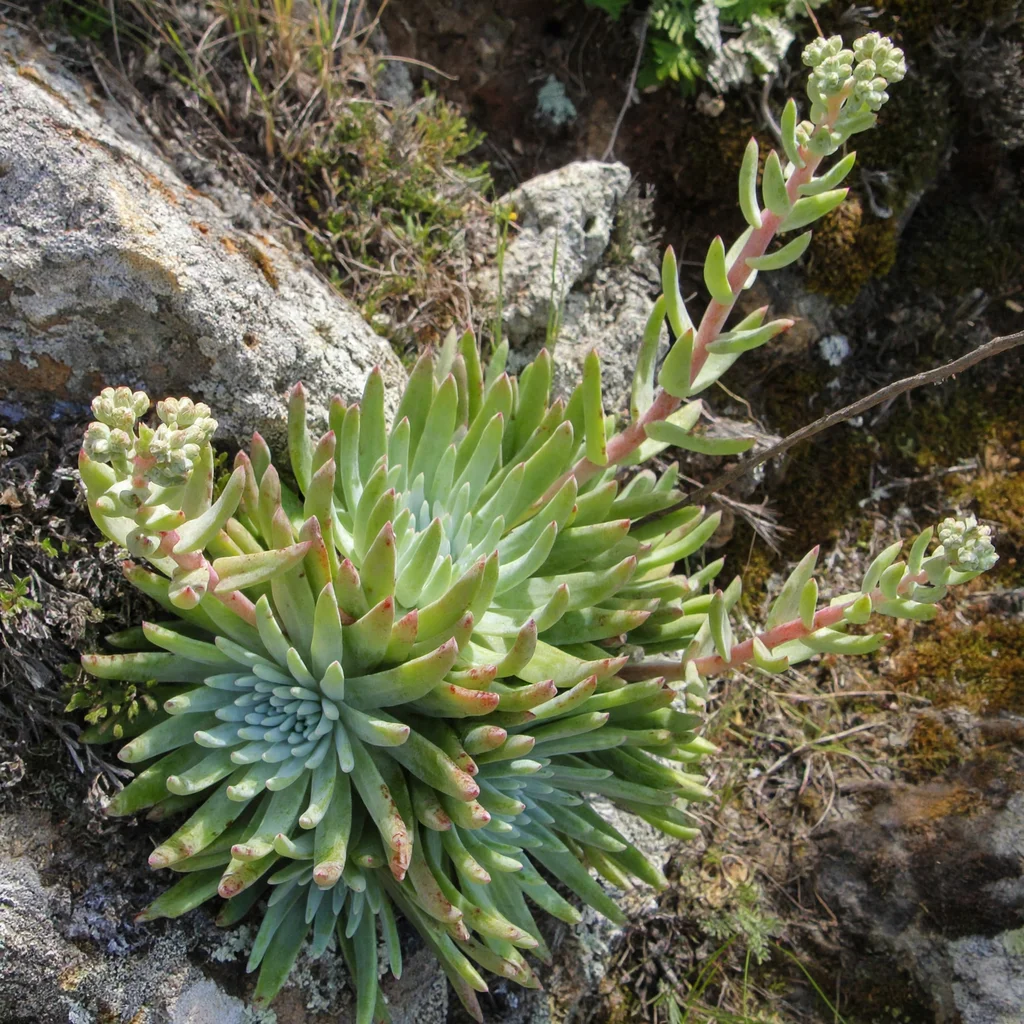
Bright Green Dudleya
Dudleya virens
Keep exploring
Explore the genus
Hardy in your zone?
Grow Arizona Chalk Dudleya with confidence
See it in a design of your actual yard, get zone-matched care reminders, and track it season by season in your garden journal.