The Story
Plant Bio
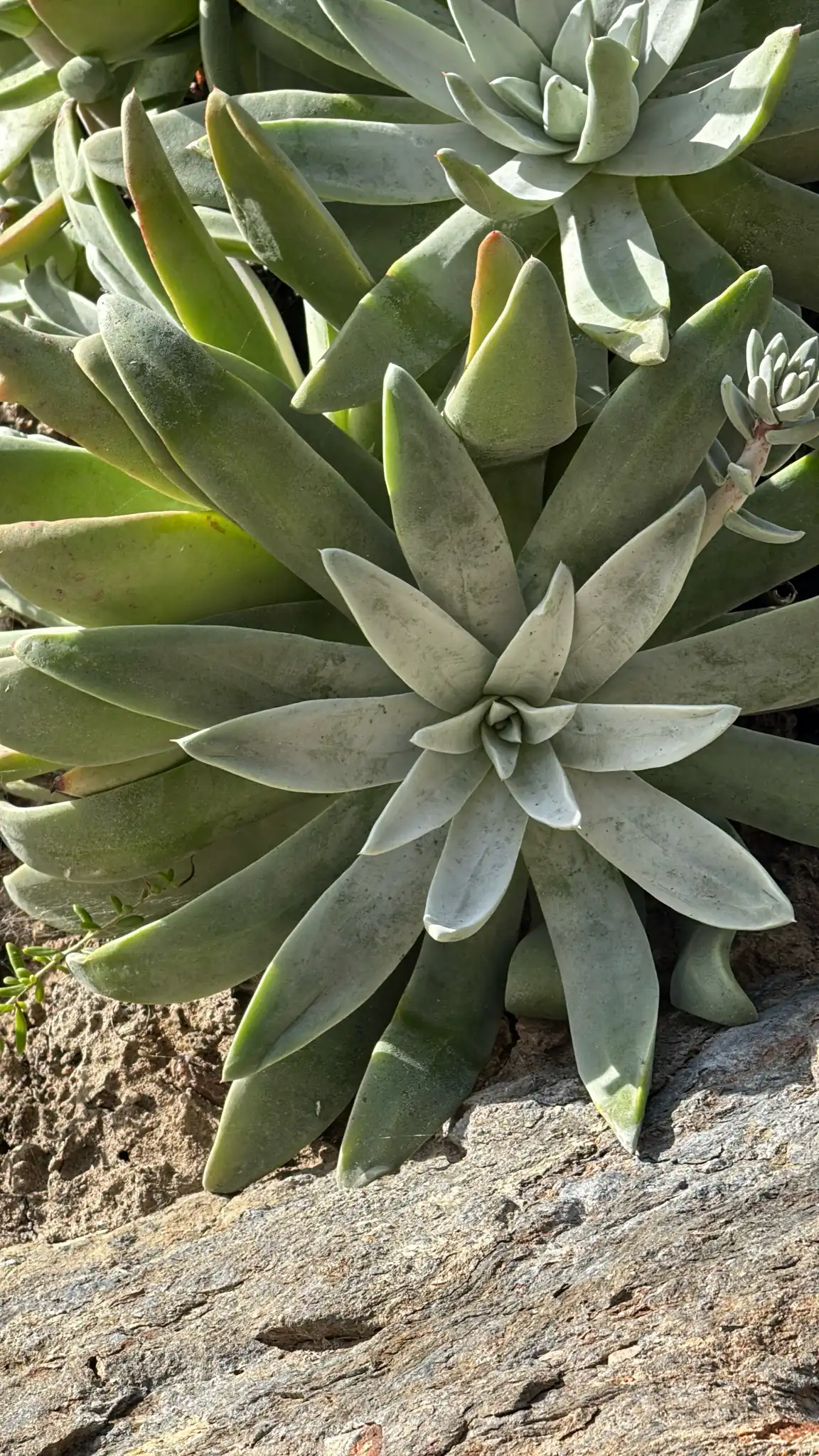
Dudleya virens is a succulent perennial native to coastal bluffs and rocky cliffs of southern California's Channel Islands and Guadalupe Island. It forms branching, low-slung cushions of cylindrical or strap-like fleshy leaves that store water to survive dry summer Mediterranean climates.
Unlike flat-leaved species in the genus, this liveforever produces bright green to glaucous blue-green rosettes branching from a short caudex to form dense matting clumps over time. In spring, erect branching cymes elevate clusters of pale cream to greenish-white star-shaped flowers above the foliage.
Uses & Benefits:
Essentials
At a Glance
Plant Type
Cactus Succulent
Height
6"
Width
48"
Light
Full Sun, Partial Sun
Zones
9, 10
Water
Low
Humidity
Low
Lifespan
Perennial
Native To
California Channel Islands, Guadalupe Island
Toxicity
Non-toxic
Bloom period
Spring – Early summer
In flower about 4 months of the year
Planting
How to Grow
- Plant in sharp, gritty, mineral-rich soil or a cactus mix on a sloped site or cliffside rockery to ensure immediate drainage away from the root crown.
- Position in full sun to bright partial shade where airflow is high and light levels prevent leaf elongation.
- Water sparingly during the active spring growth period, allowing the soil to dry completely between applications.
- Withhold water almost entirely through mid-to-late summer when the plant enters its natural heat dormancy.
Pro Tip
Avoid overhead watering during summer dormancy, as water trapped inside the leaf rosettes invites fatal crown rot.
Keep It Thriving
Care Guide
Do
- Ensure planting locations have rapid water runoff and sharp drainage.
- Keep leaf rosettes dry when irrigating to prevent crown decay.
- Provide ample full sunlight to maintain tight leaf rosettes.
Don't
- Do not apply heavy fertilizer, which forces weak and unnatural soft growth.
- Do not water during high summer heat when the roots are semi-dormant.
- Do not cut into green living stem tissue when clearing old foliage.
Seasonal Care Calendar
| Task | Jan | Feb | Mar | Apr | May | Jun | Jul | Aug | Sep | Oct | Nov | Dec |
|---|---|---|---|---|---|---|---|---|---|---|---|---|
| Pest Check | ||||||||||||
| Plant | ||||||||||||
| Propagate | ||||||||||||
| Prune |
Watch Out For
Pests & Diseases
Common Pests
Common Diseases
In the Garden
Landscape Uses & Companions
Landscape Uses
Multiply
Propagation Methods
Good to Know
Common Questions
Bright Green Dudleya questions
What zones can Bright Green Dudleya grow in?
Bright Green Dudleya is hardy in USDA Zones 9–10: in that range it survives winter in the ground. Colder than Zone 9, grow it in a container you can move to shelter for the winter, or as an annual.
Is Bright Green Dudleya deer resistant?
Not reliably. Deer may browse Bright Green Dudleya, especially tender spring growth — plan on repellents or fencing where pressure is high.
When does Bright Green Dudleya bloom?
Bright Green Dudleya typically blooms from early spring to early summer. Exact timing shifts a week or two with your zone — Sow's bloom calendar maps it to your garden.
Does Bright Green Dudleya need full sun?
Bright Green Dudleya does best in full sun to part shade. In hot climates, afternoon shade keeps blooms fresher longer.
Is Bright Green Dudleya drought tolerant?
Yes — once established (usually after the first full season), Bright Green Dudleya handles dry spells with minimal watering. Water deeply its first year to build the root system that makes that possible.
More Dudleya to compare
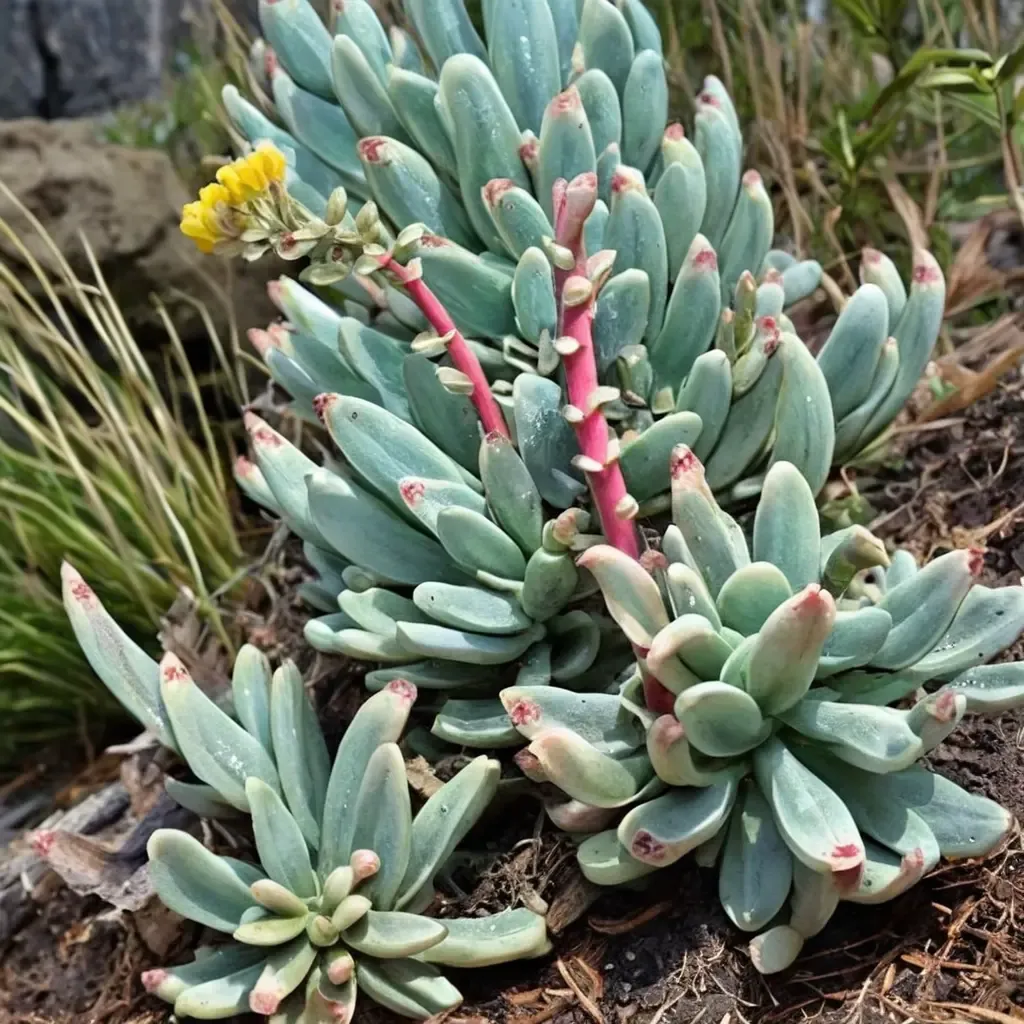
Sea Lettuce
Dudleya caespitosa
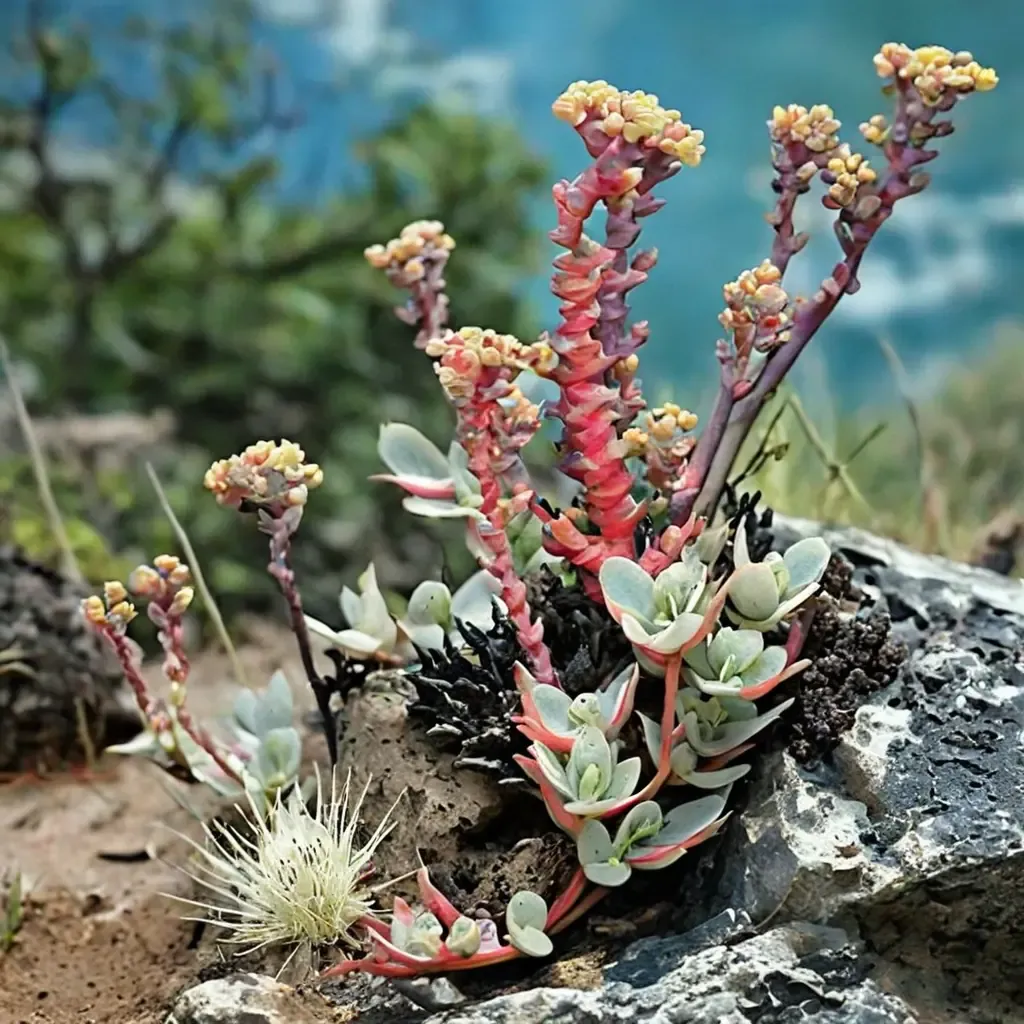
Powdery Liveforever
Dudleya farinosa
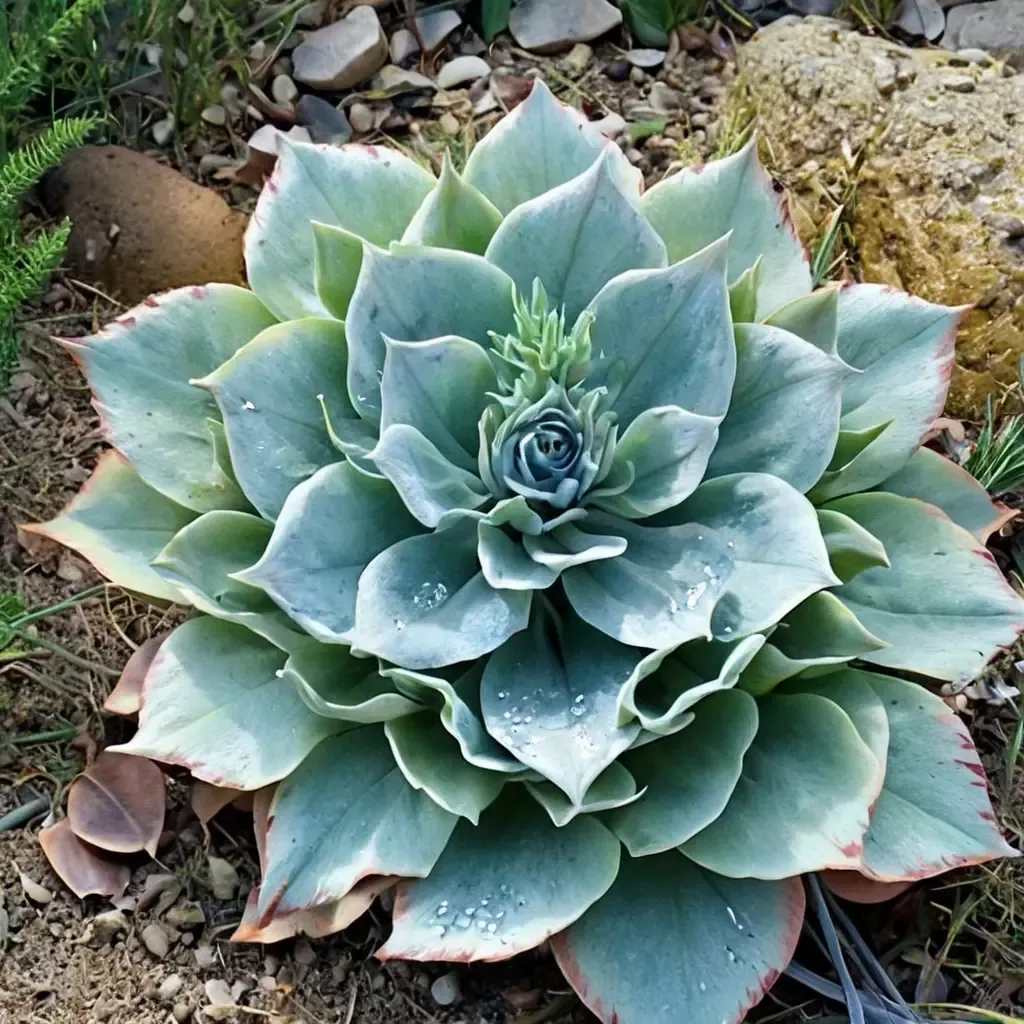
Chalk Dudleya
Dudleya pulverulenta
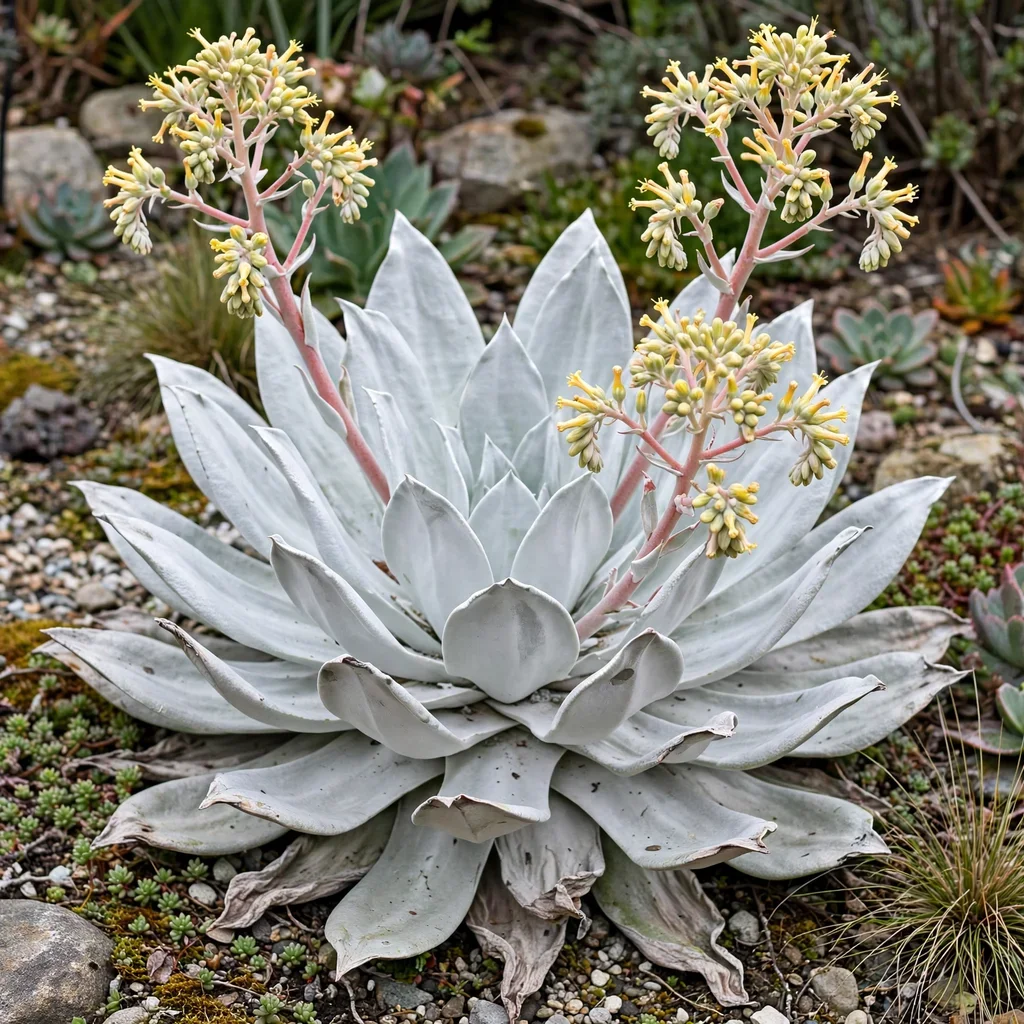
Giant Chalk Dudleya
Dudleya brittonii 'Giant Chalk Dudleya'
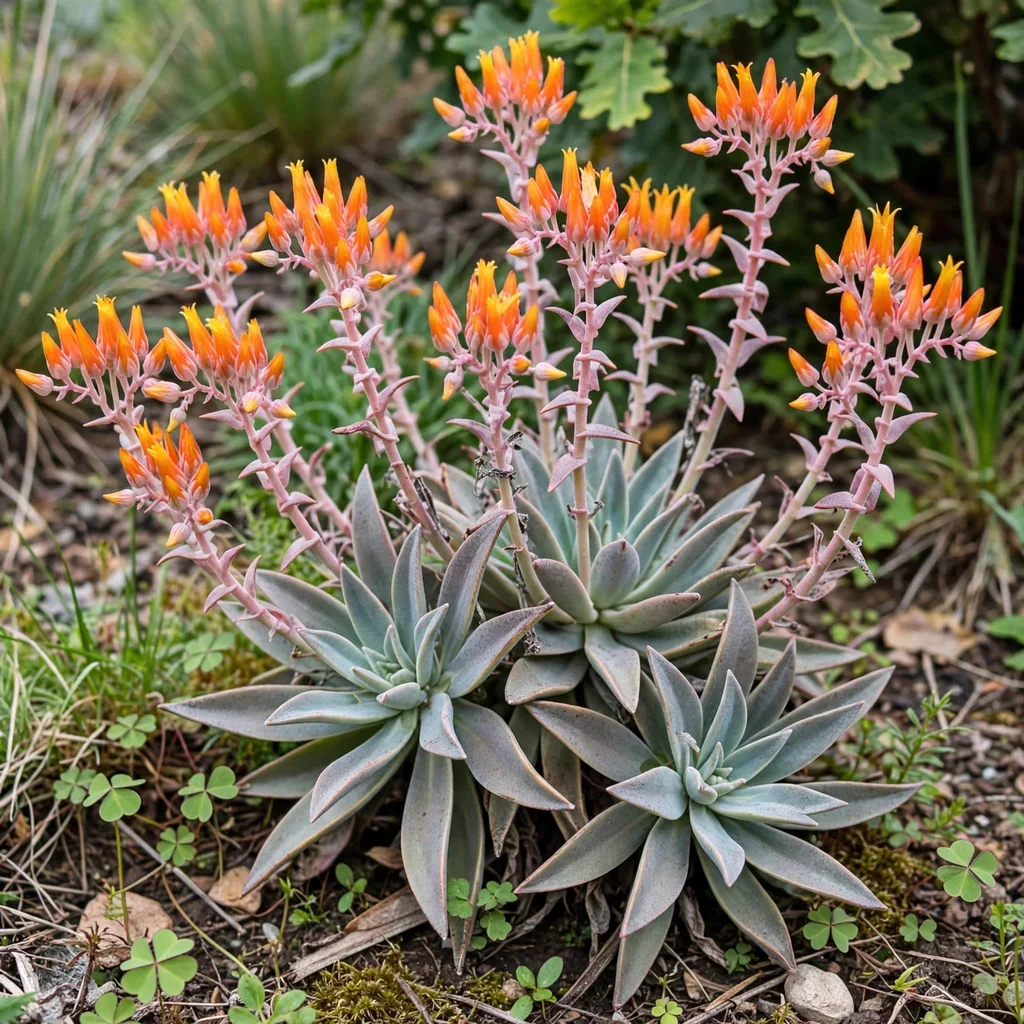
Canyon Liveforever
Dudleya cymosa 'Orange Form'
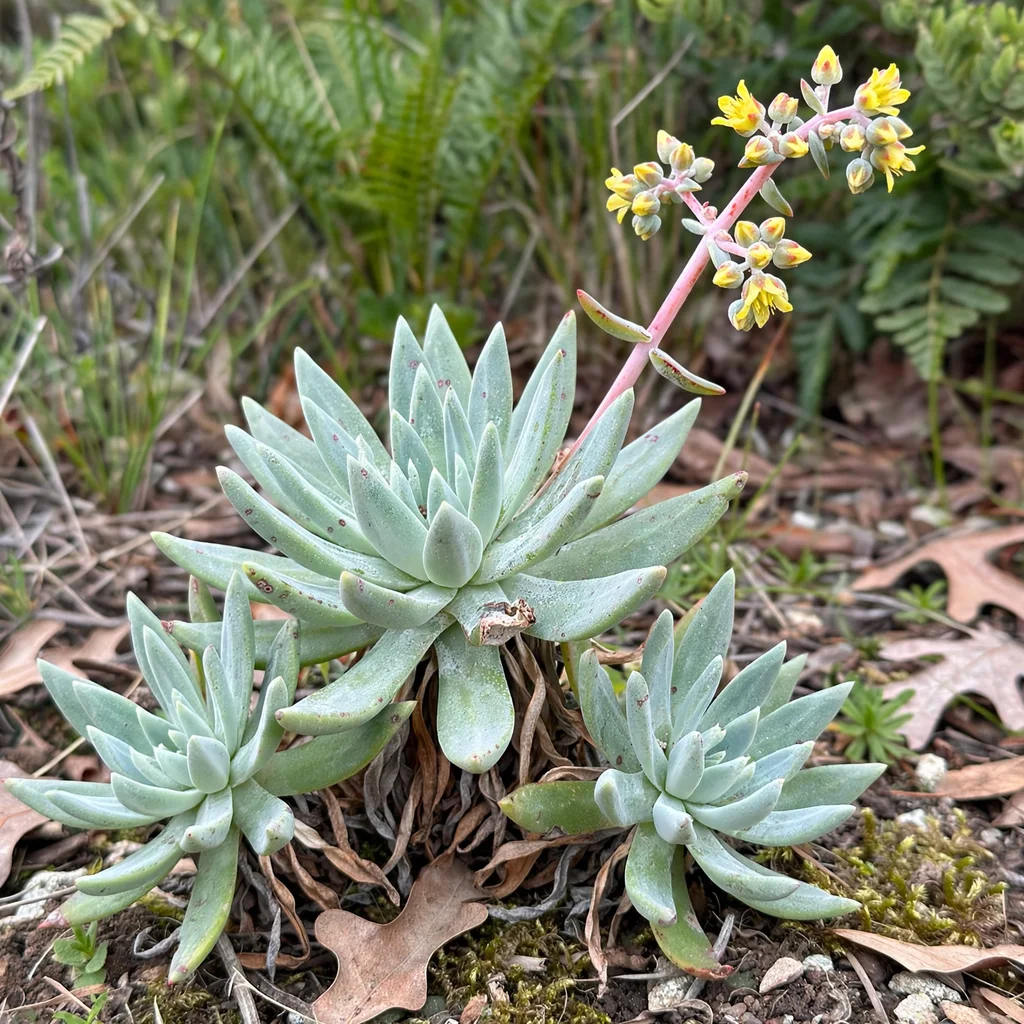
Greene's Liveforever
Dudleya greenei
Keep exploring
Explore the genus
Hardy in your zone?
Grow Bright Green Dudleya with confidence
See it in a design of your actual yard, get zone-matched care reminders, and track it season by season in your garden journal.