The Story
Plant Bio
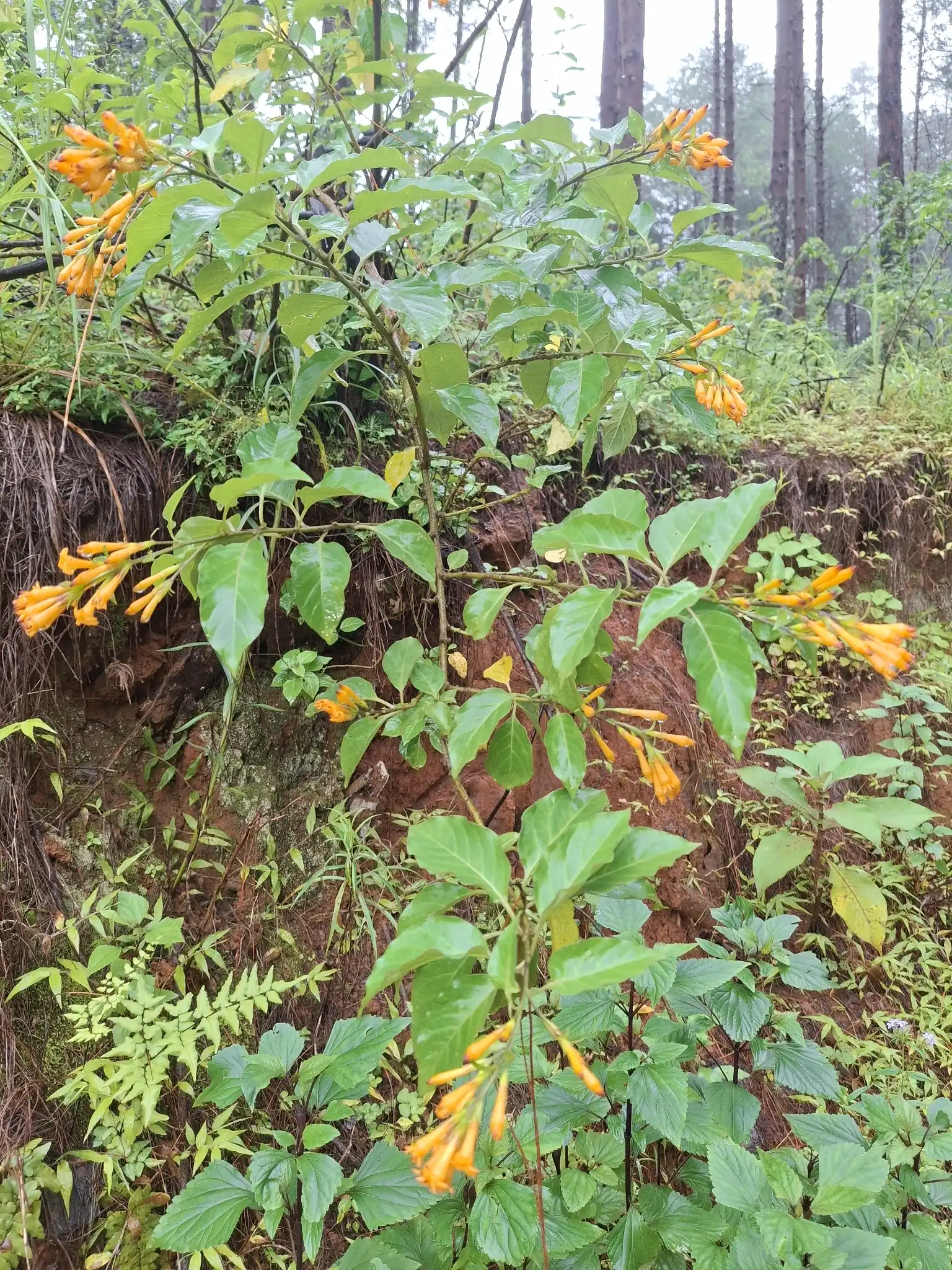
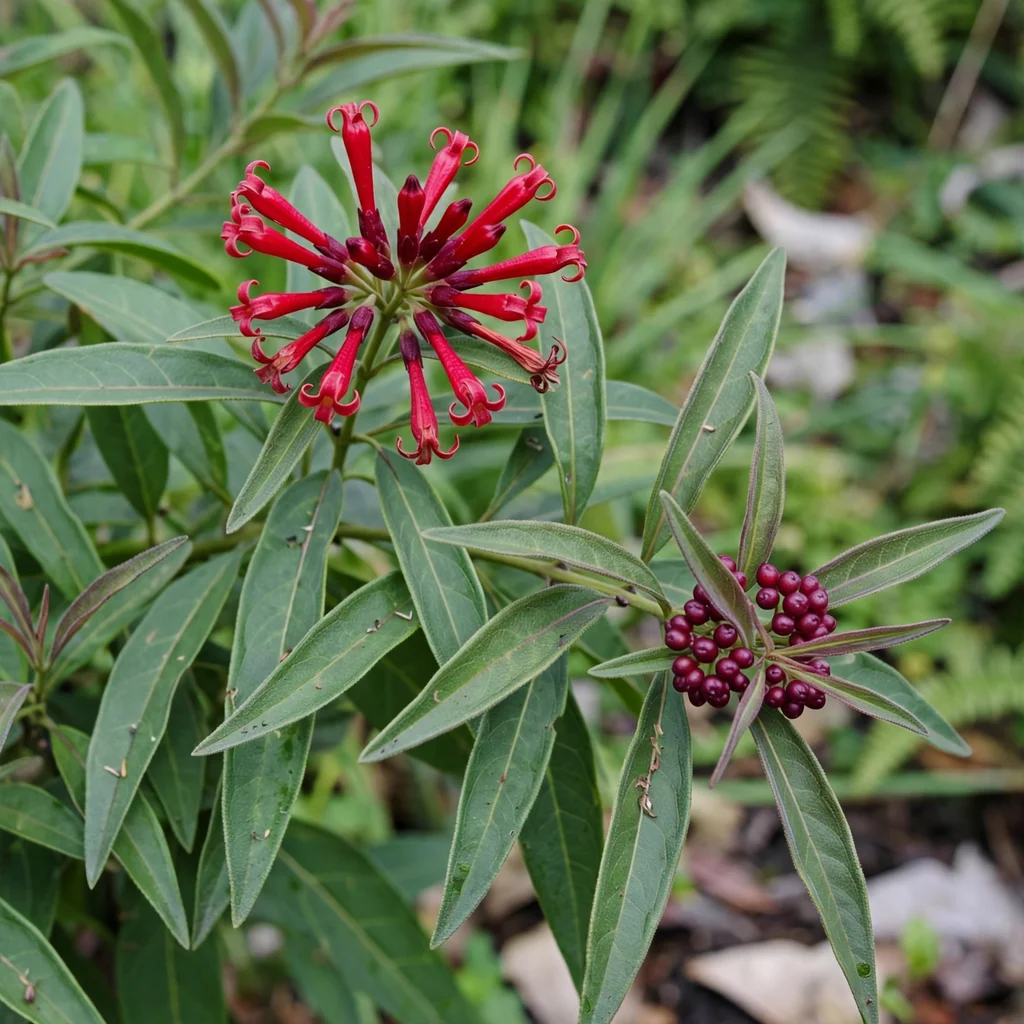
Cestrum aurantiacum is an evergreen shrub from montane Central America that grows 6 to 10 feet tall with upright to arching, densely branched stems and elliptic entire leaves 3 to 4 inches long. It carries terminal clusters of narrow golden-orange tubular flowers followed by white berries about half an inch across.
This species is distinguished by its golden-orange tubes, with yellow forms in cultivation, opening from spring into summer. In Zones 7-8 it freezes to the ground and resprouts from the roots in spring, so cut back dead stems only after new growth shows.
Uses & Benefits:
Essentials
At a Glance
Plant Type
Shrub
Height
96"
Width
72"
Light
Full Sun, Partial Sun
Zones
7, 8, 9, 10
Water
Medium
Humidity
Average
Lifespan
Long-lived shrub
Native To
Mexico to Central America and Venezuela
Toxicity
Toxic - all parts poisonous if ingested
Bloom period
Spring – Summer
In flower about 6 months of the year
Planting
How to Grow
- Plant after last frost in full sun to part shade.
- Set into humusy, evenly moist but well-drained soil at the same depth as in the pot.
- Water to establish and keep evenly moist; do not let it sit waterlogged.
- Mulch the crown in Zones 7-8 and prune hard after flowering to control size.
- Wear gloves when handling and bag clippings; keep away from livestock and pets.
Pro Tip
Prune hard after flowering to keep it within bounds, and in Zones 7-8 leave the dead top growth in place over winter and cut to live wood once it resprouts; wear gloves and bag all clippings because all parts are poisonous to people and livestock.
Keep It Thriving
Care Guide
Do
- Plant in full sun to part shade in humusy well-drained soil
- Water evenly during establishment
- Prune after flowering to control spread
- Mulch crowns where winters freeze
Don't
- Do not assume winter-killed stems are dead — wait for root resprouts
- Do not ingest any part; keep clippings from cattle and pets
- Do not let it overtake beds — cut back before it spreads
Seasonal Care Calendar
| Task | Jan | Feb | Mar | Apr | May | Jun | Jul | Aug | Sep | Oct | Nov | Dec |
|---|---|---|---|---|---|---|---|---|---|---|---|---|
| Mulch | ||||||||||||
| Pest Check | ||||||||||||
| Plant | ||||||||||||
| Prune | ||||||||||||
| Winter Prep |
Watch Out For
Pests & Diseases
Common Pests
Common Diseases
In the Garden
Landscape Uses & Companions
Landscape Uses
Companion Plants
Multiply
Propagation Methods
Good to Know
Common Questions
Orange Cestrum questions
What zones can Orange Cestrum grow in?
Orange Cestrum is hardy in USDA Zones 7–10: in that range it survives winter in the ground. Colder than Zone 7, grow it in a container you can move to shelter for the winter.
When does Orange Cestrum bloom?
Orange Cestrum typically blooms from spring to summer. Exact timing shifts a week or two with your zone — Sow's bloom calendar maps it to your garden.
Does Orange Cestrum need full sun?
Orange Cestrum does best in full sun to part shade. In hot climates, afternoon shade keeps blooms fresher longer.
More Cestrum to compare
Keep exploring
Explore the genus
Hardy in your zone?
Grow Orange Cestrum with confidence
See it in a design of your actual yard, get zone-matched care reminders, and track it season by season in your garden journal.