The Story
Plant Bio
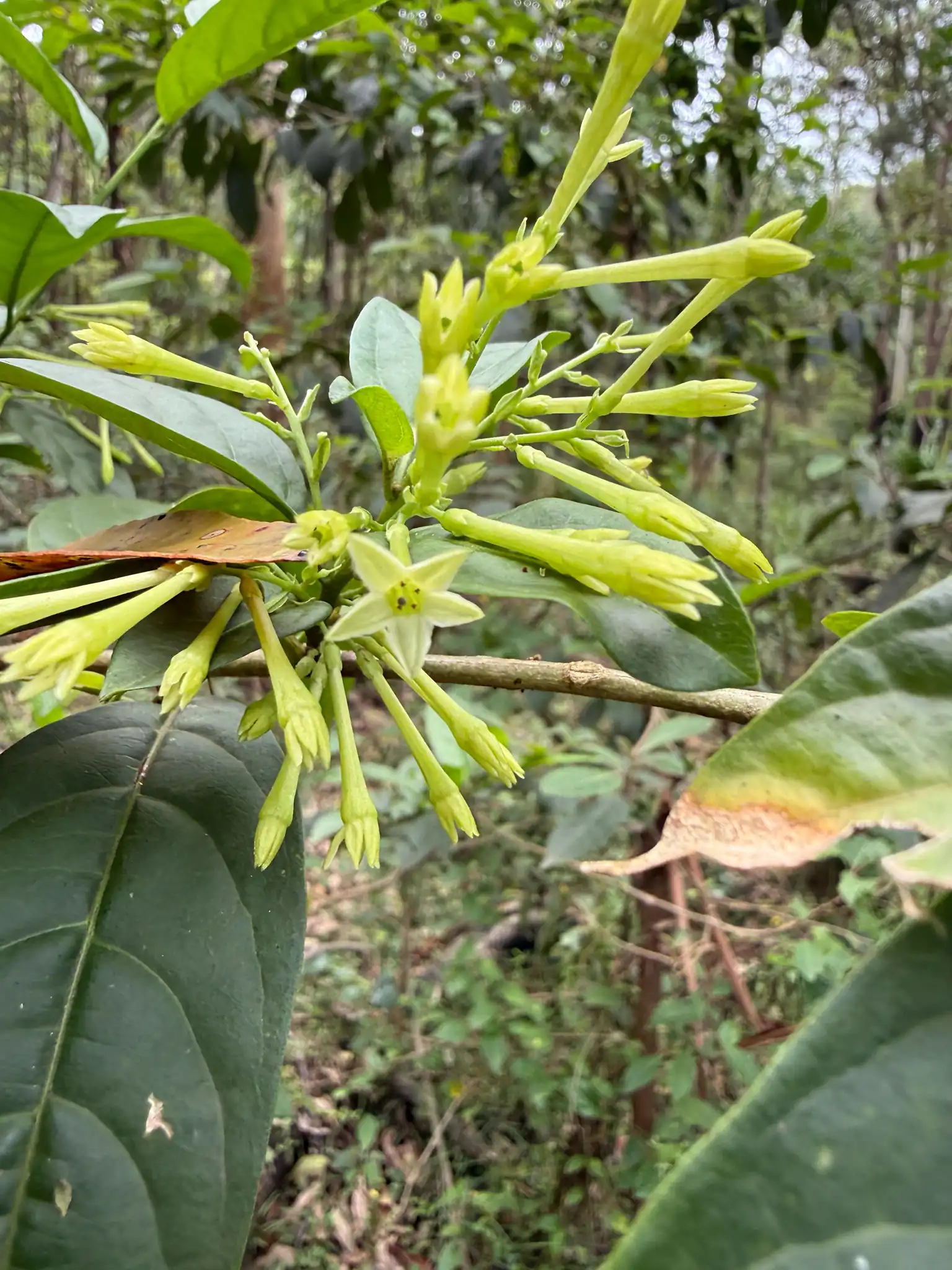
Cestrum nocturnum is a fast-growing evergreen shrub from the West Indies and Central America, reaching three to thirteen feet tall with a similar spread and arching, multi-stemmed branches. It carries glossy green leaves two to six inches long and clusters of small, slender, pale green to creamy-white tubular flowers that open at night with an intense sweet scent.
Unlike true jasmine, the flowers stay closed and inconspicuous by day and release their perfume after dark, with bloom coming intermittently through the warm months in frost-free climates. All parts are highly toxic if eaten, and birds spread the berries readily, allowing thickets to establish beyond the garden in warm regions.
Uses & Benefits:
Essentials
At a Glance
Plant Type
Shrub
Height
156"
Width
156"
Light
Full Sun, Partial Sun
Zones
8, 9, 10
Water
Medium
Humidity
Tolerant
Lifespan
Long-lived evergreen shrub
Native To
West Indies and Central America, Mexico to Panama
Toxicity
Highly toxic if ingested
Bloom period
Summer – Fall
In flower about 6 months of the year
Planting
How to Grow
- Plant in full sun for best flowering, with part shade tolerated in hot areas.
- Set out after last frost in moist, well-drained soil, spacing plants four feet or more apart to allow for wide-spreading roots.
- Water regularly to establish, then keep soil evenly moist but never waterlogged.
- Prune in early spring after frost and again after each flush to control size and remove suckers and seedlings.
- In zone 8 and cold pockets, site against a warm wall and cover before freezes; grow in a large pot to move under cover where winters are colder.
Pro Tip
Prune after each flush and remove suckers and seedlings; site it well away from bedrooms and patios where the night perfume becomes overwhelming.
Keep It Thriving
Care Guide
Do
- Plant in full sun for strongest night fragrance and densest growth.
- Prune after flowering to control size and remove suckers and unwanted seedlings.
- Check leaf undersides through summer for sap-sucking insects and improve air flow around crowded stems.
Don't
- Do not eat any part of the plant and keep it away from children, cats, dogs, and livestock.
- Do not plant near bedrooms, patios, or enclosed spaces where the night scent concentrates.
- Do not overwater or leave pots standing in water, which invites leaf spot and root rot.
- Do not cut hard back into old leafless wood to rejuvenate; regrowth is slow and patchy.
Seasonal Care Calendar
| Task | Jan | Feb | Mar | Apr | May | Jun | Jul | Aug | Sep | Oct | Nov | Dec |
|---|---|---|---|---|---|---|---|---|---|---|---|---|
| Fertilize | ||||||||||||
| Pest Check | ||||||||||||
| Plant | ||||||||||||
| Prune | ||||||||||||
| Winter Prep |
Watch Out For
Pests & Diseases
Common Pests
Common Diseases
In the Garden
Landscape Uses & Companions
Landscape Uses
Multiply
Propagation Methods
Good to Know
Common Questions
Night-Blooming Jasmine questions
What zones can Night-Blooming Jasmine grow in?
Night-Blooming Jasmine is hardy in USDA Zones 8–10: in that range it survives winter in the ground. Colder than Zone 8, grow it in a container you can move to shelter for the winter.
When does Night-Blooming Jasmine bloom?
Night-Blooming Jasmine typically blooms from summer to fall. Exact timing shifts a week or two with your zone — Sow's bloom calendar maps it to your garden.
Does Night-Blooming Jasmine need full sun?
Night-Blooming Jasmine does best in full sun to part shade. In hot climates, afternoon shade keeps blooms fresher longer.
More Cestrum to compare
Keep exploring
Explore the genus
Hardy in your zone?
Grow Night-Blooming Jasmine with confidence
See it in a design of your actual yard, get zone-matched care reminders, and track it season by season in your garden journal.