The Story
Plant Bio
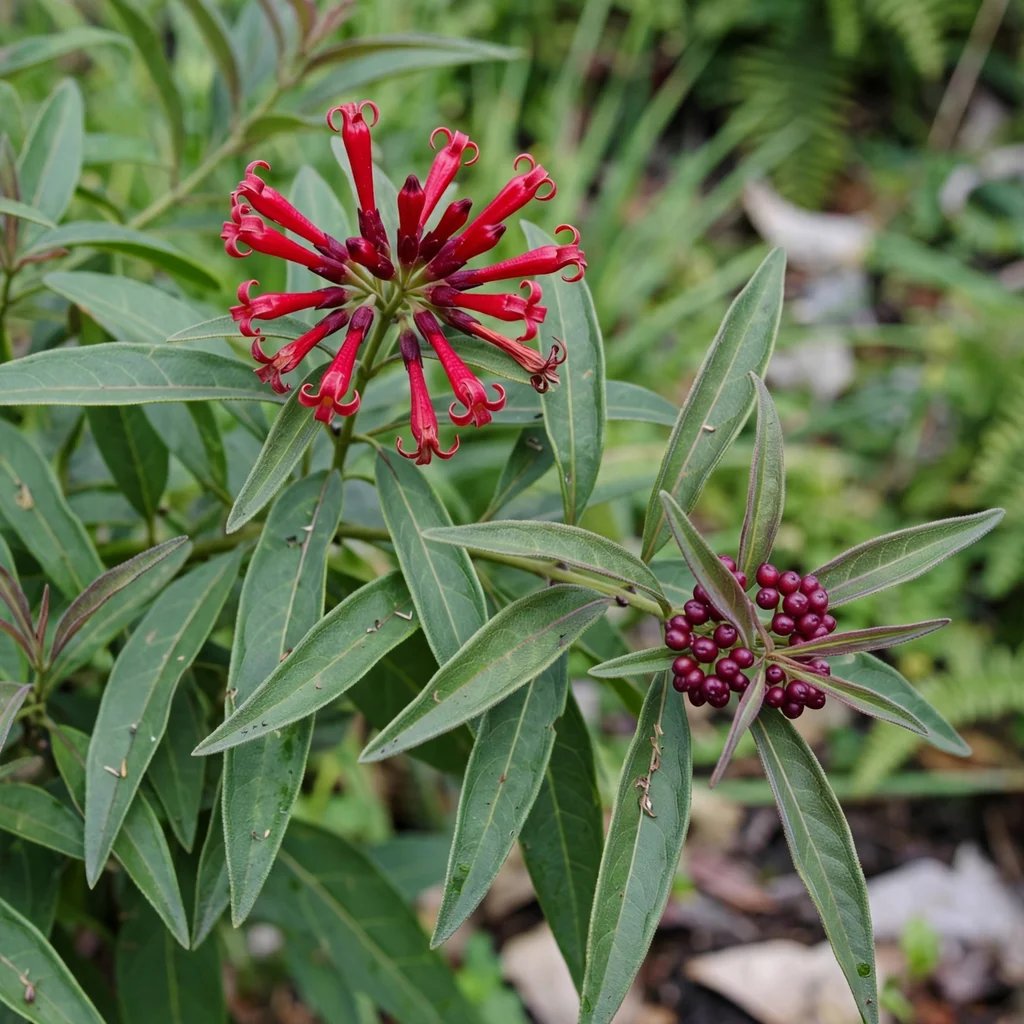
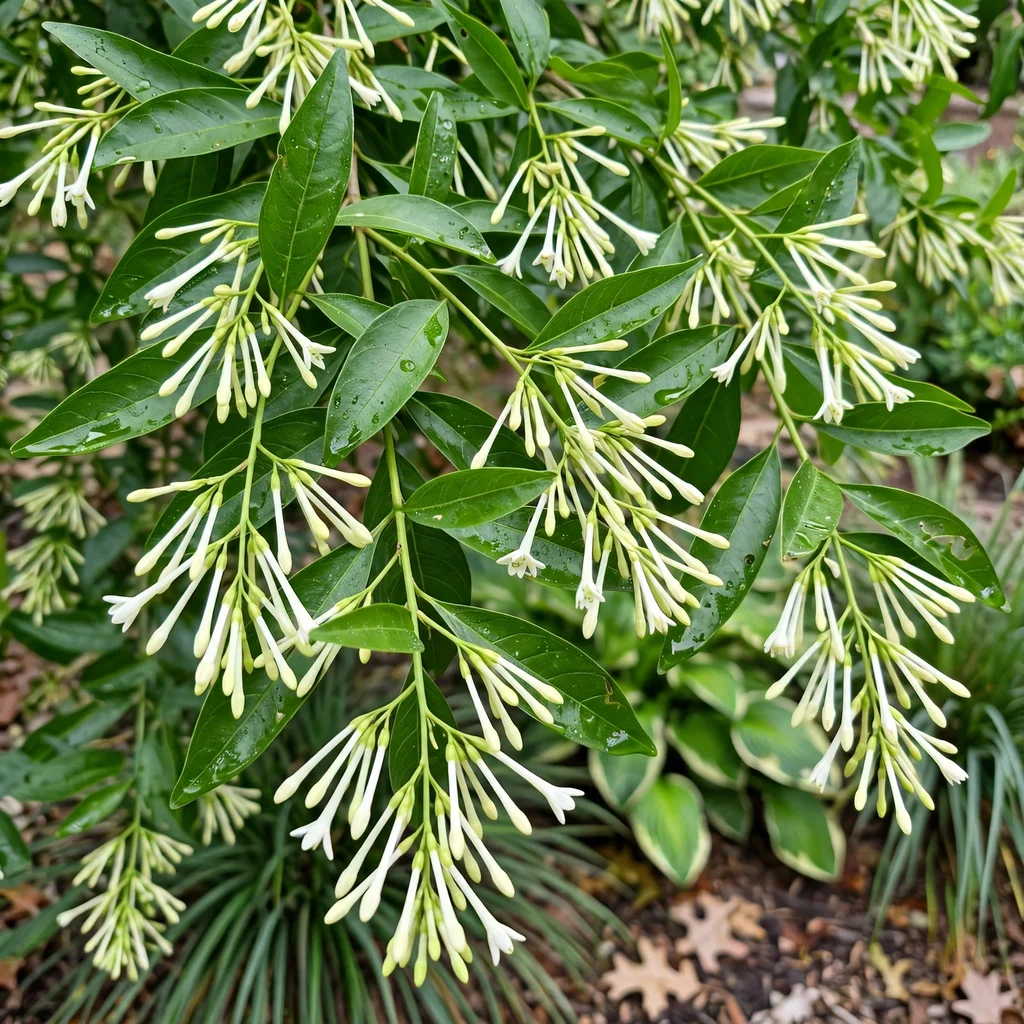
Cestrum fasciculatum, one of the red-flowered cestrum species from Mexico, is a vigorous evergreen shrub with dull green lance-shaped leaves held on erect, branching stems. Flowers are narrow scarlet tubes about 2 cm long with the petal lobes bent back, borne in dense terminal clusters and followed by small purple-red berries.
'Newellii' is a garden hybrid between Cestrum fasciculatum and Cestrum elegans, selected for bright crimson scentless flowers carried in clusters of up to ten at the branch ends from spring through winter in mild climates. It forms a bushy erect shrub to 8 feet tall and 6 feet wide, resprouting from the roots after a hard freeze.
Uses & Benefits:
Essentials
At a Glance
Plant Type
Shrub
Height
96"
Width
72"
Light
Full Sun, Partial Sun
Zones
8, 9, 10
Water
Moderate
Humidity
Average
Lifespan
Long-lived evergreen shrub
Native To
Mexico and Central America
Toxicity
Toxic if ingested
Bloom period
Early spring – Winter
In flower about 12 months of the year
Planting
How to Grow
- Plant in spring after last frost against a sheltered south- or west-facing wall in full sun.
- Dig into loam or sandy soil that holds moisture yet drains freely, pH acid to alkaline.
- Set the root ball level, backfill, water deeply, and mulch 2 inches, keeping mulch off stems.
- Water freely through summer and keep just moist in winter; give afternoon shade in hot inland sites.
- Grow in a large container of loam-based mix where winter falls below 20F, moving under glass.
Pro Tip
Cut freeze-killed stems to the base in early spring and let new shoots break from the roots; pinch spent clusters and strip young berries before birds spread seed.
Keep It Thriving
Care Guide
Do
- Water deeply in summer heat and mulch to hold soil moisture
- Prune lightly in early spring to shape and remove dead wood
- Wear gloves when handling stems and berries
Don't
- Do not plant where livestock or pets browse foliage or berries
- Do not leave ripe berries for birds to spread
- Do not cut hard into old leafless wood each year
Seasonal Care Calendar
| Task | Jan | Feb | Mar | Apr | May | Jun | Jul | Aug | Sep | Oct | Nov | Dec |
|---|---|---|---|---|---|---|---|---|---|---|---|---|
| Mulch | ||||||||||||
| Pest Check | ||||||||||||
| Plant | ||||||||||||
| Prune | ||||||||||||
| Winter Prep |
Watch Out For
Pests & Diseases
Common Pests
Common Diseases
In the Garden
Landscape Uses & Companions
Landscape Uses
Companion Plants
Multiply
Propagation Methods
Good to Know
Common Questions
Red Cestrum questions
What zones can Red Cestrum grow in?
Red Cestrum is hardy in USDA Zones 8–10: in that range it survives winter in the ground. Colder than Zone 8, grow it in a container you can move to shelter for the winter.
When does Red Cestrum bloom?
Red Cestrum typically blooms in early spring. Exact timing shifts a week or two with your zone — Sow's bloom calendar maps it to your garden.
Does Red Cestrum need full sun?
Red Cestrum does best in full sun to part shade. In hot climates, afternoon shade keeps blooms fresher longer.
Is Red Cestrum drought tolerant?
Yes — once established (usually after the first full season), Red Cestrum handles dry spells with minimal watering. Water deeply its first year to build the root system that makes that possible.
More Cestrum to compare
Keep exploring
Explore the genus
Hardy in your zone?
Grow Red Cestrum with confidence
See it in a design of your actual yard, get zone-matched care reminders, and track it season by season in your garden journal.