The Story
Plant Bio
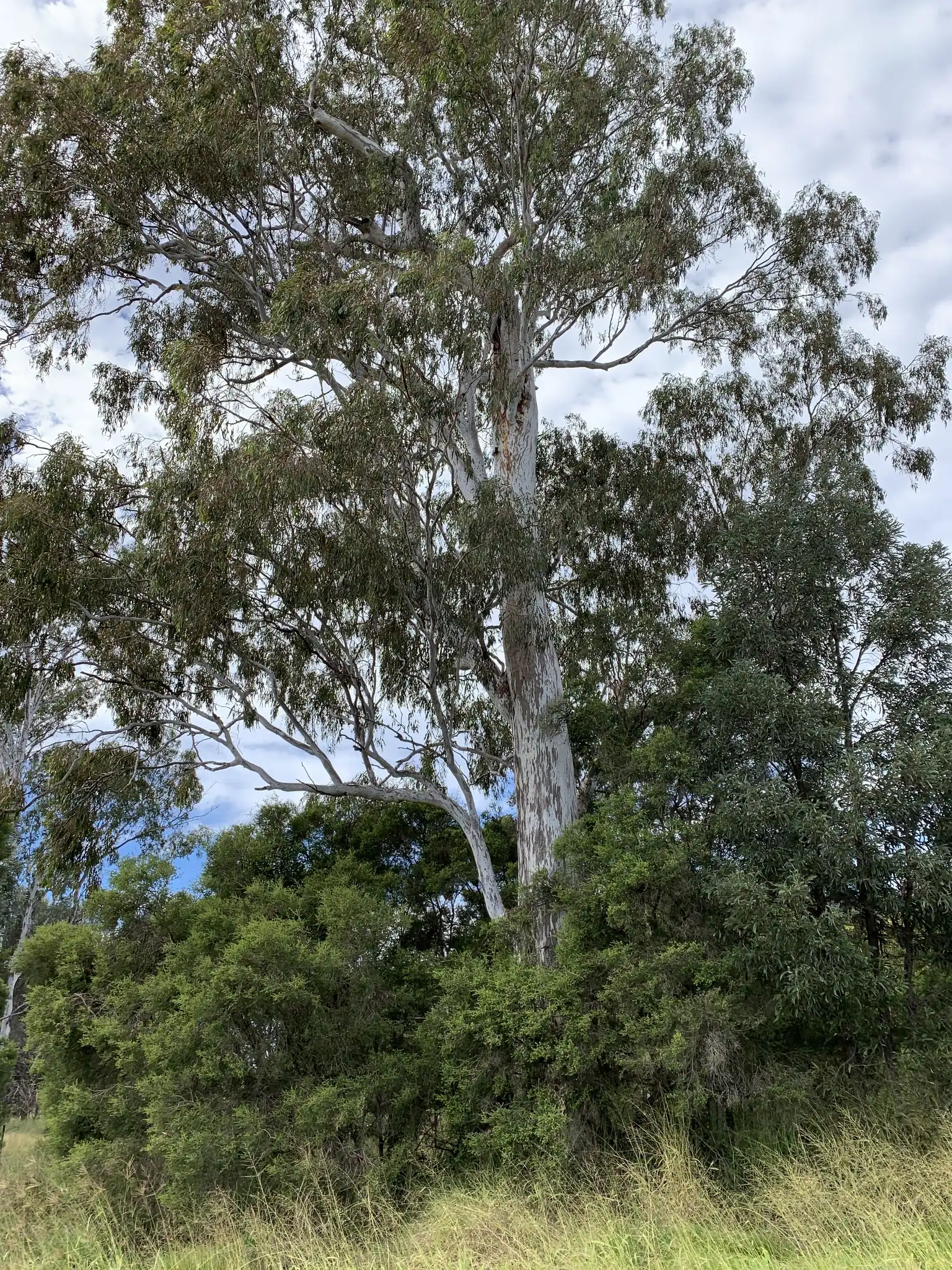
Eucalyptus argophloia is an upright evergreen tree adapted to deep clay soils, forming a straight trunk free of lower branches beneath a broad canopy. Its narrow foliage emerges grey-green before turning glossy green, accompanied by small clusters of white flowers from late fall into winter.
Unlike many species in its genus that require sandy or nutrient-poor soils, this tree thrives specifically in heavy, cracking clays. It forms a underground lignotuber that stores nutrients and enables regeneration after environmental stress.
Uses & Benefits:
Essentials
At a Glance
Plant Type
Tree
Height
1181"
Width
394"
Light
Full Sun
Zones
9, 10
Water
Low
Humidity
Moderate
Lifespan
Perennial
Native To
Australia
Toxicity
Non-Toxic
Bloom period
Fall – Winter
In flower about 6 months of the year
Planting
How to Grow
- Select a full-sun site with heavy clay or clay-loam soil that remains well-drained and free of standing water.
- Dig a planting hole to the exact depth of the root plug and twice as wide without adding organic amendments.
- Place the plug straight in the hole and pack the native soil firmly around the roots to close air pockets.
- Water thoroughly at planting, then restrict supplementary watering to extended dry periods once settled.
Pro Tip
Never prune back into old bare wood; cutting past active leaves stops shoots from regenerating because mature wood lacks epicormic buds.
Keep It Thriving
Care Guide
Do
- Plant in heavy clay or clay-loam soil profiles.
- Provide full sun to maintain an upright, stable growth form.
- Protect young saplings with physical barriers where deer browsing occurs.
Don't
- Do not prune into old timber that lacks leafy green growth.
- Do not amend native clay planting holes with rich compost or organic matter.
- Do not allow soil around the trunk base to remain continuously waterlogged.
Seasonal Care Calendar
| Task | Jan | Feb | Mar | Apr | May | Jun | Jul | Aug | Sep | Oct | Nov | Dec |
|---|---|---|---|---|---|---|---|---|---|---|---|---|
| Fertilize | ||||||||||||
| Pest Check | ||||||||||||
| Plant | ||||||||||||
| Prune |
Watch Out For
Pests & Diseases
Common Pests
Common Diseases
In the Garden
Landscape Uses & Companions
Landscape Uses
Multiply
Propagation Methods
Good to Know
Common Questions
Queensland Western White Gum questions
What zones can Queensland Western White Gum grow in?
Queensland Western White Gum is hardy in USDA Zones 9–10: in that range it survives winter in the ground. Colder than Zone 9, winters are too cold for it to survive outdoors.
Is Queensland Western White Gum deer resistant?
Not reliably. Deer may browse Queensland Western White Gum, especially tender spring growth — plan on repellents or fencing where pressure is high.
When does Queensland Western White Gum bloom?
Queensland Western White Gum typically blooms from fall to winter. Exact timing shifts a week or two with your zone — Sow's bloom calendar maps it to your garden.
Does Queensland Western White Gum need full sun?
Queensland Western White Gum does best in full sun (6+ hours).
Is Queensland Western White Gum drought tolerant?
Yes — once established (usually after the first full season), Queensland Western White Gum handles dry spells with minimal watering. Water deeply its first year to build the root system that makes that possible.
More Eucalyptus to compare
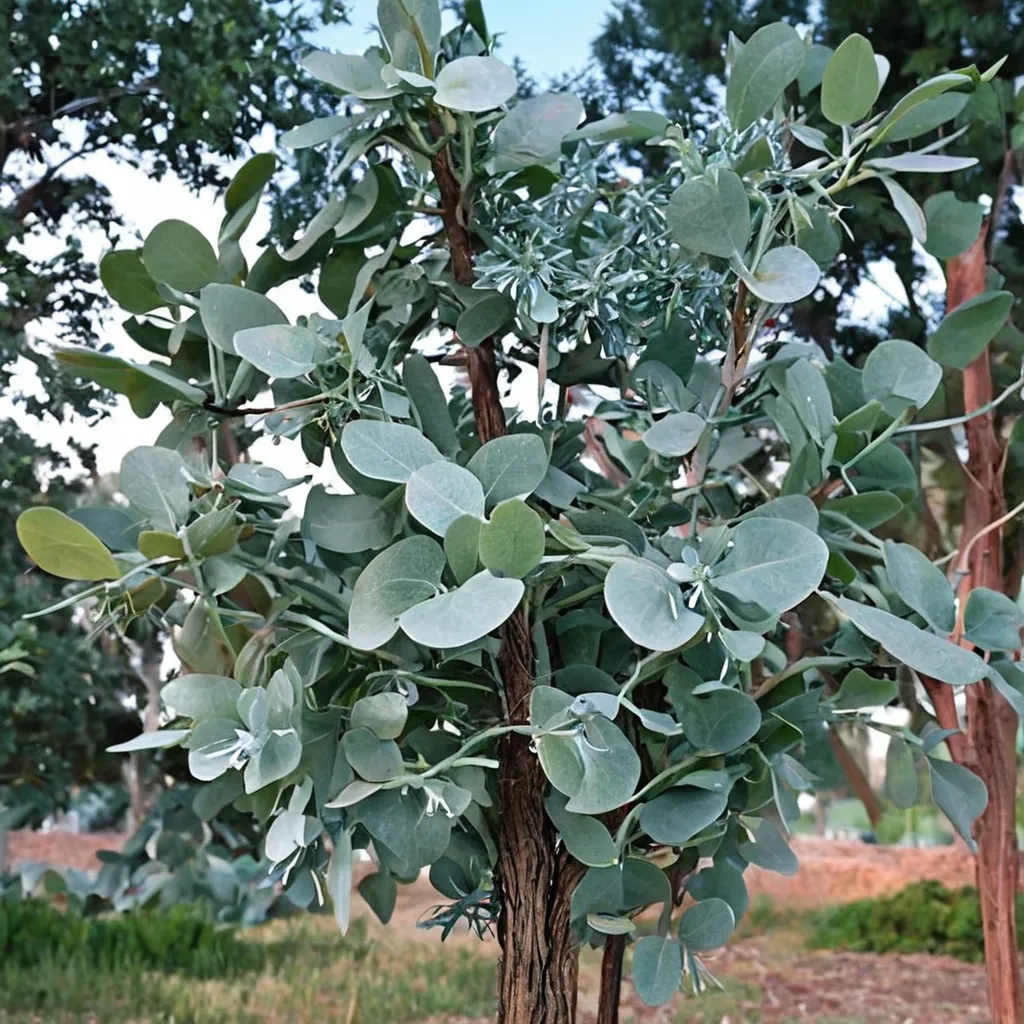
Silver Dollar Eucalyptus
Eucalyptus cinerea
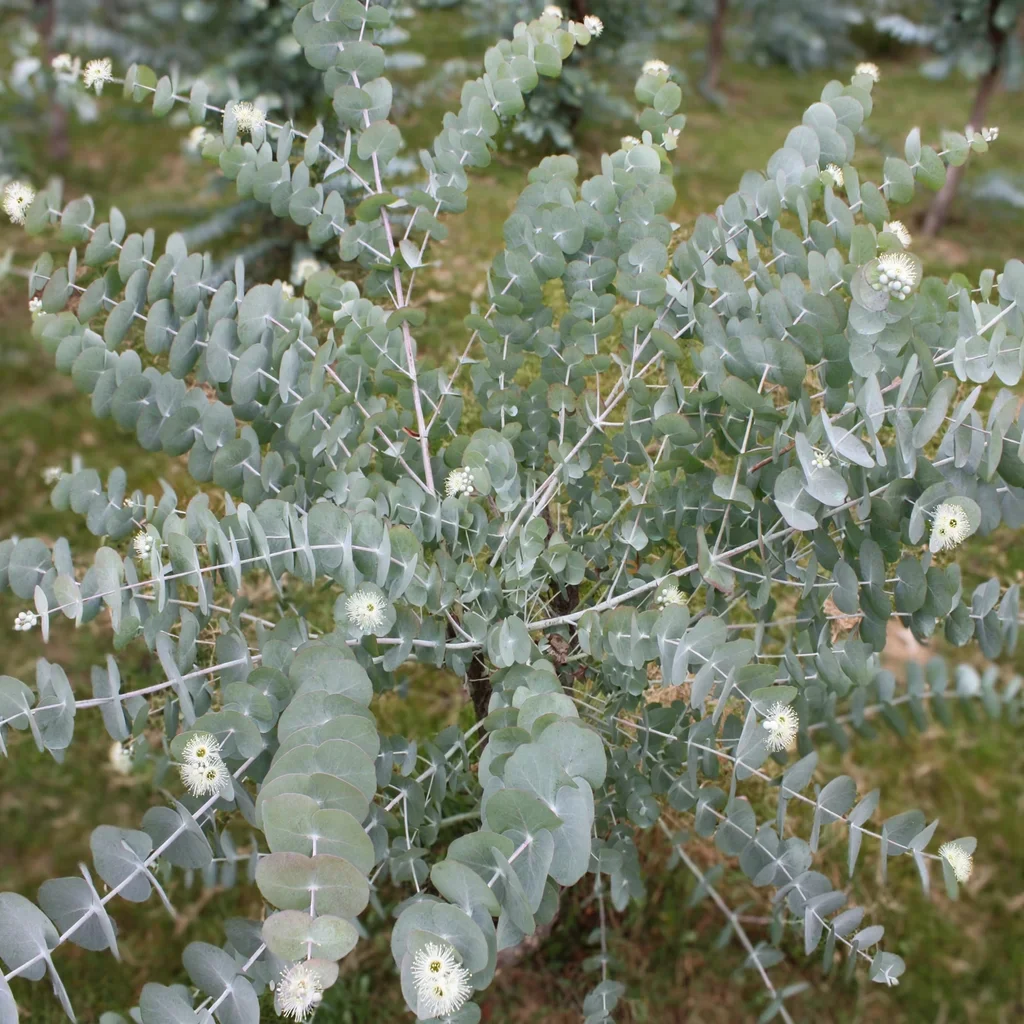
Silver Dollar Tree
Eucalyptus cinerea 'Silver Dollar Tree'
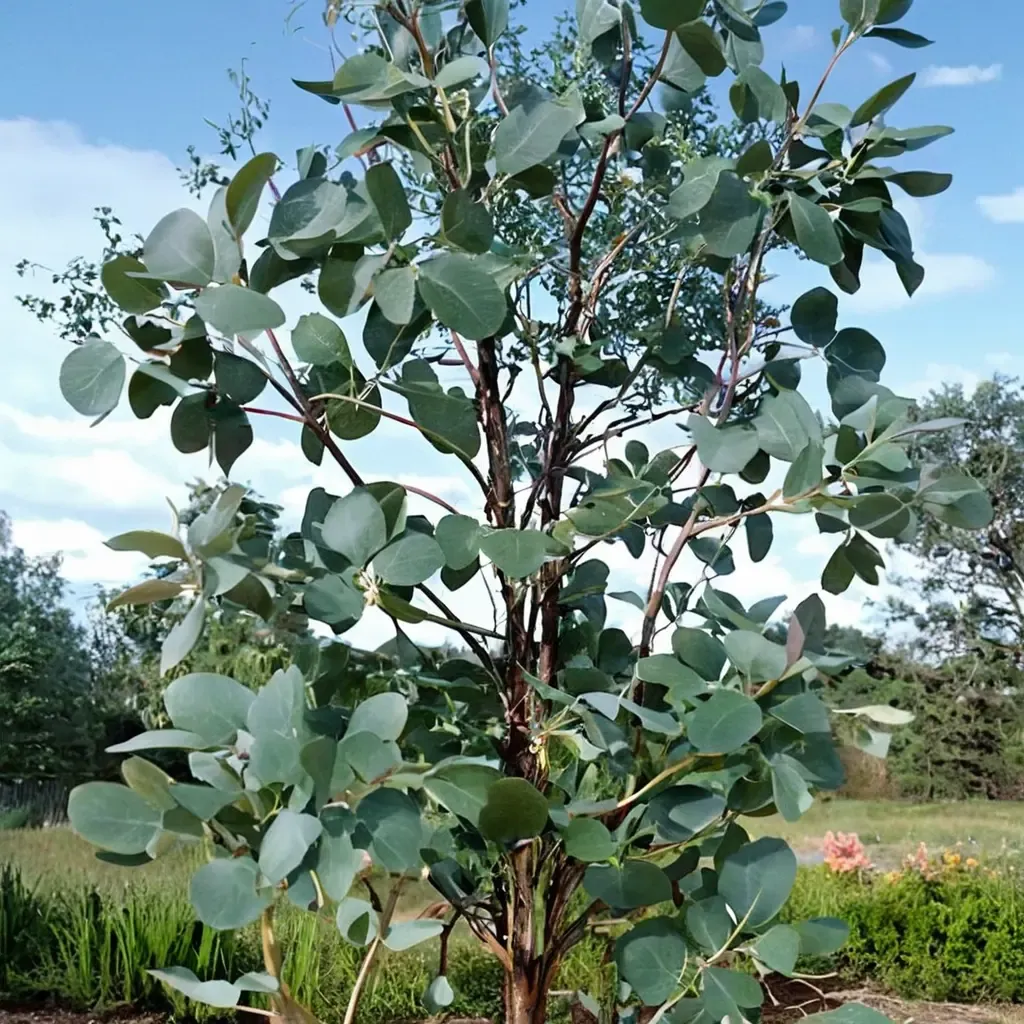
Omeo Gum
Eucalyptus neglecta
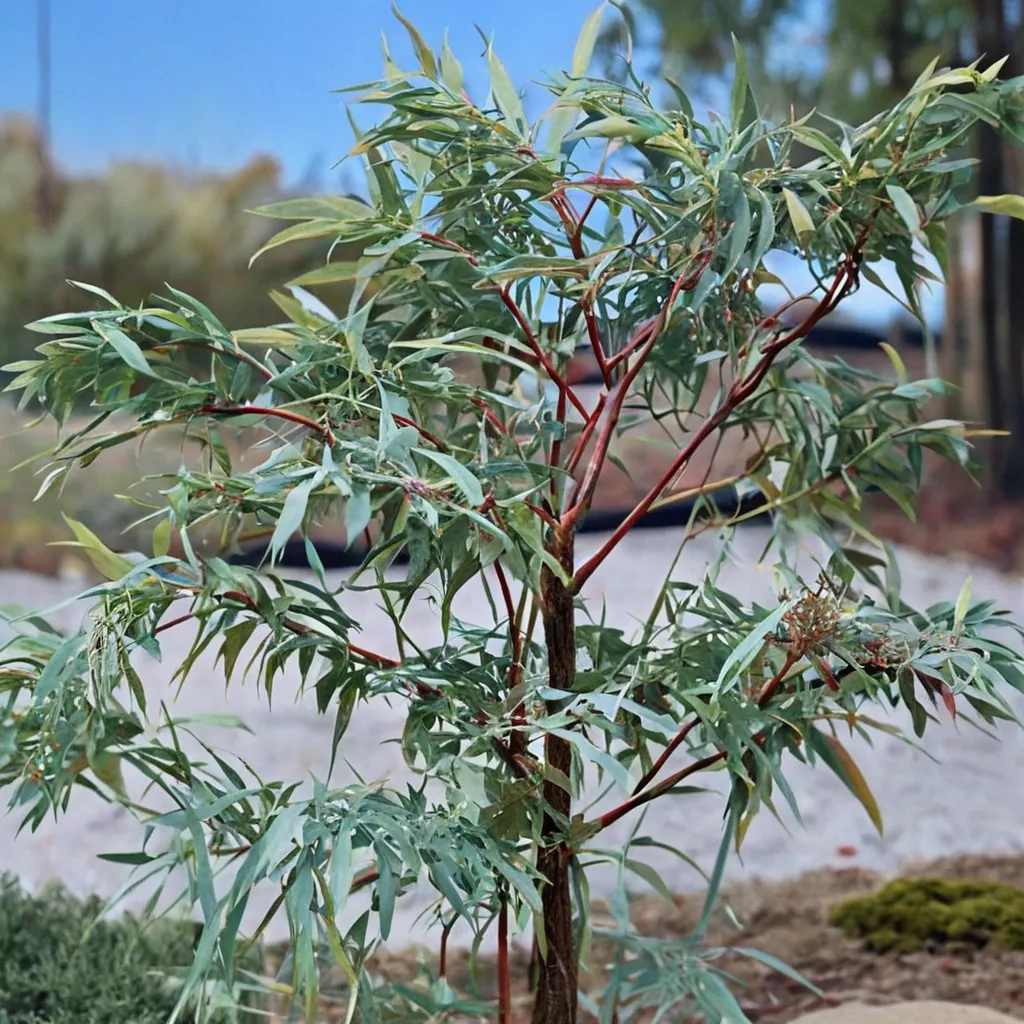
Narrow-leaved Peppermint Eucalyptus
Eucalyptus nicholii
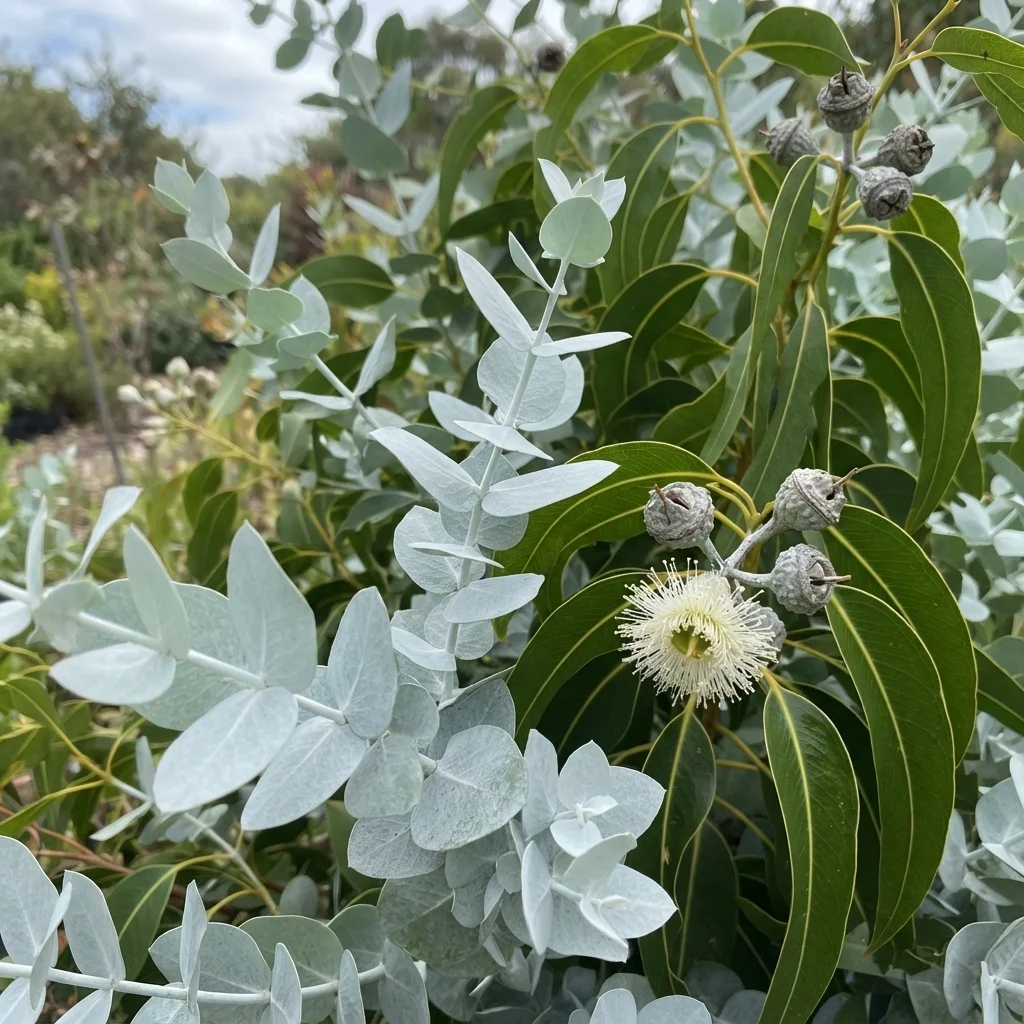
Tasmanian Blue Gum
Eucalyptus globulus
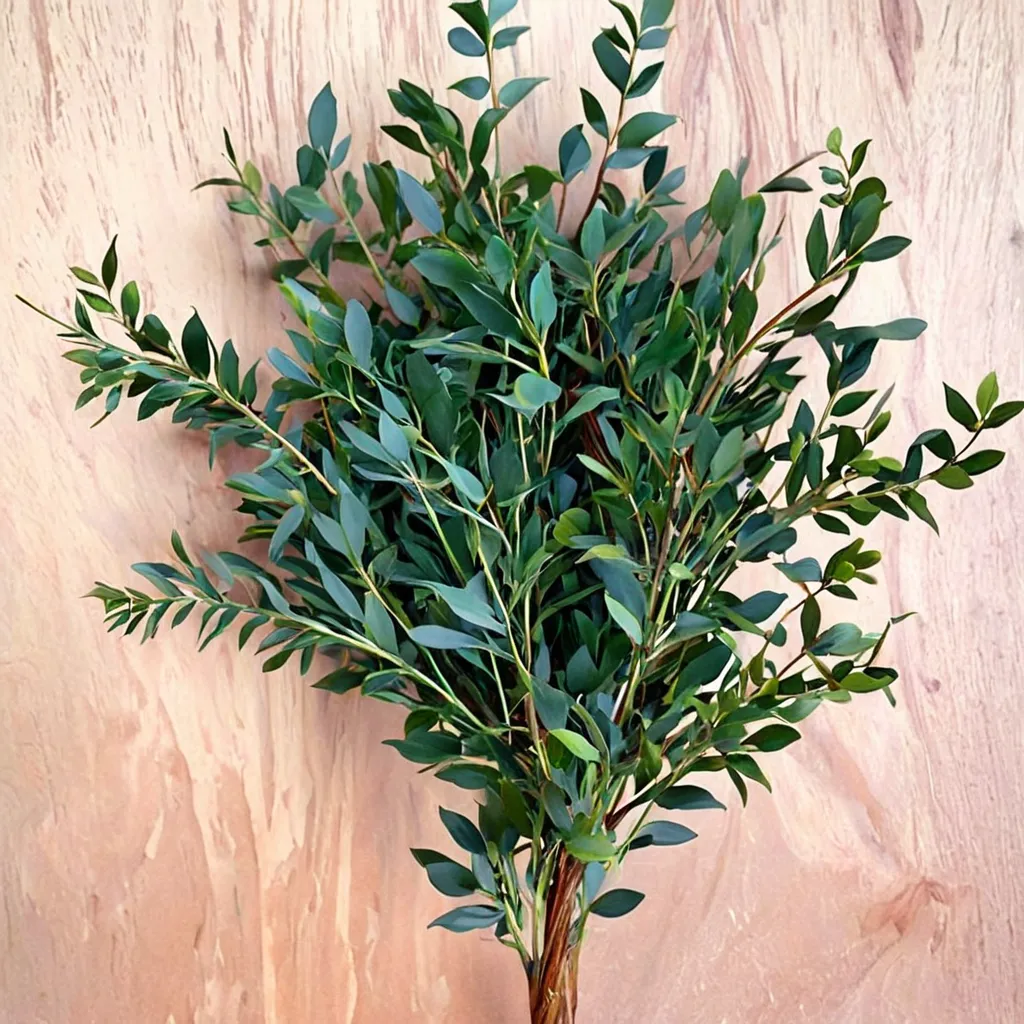
Small-leaved Gum
Eucalyptus parvula
Keep exploring
Explore the genus
Hardy in your zone?
Grow Queensland Western White Gum with confidence
See it in a design of your actual yard, get zone-matched care reminders, and track it season by season in your garden journal.