The Story
Plant Bio
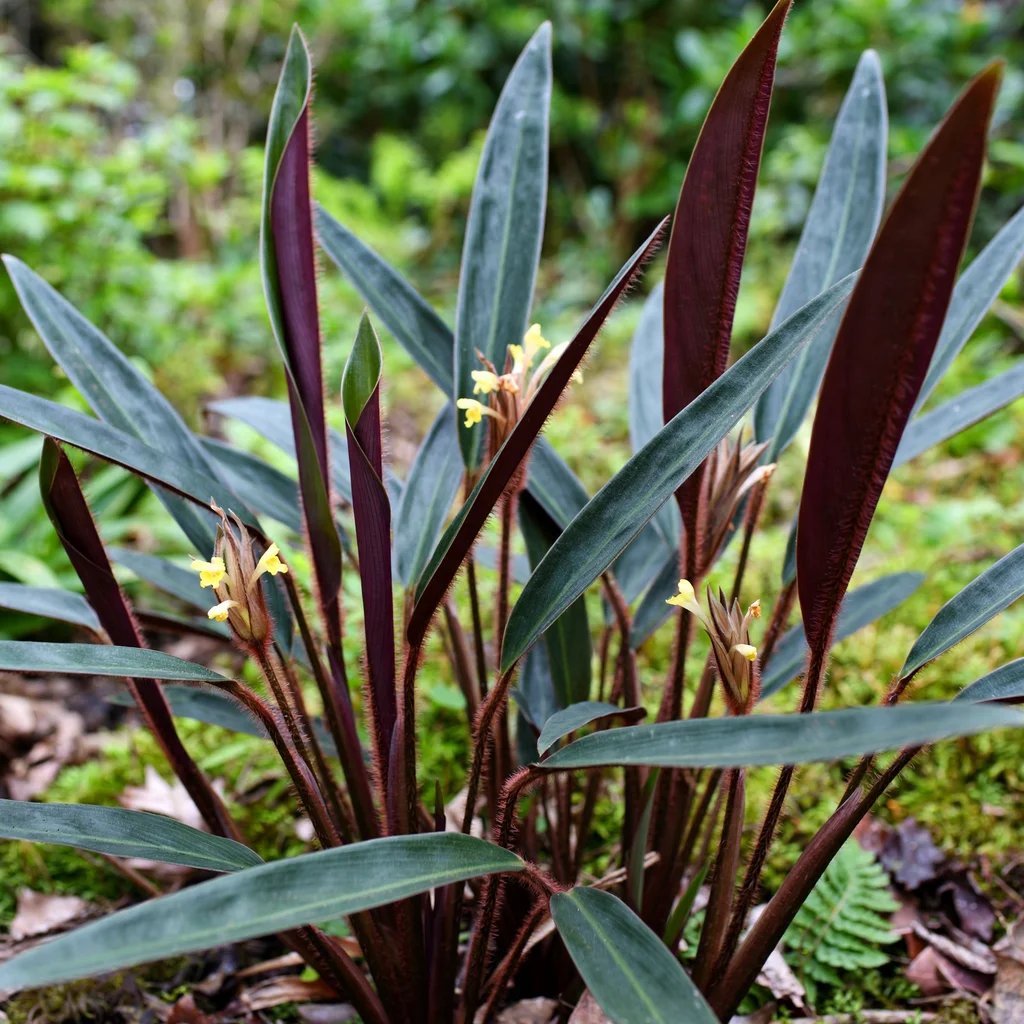
Goeppertia rufibarba is an evergreen clump-forming perennial from the rainforest understory of northeastern Brazil, reaching two to three feet tall and one to two feet wide indoors. Leaves rise in a tufted clump on hairy stems and lift and lower with day-night prayer-plant movement.
Its distinction is texture: long narrow leaves with rippled margins are velvety dark green above and deep purple-maroon beneath, with reddish hairs on the stems and leaf undersides that give the red-beard name. Plants rarely flower indoors and are grown for foliage, which folds upward at night — normal movement, not wilt.
Uses & Benefits:
Essentials
At a Glance
Plant Type
Tropical
Height
36"
Width
24"
Light
Partial Sun, Shade
Zones
10
Water
Evenly moist, well-drained
Humidity
High, above 60%
Lifespan
Perennial
Native To
Northeast Brazil
Toxicity
Non-toxic to cats, dogs and humans
Bloom period
Summer
In flower about 3 months of the year
Marketplace
Where to Buy
Shipping costs Year-round shipping Free shipping
Planting
How to Grow
- Place in bright indirect light with no direct sun; an east window or set back from south or west glass works.
- Pot in a loose, well-drained indoor mix and water to keep it evenly moist, emptying the saucer so it never stands in water.
- Hold temperatures between 65 and 90F, never below 60F, and keep humidity above 60% with a humidifier or pebble tray.
- Remove only brown or dead leaves at the base; do not shear or hard-prune the clump.
Pro Tip
Give bright indirect light, steady warmth above 60F and even moisture with humidity above 60%; brown edges mean dry air or underwatering, not a need to cut the plant back.
Keep It Thriving
Care Guide
Do
- Do keep soil evenly moist and humidity high.
- Do give bright indirect light and warmth above 60F.
- Do isolate new plants and check leaf undersides for mites and mealybugs.
Don't
- Don't place in direct sun or cold drafts.
- Don't let soil dry out fully or stay soggy.
- Don't hard-prune or cut back the clump annually.
Seasonal Care Calendar
| Task | Jan | Feb | Mar | Apr | May | Jun | Jul | Aug | Sep | Oct | Nov | Dec |
|---|---|---|---|---|---|---|---|---|---|---|---|---|
| Pest Check | ||||||||||||
| Propagate | ||||||||||||
| Prune | ||||||||||||
| Spring Cleanup | ||||||||||||
| Winter Prep |
Watch Out For
Pests & Diseases
Common Pests
Common Diseases
In the Garden
Landscape Uses & Companions
Landscape Uses
Multiply
Propagation Methods
Good to Know
Common Questions
Furry Feather questions
What zones can Furry Feather grow in?
Furry Feather is hardy in USDA Zone 10: in that range it survives winter in the ground. Colder than Zone 10, grow it in a container you can move to shelter for the winter, or as an annual.
When does Furry Feather bloom?
Furry Feather typically blooms in summer. Exact timing shifts a week or two with your zone — Sow's bloom calendar maps it to your garden.
Does Furry Feather need full sun?
Furry Feather does best in part shade.
More Calathea to compare
Keep exploring
Explore the genus
Hardy in your zone?
Grow Furry Feather with confidence
See it in a design of your actual yard, get zone-matched care reminders, and track it season by season in your garden journal.