The Story
Plant Bio
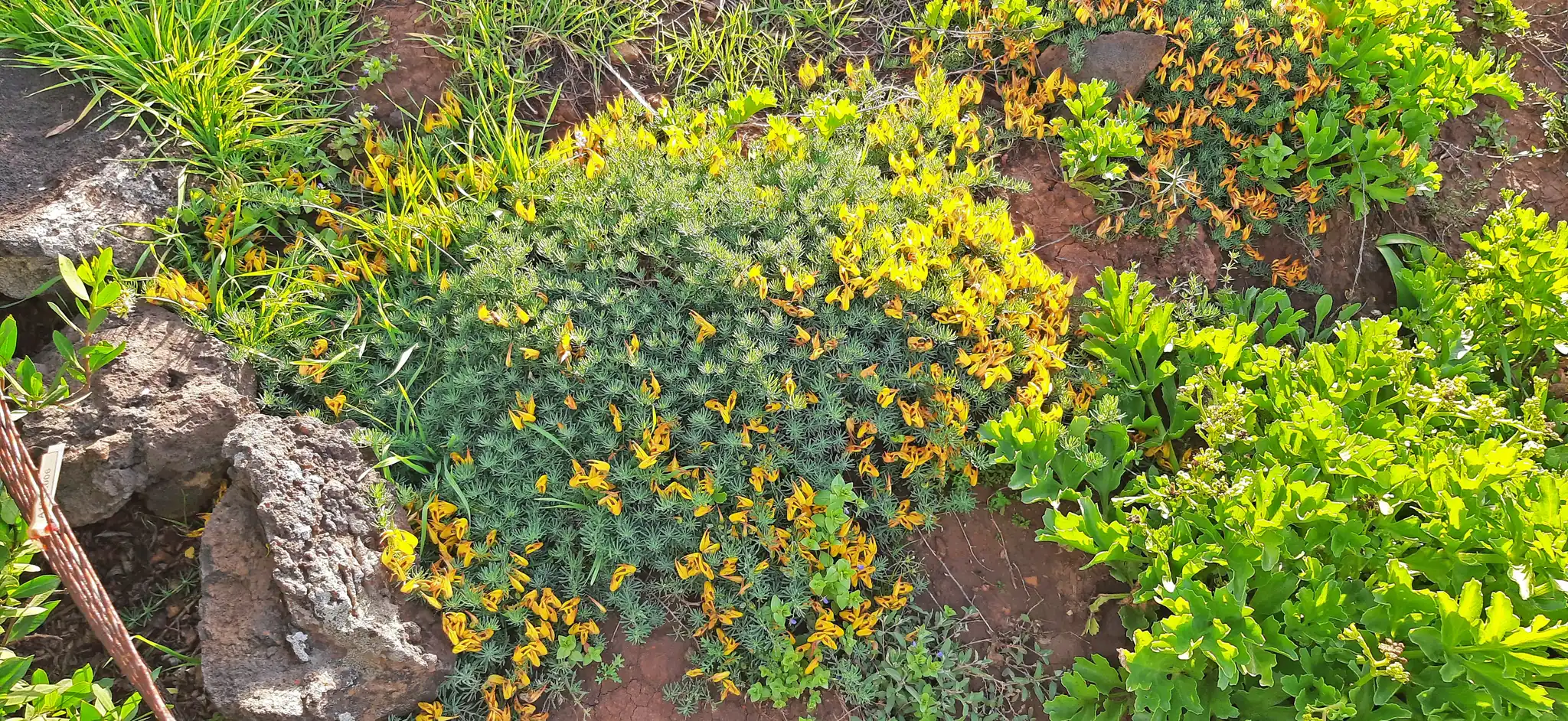
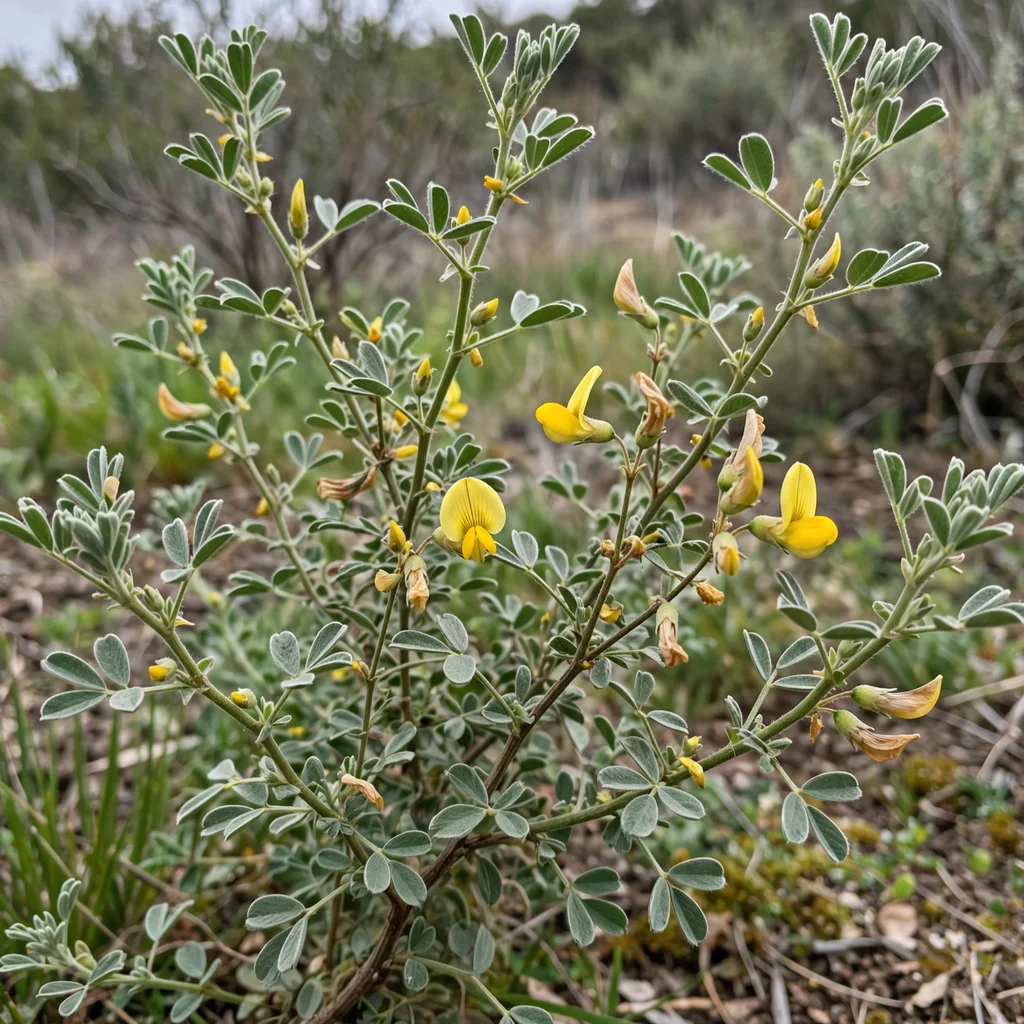
Lotus maculatus is a trailing evergreen perennial from the north side of Tenerife that grows 6 to 12 inches high and cascades 24 to 60 inches, rooting into a dense mat of slender stems clothed in soft grey-green needle-like leaflets. The pea flowers are borne singly or in small clusters through spring into early summer, each beak-shaped bloom bright yellow tipped with orange-red.
Its yellow ground flamed with orange-red at the tip separates it from solid red parrots beak types, and the smoky-silver needle foliage holds as a silver mat even when flowers pause in high summer heat. It demands sharp drainage and bright light, tolerates coastal spray and light drought, and dies from the crown in soggy soil or a hard freeze.
Uses & Benefits:
Essentials
At a Glance
Plant Type
Perennial
Height
12"
Width
60"
Light
Full Sun, Partial Sun
Zones
9, 10
Water
Low to moderate
Humidity
Moderate; dislikes hot humid air
Lifespan
Tender perennial; grown as annual in cold zones
Native To
Tenerife, Canary Islands
Toxicity
Non-toxic
Bloom period
Spring – Summer
In flower about 6 months of the year
Planting
How to Grow
- Plant after last frost in full sun in light sandy or loamy soil that drains fast; set the crown level and space 18 to 24 inches to allow trailing.
- Water in once, then water only when the top inch is dry; established plants take short dry spells but fail in soggy soil.
- Feed once at planting and once in early summer with a dilute balanced fertilizer; excess nitrogen gives soft growth that rots.
- Shear lightly after the spring flush to shorten trailers and keep the center full; never cut back into leafless woody stems.
- Grow in a hanging basket or pot you can move indoors where winter drops below 25F; it survives only briefly to about 20F.
Pro Tip
Plant high in sand-based mix, water only when the top inch is dry, and shear lightly after the spring flush without cutting into bare old wood.
Keep It Thriving
Care Guide
Do
- Give full sun and moving air for best flowering.
- Use a sandy, fast-draining mix and pots with drainage holes.
- Water at the base in the morning and let the surface dry.
Don't
- Do not plant in heavy clay or low spots that stay wet.
- Do not cut hard into old bare wood; it rarely reshoots.
- Do not overfertilize or keep constantly moist through summer heat.
Seasonal Care Calendar
| Task | Jan | Feb | Mar | Apr | May | Jun | Jul | Aug | Sep | Oct | Nov | Dec |
|---|---|---|---|---|---|---|---|---|---|---|---|---|
| Fertilize | ||||||||||||
| Lift Store | ||||||||||||
| Pest Check | ||||||||||||
| Plant | ||||||||||||
| Prune |
Watch Out For
Pests & Diseases
Common Pests
Common Diseases
In the Garden
Landscape Uses & Companions
Landscape Uses
Companion Plants
Multiply
Propagation Methods
Good to Know
Common Questions
Lotus Vine questions
What zones can Lotus Vine grow in?
Lotus Vine is hardy in USDA Zones 9–10: in that range it survives winter in the ground. Colder than Zone 9, grow it in a container you can move to shelter for the winter, or as an annual.
Is Lotus Vine deer resistant?
Not reliably. Deer may browse Lotus Vine, especially tender spring growth — plan on repellents or fencing where pressure is high.
When does Lotus Vine bloom?
Lotus Vine typically blooms from spring to summer. Exact timing shifts a week or two with your zone — Sow's bloom calendar maps it to your garden.
Does Lotus Vine need full sun?
Lotus Vine does best in full sun to part shade. In hot climates, afternoon shade keeps blooms fresher longer.
Is Lotus Vine drought tolerant?
Yes — once established (usually after the first full season), Lotus Vine handles dry spells with minimal watering. Water deeply its first year to build the root system that makes that possible.
More Lotus to compare
Keep exploring
Explore the genus
Hardy in your zone?
Grow Lotus Vine with confidence
See it in a design of your actual yard, get zone-matched care reminders, and track it season by season in your garden journal.