The Story
Plant Bio
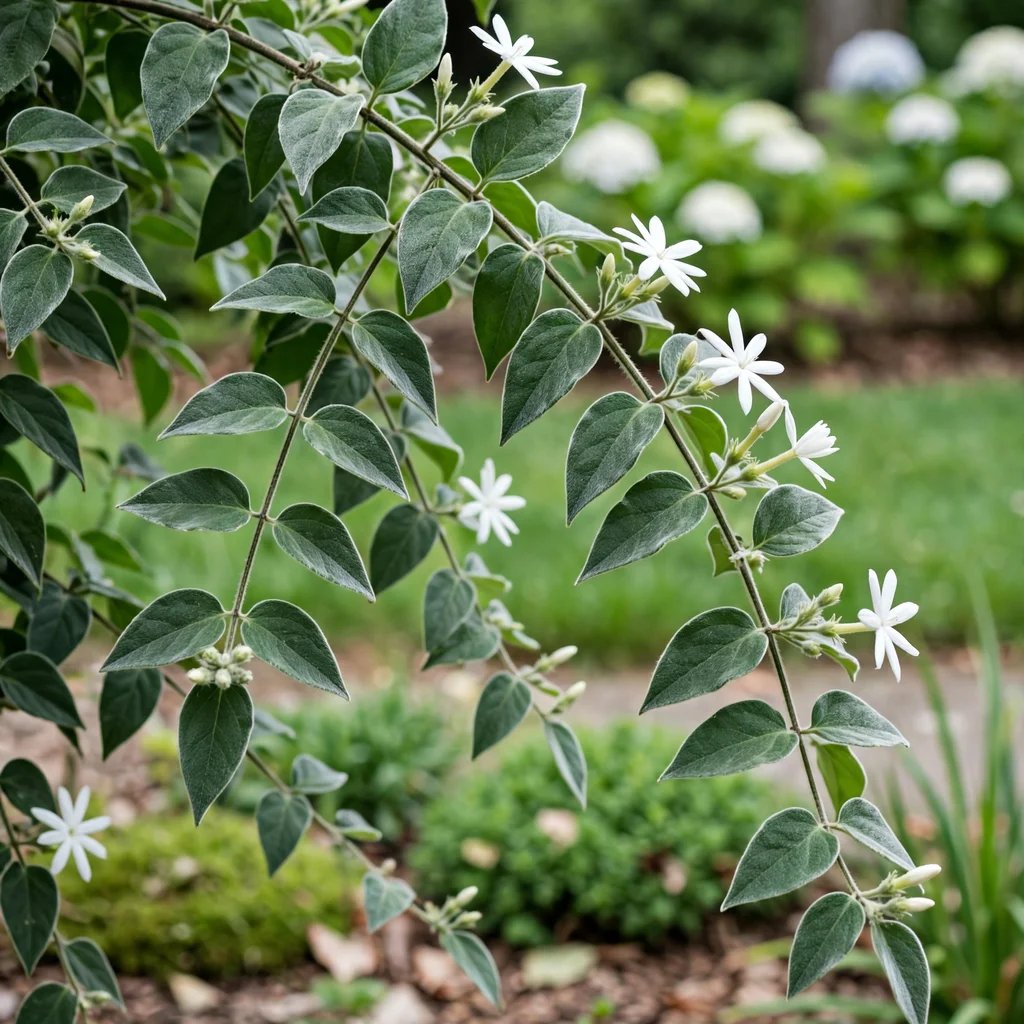
Jasminum multiflorum, sold as Jasminum pubescens, is an evergreen woody scrambler from tropical Asia reaching five to ten feet tall and wide, with opposite dark-green ovate leaves and young stems clothed in soft downy hairs. The display comes from dense clusters of one-inch white tubular stars with five to ten narrow lobes opening from dark-red buds, sweetly fragrant and produced from fall through spring.
The soft velvety pubescence on leaves and long arching branches separates it from smooth-leaved jasmines and gives the mound a gray-green cast. It flowers heaviest in winter to early spring when few other shrubs bloom, and the open spreading shoots can be left to scramble, tied to a support as a vine, or clipped after flowering into a dense hedge.
Uses & Benefits:
Essentials
At a Glance
Plant Type
Shrub
Height
118"
Width
118"
Light
Full Sun, Partial Sun
Zones
9, 10
Water
Moderate
Humidity
Average
Lifespan
Woody evergreen perennial
Native To
India to Indo-China
Toxicity
Unknown
Bloom period
Fall – Spring
In flower about 9 months of the year
Marketplace
Where to Buy
Shipping costs Year-round shipping Free shipping
Planting
How to Grow
- Plant in full sun to part shade after last frost in well-drained soil, spacing to allow a 5- to 10-foot mound or training on a trellis.
- Water regularly to establish, then keep soil moderately moist and mulch to hold even moisture.
- Feed lightly with balanced fertilizer during active growth in spring and summer.
- Prune after each flush to keep dense; cut long scrambling shoots back to shape a shrub or hedge.
- Move containers indoors before frost to a bright cool spot; outdoor plants die back in a freeze and resprout from the base.
Pro Tip
Prune right after the main flush finishes; buds form on new growth and cutting before bloom removes the winter display.
Keep It Thriving
Care Guide
Do
- Do plant in well-drained soil in full sun with midday protection in hot areas.
- Do prune after bloom to maintain a dense mound or hedge.
- Do bring potted plants indoors where winters drop below Zone 9.
Don't
- Do not prune in fall before bloom; you will remove the winter flower buds.
- Do not plant outdoors year-round below Zone 9; it is frost-tender and dies back in a freeze.
- Do not keep roots waterlogged; provide drainage and regular water while establishing.
Seasonal Care Calendar
| Task | Jan | Feb | Mar | Apr | May | Jun | Jul | Aug | Sep | Oct | Nov | Dec |
|---|---|---|---|---|---|---|---|---|---|---|---|---|
| Fertilize | ||||||||||||
| Pest Check | ||||||||||||
| Plant | ||||||||||||
| Prune | ||||||||||||
| Winter Prep |
Watch Out For
Pests & Diseases
Common Pests
Common Diseases
In the Garden
Landscape Uses & Companions
Landscape Uses
Multiply
Propagation Methods
Good to Know
Common Questions
Downy Jasmine questions
What zones can Downy Jasmine grow in?
Downy Jasmine is hardy in USDA Zones 9–10: in that range it survives winter in the ground. Colder than Zone 9, grow it in a container you can move to shelter for the winter.
When does Downy Jasmine bloom?
Downy Jasmine typically blooms from fall to spring. Exact timing shifts a week or two with your zone — Sow's bloom calendar maps it to your garden.
Does Downy Jasmine need full sun?
Downy Jasmine does best in full sun to part shade. In hot climates, afternoon shade keeps blooms fresher longer.
More Jasminum to compare
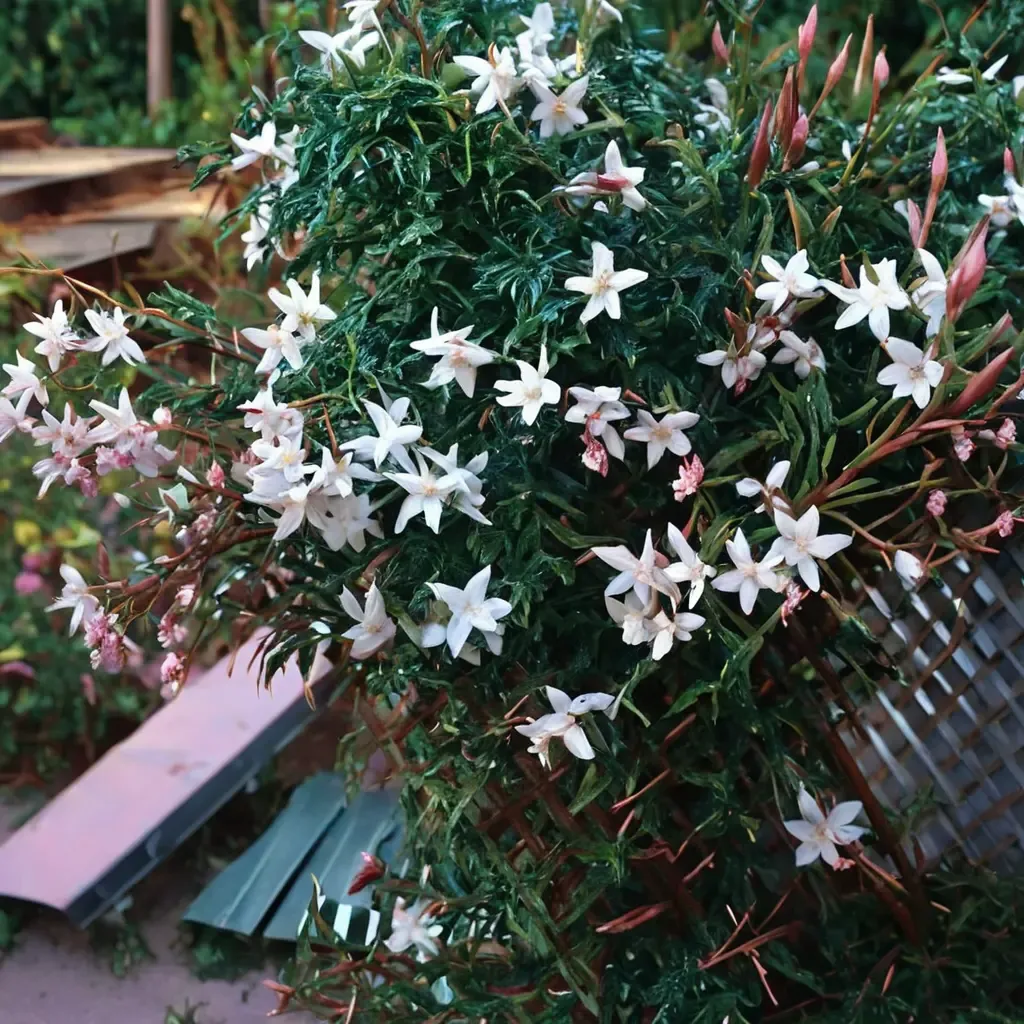
Pink Jasmine
Jasminum polyanthum
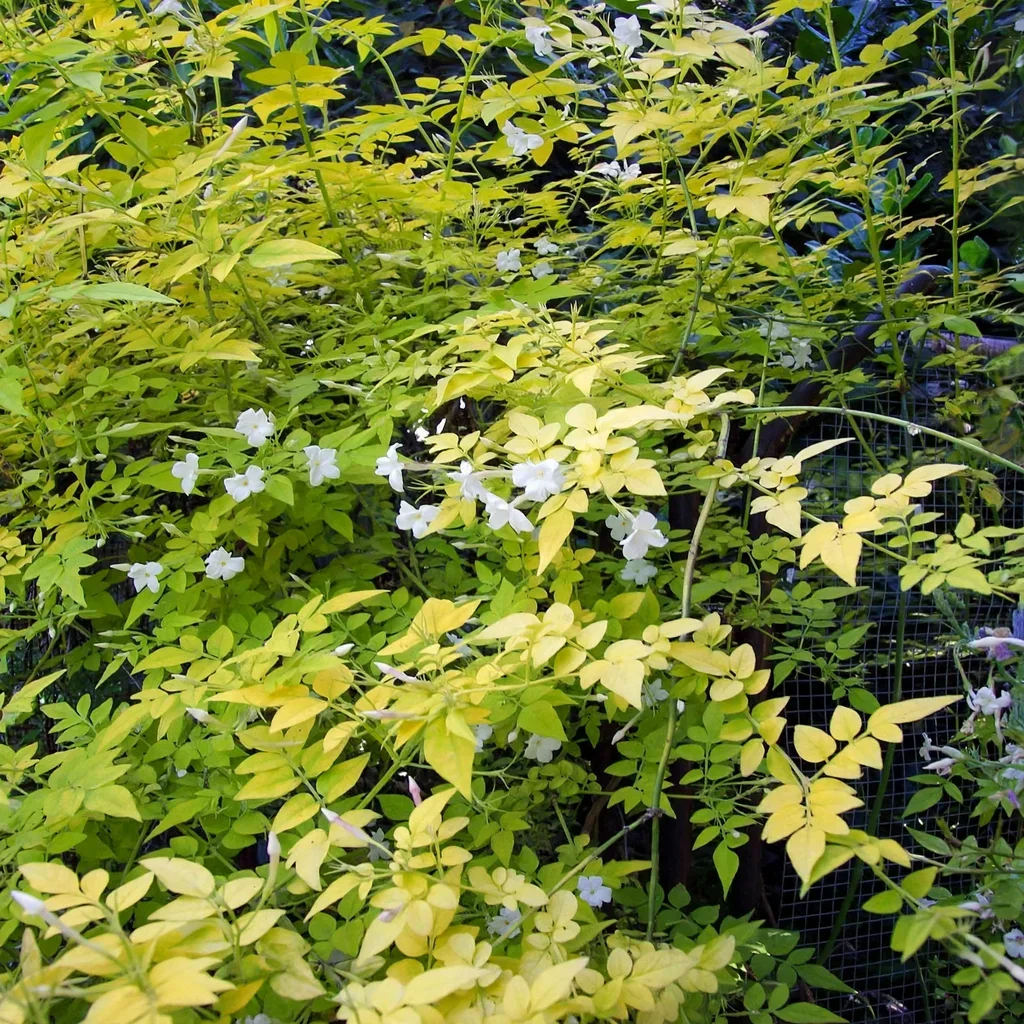
Fiona Sunrise Common Jasmine
Jasminum officinale 'Frojas'
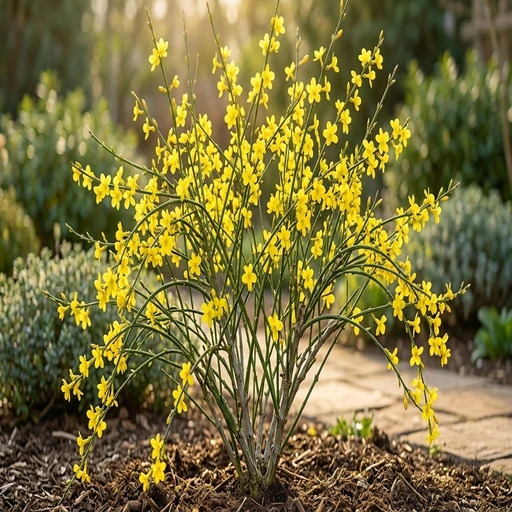
Winter Jasmine
Jasminum nudiflorum
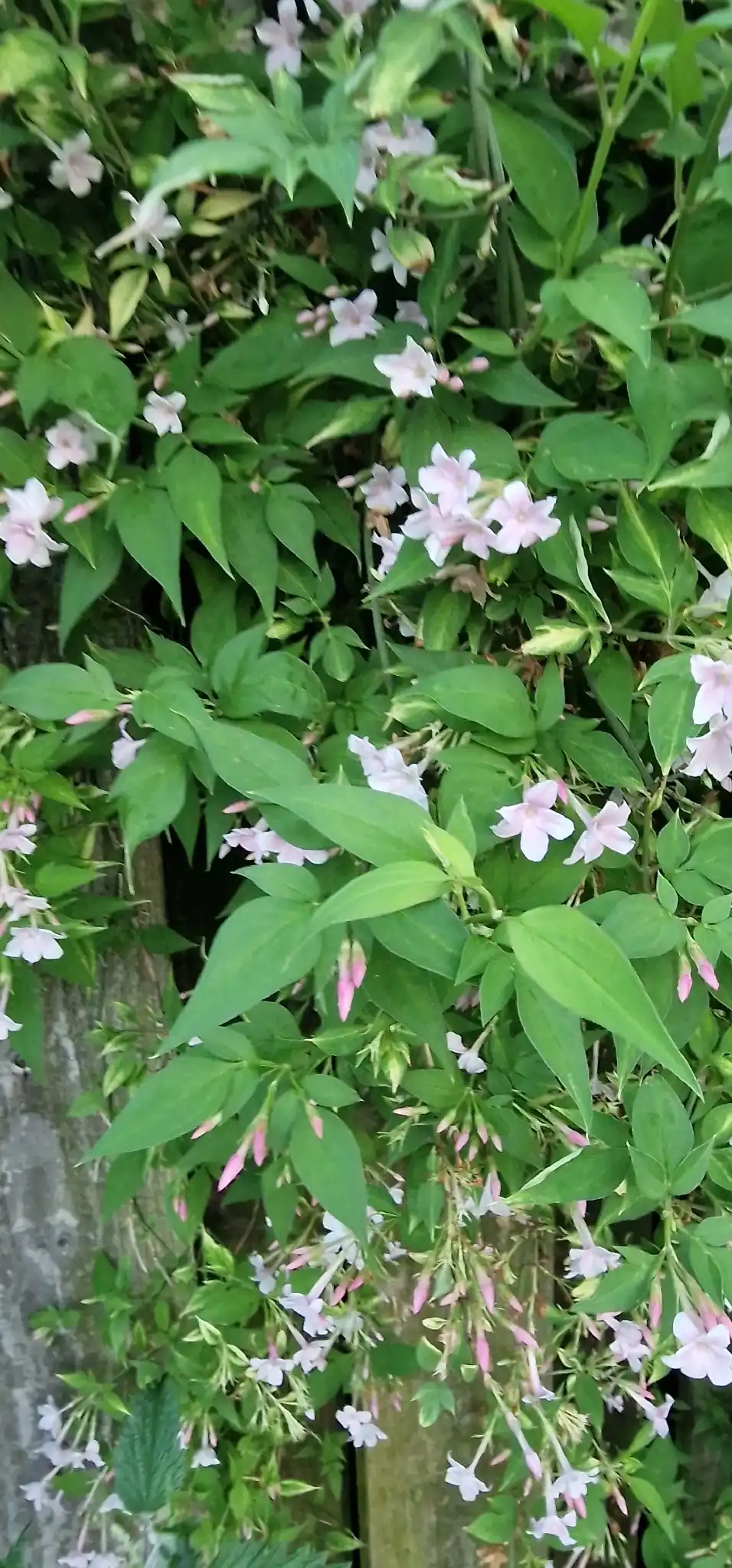
Common Jasmine
Jasminum officinale
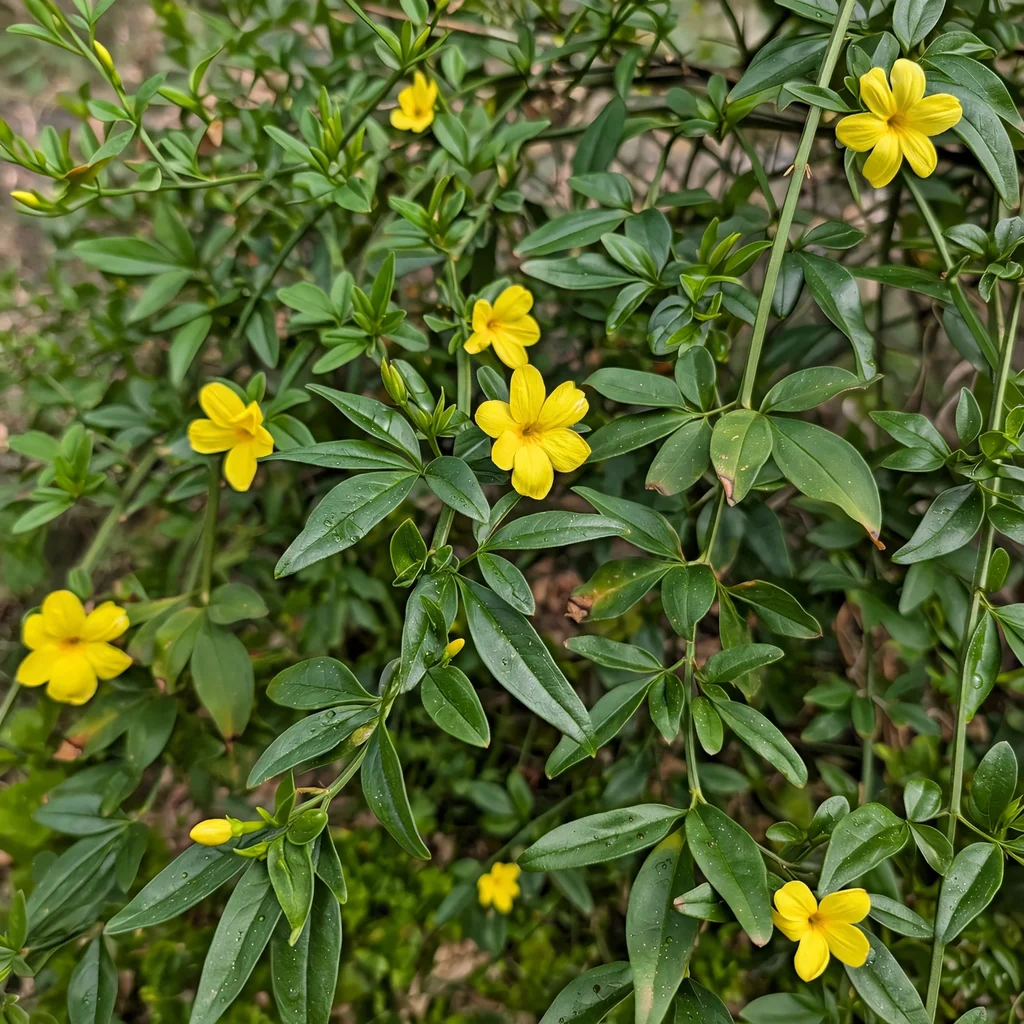
Primrose Jasmine
Jasminum mesnyi
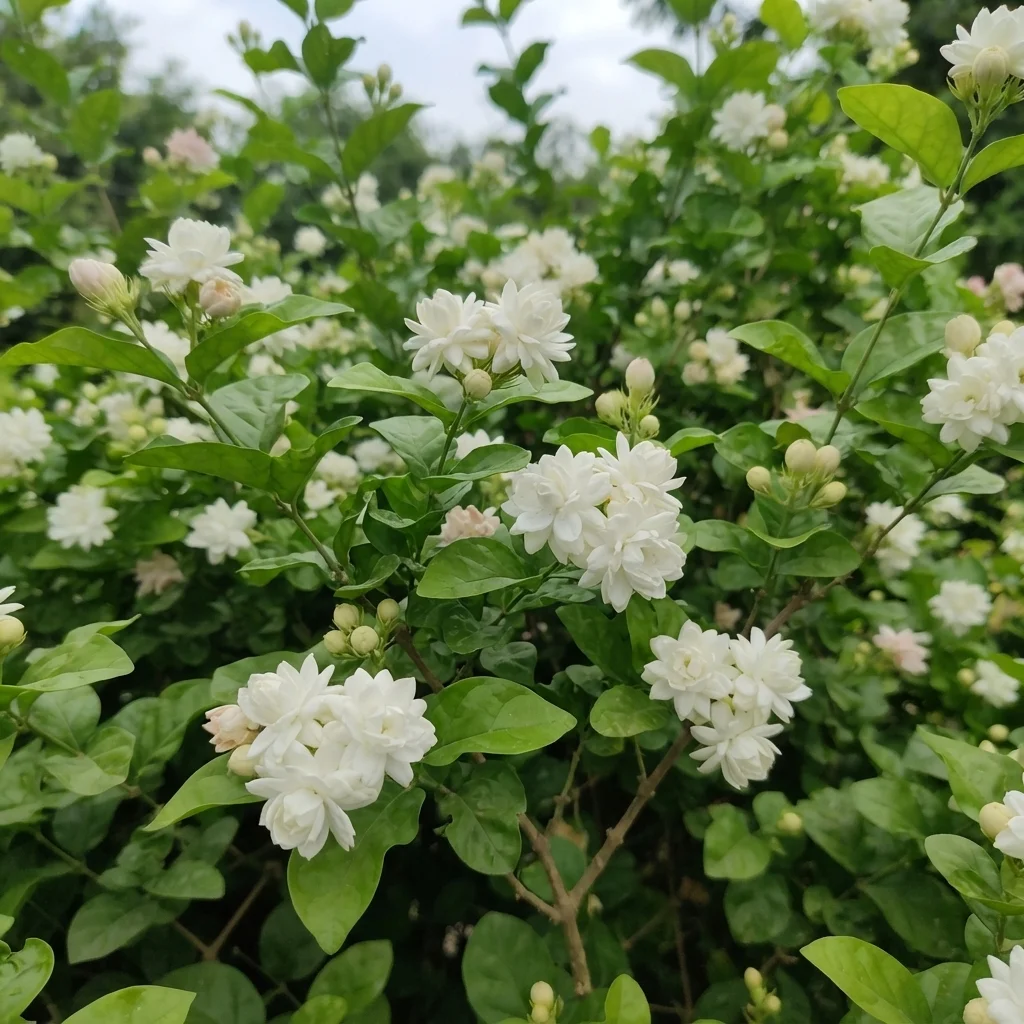
Arabian Jasmine
Jasminum sambac
Keep exploring
Explore the genus
Hardy in your zone?
Grow Downy Jasmine with confidence
See it in a design of your actual yard, get zone-matched care reminders, and track it season by season in your garden journal.