The Story
Plant Bio
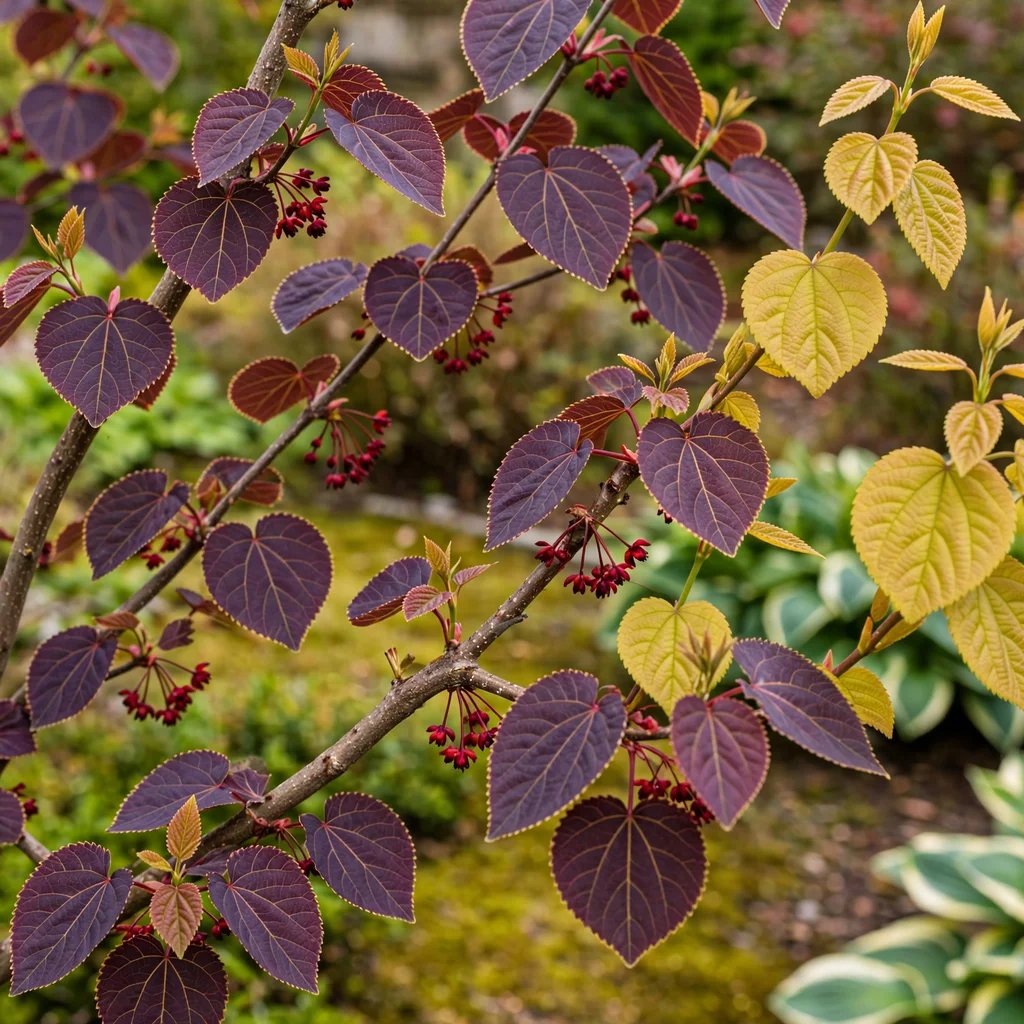
Cercidiphyllum japonicum, the katsura tree, is a deciduous single or multi-stemmed tree from Japan and China that reaches 40 to 60 feet in cultivation with a dense rounded to pyramidal crown. The opposite heart-shaped leaves to 4 inches emerge reddish-purple, mature to medium green with a bluish cast, then turn gold to orange-red in fall.
Male and female flowers grow on separate trees in early spring before the leaves, with red males and green females followed by clustered green pods to almost an inch on females only. Fallen leaves release a cinnamon to burnt-sugar scent as they lie on the ground, which is the trait most gardeners plant it for.
Uses & Benefits:
Essentials
At a Glance
Plant Type
Tree
Height
600"
Width
480"
Light
Full Sun, Partial Sun
Zones
4, 5, 6, 7, 8
Water
Medium
Humidity
Moderate
Lifespan
Long-lived tree
Native To
Japan and China
Toxicity
Non-toxic
Bloom period
Early spring – Spring
In flower about 3 months of the year
Marketplace
Where to Buy
Shipping costs Year-round shipping Free shipping
Planting
How to Grow
- Plant in full sun to part shade in rich, moist, slightly acid to neutral soil that stays cool in summer.
- Dig the hole twice as wide as the root ball, set the crown level, backfill, water deeply and mulch 2 to 3 inches keeping mulch off the trunk.
- Water regularly the first two seasons; established trees still need supplemental water in dry or windy heat to prevent scorch.
- Prune only in dormancy to shape or remove crossing limbs.
Pro Tip
Plant a male and a female together if you want pods, and site both in cool moist sheltered soil out of hot afternoon sun and wind or the foliage will scorch.
Keep It Thriving
Care Guide
Do
- Keep soil consistently moist with deep mulch
- Shelter from strong wind and hot afternoon sun
- Plant male and female together if pods are wanted
Don't
- Do not let young trees dry out in heat or wind
- Do not cut needlessly into old leafless wood
- Do not plant in hot dry exposed sites
Seasonal Care Calendar
| Task | Jan | Feb | Mar | Apr | May | Jun | Jul | Aug | Sep | Oct | Nov | Dec |
|---|---|---|---|---|---|---|---|---|---|---|---|---|
| Mulch | ||||||||||||
| Pest Check | ||||||||||||
| Plant | ||||||||||||
| Prune |
Watch Out For
Pests & Diseases
Common Pests
Common Diseases
In the Garden
Landscape Uses & Companions
Landscape Uses
Companion Plants
Multiply
Propagation Methods
Good to Know
Common Questions
Katsura Tree questions
What zones can Katsura Tree grow in?
Katsura Tree is hardy in USDA Zones 4–8: in that range it survives winter in the ground. Warmer than Zone 8, winter isn't the problem: it prefers colder winters, and summer heat can shorten its life.
When does Katsura Tree bloom?
Katsura Tree typically blooms in spring. Exact timing shifts a week or two with your zone — Sow's bloom calendar maps it to your garden.
Does Katsura Tree need full sun?
Katsura Tree does best in full sun to part shade. In hot climates, afternoon shade keeps blooms fresher longer.
Keep exploring
Explore the genus
Hardy in your zone?
Grow Katsura Tree with confidence
See it in a design of your actual yard, get zone-matched care reminders, and track it season by season in your garden journal.