The Story
Plant Bio
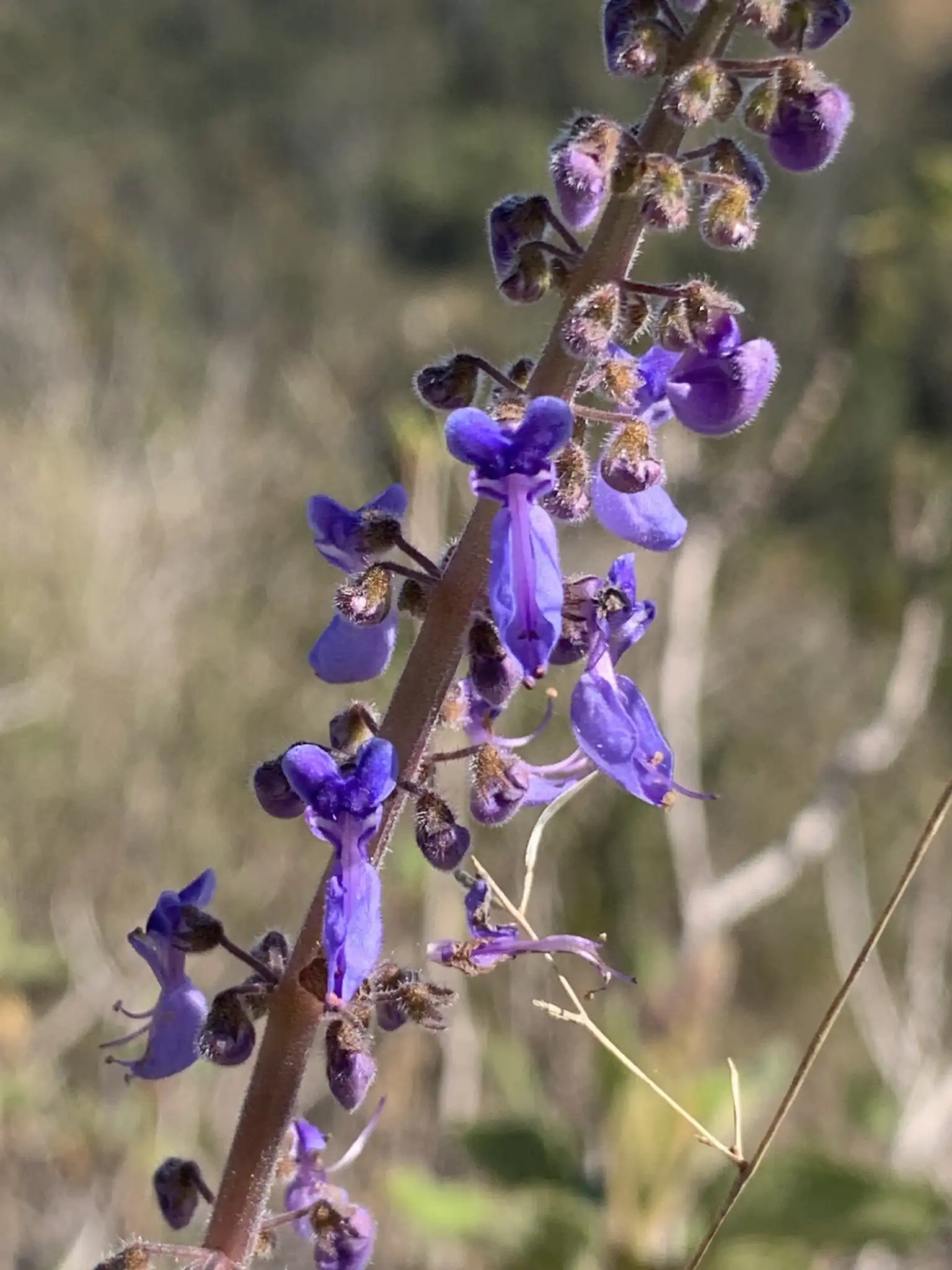
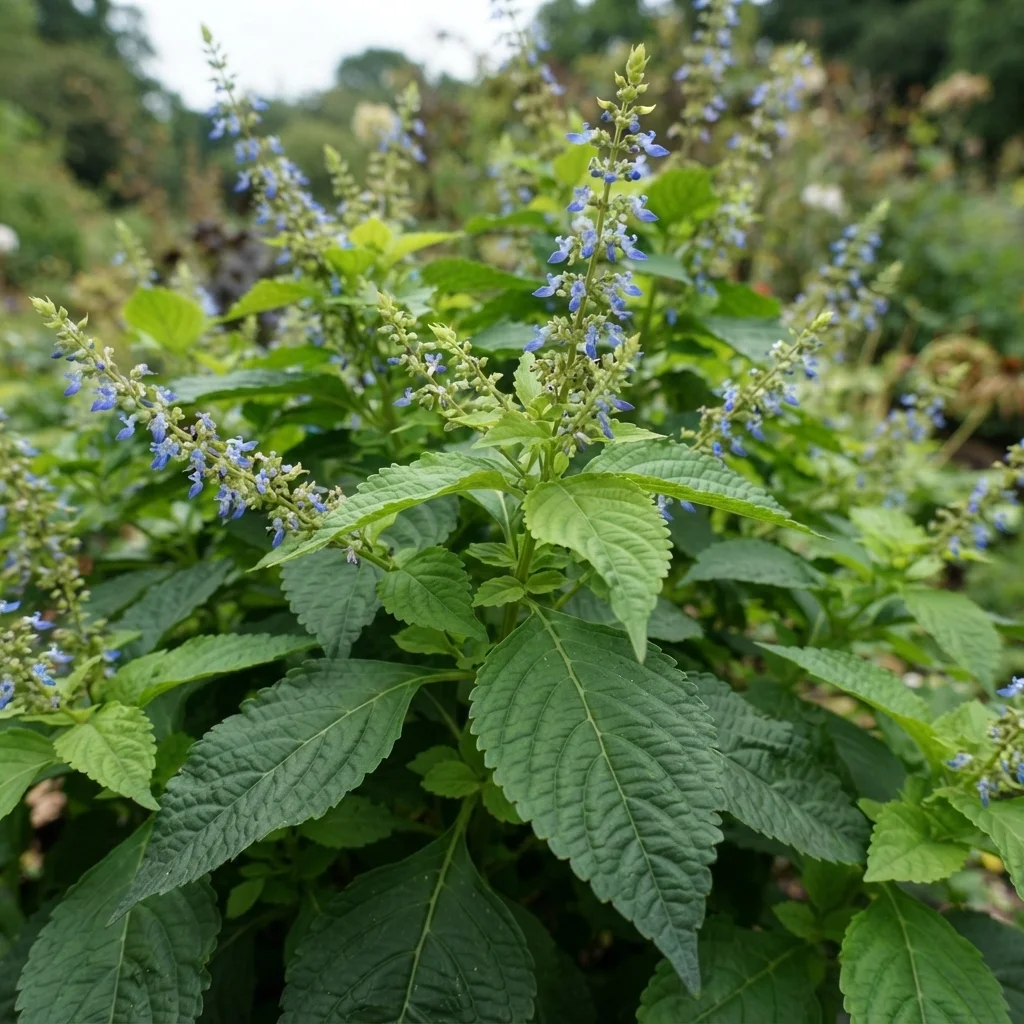
Coleus graveolens is an evergreen, soft-wooded subshrub native to rocky coastal areas and rainforest edges in eastern Australia. It forms a dense, spreading mound up to four feet tall with sticky, heart-shaped leaves that release a strong aroma of basil, mint, and sage when crushed.
Unlike traditional shade coleus grown strictly for foliage, this species produces long terminal spikes of blue to purple-blue flowers from spring through fall. Its leaves are covered in fine glandular hairs that produce aromatic essential oils used as a culinary herb.
Uses & Benefits:
Essentials
At a Glance
Plant Type
Shrub
Height
48"
Width
60"
Light
Full Sun, Partial Sun
Zones
10
Water
Moderate
Humidity
High
Lifespan
Perennial
Native To
Eastern Australia, Lord Howe Island, Marshall Islands
Toxicity
Non-toxic
Bloom period
Spring – Fall
In flower about 9 months of the year
Planting
How to Grow
- Select a planting location in full sun to partial shade with sharply draining soil.
- Amend heavy ground soils with organic compost and coarse sand to prevent water stagnation.
- Plant container stock at the same depth as the nursery pot and water thoroughly to settle.
- Water regularly during initial establishment, allowing the top inch of soil to dry out between applications.
- Trim shoot tips periodically during spring and summer to encourage dense branching.
Pro Tip
Shear back the stem tips after each flowering flush to maintain a compact habit, but never cut into old leafless wood where latent buds fail to break.
Keep It Thriving
Care Guide
Do
- Provide loose, organic-rich soil with high drainage capacity.
- Prune lightly after main flowering flushes to preserve form.
- Move potted plants indoors before autumn temperatures drop near freezing.
Don't
- Do not allow roots to sit in stagnant water or heavy clay.
- Do not prune deep into old woody stems devoid of foliage.
- Do not over-fertilize with heavy nitrogen formulations.
Seasonal Care Calendar
| Task | Jan | Feb | Mar | Apr | May | Jun | Jul | Aug | Sep | Oct | Nov | Dec |
|---|---|---|---|---|---|---|---|---|---|---|---|---|
| Fertilize | ||||||||||||
| Pest Check | ||||||||||||
| Propagate | ||||||||||||
| Prune | ||||||||||||
| Winter Prep |
Watch Out For
Pests & Diseases
Common Pests
Common Diseases
In the Garden
Landscape Uses & Companions
Landscape Uses
Multiply
Propagation Methods
Good to Know
Common Questions
Bush Basil questions
What zones can Bush Basil grow in?
Bush Basil is hardy in USDA Zone 10: in that range it survives winter in the ground. Colder than Zone 10, grow it in a container you can move to shelter for the winter.
Is Bush Basil deer resistant?
Not reliably. Deer may browse Bush Basil, especially tender spring growth — plan on repellents or fencing where pressure is high.
When does Bush Basil bloom?
Bush Basil typically blooms from spring to fall. Exact timing shifts a week or two with your zone — Sow's bloom calendar maps it to your garden.
Does Bush Basil need full sun?
Bush Basil does best in full sun to part shade. In hot climates, afternoon shade keeps blooms fresher longer.
Is Bush Basil drought tolerant?
Yes — once established (usually after the first full season), Bush Basil handles dry spells with minimal watering. Water deeply its first year to build the root system that makes that possible.
More Coleus to compare
Keep exploring
Explore the genus
Hardy in your zone?
Grow Bush Basil with confidence
See it in a design of your actual yard, get zone-matched care reminders, and track it season by season in your garden journal.