The Story
Plant Bio
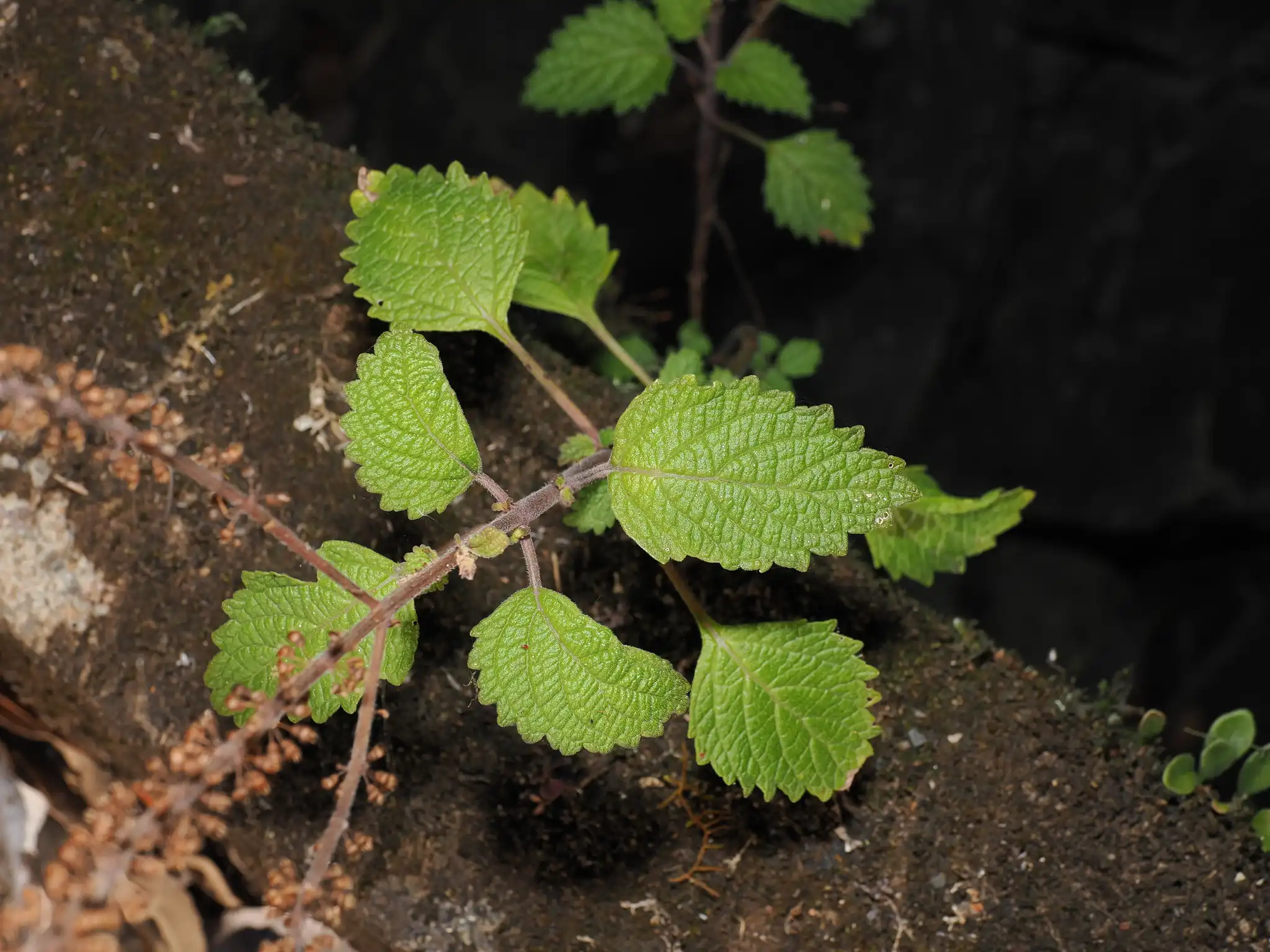
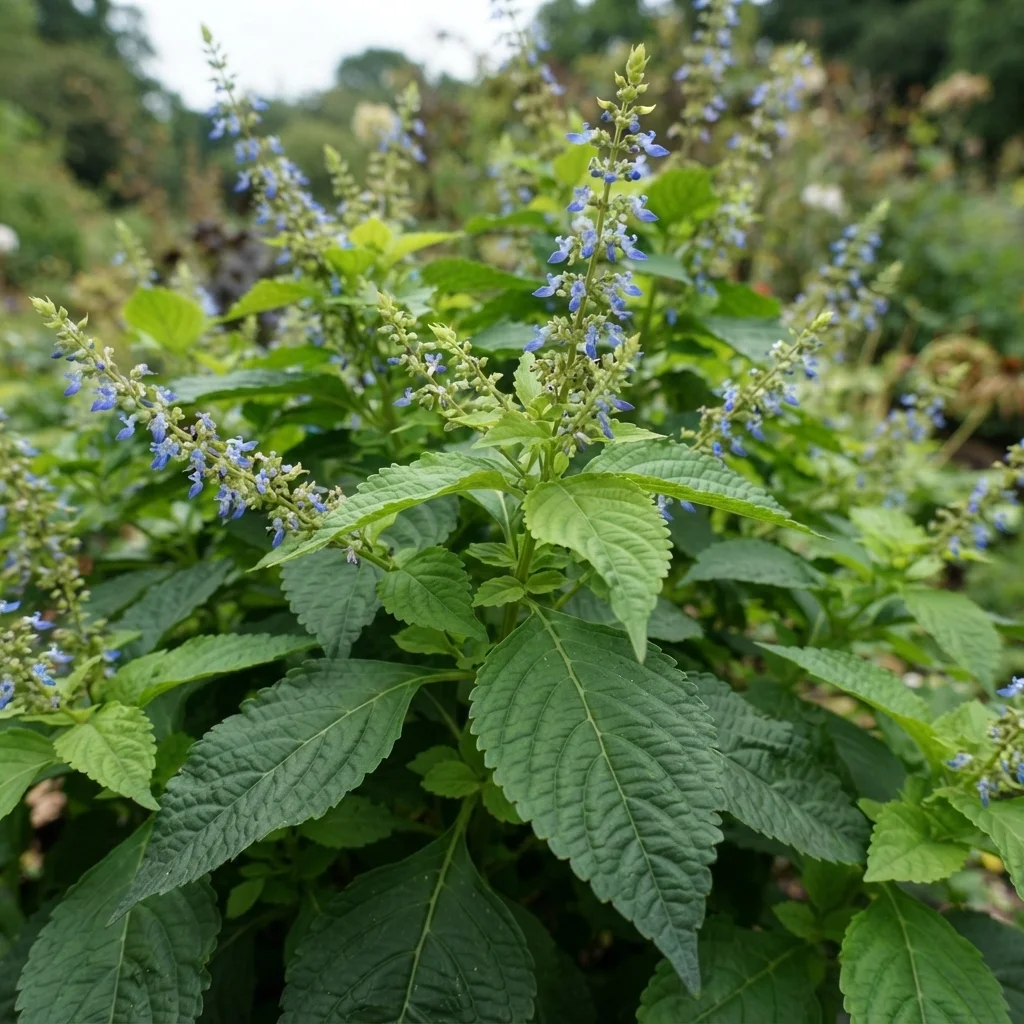
Coleus australis is a prostrate to semi-erect, semi-succulent perennial native to Pacific islands and Australasia. The crushed foliage releases a pungent citrus or minty scent, while the lower leaf surfaces carry distinct orange glandular dots.
Foliage coloration adjusts dynamically with sunlight, shifting from dull green in shaded positions to glossy, reddish, or yellowish-green when fully exposed. Terminal flowering spikes bear whorls of pale mauve to light blue flowers marked with deeper blue-violet spots.
Uses & Benefits:
Essentials
At a Glance
Plant Type
Perennial
Height
28"
Width
39"
Light
Full Sun, Partial Sun, Shade
Zones
10
Water
Low to Moderate
Humidity
Moderate
Lifespan
Perennial
Native To
Australasia, Pacific Islands, Hawaii
Toxicity
Non-toxic
Bloom period
Spring – Fall
In flower about 9 months of the year
Planting
How to Grow
- Select a planting site or container with excellent drainage, using a grit-rich or sandy potting mix.
- Place the plant where it receives bright, indirect light or partial sunlight to maintain vibrant foliage color without scorching.
- Water thoroughly when the top inch of soil feels dry, allowing excess moisture to drain completely away.
- Apply a balanced liquid fertilizer diluted to quarter-strength monthly during spring and summer.
- Overwinter containers indoors before the first frost in colder regions, placing them near a bright window.
Pro Tip
Pinch back stem tips regularly during active growth to maintain a dense, compact habit; never prune hard into old leafless stems, as they lack dormant buds to regenerate.
Keep It Thriving
Care Guide
Do
- Provide loose, sharply draining soil to protect the fleshy tuberous base from moisture buildup.
- Pinch growing tips throughout the warm months to build a bushier canopy.
- Expose to filtered sunlight for the richest foliage tones.
Don't
- Do not allow soil to remain waterlogged or sit in water-filled saucers.
- Do not cut back into bare, woody stem bases when shaping.
- Do not leave outdoors once night temperatures drop near freezing.
Seasonal Care Calendar
| Task | Jan | Feb | Mar | Apr | May | Jun | Jul | Aug | Sep | Oct | Nov | Dec |
|---|---|---|---|---|---|---|---|---|---|---|---|---|
| Fertilize | ||||||||||||
| Pest Check | ||||||||||||
| Pinch | ||||||||||||
| Winter Prep |
Watch Out For
Pests & Diseases
Common Pests
Common Diseases
In the Garden
Landscape Uses & Companions
Landscape Uses
Multiply
Propagation Methods
Good to Know
Common Questions
Cockspur Flower questions
What zones can Cockspur Flower grow in?
Cockspur Flower is hardy in USDA Zone 10: in that range it survives winter in the ground. Colder than Zone 10, grow it in a container you can move to shelter for the winter, or as an annual.
Is Cockspur Flower deer resistant?
Not reliably. Deer may browse Cockspur Flower, especially tender spring growth — plan on repellents or fencing where pressure is high.
When does Cockspur Flower bloom?
Cockspur Flower typically blooms from spring to fall. Exact timing shifts a week or two with your zone — Sow's bloom calendar maps it to your garden.
Does Cockspur Flower need full sun?
Cockspur Flower does best in full sun to part shade. In hot climates, afternoon shade keeps blooms fresher longer.
Is Cockspur Flower drought tolerant?
Yes — once established (usually after the first full season), Cockspur Flower handles dry spells with minimal watering. Water deeply its first year to build the root system that makes that possible.
More Coleus to compare
Keep exploring
Explore the genus
Hardy in your zone?
Grow Cockspur Flower with confidence
See it in a design of your actual yard, get zone-matched care reminders, and track it season by season in your garden journal.