The Story
Plant Bio
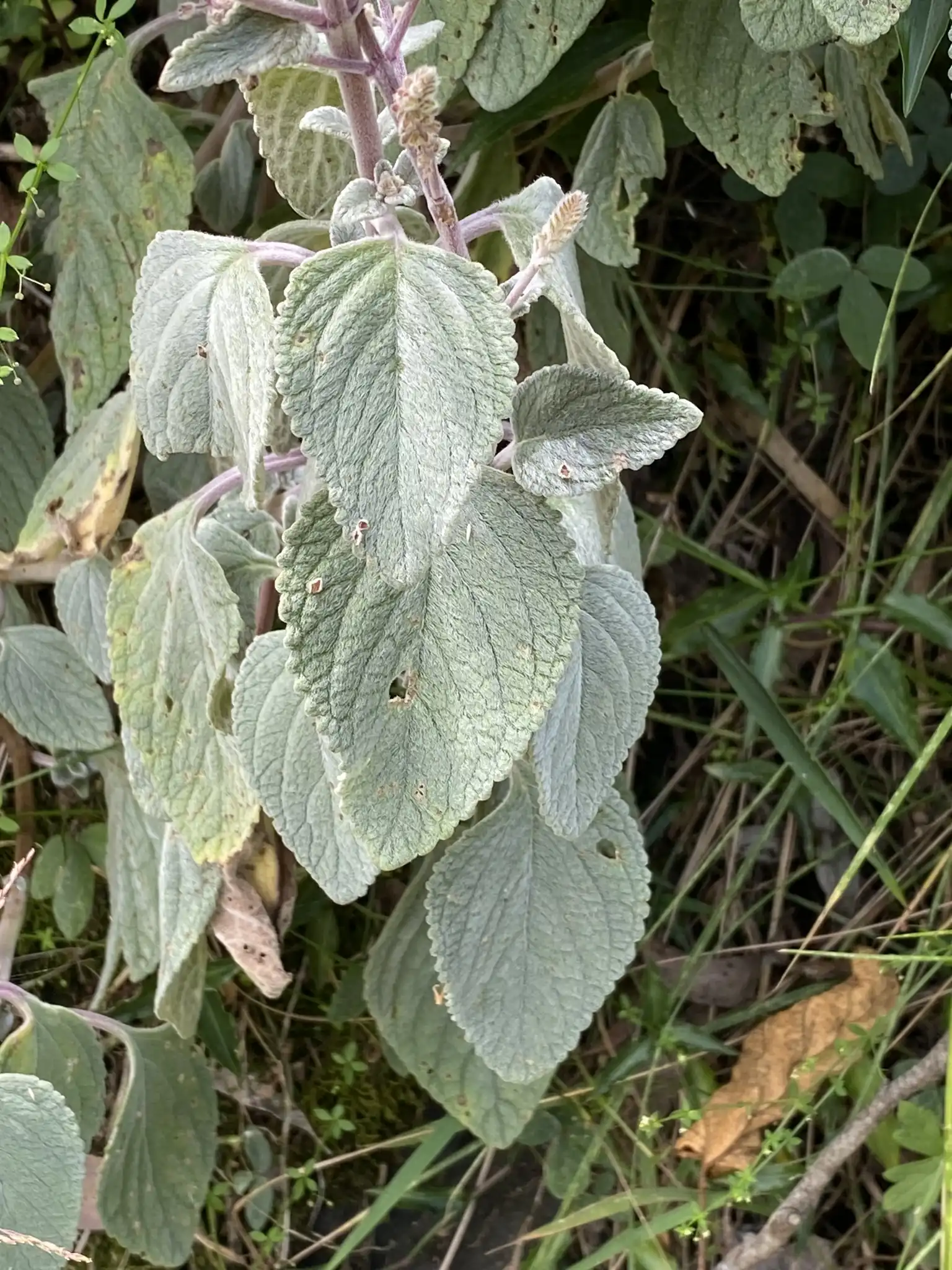
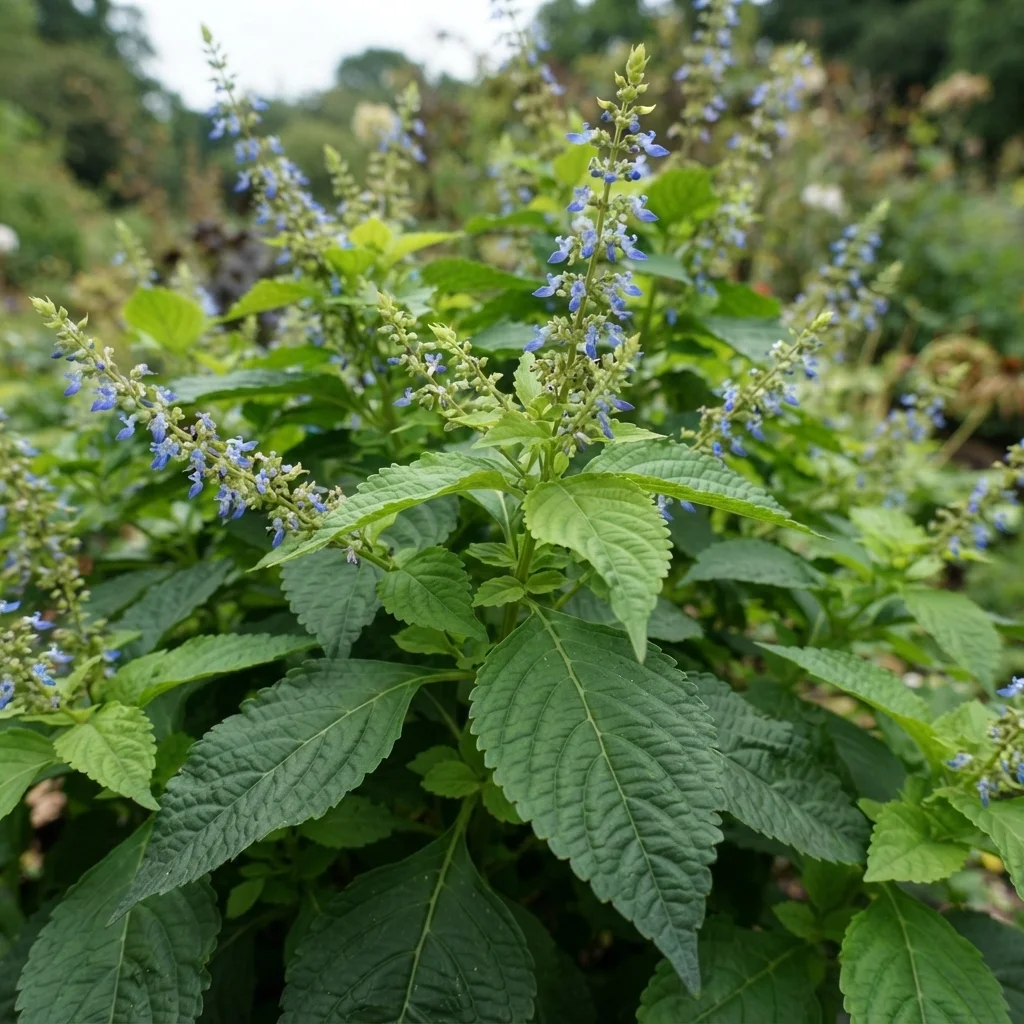
Coleus argentatus, commonly known as silver spurflower, is an evergreen woody-based subshrub native to border regions of eastern Australia, reaching two to three feet tall in garden settings. Its broad ovate leaves are densely covered in fine hairs that produce a velvety silver-gray appearance, topped from summer into fall with upright spikes of pale lilac to white flowers.
Unlike soft-leaved foliage coleus, this species forms a semi-woody framework and thrives in full sun where light intensifies its silvery leaf coloration. The dense hair covering protects the leaf tissue against intense sun and brief periods of dry soil, making it a robust foliage structural plant for warm climates or summer containers.
Uses & Benefits:
Essentials
At a Glance
Plant Type
Perennial
Height
36"
Width
60"
Light
Full Sun, Partial Sun
Zones
10
Water
Low to Moderate
Humidity
40% - 60%
Lifespan
Perennial
Native To
Australia
Toxicity
Non-toxic (sap may irritate sensitive skin)
Bloom period
Summer – Fall
In flower about 6 months of the year
Planting
How to Grow
- Select a planting site in full sun or light afternoon shade with sharply draining soil.
- Work organic matter into heavy soils or construct raised beds to improve aeration and moisture movement.
- Plant at the same soil depth as the nursery container and water thoroughly to settle roots.
- Apply a two-inch layer of organic mulch around the root zone, keeping it clear of the central stems.
- Prune back tips during active summer growth to encourage a dense, branching form.
Pro Tip
Cut stems back hard in early spring to prevent the base from becoming bare and woody, and ensure soil drains sharply to avoid root decay.
Keep It Thriving
Care Guide
Do
- Provide full sun to maximize silver hair density and leaf color.
- Allow the top two inches of soil to dry out between waterings.
- Cut back old stems hard in spring before main flushes of new growth.
Don't
- Do not allow plants to sit in waterlogged soil or standing water.
- Do not plant in deep shade, which causes leggy growth and dull green leaves.
- Do not apply high-nitrogen fertilizers that stimulate soft, weak growth.
Seasonal Care Calendar
| Task | Jan | Feb | Mar | Apr | May | Jun | Jul | Aug | Sep | Oct | Nov | Dec |
|---|---|---|---|---|---|---|---|---|---|---|---|---|
| Fertilize | ||||||||||||
| Pest Check | ||||||||||||
| Plant | ||||||||||||
| Prune | ||||||||||||
| Winter Prep |
Watch Out For
Pests & Diseases
Common Pests
Common Diseases
In the Garden
Landscape Uses & Companions
Landscape Uses
Multiply
Propagation Methods
Good to Know
Common Questions
Silver Spurflower questions
What zones can Silver Spurflower grow in?
Silver Spurflower is hardy in USDA Zone 10: in that range it survives winter in the ground. Colder than Zone 10, grow it in a container you can move to shelter for the winter, or as an annual.
Is Silver Spurflower deer resistant?
Not reliably. Deer may browse Silver Spurflower, especially tender spring growth — plan on repellents or fencing where pressure is high.
When does Silver Spurflower bloom?
Silver Spurflower typically blooms from summer to fall. Exact timing shifts a week or two with your zone — Sow's bloom calendar maps it to your garden.
Does Silver Spurflower need full sun?
Silver Spurflower does best in full sun to part shade. In hot climates, afternoon shade keeps blooms fresher longer.
Is Silver Spurflower drought tolerant?
Yes — once established (usually after the first full season), Silver Spurflower handles dry spells with minimal watering. Water deeply its first year to build the root system that makes that possible.
More Coleus to compare
Keep exploring
Explore the genus
Hardy in your zone?
Grow Silver Spurflower with confidence
See it in a design of your actual yard, get zone-matched care reminders, and track it season by season in your garden journal.