The Story
Plant Bio
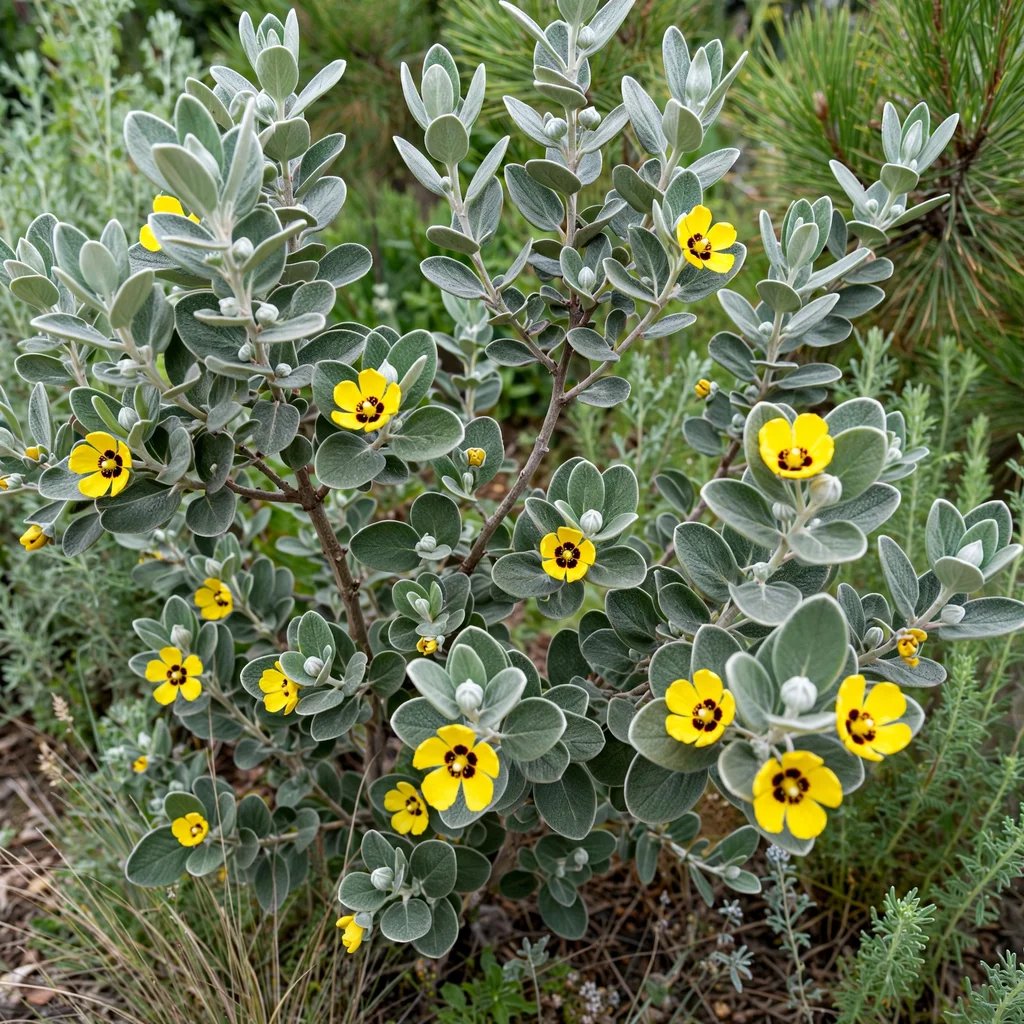
Halimium x pauanum is a natural hybrid rockrose from stony maquis and open pine ground in the western Mediterranean, forming an upright-rounded evergreen shrub four to six foot tall with dense opposite gray-green to silvery leaves. Each bloom is a five-petalled pure yellow saucer about an inch and a quarter across with a creped texture that opens in the morning and drops by evening, replaced daily by new buds over a long spring display.
It is the cross of Halimium halimifolium and Halimium lasianthum, sold under both Halimium and Cistus names, and it grows taller and blooms longer than either parent. The flowers are unblotched yellow and larger than most rockroses, opening in succession from late spring into summer for up to eighty days before forming reddish-brown capsules of small dark seed.
Uses & Benefits:
Essentials
At a Glance
Plant Type
Shrub
Height
60"
Width
48"
Light
Full Sun
Zones
8, 9, 10
Water
Low
Humidity
Low
Lifespan
Long-lived evergreen shrub
Native To
W Mediterranean - Morocco, Spain, Portugal
Toxicity
Unknown
Bloom period
Late spring – Summer
In flower about 4 months of the year
Planting
How to Grow
- Plant in full sun on a slope or raised mound in lean, mineral soil with sharp drainage.
- Amend heavy ground with sharp gravel or pumice and pull organic mulch back from the stem.
- Shake excess bark mix off the crown at planting and set the crown slightly high.
- Water deeply to settle, then water only to establish; once rooted, water rarely and never in summer heat.
- Keep it away from thirsty neighbors; do not site with roses or hydrangeas that need summer irrigation.
Pro Tip
Plant it lean on a dry slope and keep summer water off the crown; water-retentive bark heaped against the stem rots it faster than drought ever will.
Keep It Thriving
Care Guide
Do
- Plant on a slope in lean soil with sharp drainage.
- Water rarely but deeply only during the first dry season.
- Tidy spent flower stalks lightly after bloom to keep the canopy dense.
Don't
- Do not enrich soil with rich compost or fertilizer.
- Do not overwater in summer or wet the crown.
- Do not shear hard into old bare wood.
- Do not pile bark mulch against the stem.
Seasonal Care Calendar
| Task | Jan | Feb | Mar | Apr | May | Jun | Jul | Aug | Sep | Oct | Nov | Dec |
|---|---|---|---|---|---|---|---|---|---|---|---|---|
| Mulch | ||||||||||||
| Pest Check | ||||||||||||
| Plant | ||||||||||||
| Prune |
Watch Out For
Pests & Diseases
Common Pests
Common Diseases
In the Garden
Landscape Uses & Companions
Landscape Uses
Multiply
Propagation Methods
Good to Know
Common Questions
Yellow Rock Rose questions
What zones can Yellow Rock Rose grow in?
Yellow Rock Rose is hardy in USDA Zones 8–10: in that range it survives winter in the ground. Colder than Zone 8, grow it in a container you can move to shelter for the winter.
Is Yellow Rock Rose deer resistant?
Yes — Yellow Rock Rose is rated deer-resistant. Deer typically pass it over, though extreme hunger can override any plant's defenses.
When does Yellow Rock Rose bloom?
Yellow Rock Rose typically blooms from late spring to late summer. Exact timing shifts a week or two with your zone — Sow's bloom calendar maps it to your garden.
Does Yellow Rock Rose need full sun?
Yellow Rock Rose does best in full sun (6+ hours).
Is Yellow Rock Rose drought tolerant?
Yes — once established (usually after the first full season), Yellow Rock Rose handles dry spells with minimal watering. Water deeply its first year to build the root system that makes that possible.
More Halimium to compare
Keep exploring
Explore the genus
Hardy in your zone?
Grow Yellow Rock Rose with confidence
See it in a design of your actual yard, get zone-matched care reminders, and track it season by season in your garden journal.