The Story
Plant Bio
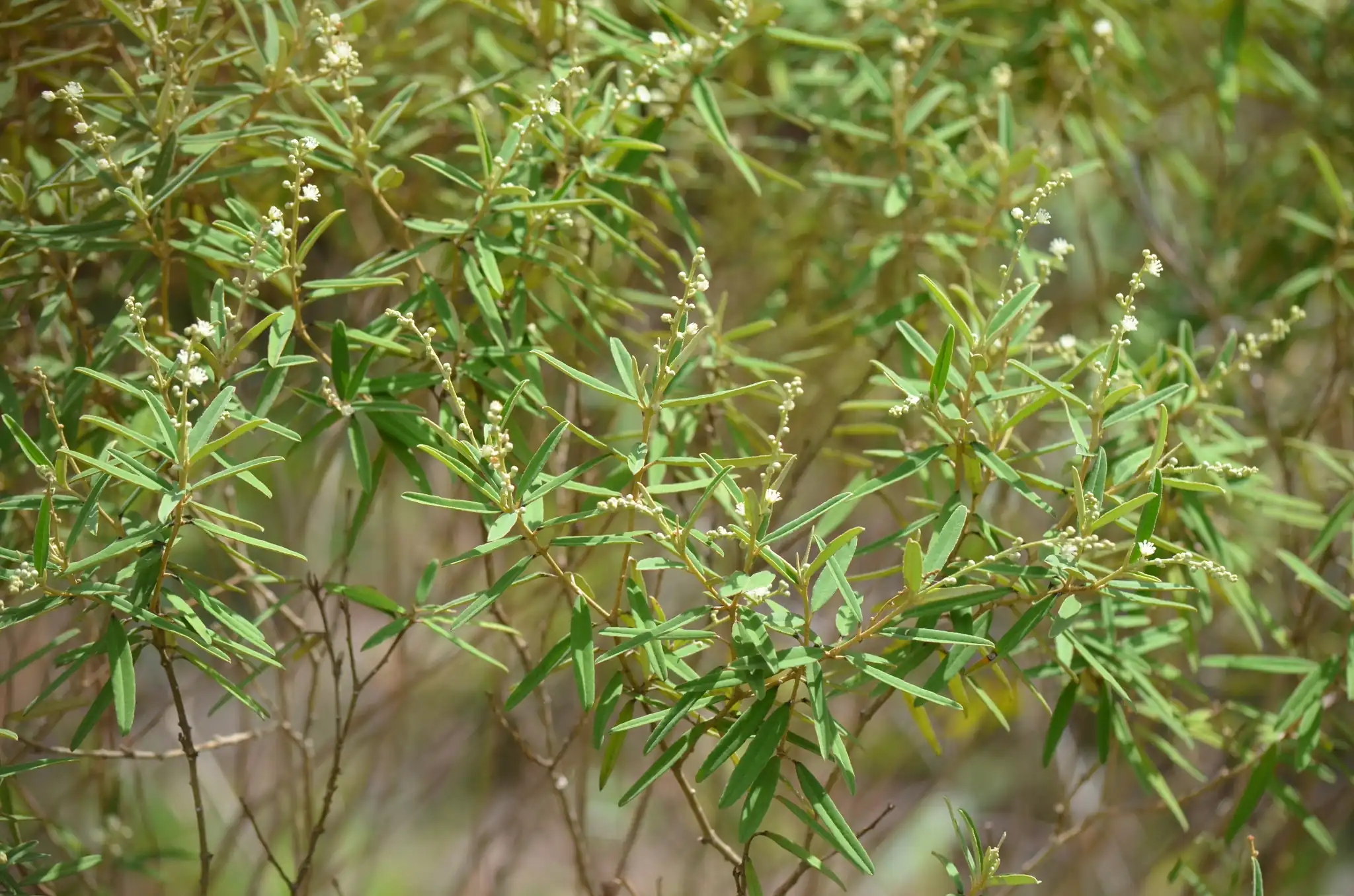
Croton linearis is a dioecious evergreen shrub in the spurge family, well-branched from the base with wiry, often rust-colored stems. It carries alternate linear leaves 3 to 4 inches long, dark green and hairless above and silvery to coppery with star-shaped hairs beneath, and bears small white flowers in racemes followed by dry capsules.
Unlike the broad-leaved houseplant croton, this wild species holds stiff rosemary-like foliage on a compact 1 to 3 foot frame built for dry limestone sand and marl without humus. Male and female flowers grow on separate plants and open in every month, providing nectar and serving as the sole Florida larval host for Bartram's scrub-hairstreak and the Florida leafwing.
Uses & Benefits:
Essentials
At a Glance
Plant Type
Shrub
Height
36"
Width
36"
Light
Full Sun, Partial Sun
Zones
9, 10
Water
Low
Humidity
Average
Lifespan
10+ years
Native To
South Florida and West Indies
Toxicity
Toxic seeds, irritant sap
Bloom period
Year round
In flower about 12 months of the year
Planting
How to Grow
- Set in full sun in dry, well-drained sandy or limestone marl with neutral to alkaline pH.
- Dig the hole no deeper than the rootball and backfill with the same poor native sand, no compost.
- Water in once to settle, then water sparingly only until established.
- Topdress with thin limestone gravel, keeping organic mulch away from the stems.
- Pinch or lightly trim to shape; do not enrich the soil or overwater.
Pro Tip
Plant it in poor limestone sand in full sun and keep it dry; rich organic soil and frequent irrigation rot the roots.
Keep It Thriving
Care Guide
Do
- Give full sun and sharp drainage in poor calcareous sand.
- Allow soil to dry between waterings once established.
- Tip-trim lightly to keep a dense, low hedge form.
Don't
- Do not plant in wet soil or high-organic potting mixes.
- Do not fertilize heavily or water on a lawn schedule.
- Do not confuse with houseplant Codiaeum variegatum or treat it as an indoor plant.
Seasonal Care Calendar
| Task | Jan | Feb | Mar | Apr | May | Jun | Jul | Aug | Sep | Oct | Nov | Dec |
|---|---|---|---|---|---|---|---|---|---|---|---|---|
| Mulch | ||||||||||||
| Pest Check | ||||||||||||
| Plant | ||||||||||||
| Propagate | ||||||||||||
| Prune |
Watch Out For
Pests & Diseases
Common Pests
Common Diseases
In the Garden
Landscape Uses & Companions
Landscape Uses
Companion Plants
Multiply
Propagation Methods
Good to Know
Common Questions
Pineland Croton questions
What zones can Pineland Croton grow in?
Pineland Croton is hardy in USDA Zones 9–10: in that range it survives winter in the ground. Colder than Zone 9, grow it in a container you can move to shelter for the winter.
When does Pineland Croton bloom?
Pineland Croton typically blooms year-round. Exact timing shifts a week or two with your zone — Sow's bloom calendar maps it to your garden.
Does Pineland Croton need full sun?
Pineland Croton does best in full sun to part shade. In hot climates, afternoon shade keeps blooms fresher longer.
Is Pineland Croton drought tolerant?
Yes — once established (usually after the first full season), Pineland Croton handles dry spells with minimal watering. Water deeply its first year to build the root system that makes that possible.
More Croton to compare
Keep exploring
Explore the genus
Hardy in your zone?
Grow Pineland Croton with confidence
See it in a design of your actual yard, get zone-matched care reminders, and track it season by season in your garden journal.