The Story
Plant Bio
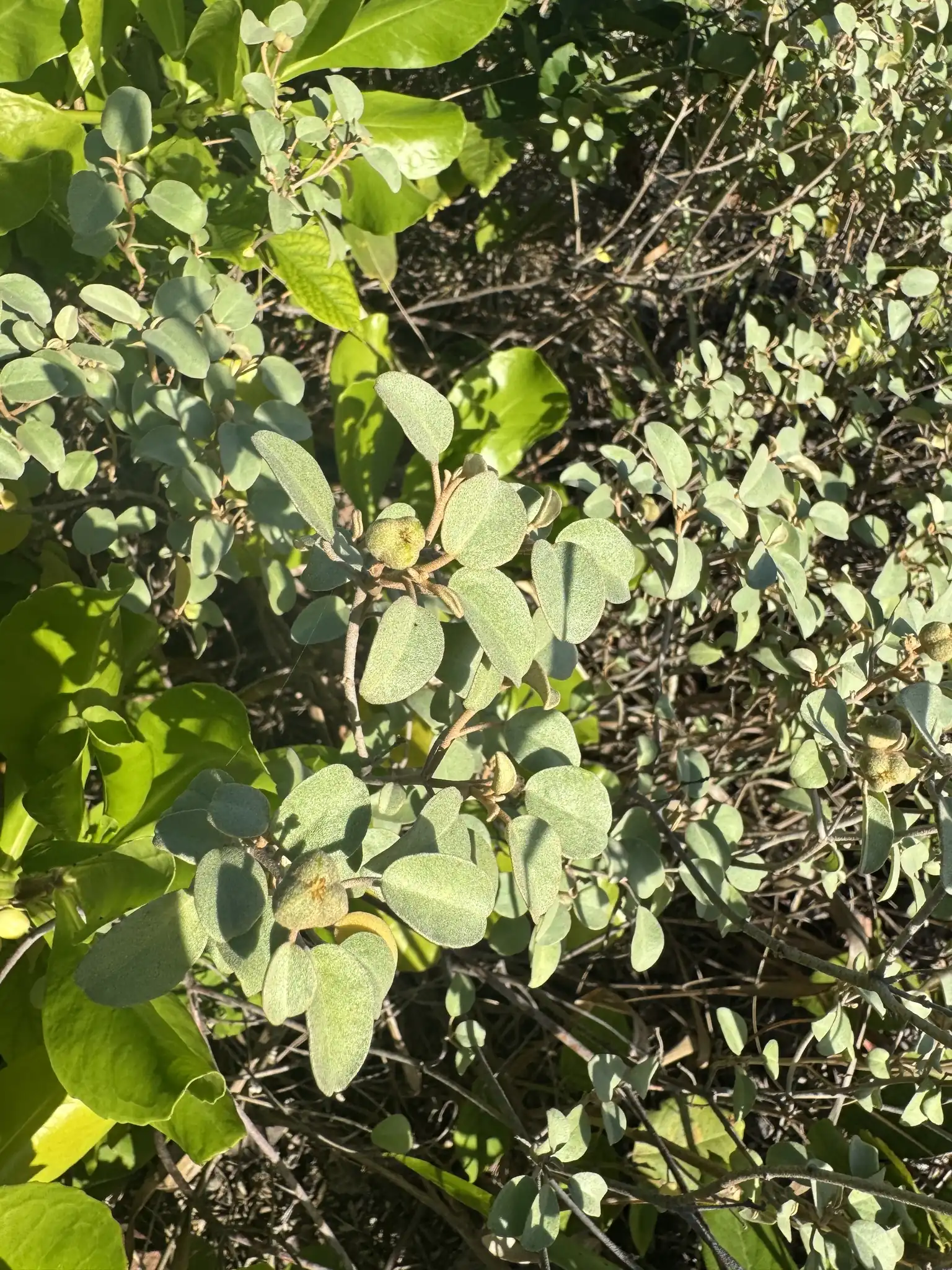
Croton punctatus, the gulf croton, is a low rounded semi-woody subshrub reaching one to three feet tall and wider across, with simple alternate ovate leaves on short petioles. The flowers have no petals to speak of; small male flowers cluster above female flowers on the same narrow spike, followed by three-lobed capsules.
Both leaf surfaces carry dense silvery star-shaped scales, thickest beneath, that give the foliage a silver-gray cast flecked with brown dots and shed sun and salt spray. It is a dune colonizer that holds loose sand with a spreading branched root system and fails where the crown stays wet.
Uses & Benefits:
Essentials
At a Glance
Plant Type
Shrub
Height
35"
Width
47"
Light
Full Sun
Zones
8, 9, 10
Water
Low
Humidity
High
Lifespan
Perennial subshrub
Native To
Southeastern United States to northern South America
Toxicity
Toxic if ingested, skin irritant
Bloom period
Summer – Fall
In flower about 6 months of the year
Planting
How to Grow
- Plant in spring after frost into deep coarse sand in full sun, with the crown set slightly high.
- Water in once to settle sand around roots, then withhold routine irrigation once new leaves extend.
- Leave soil unamended and unmulched; do not add compost, loam, or fertilizer.
- Tip-prune lightly in spring to shape, never cutting back into old leafless wood.
- Keep overhead irrigation and summer rain runoff away from the stem base.
Pro Tip
Plant high in pure sand in full sun and keep the crown dry; rich loam, fertilizer, and routine irrigation rot it.
Keep It Thriving
Care Guide
Do
- Grow in full sun with open air movement and sharp drainage.
- Leave established plants dry; rely on rainfall in coastal sand.
- Handle with gloves and wash tools after pruning to avoid sap contact.
Don't
- Do not plant in clay, loam, or moisture-holding potting soil.
- Do not fertilize; excess nutrients produce weak leggy growth.
- Do not cut hard into old woody stems or shear after summer bloom.
Seasonal Care Calendar
| Task | Jan | Feb | Mar | Apr | May | Jun | Jul | Aug | Sep | Oct | Nov | Dec |
|---|---|---|---|---|---|---|---|---|---|---|---|---|
| Pest Check | ||||||||||||
| Plant | ||||||||||||
| Propagate | ||||||||||||
| Prune |
Watch Out For
Pests & Diseases
Common Pests
Common Diseases
In the Garden
Landscape Uses & Companions
Landscape Uses
Multiply
Propagation Methods
Good to Know
Common Questions
Gulf Croton questions
What zones can Gulf Croton grow in?
Gulf Croton is hardy in USDA Zones 8–10: in that range it survives winter in the ground. Colder than Zone 8, grow it in a container you can move to shelter for the winter.
Is Gulf Croton deer resistant?
Not reliably. Deer may browse Gulf Croton, especially tender spring growth — plan on repellents or fencing where pressure is high.
When does Gulf Croton bloom?
Gulf Croton typically blooms from summer to fall. Exact timing shifts a week or two with your zone — Sow's bloom calendar maps it to your garden.
Does Gulf Croton need full sun?
Gulf Croton does best in full sun (6+ hours).
Is Gulf Croton drought tolerant?
Yes — once established (usually after the first full season), Gulf Croton handles dry spells with minimal watering. Water deeply its first year to build the root system that makes that possible.
More Croton to compare
Keep exploring
Explore the genus
Hardy in your zone?
Grow Gulf Croton with confidence
See it in a design of your actual yard, get zone-matched care reminders, and track it season by season in your garden journal.