The Story
Plant Bio
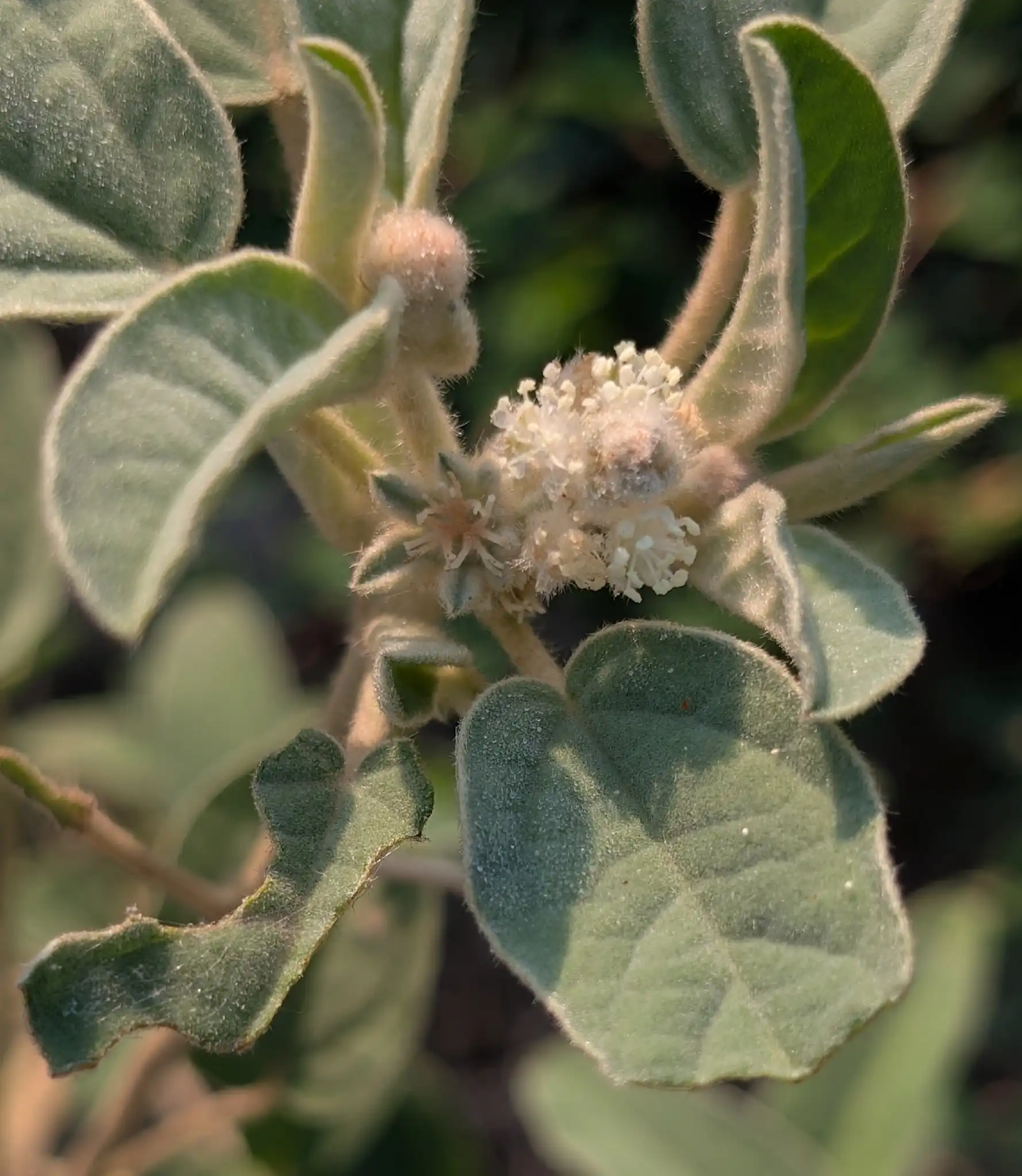
Croton capitatus, the woolly croton, is an erect annual forb in the spurge family reaching 12 to 39 inches tall, sparingly branched above with stems and leaves coated in whitish stellate hairs. The flowers have no showy petals; the display is a tight capitate cluster with tiny white male flowers above and apetalous female flowers below that mature to three-seeded capsules about 9 mm long.
Dense woolly-white pubescence, entire to toothed oblong to ovate leaves 3 to 8 cm long on 10 to 30 mm petioles without glands, and a capitate inflorescence separate it from Croton heptalon and Croton lindheimeri. Seed is a major fall food for doves and quail and the foliage feeds goatweed leafwing larvae, while all parts carry croton oil that blisters skin and poisons livestock but is seldom eaten because of its taste.
Uses & Benefits:
Essentials
At a Glance
Plant Type
Annual
Height
39"
Width
18"
Light
Full Sun
Zones
4, 5, 6, 7, 8, 9, 10
Water
Low
Humidity
Average
Lifespan
Annual
Native To
Eastern and south-central USA
Toxicity
Toxic
Bloom period
Summer – Fall
In flower about 6 months of the year
Planting
How to Grow
- Choose an open site with 8+ hours of sun and sandy to loamy, free-draining soil.
- Sow seed outdoors after last frost, barely covering, and keep evenly moist until germination.
- Thin seedlings for airflow and withhold supplemental water once established except in prolonged drought.
- Leave some seed heads for doves and quail; pull remaining plants before capsules split to limit spread.
- Wear gloves when handling; foliage and sap irritate skin and all parts are poisonous if eaten.
Pro Tip
Sow where it is to grow in full sun and lean, well-drained sand to loam; thin to stand and pull plants before capsules ripen if self-sowing is unwanted.
Keep It Thriving
Care Guide
Do
- Give full sun and sharp drainage in drained to dry soil.
- Leave a patch of ripe seed for doves, quail, and butterflies.
- Remove plants before seed split where pasture weed pressure matters.
Don't
- Do not cut back as a perennial; this is an annual that dies with frost.
- Do not overwater or plant in wet clay.
- Do not allow livestock or dogs to chew foliage or seed.
Seasonal Care Calendar
| Task | Jan | Feb | Mar | Apr | May | Jun | Jul | Aug | Sep | Oct | Nov | Dec |
|---|---|---|---|---|---|---|---|---|---|---|---|---|
| Harvest | ||||||||||||
| Pest Check | ||||||||||||
| Plant | ||||||||||||
| Winter Prep |
Watch Out For
Pests & Diseases
Common Pests
Common Diseases
In the Garden
Landscape Uses & Companions
Landscape Uses
Multiply
Propagation Methods
Good to Know
Common Questions
Woolly Croton questions
What zones can Woolly Croton grow in?
Woolly Croton is an annual: it grows, flowers and sets seed in one season, so winter cold doesn't limit where it grows. Gardeners in any zone can grow it by planting at the right time, usually after the last spring frost.
Is Woolly Croton deer resistant?
Yes — Woolly Croton is rated deer-resistant. Deer typically pass it over, though extreme hunger can override any plant's defenses.
When does Woolly Croton bloom?
Woolly Croton typically blooms from summer to fall. Exact timing shifts a week or two with your zone — Sow's bloom calendar maps it to your garden.
Does Woolly Croton need full sun?
Woolly Croton does best in full sun (6+ hours).
Is Woolly Croton drought tolerant?
Yes — once established (usually after the first full season), Woolly Croton handles dry spells with minimal watering. Water deeply its first year to build the root system that makes that possible.
More Croton to compare
Keep exploring
Explore the genus
Grow Woolly Croton with confidence
See it in a design of your actual yard, get zone-matched care reminders, and track it season by season in your garden journal.