The Story
Plant Bio
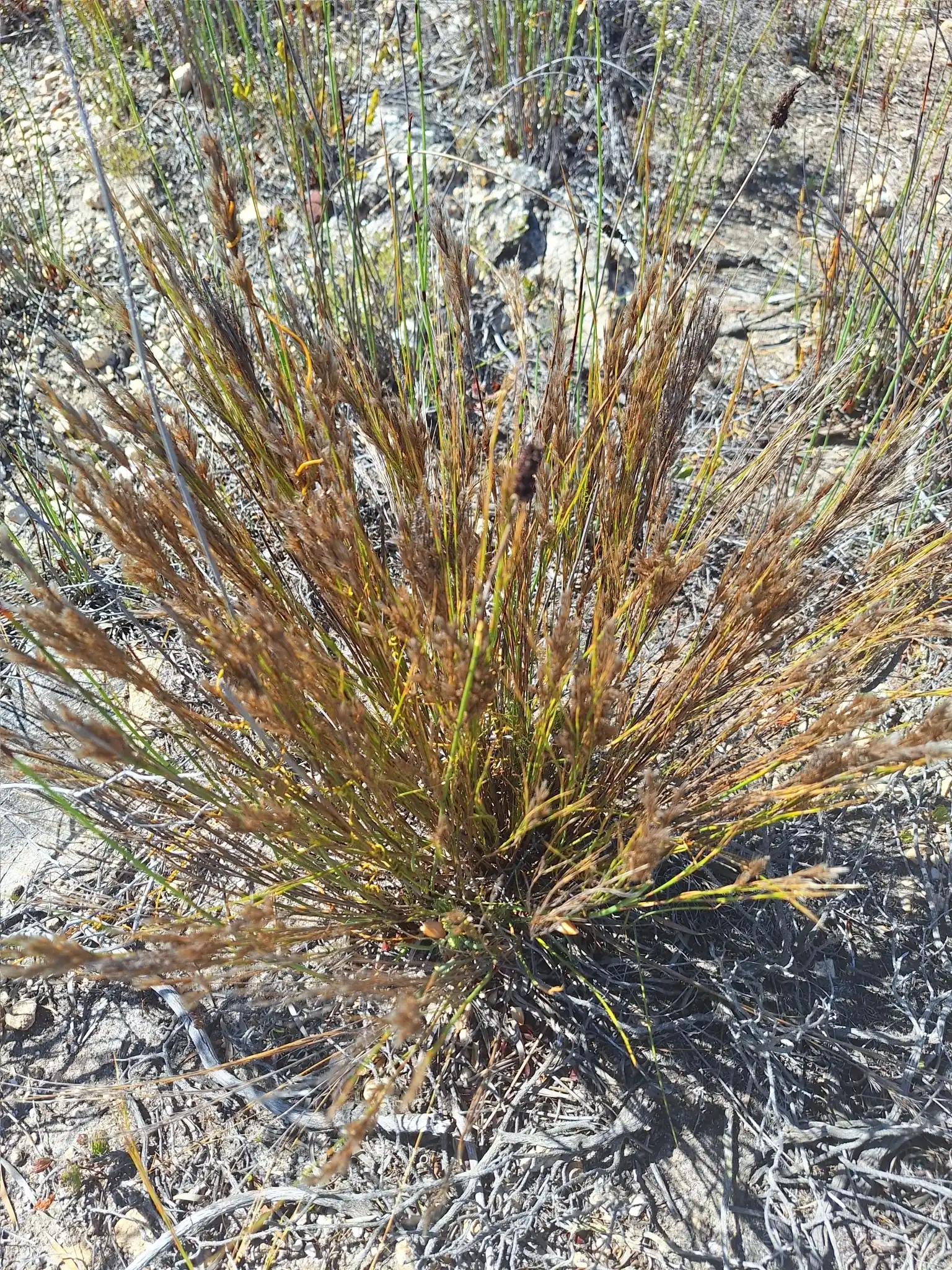
Restio festuciformis is a tufted evergreen restio from the winter-rainfall Western Cape, forming a dense mound of fine arching culms to about 18 inches tall. It is dioecious and wind-pollinated, with male and female flowers carried on separate plants as small brown-bracted spikelets.
Unlike the tall reed-like restios, this species stays low and fescue-like, with slightly branched culms that move in the breeze rather than standing stiffly upright. Fresh growth emerges bright green from the center and matures to golden-green, and female plants carry small brown seed heads through summer.
Uses & Benefits:
Essentials
At a Glance
Plant Type
Grass
Height
18"
Width
20"
Light
Full Sun, Partial Sun
Zones
8, 9, 10
Water
Moderate
Humidity
Low to moderate
Lifespan
Short-lived, 2-4 years
Native To
Western Cape, South Africa
Toxicity
No toxicity reported
Bloom period
Late winter – Early spring
In flower about 2 months of the year
Planting
How to Grow
- Plant in fall in full sun in very well-drained sandy or loamy soil.
- Set the rootball at the same level it grew in the pot without teasing or breaking roots.
- Water deeply after planting and irrigate regularly the first year to establish.
- Feed lightly in spring and renew a thin mulch kept clear of the crown.
- Remove the previous year's browned culms each spring to keep the center vigorous.
Pro Tip
Plan to replace plants after about four years; clear out the dead outer culms each year and never divide or move the crown.
Keep It Thriving
Care Guide
Do
- Give full sun and very sharp drainage
- Water regularly the first season, then as needed to keep culms green
- Feed lightly in spring
- Pull out dead outer culms each year
Don't
- Do not divide or move established plants
- Do not plant in heavy clay or soggy winter soil
- Do not cut into the live green center
- Do not expect it to live beyond about four years
Seasonal Care Calendar
| Task | Jan | Feb | Mar | Apr | May | Jun | Jul | Aug | Sep | Oct | Nov | Dec |
|---|---|---|---|---|---|---|---|---|---|---|---|---|
| Fertilize | ||||||||||||
| Mulch | ||||||||||||
| Plant | ||||||||||||
| Propagate | ||||||||||||
| Prune |
Watch Out For
Pests & Diseases
Common Pests
Common Diseases
In the Garden
Landscape Uses & Companions
Landscape Uses
Multiply
Propagation Methods
Good to Know
Common Questions
Green Grass Reed questions
What zones can Green Grass Reed grow in?
Green Grass Reed is hardy in USDA Zones 8–10: in that range it survives winter in the ground. Colder than Zone 8, grow it in a container you can move to shelter for the winter, or as an annual.
When does Green Grass Reed bloom?
Green Grass Reed typically blooms from late winter to early spring. Exact timing shifts a week or two with your zone — Sow's bloom calendar maps it to your garden.
Does Green Grass Reed need full sun?
Green Grass Reed does best in full sun to part shade. In hot climates, afternoon shade keeps blooms fresher longer.
Is Green Grass Reed drought tolerant?
Yes — once established (usually after the first full season), Green Grass Reed handles dry spells with minimal watering. Water deeply its first year to build the root system that makes that possible.
More Restio to compare
Keep exploring
Explore the genus
Hardy in your zone?
Grow Green Grass Reed with confidence
See it in a design of your actual yard, get zone-matched care reminders, and track it season by season in your garden journal.