The Story
Plant Bio
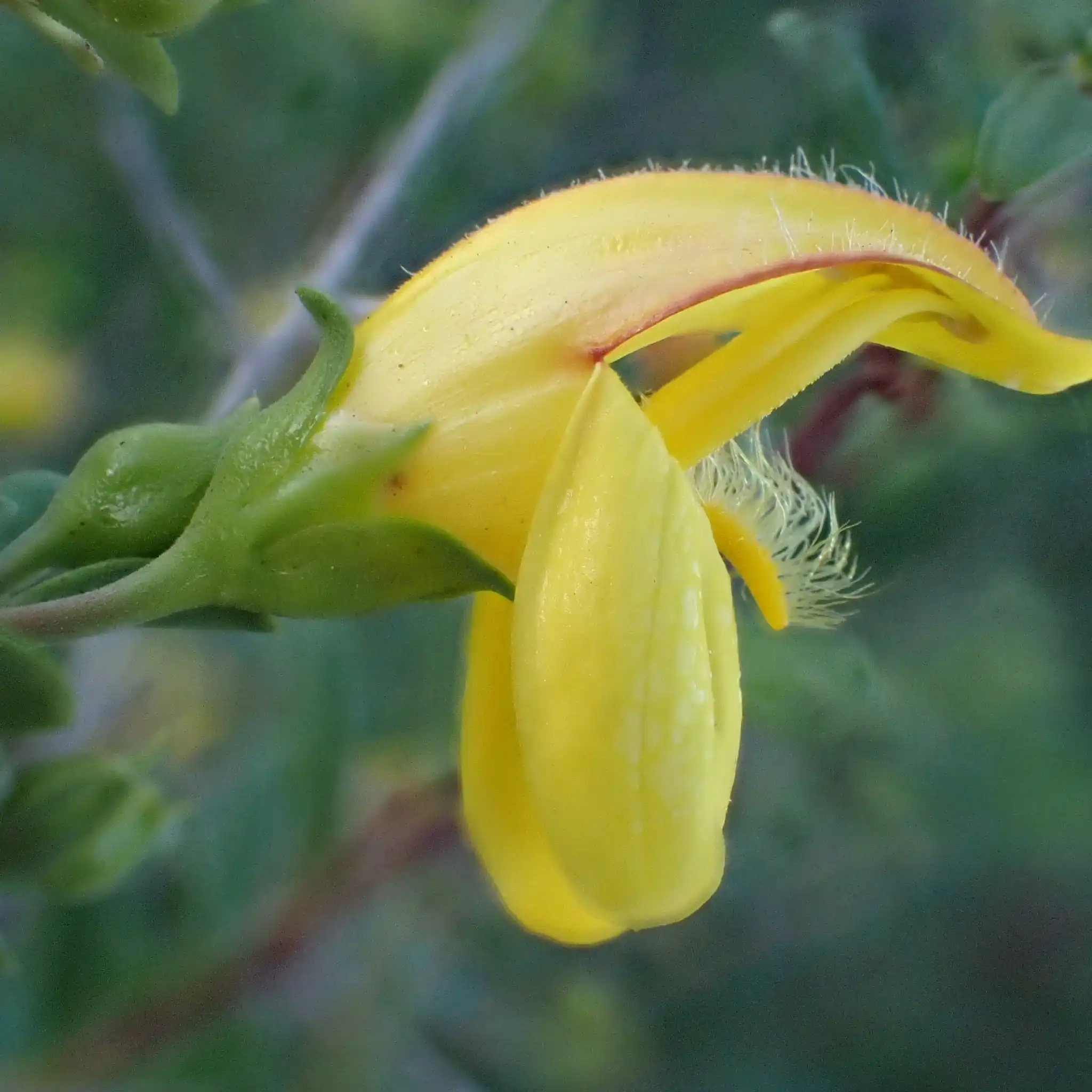
Keckiella antirrhinoides is a woody, densely branched shrub native to dry slopes and chaparral across southern California and northern Baja California. It produces oppositely arranged, lance-shaped leaves and bright golden-yellow, snapdragon-like flowers with hairy staminodes along its upper branches in spring and early summer.
Unlike typical evergreen garden shrubs, this species adapts to dry heat by dropping its foliage and entering summer dormancy when moisture is withheld. Its tubular, nectar-rich blossoms serve as a major attraction for hummingbirds and native bees.
Uses & Benefits:
Essentials
At a Glance
Plant Type
Shrub
Height
98"
Width
118"
Light
Full Sun, Partial Sun
Zones
8, 9, 10
Water
Low
Humidity
Low
Lifespan
Perennial
Native To
North America (California, Baja California)
Toxicity
Toxic if ingested
Bloom period
Spring – Summer
In flower about 6 months of the year
Planting
How to Grow
- Plant in early autumn or late winter to allow roots to establish before summer heat.
- Select a full sun to light shade location with sharp, fast-draining sandy or mineral soil.
- Water thoroughly at planting to settle soil around roots.
- Reduce watering frequency gradually as the plant establishes, stopping summer irrigation entirely once mature.
Pro Tip
Withhold summer irrigation once established, as warm soil wetness encourages fatal root rot pathogens.
Keep It Thriving
Care Guide
Do
- Provide exceptional mineral soil drainage.
- Allow the plant to enter summer dormancy naturally during dry spells.
- Prune lightly after flowering to maintain a dense habit.
Don't
- Do not overwater or irrigate during warm summer months.
- Do not prune hard into old, leafless woody stems.
- Do not plant in heavy, waterlogged clay soils.
Seasonal Care Calendar
| Task | Jan | Feb | Mar | Apr | May | Jun | Jul | Aug | Sep | Oct | Nov | Dec |
|---|---|---|---|---|---|---|---|---|---|---|---|---|
| Mulch | ||||||||||||
| Pest Check | ||||||||||||
| Prune | ||||||||||||
| Spring Cleanup |
Watch Out For
Pests & Diseases
Common Pests
Common Diseases
In the Garden
Landscape Uses & Companions
Landscape Uses
Multiply
Propagation Methods
Good to Know
Common Questions
Snapdragon penstemon questions
What zones can Snapdragon penstemon grow in?
Snapdragon penstemon is hardy in USDA Zones 8–10: in that range it survives winter in the ground. Colder than Zone 8, grow it in a container you can move to shelter for the winter.
Is Snapdragon penstemon deer resistant?
Yes — Snapdragon penstemon is rated deer-resistant. Deer typically pass it over, though extreme hunger can override any plant's defenses.
When does Snapdragon penstemon bloom?
Snapdragon penstemon typically blooms from spring to summer. Exact timing shifts a week or two with your zone — Sow's bloom calendar maps it to your garden.
Does Snapdragon penstemon need full sun?
Snapdragon penstemon does best in full sun to part shade. In hot climates, afternoon shade keeps blooms fresher longer.
Is Snapdragon penstemon drought tolerant?
Yes — once established (usually after the first full season), Snapdragon penstemon handles dry spells with minimal watering. Water deeply its first year to build the root system that makes that possible.
More Keckiella to compare
Keep exploring
Explore the genus
Hardy in your zone?
Grow Snapdragon penstemon with confidence
See it in a design of your actual yard, get zone-matched care reminders, and track it season by season in your garden journal.