The Story
Plant Bio
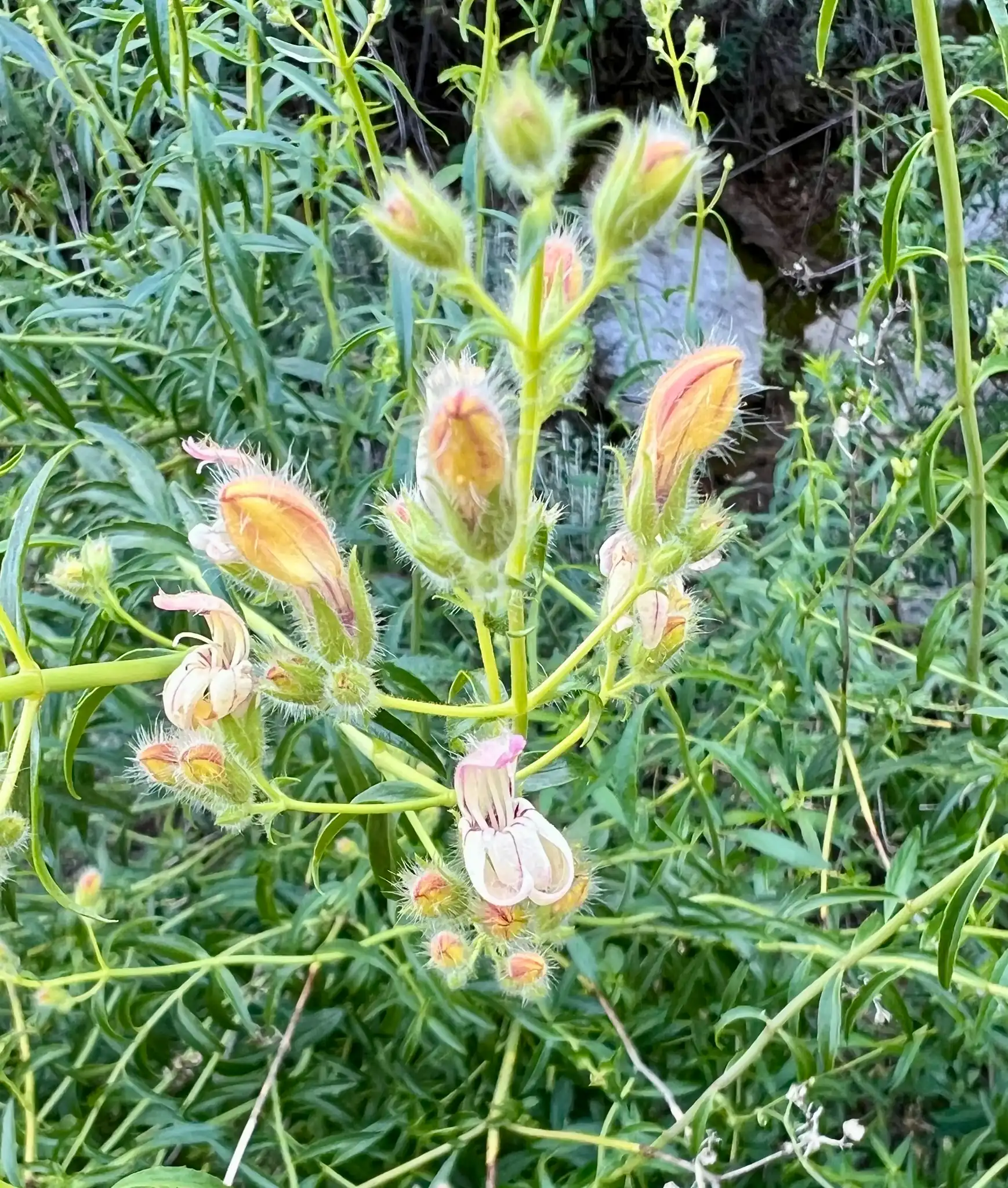
Keckiella breviflora is an open, many-stemmed shrub from rocky slopes and chaparral in California and Nevada, reaching about 3 feet in gardens on thin upright stems. Opposite, lance-shaped leaves with toothed margins clothe the glaucous young growth, and loose spikes of small tubular flowers open from spring into summer.
The flowers are white to cream flushed with rose, with five spreading lobes lined and streaked in pink to red-purple and hairy on the outside, each corolla only about half an inch long. Unlike true Penstemon, it forms a woody, branching bush with glandular-hairy flowering spikes and two recognized varieties, breviflora and glabrisepala.
Uses & Benefits:
Essentials
At a Glance
Plant Type
Shrub
Height
36"
Width
36"
Light
Full Sun, Partial Sun
Zones
6, 7, 8, 9, 10
Water
Very low
Humidity
Low
Lifespan
Perennial
Native To
California, Nevada
Toxicity
Unknown
Bloom period
Late spring – Summer
In flower about 4 months of the year
Planting
How to Grow
- Set plants in full sun to light shade in sharply drained, slightly acid soil with pH 5.3 to 6.9.
- Dig the hole no deeper than the root ball and backfill with native soil, leaving the crown at grade.
- Water deeply at planting, then taper off; once established give a deep soak no more than once a week.
- Top with gravel rather than rich organic mulch and leave space for air flow.
Pro Tip
Plant in lean, sharply drained soil in full sun and withhold summer water once established; a deep soak no more than once a week is ample.
Keep It Thriving
Care Guide
Do
- Give fast drainage on a slope or mound.
- Water deeply but infrequently once established.
- Leave flower spikes for pollinators before tipping back.
Don't
- Do not plant in heavy wet soil or low spots.
- Do not fertilize heavily or overwater in summer.
- Do not cut hard into old leafless wood.
Seasonal Care Calendar
| Task | Jan | Feb | Mar | Apr | May | Jun | Jul | Aug | Sep | Oct | Nov | Dec |
|---|---|---|---|---|---|---|---|---|---|---|---|---|
| Mulch | ||||||||||||
| Pest Check | ||||||||||||
| Plant | ||||||||||||
| Prune |
Watch Out For
Pests & Diseases
Common Pests
Common Diseases
In the Garden
Landscape Uses & Companions
Landscape Uses
Multiply
Propagation Methods
Good to Know
Common Questions
Bush Beardtongue questions
What zones can Bush Beardtongue grow in?
Bush Beardtongue is hardy in USDA Zones 6–10: in that range it survives winter in the ground. Colder than Zone 6, grow it in a container you can move to shelter for the winter.
Is Bush Beardtongue deer resistant?
Yes — Bush Beardtongue is rated deer-resistant. Deer typically pass it over, though extreme hunger can override any plant's defenses.
When does Bush Beardtongue bloom?
Bush Beardtongue typically blooms from late spring to late summer. Exact timing shifts a week or two with your zone — Sow's bloom calendar maps it to your garden.
Does Bush Beardtongue need full sun?
Bush Beardtongue does best in full sun to part shade. In hot climates, afternoon shade keeps blooms fresher longer.
Is Bush Beardtongue drought tolerant?
Yes — once established (usually after the first full season), Bush Beardtongue handles dry spells with minimal watering. Water deeply its first year to build the root system that makes that possible.
More Keckiella to compare
Keep exploring
Explore the genus
Hardy in your zone?
Grow Bush Beardtongue with confidence
See it in a design of your actual yard, get zone-matched care reminders, and track it season by season in your garden journal.