The Story
Plant Bio
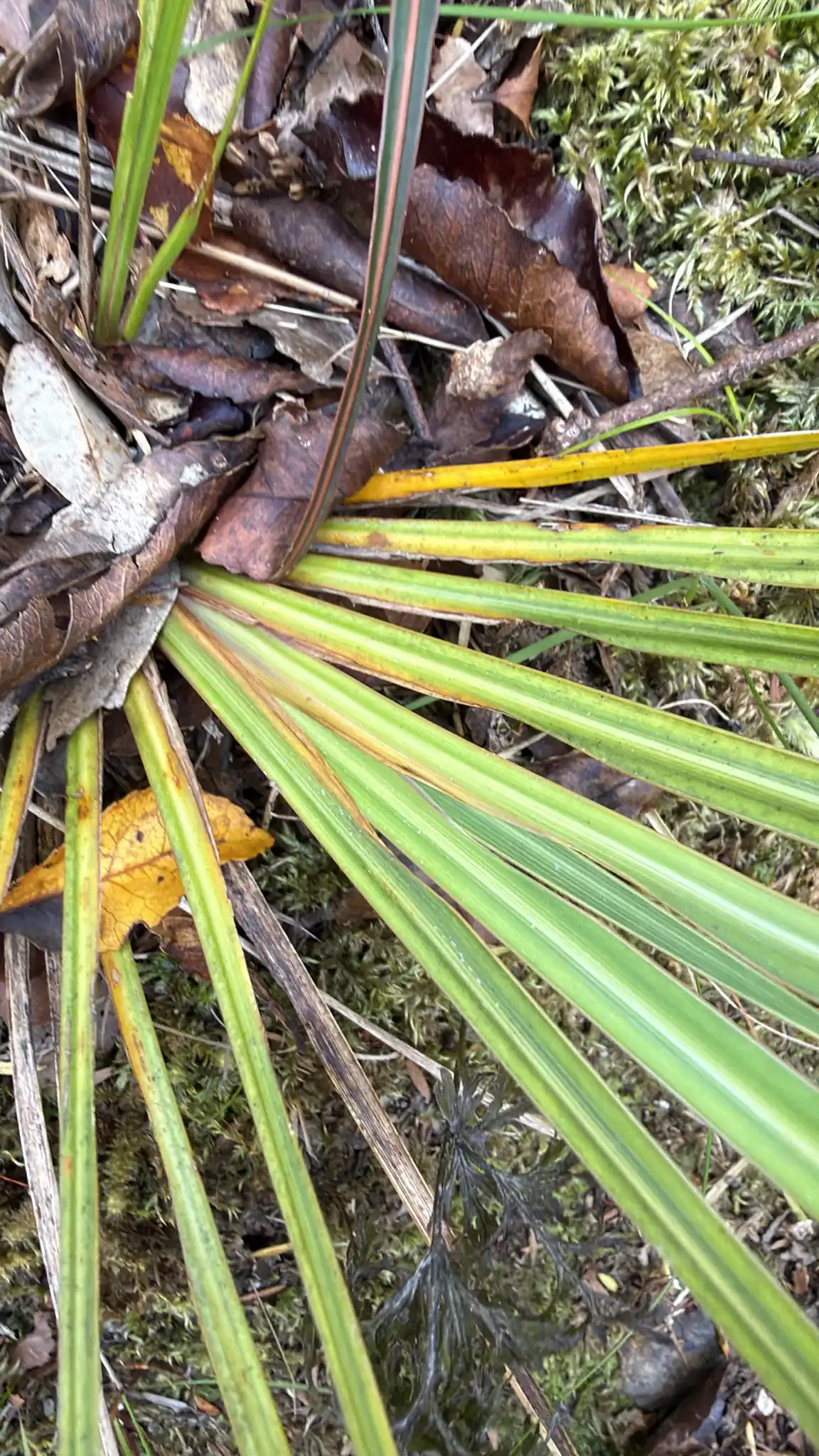
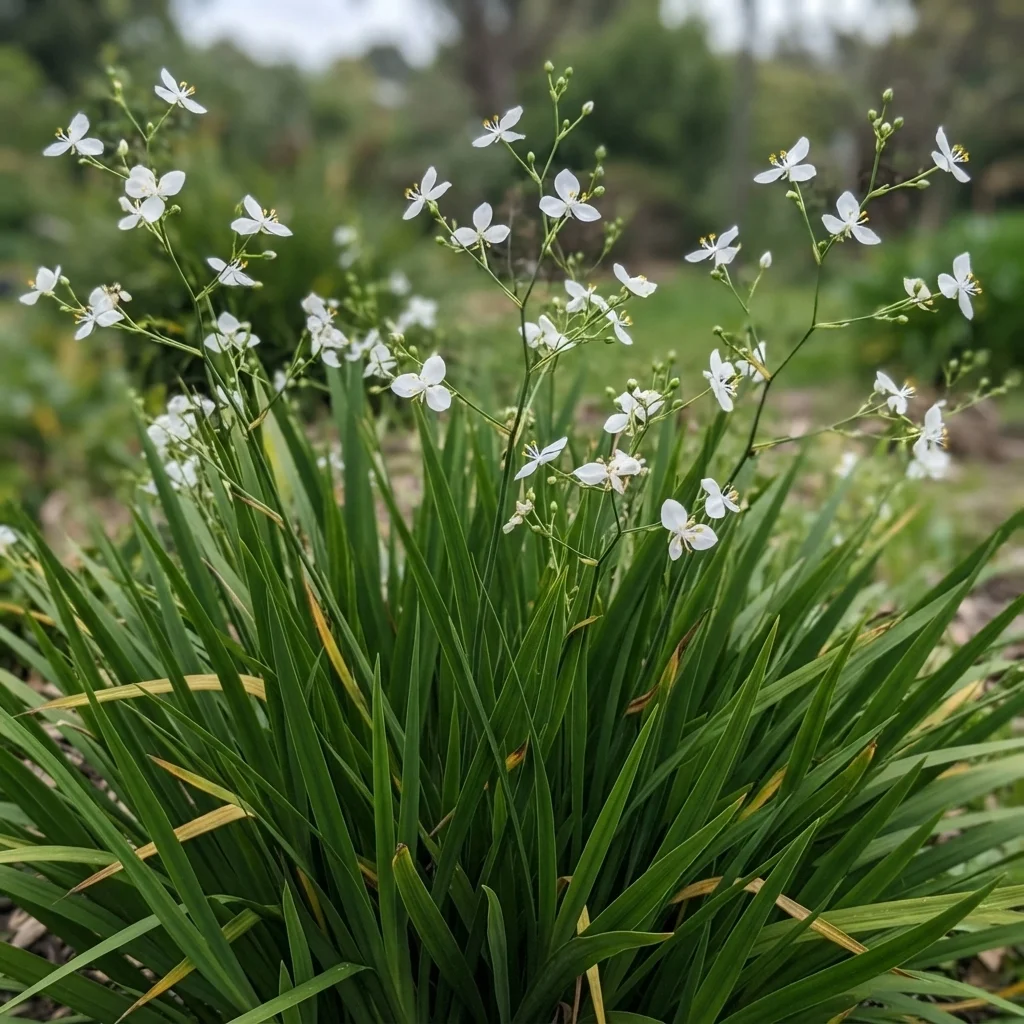
Libertia ixioides is an evergreen, rhizomatous perennial native to New Zealand, forming upright clumps of rigid, linear foliage up to three feet tall. In late spring, branching panicles produce clusters of three-petaled white flowers with central yellow anthers directly above the leaf fans.
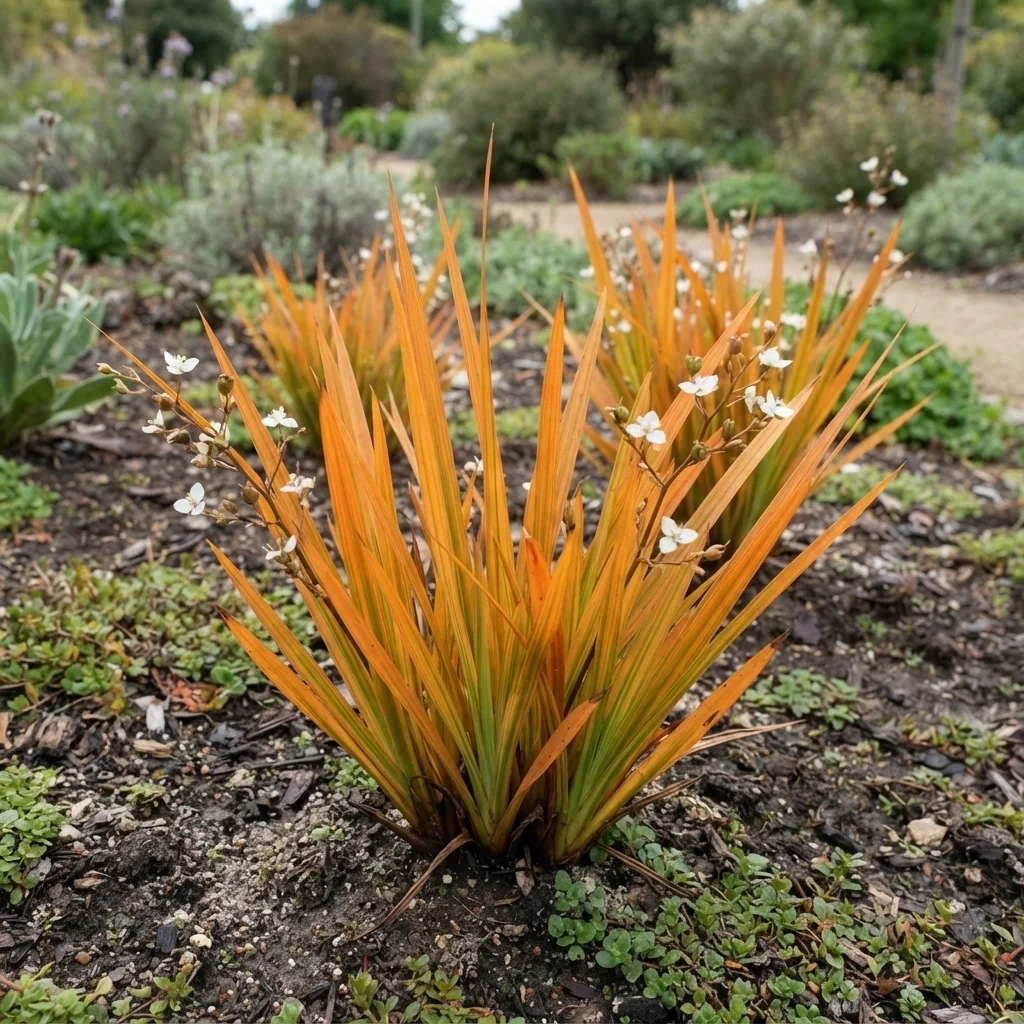
Full sun exposure or winter cold triggers a vivid color transition in the foliage, shifting the leaves from bright green to shades of gold, bronze, and copper-orange. The blooms are followed by large seed capsules that dry to a persistent tan or black, providing structural interest into winter.
Uses & Benefits:
Essentials
At a Glance
Plant Type
Perennial
Height
35"
Width
35"
Light
Full Sun, Partial Sun
Zones
7, 8, 9
Water
Low to moderate
Humidity
Moderate
Lifespan
Perennial
Native To
New Zealand
Toxicity
Non-toxic
Bloom period
Late spring – Early summer
In flower about 2 months of the year
Marketplace
Where to Buy
Shipping costs Year-round shipping Free shipping
Planting
How to Grow
- Select a planting location in full sun to light afternoon shade with sharply draining soil.
- Amend dense garden soils with coarse sand or fine gravel to prevent winter wetness.
- Set the plant at the same soil level as its container and water thoroughly to settle roots.
- Comb out tattered or brown foliage manually each spring to keep the clump tidy.
Pro Tip
Never shear or cut the foliage back hard into bare basal tissue, as damaged leaf stems will not regenerate; instead, comb out or manually trim dead leaves at the ground line in spring.
Keep It Thriving
Care Guide
Do
- Provide full sun exposure to maximize golden and bronze foliage pigmentation.
- Plant in sharply draining soil mixes to prevent winter crown decay.
- Trim or comb out dead foliage individual blade by blade at the base in spring.
Don't
- Do not shear the foliage back flat with hedge trimmers.
- Avoid planting in heavy clay soils without grit amendments or raised drainage.
- Do not over-fertilize, which leads to weak, floppy foliage.
Seasonal Care Calendar
| Task | Jan | Feb | Mar | Apr | May | Jun | Jul | Aug | Sep | Oct | Nov | Dec |
|---|---|---|---|---|---|---|---|---|---|---|---|---|
| Divide | ||||||||||||
| Fertilize | ||||||||||||
| Pest Check | ||||||||||||
| Spring Cleanup |
Watch Out For
Pests & Diseases
Common Pests
Common Diseases
In the Garden
Landscape Uses & Companions
Landscape Uses
Multiply
Propagation Methods
Good to Know
Common Questions
New Zealand Iris questions
What zones can New Zealand Iris grow in?
New Zealand Iris is hardy in USDA Zones 7–9: in that range it survives winter in the ground. Colder than Zone 7, grow it in a container you can move to shelter for the winter, or as an annual. Warmer than Zone 9, winter isn't the problem: it prefers colder winters, and summer heat can shorten its life.
Is New Zealand Iris deer resistant?
Yes — New Zealand Iris is rated deer-resistant. Deer typically pass it over, though extreme hunger can override any plant's defenses.
When does New Zealand Iris bloom?
New Zealand Iris typically blooms from late spring to early summer. Exact timing shifts a week or two with your zone — Sow's bloom calendar maps it to your garden.
Does New Zealand Iris need full sun?
New Zealand Iris does best in full sun to part shade. In hot climates, afternoon shade keeps blooms fresher longer.
Is New Zealand Iris drought tolerant?
Yes — once established (usually after the first full season), New Zealand Iris handles dry spells with minimal watering. Water deeply its first year to build the root system that makes that possible.
More Libertia to compare
Keep exploring
Explore the genus
Hardy in your zone?
Grow New Zealand Iris with confidence
See it in a design of your actual yard, get zone-matched care reminders, and track it season by season in your garden journal.