The Story
Plant Bio
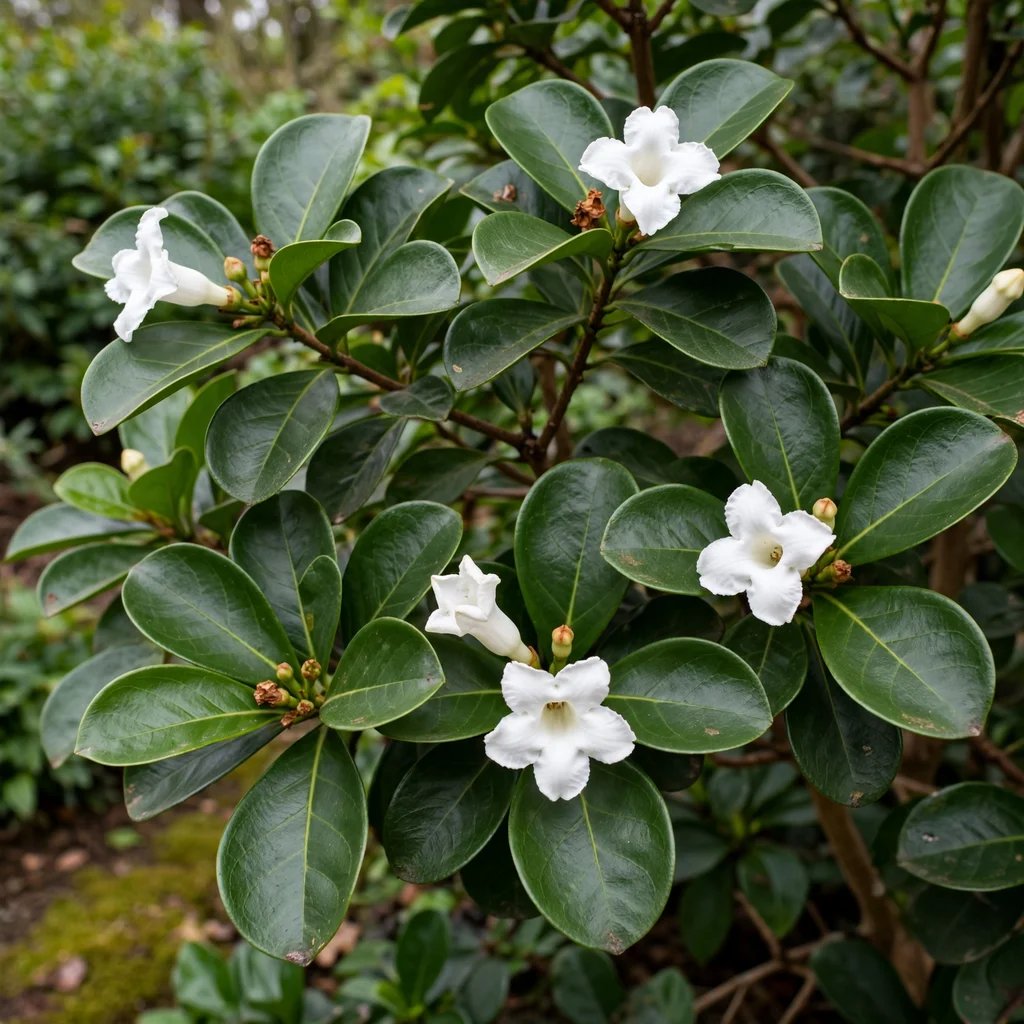
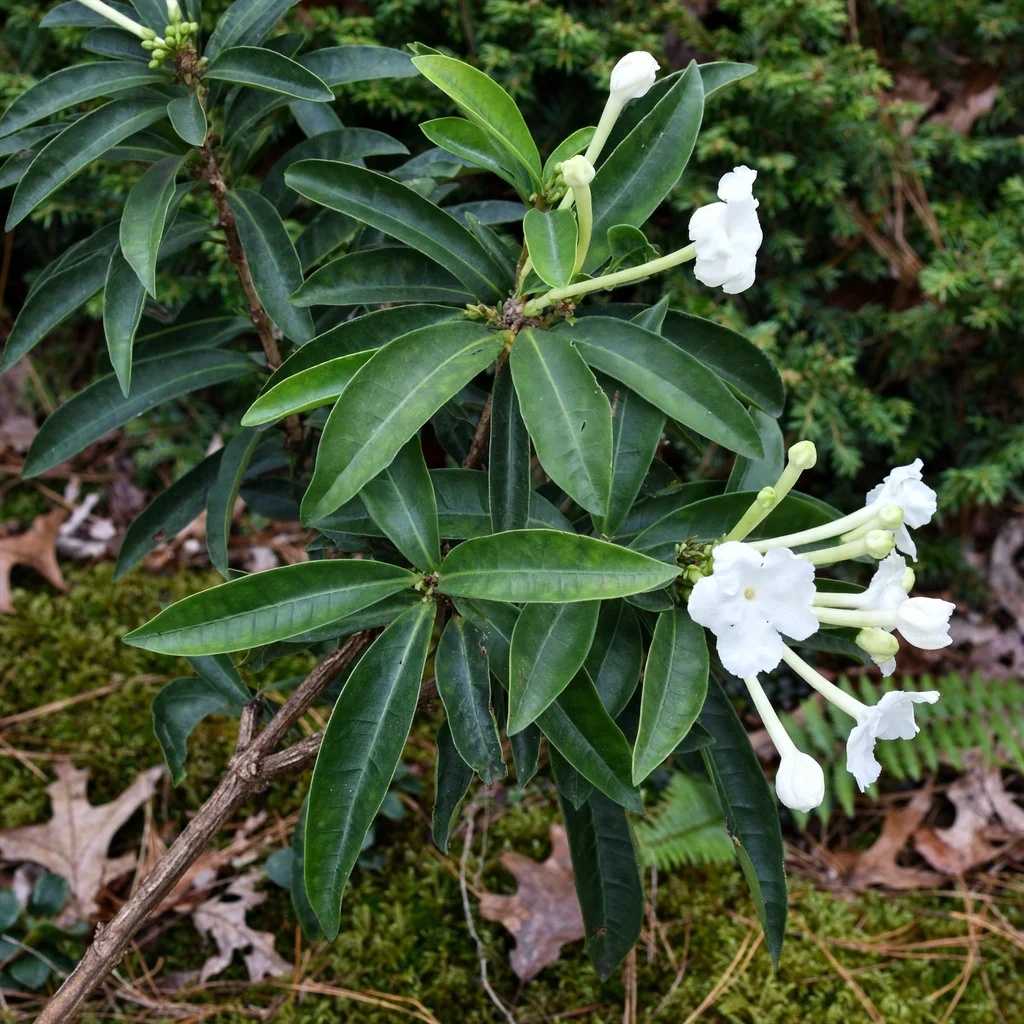
Brunfelsia nitida, commonly known as lady of the night, is an evergreen tropical shrub native to Cuba that grows five to ten feet tall with glossy, narrow foliage. From late spring through autumn, it produces clusters of long tubular white flowers that age to a creamy hue and release a powerful clove-like fragrance after dark.
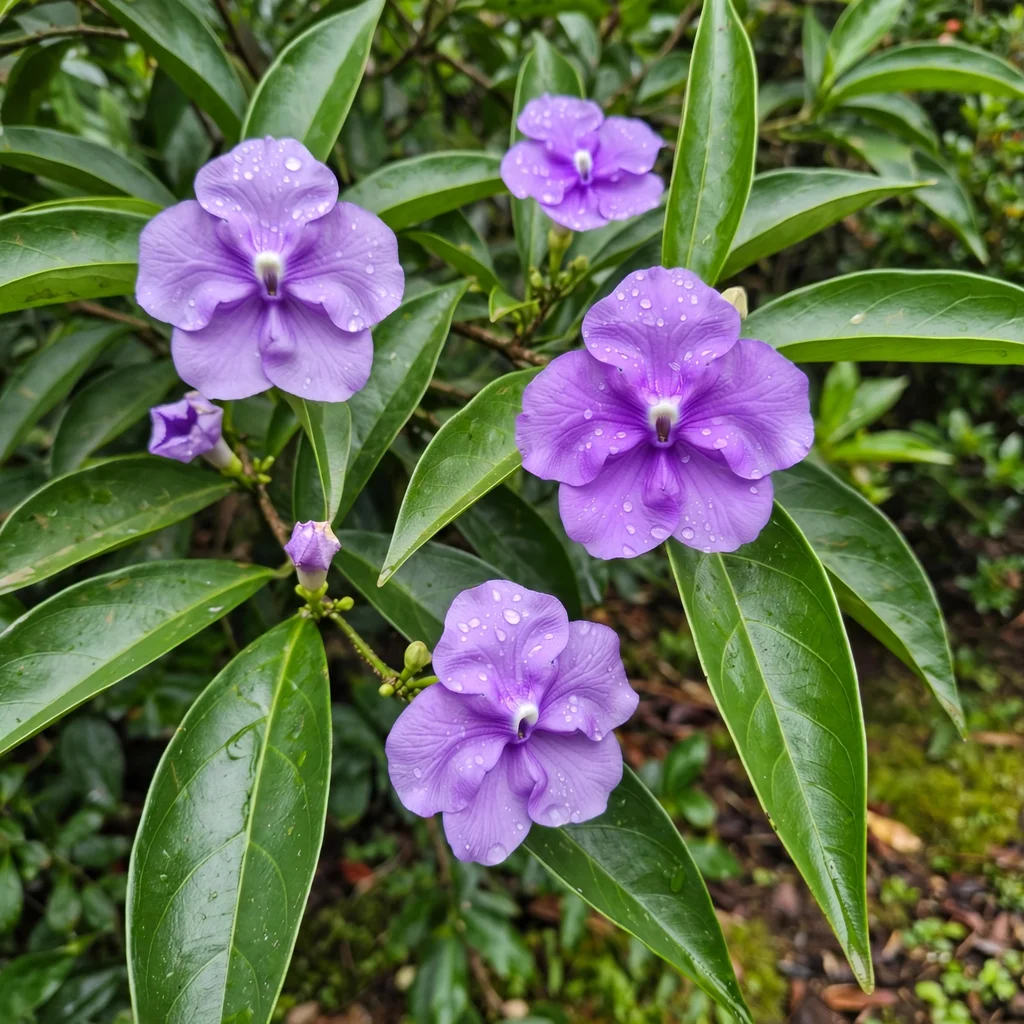
Unlike its color-shifting relatives in the genus that fade from purple to white, this species maintains pristine white-to-cream blossoms dedicated to nocturnal pollinators. Its dark, polished leaves remain dense year-round when grown in warm, frost-free climates.
Uses & Benefits:
Essentials
At a Glance
Plant Type
Shrub
Height
96"
Width
72"
Light
Full Sun, Partial Sun
Zones
9, 10
Water
Moderate
Humidity
High
Lifespan
Perennial
Native To
Cuba
Toxicity
High
Bloom period
Late spring – Fall
In flower about 7 months of the year
Planting
How to Grow
- Select a sheltered site receiving full sun to partial shade in well-draining soil rich in organic matter.
- Plant at the same depth as the nursery container, firming the soil gently around the root ball.
- Water thoroughly after planting and maintain moderate soil moisture during the first growing season.
- Apply a thick layer of organic mulch around the root zone to conserve moisture and regulate soil temperature.
Pro Tip
Prune lightly immediately after a blooming flush to maintain a compact shape; hard spring shearing strips the developing flower buds.
Keep It Thriving
Care Guide
Do
- Do plant in well-drained soil amended with organic material.
- Do provide protection from cold winds and frost.
- Do keep pets away from all plant parts due to toxicity.
Don't
- Don't allow the soil to remain waterlogged, which promotes root rot.
- Don't shear hard in late winter or early spring, as this reduces flowering.
- Don't plant near areas where domestic animals or livestock graze.
Seasonal Care Calendar
| Task | Jan | Feb | Mar | Apr | May | Jun | Jul | Aug | Sep | Oct | Nov | Dec |
|---|---|---|---|---|---|---|---|---|---|---|---|---|
| Fertilize | ||||||||||||
| Mulch | ||||||||||||
| Pest Check | ||||||||||||
| Propagate | ||||||||||||
| Prune |
Watch Out For
Pests & Diseases
Common Pests
Common Diseases
In the Garden
Landscape Uses & Companions
Landscape Uses
Multiply
Propagation Methods
Good to Know
Common Questions
Lady of the Night questions
What zones can Lady of the Night grow in?
Lady of the Night is hardy in USDA Zones 9–10: in that range it survives winter in the ground. Colder than Zone 9, grow it in a container you can move to shelter for the winter.
Is Lady of the Night deer resistant?
Yes — Lady of the Night is rated deer-resistant. Deer typically pass it over, though extreme hunger can override any plant's defenses.
When does Lady of the Night bloom?
Lady of the Night typically blooms from late spring to late fall. Exact timing shifts a week or two with your zone — Sow's bloom calendar maps it to your garden.
Does Lady of the Night need full sun?
Lady of the Night does best in full sun to part shade. In hot climates, afternoon shade keeps blooms fresher longer.
Is Lady of the Night drought tolerant?
Yes — once established (usually after the first full season), Lady of the Night handles dry spells with minimal watering. Water deeply its first year to build the root system that makes that possible.
More Brunfelsia to compare
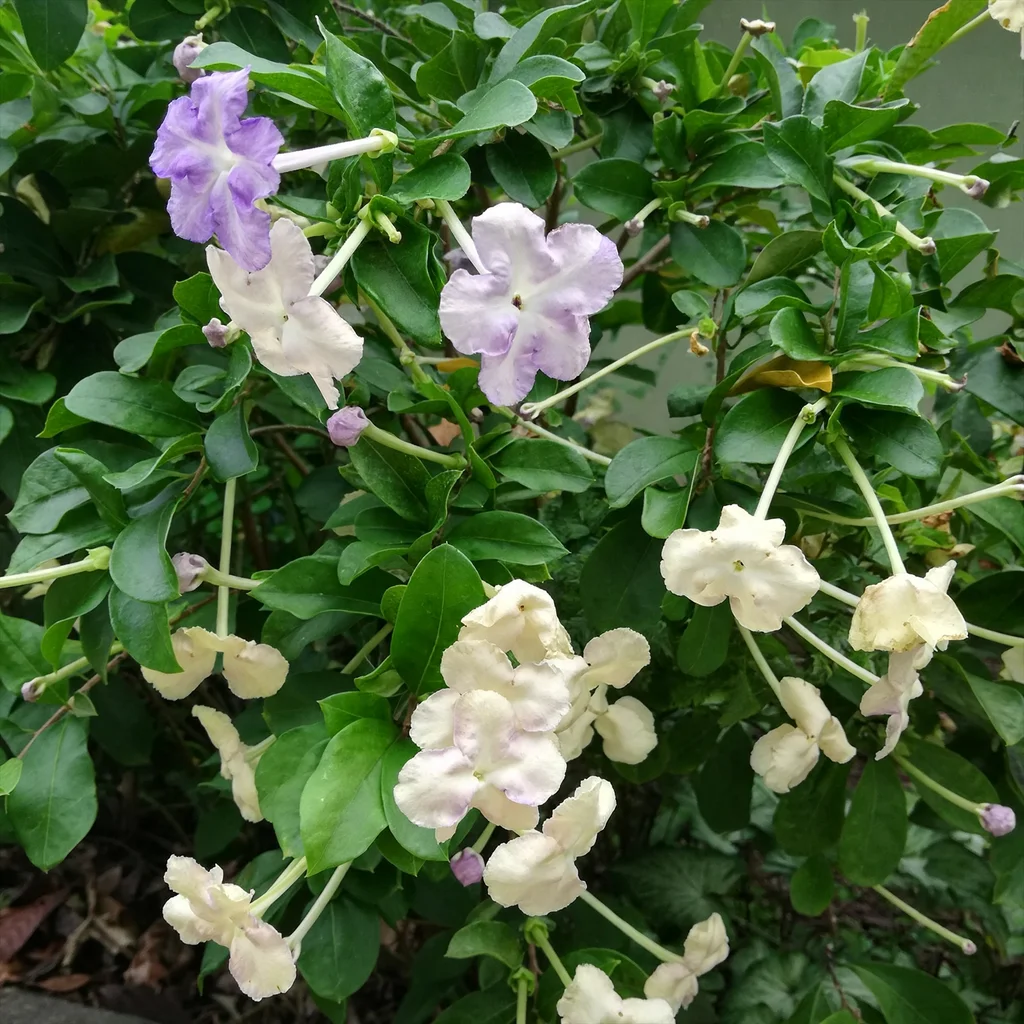
Lavender Lady of the Night
Brunfelsia isola 'Isola'
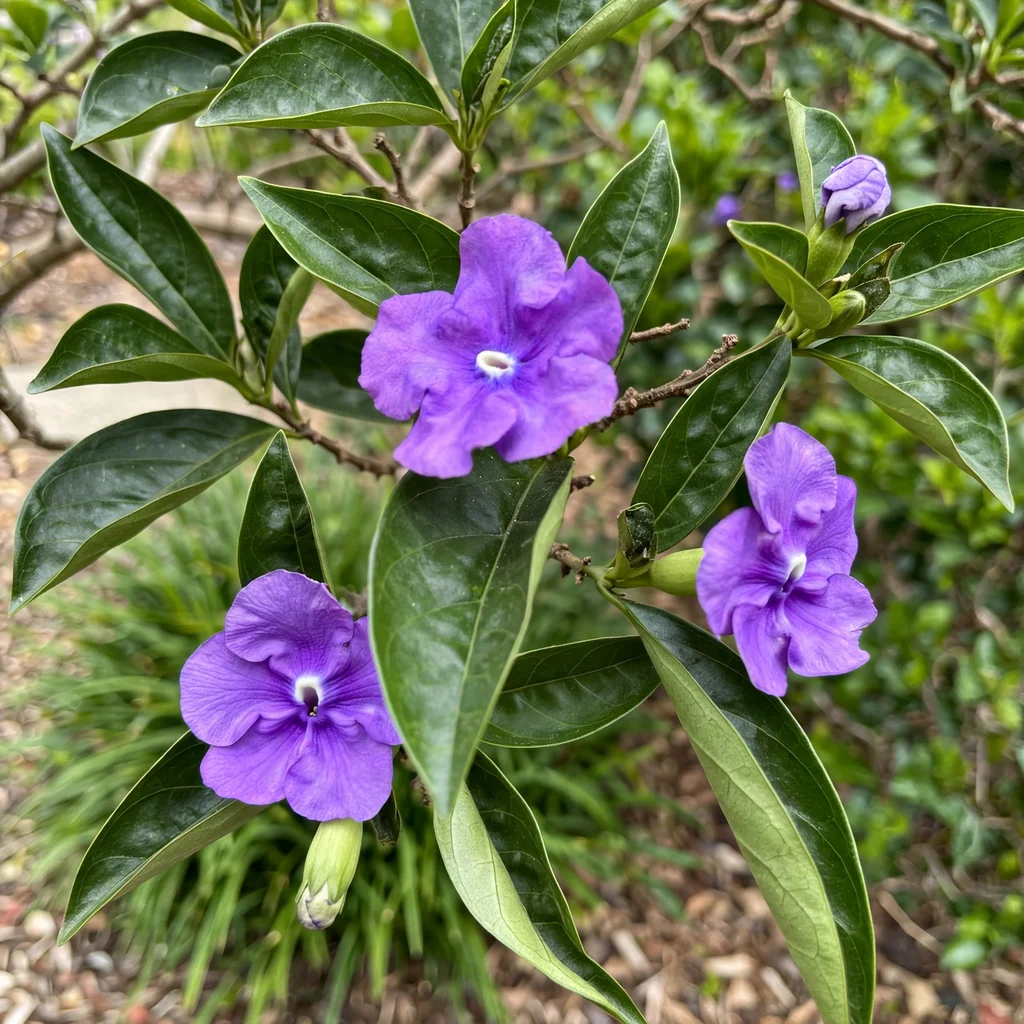
Yesterday
Brunfelsia pauciflora
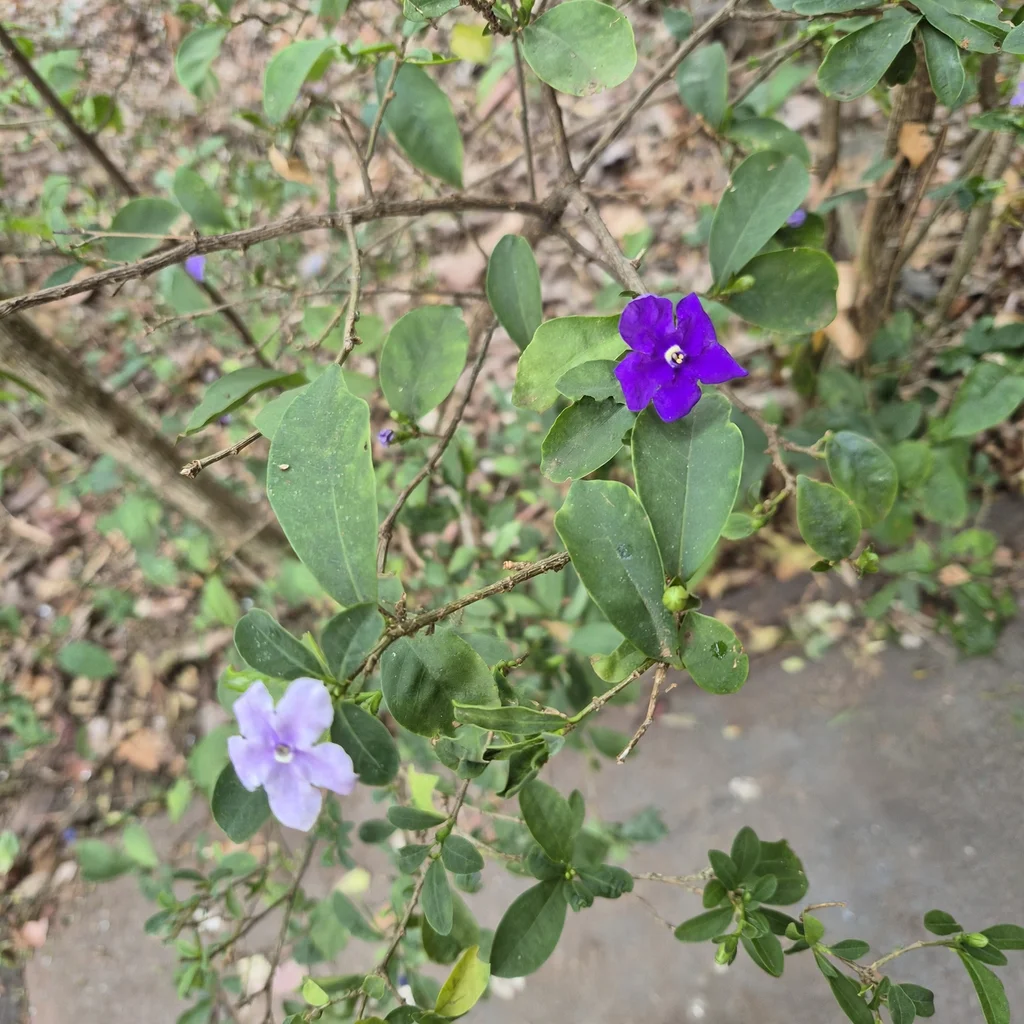
Yesterday Today And Tomorrow
Brunfelsia uniflora
Jamaican Lady of the Night
Brunfelsia plicata
Yesterday-Today-And-Tomorrow
Brunfelsia grandiflora
Keep exploring
Explore the genus
Hardy in your zone?
Grow Lady of the Night with confidence
See it in a design of your actual yard, get zone-matched care reminders, and track it season by season in your garden journal.