The Story
Plant Bio
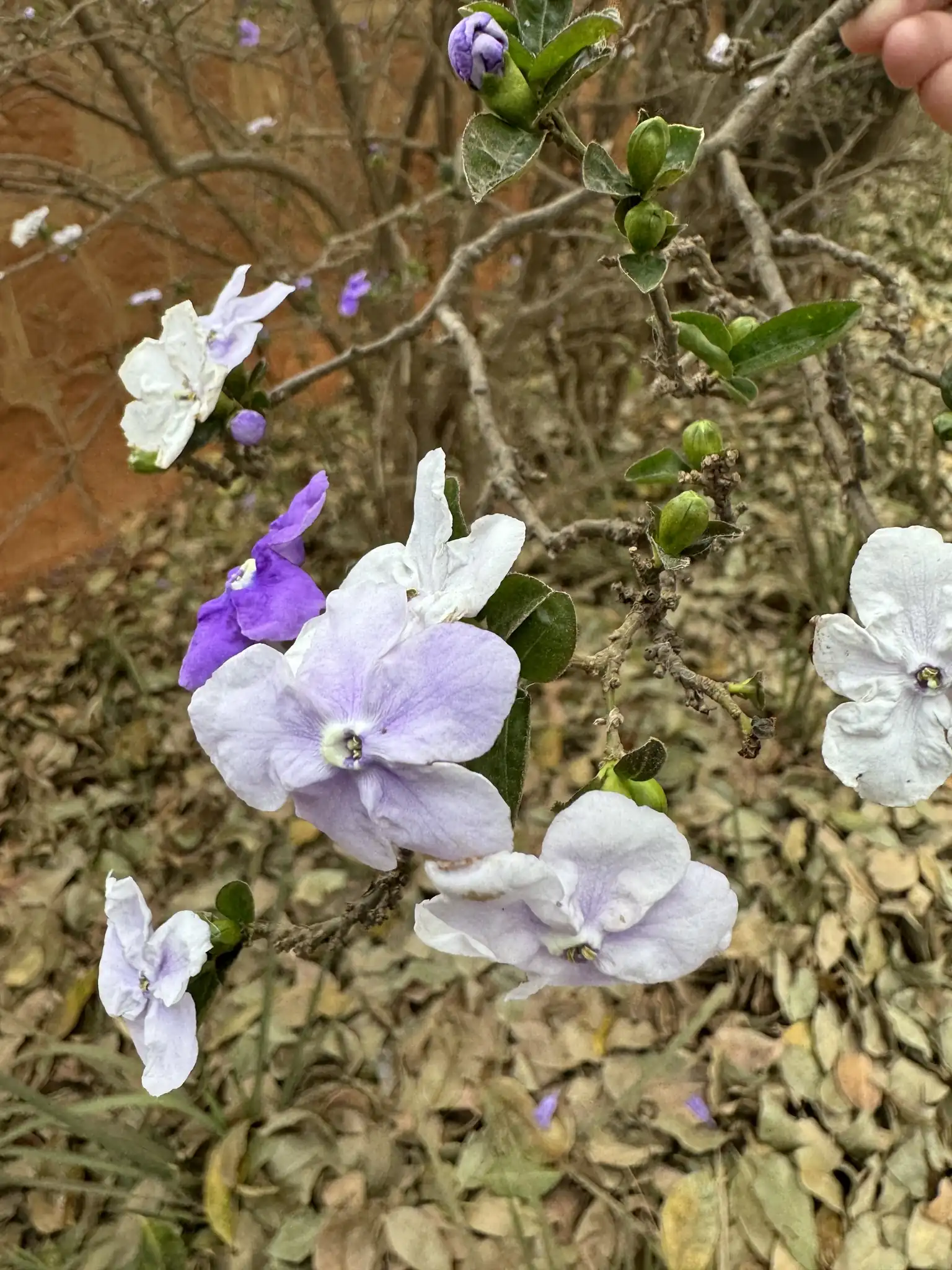
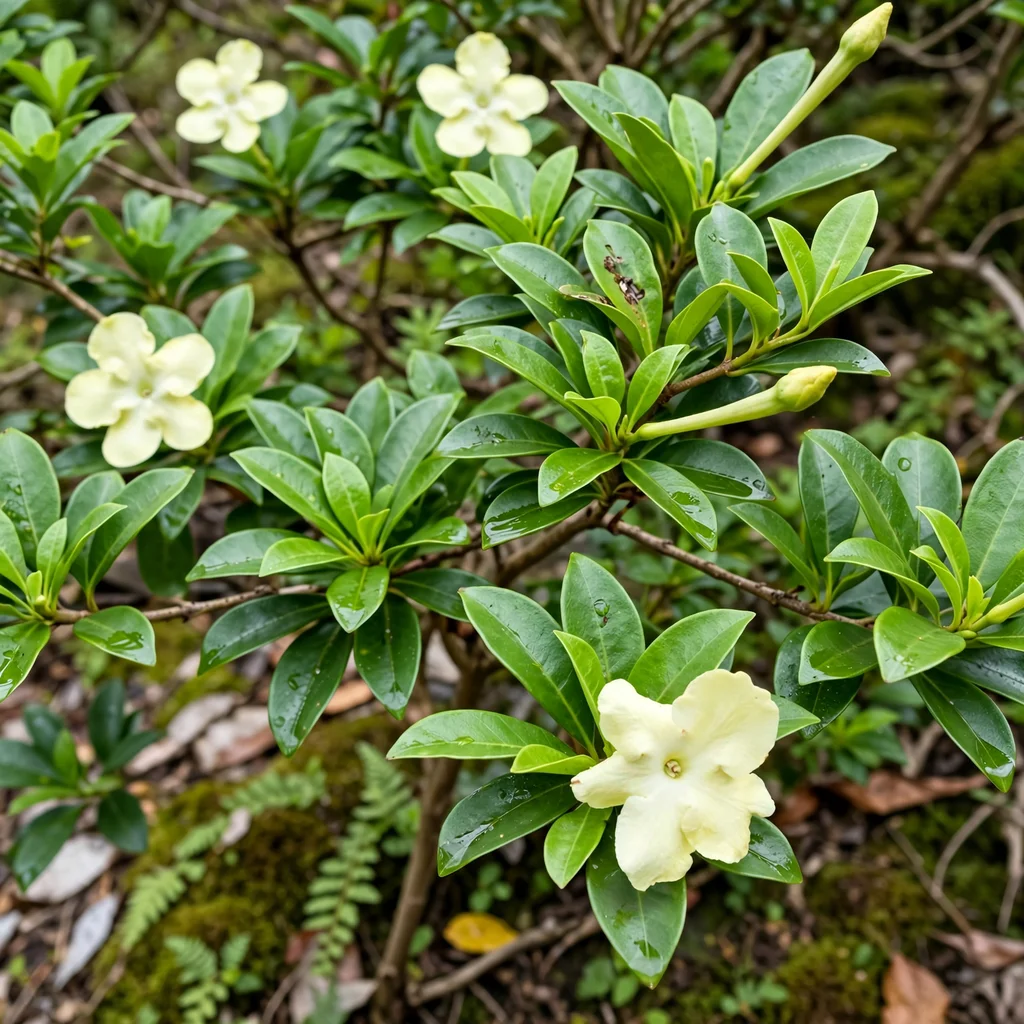
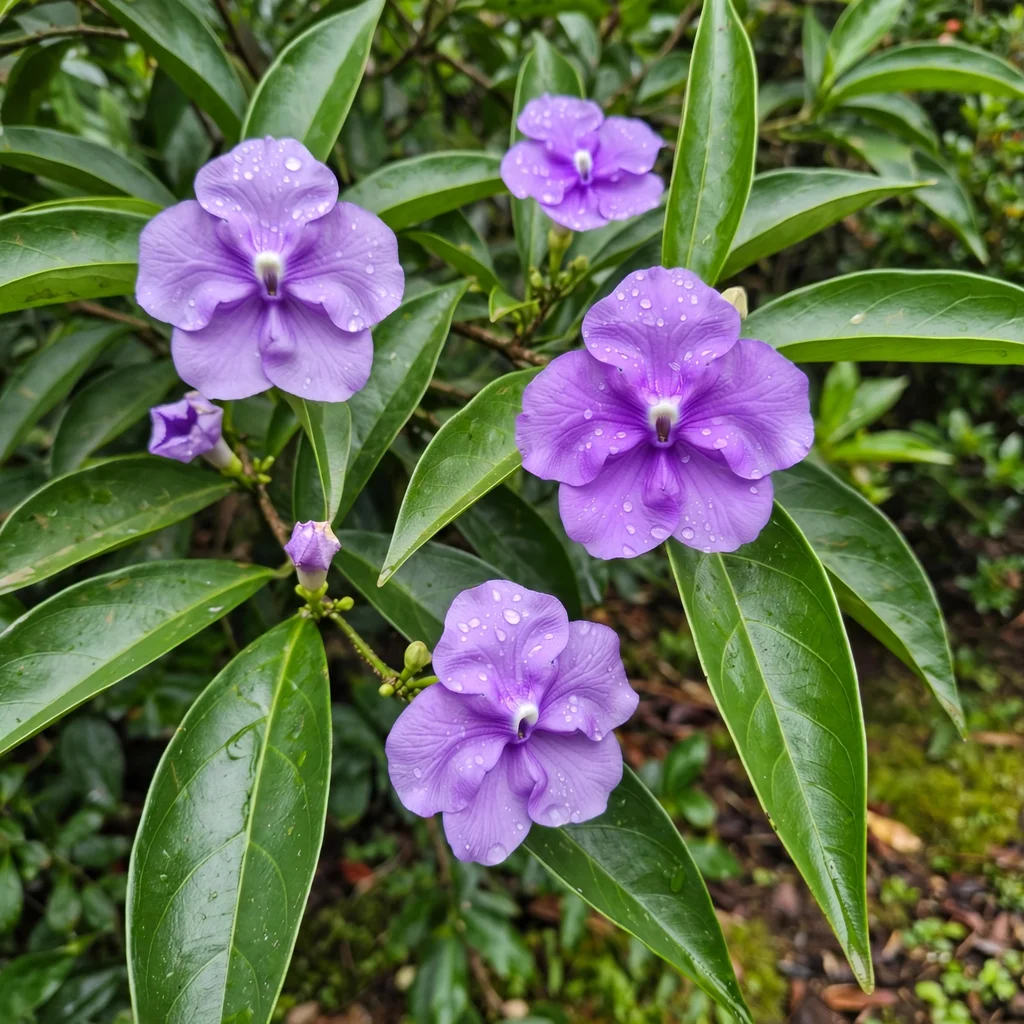
Brunfelsia pauciflora is a bushy semi-evergreen shrub from the woodlands of Brazil, reaching three to eight feet tall with an open airy habit and dark green glossy leaves pale beneath. The tubular buds open to flat five-petaled disks with white throats, borne in clusters at the stem tips through the warm season.
Flowers open deep purple and fade through lavender to white, so all three colors show together on the plant at once. The blooms are sweetly fragrant and form only on new growth, with the heaviest flush in spring and early summer and repeat flowering when warm and moist.
Uses & Benefits:
Essentials
At a Glance
Plant Type
Shrub
Height
96"
Width
72"
Light
Full Sun, Partial Sun
Zones
9, 10
Water
Medium - moist but not soggy
Humidity
High - humidity loving
Lifespan
Perennial shrub
Native To
Brazil
Toxicity
Toxic if ingested - all parts, especially berries
Bloom period
Spring – Summer
In flower about 6 months of the year
Marketplace
Where to Buy
Shipping costs Year-round shipping Free shipping
Planting
How to Grow
- Plant in full sun to partial shade with midday shade, in moist humus-rich acidic soil that drains freely.
- Water to keep soil evenly moist but never soggy, with extra humidity in heat.
- Feed with balanced slow-release fertilizer from spring to early fall.
- Tip-prune after each flower flush and shape in fall to build new blooming wood.
- Below zone 9 grow in a container, give 3 hours sun daily indoors and cut back water when dormant.
Pro Tip
Prune right after the spring flush to force the new tips that carry the next flowers; hard cuts into old wood cost bloom and leaf out slowly.
Keep It Thriving
Care Guide
Do
- Plant in acidic humus-rich soil that stays moist but drains
- Give midday shade where summers are hot to keep foliage fresh
- Prune after flowering to build the new wood that blooms next
Don't
- Don't let soil stay soggy or sit in standing water
- Don't cut hard into old leafless wood, it regrows slowly and loses bloom
- Don't plant where dogs, cats or children can chew leaves or berries
Seasonal Care Calendar
| Task | Jan | Feb | Mar | Apr | May | Jun | Jul | Aug | Sep | Oct | Nov | Dec |
|---|---|---|---|---|---|---|---|---|---|---|---|---|
| Fertilize | ||||||||||||
| Mulch | ||||||||||||
| Pest Check | ||||||||||||
| Prune | ||||||||||||
| Winter Prep |
Watch Out For
Pests & Diseases
Common Pests
Common Diseases
In the Garden
Landscape Uses & Companions
Landscape Uses
Multiply
Propagation Methods
Good to Know
Common Questions
Yesterday questions
What zones can Yesterday grow in?
Yesterday is hardy in USDA Zones 9–10: in that range it survives winter in the ground. Colder than Zone 9, grow it in a container you can move to shelter for the winter.
When does Yesterday bloom?
Yesterday typically blooms from spring to summer. Exact timing shifts a week or two with your zone — Sow's bloom calendar maps it to your garden.
Does Yesterday need full sun?
Yesterday does best in full sun to part shade. In hot climates, afternoon shade keeps blooms fresher longer.
More Brunfelsia to compare
Keep exploring
Explore the genus
Hardy in your zone?
Grow Yesterday with confidence
See it in a design of your actual yard, get zone-matched care reminders, and track it season by season in your garden journal.