The Story
Plant Bio
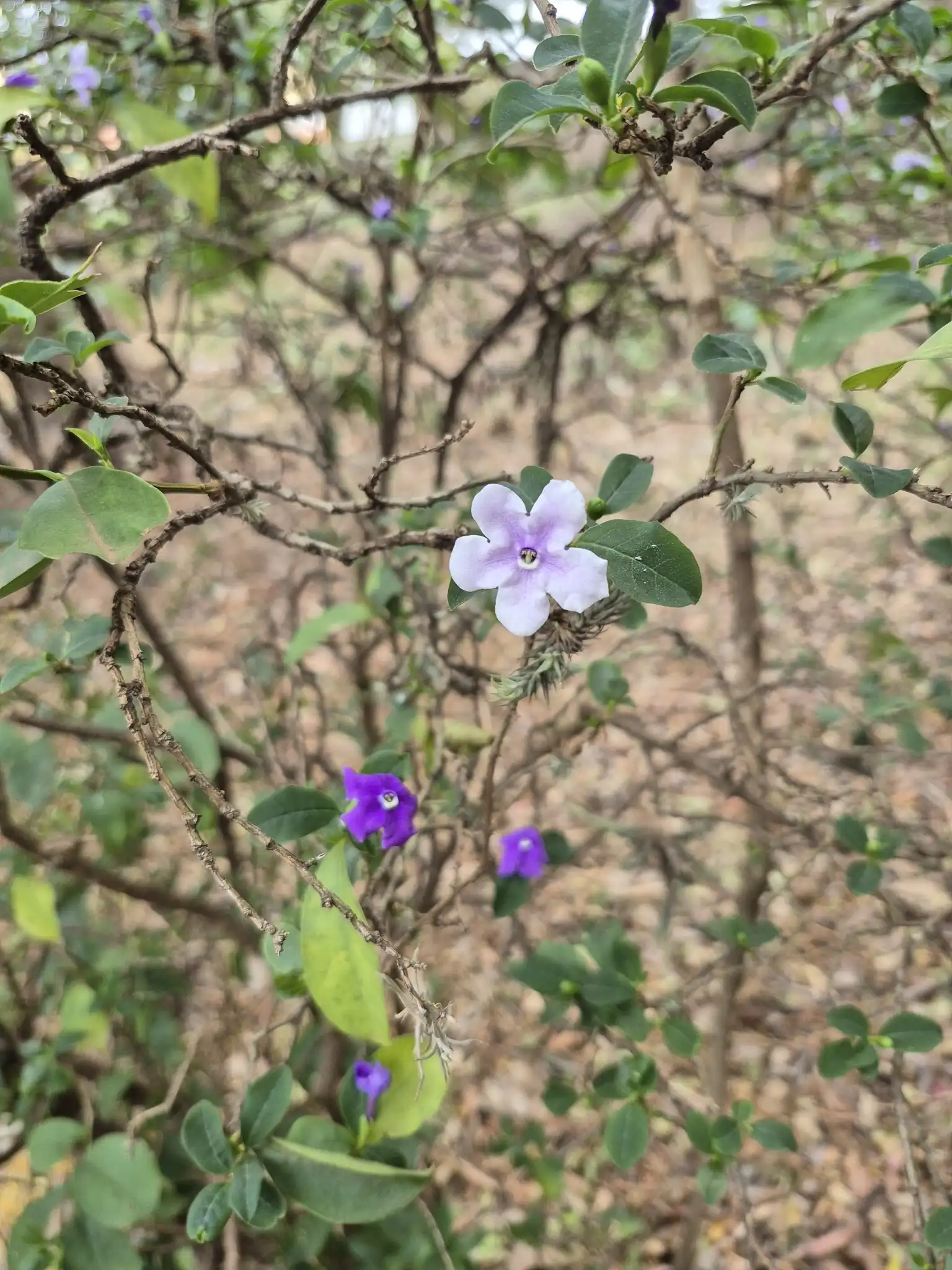
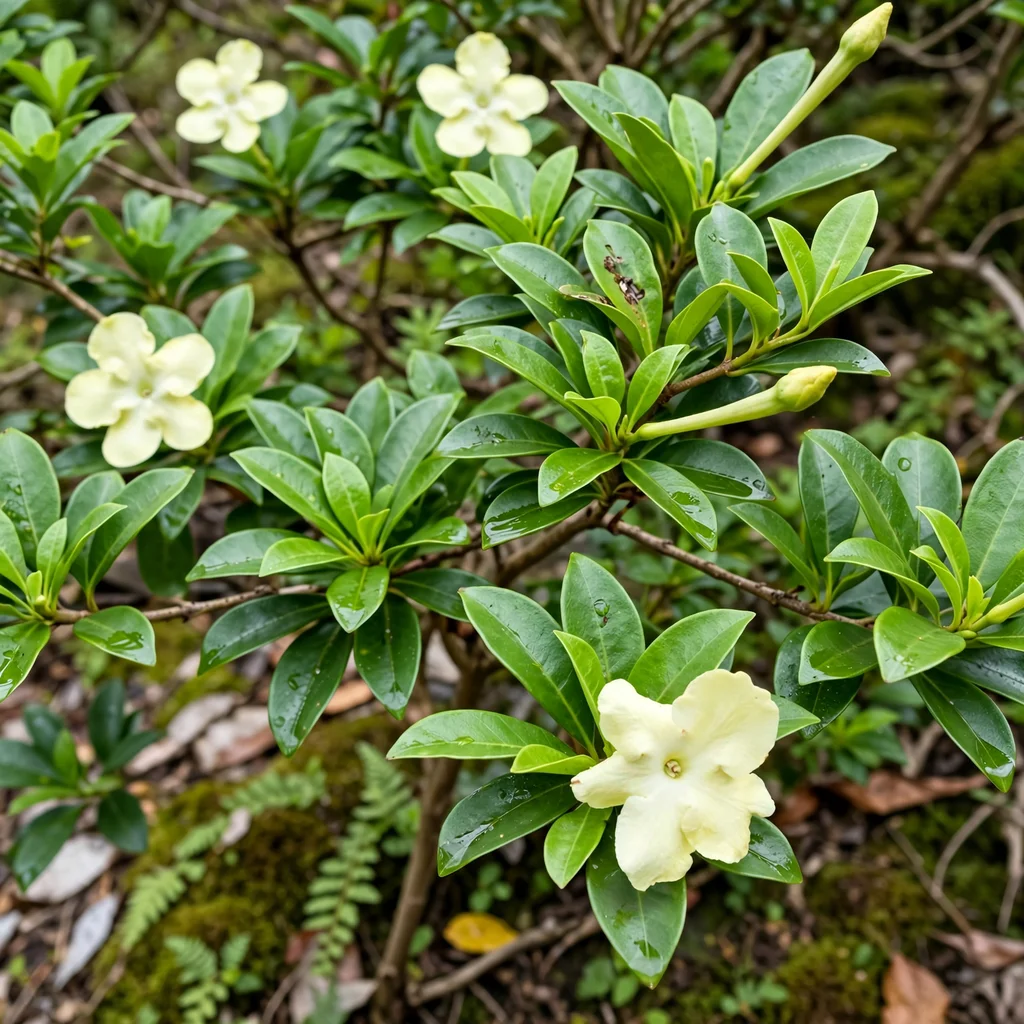
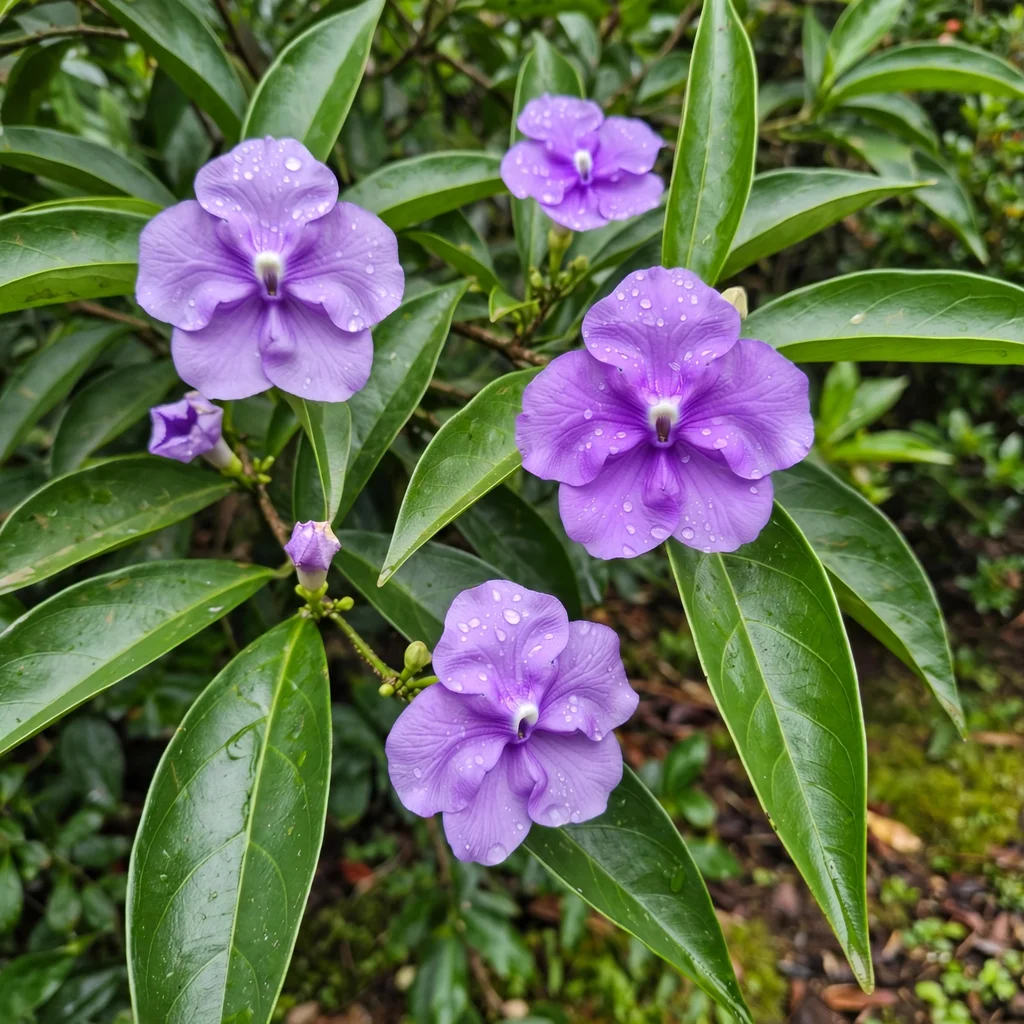
Brunfelsia uniflora is an evergreen shrub in the nightshade family, reaching 5 to 10 feet in gardens with a bushy, broadly rounded frame and dark green glossy leaves held year-round. Its solitary trumpet-shaped flowers open deep blue-violet and fade through lavender to white, so blooms in three colors appear along the branches at once.
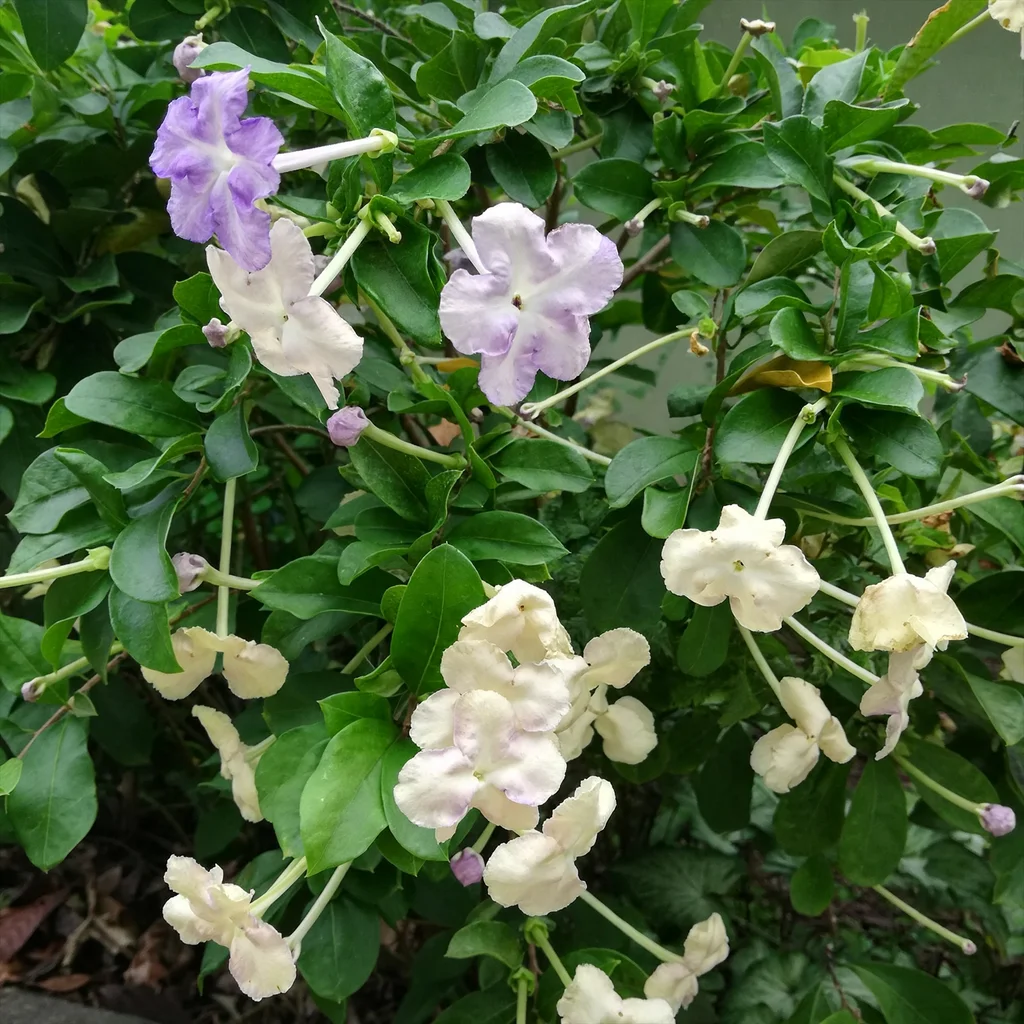
Unlike the clustered-flowered yesterday-today-and-tomorrow types sold as Brunfelsia pauciflora, uniflora bears its fragrant five-petaled blooms singly along the stems. Each flower fades from purple to white with age rather than from nutrient deficiency, and plants rebloom after a light shear following each cycle.
Uses & Benefits:
Essentials
At a Glance
Plant Type
Shrub
Height
96"
Width
60"
Light
Full Sun, Partial Sun
Zones
9, 10
Water
Moderate
Humidity
High
Lifespan
Long-lived evergreen shrub
Native To
Brazil and South America
Toxicity
Highly toxic
Bloom period
Spring – Fall
In flower about 9 months of the year
Planting
How to Grow
- Plant in spring in semi-shade with protection from midday sun, in humus-rich loam that stays moist but drains freely.
- Set container plants in a 14- to 16-inch pot of peat, perlite and compost with pH near 6.5.
- Water regularly to keep soil evenly moist and humidity high; never leave roots waterlogged.
- Feed with balanced 10-10-10 fertilizer every 4 to 6 weeks during active growth.
- Move pots indoors before nights drop below 50F and hold above 45F in bright light through winter.
Pro Tip
Shear lightly after each bloom cycle to trigger rebloom; the purple-to-white fade is normal aging, not a fertilizer fault.
Keep It Thriving
Care Guide
Do
- Prune lightly after each bloom cycle to keep growth dense and reblooming
- Grow in morning sun with afternoon shade in hot climates
- Keep soil evenly moist with composted bark mulch
- Wash hands after handling and site away from pets and livestock
Don't
- Do not cut hard into old bare wood; regrowth is slow and patchy
- Do not let soil stay waterlogged or dry to dust
- Do not feed outside active growth or mistake color fading for nutrient deficiency
Seasonal Care Calendar
| Task | Jan | Feb | Mar | Apr | May | Jun | Jul | Aug | Sep | Oct | Nov | Dec |
|---|---|---|---|---|---|---|---|---|---|---|---|---|
| Fertilize | ||||||||||||
| Mulch | ||||||||||||
| Plant | ||||||||||||
| Prune | ||||||||||||
| Winter Prep |
Watch Out For
Pests & Diseases
Common Pests
Common Diseases
In the Garden
Landscape Uses & Companions
Landscape Uses
Multiply
Propagation Methods
Good to Know
Common Questions
Yesterday Today And Tomorrow questions
What zones can Yesterday Today And Tomorrow grow in?
Yesterday Today And Tomorrow is hardy in USDA Zones 9–10: in that range it survives winter in the ground. Colder than Zone 9, grow it in a container you can move to shelter for the winter.
When does Yesterday Today And Tomorrow bloom?
Yesterday Today And Tomorrow typically blooms from spring to fall. Exact timing shifts a week or two with your zone — Sow's bloom calendar maps it to your garden.
Does Yesterday Today And Tomorrow need full sun?
Yesterday Today And Tomorrow does best in full sun to part shade. In hot climates, afternoon shade keeps blooms fresher longer.
More Brunfelsia to compare
Keep exploring
Explore the genus
Hardy in your zone?
Grow Yesterday Today And Tomorrow with confidence
See it in a design of your actual yard, get zone-matched care reminders, and track it season by season in your garden journal.