The Story
Plant Bio
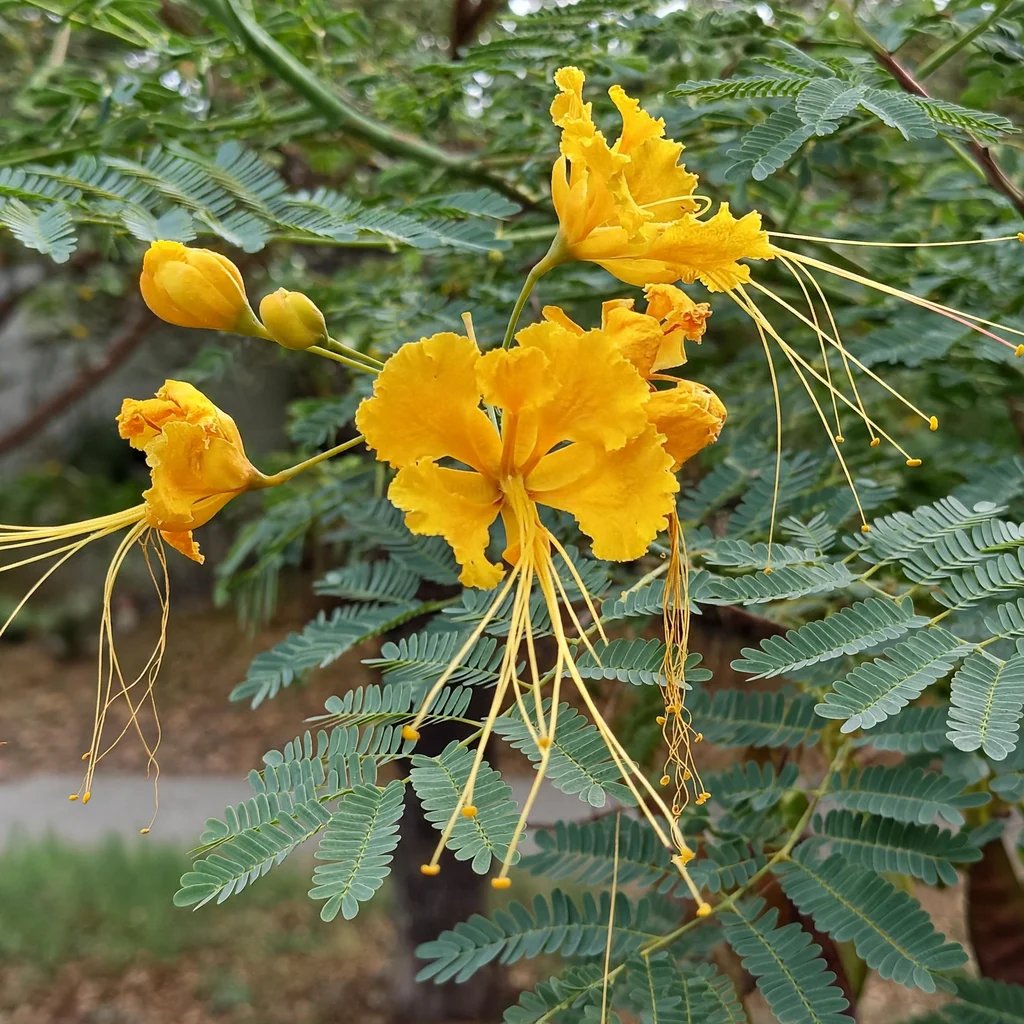
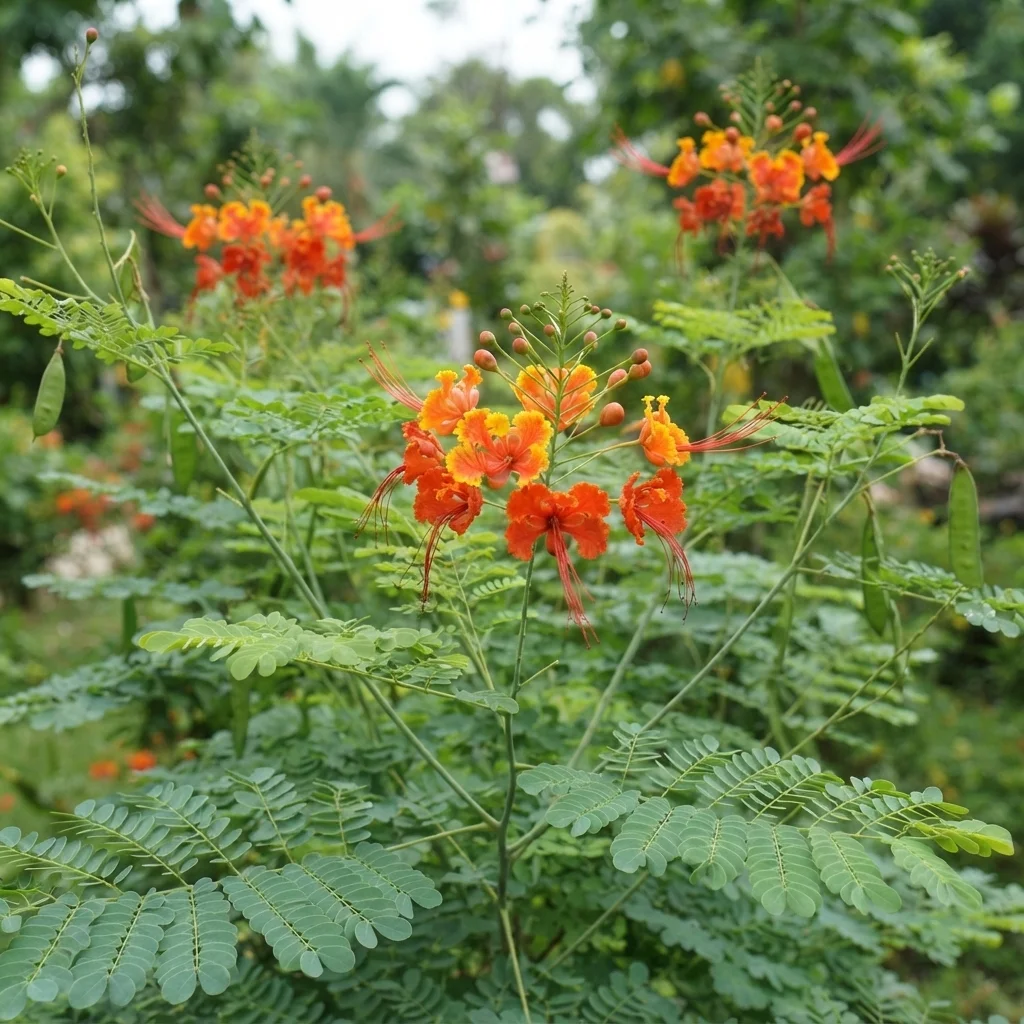
Caesalpinia mexicana, sold as Mexican bird of paradise, is a fast-growing, thornless evergreen shrub to small tree from Texas and central Mexico, reaching 6 to 10 feet with a rounded crown and brittle wood. The leaves are finely textured and twice-divided, with 4- to 8-inch blades carrying many leaflets under 2 inches long.
The display comes from upright terminal racemes 3 to 6 inches long of bright yellow, fragrant flowers that open from spring through fall and nearly year-round where winters stay warm. Unlike Caesalpinia pulcherrima and Caesalpinia gilliesii, which carry red and orange, its flowers are clear yellow, and the flat pods that follow fling seed several feet when they split.
Uses & Benefits:
Essentials
At a Glance
Plant Type
Shrub
Height
144"
Width
120"
Light
Full Sun, Partial Sun
Zones
8, 9, 10
Water
Low
Humidity
Unknown
Lifespan
Woody perennial
Native To
Texas, Mexico
Toxicity
Toxic if ingested
Bloom period
Spring – Fall
In flower about 9 months of the year
Planting
How to Grow
- Plant in full sun in sharply drained sand, loam, clay, or limestone after the last frost.
- Set the root ball level with the soil and water in deeply, then water infrequently once established.
- Mulch lightly to hold heat but keep mulch off the stem.
- Remove spent flower stalks and young pods to limit reseeding and litter.
- Leave the canopy in place over winter in zone 8-9; cut out only frost-killed wood in spring.
Pro Tip
Clip off spent racemes and young pods before they split; left on, they fling seed yards away and reseed freely in irrigated beds.
Keep It Thriving
Care Guide
Do
- Grow in full sun with excellent drainage
- Water deeply but infrequently once established
- Remove spent racemes and pods to reduce reseeding and mess
Don't
- Do not plant in soggy or poorly drained soil
- Do not leave ripe pods where children or pets can chew seeds
- Do not cut hard back into old leafless wood or force brittle limbs
Seasonal Care Calendar
| Task | Jan | Feb | Mar | Apr | May | Jun | Jul | Aug | Sep | Oct | Nov | Dec |
|---|---|---|---|---|---|---|---|---|---|---|---|---|
| Deadhead | ||||||||||||
| Fertilize | ||||||||||||
| Plant | ||||||||||||
| Prune | ||||||||||||
| Winter Prep |
Watch Out For
Pests & Diseases
Common Pests
Common Diseases
In the Garden
Landscape Uses & Companions
Landscape Uses
Multiply
Propagation Methods
Good to Know
Common Questions
Mexican Bird of Paradise questions
What zones can Mexican Bird of Paradise grow in?
Mexican Bird of Paradise is hardy in USDA Zones 8–10: in that range it survives winter in the ground. Colder than Zone 8, grow it in a container you can move to shelter for the winter.
Is Mexican Bird of Paradise deer resistant?
Yes — Mexican Bird of Paradise is rated deer-resistant. Deer typically pass it over, though extreme hunger can override any plant's defenses.
When does Mexican Bird of Paradise bloom?
Mexican Bird of Paradise typically blooms from spring to fall. Exact timing shifts a week or two with your zone — Sow's bloom calendar maps it to your garden.
Does Mexican Bird of Paradise need full sun?
Mexican Bird of Paradise does best in full sun to part shade. In hot climates, afternoon shade keeps blooms fresher longer.
Is Mexican Bird of Paradise drought tolerant?
Yes — once established (usually after the first full season), Mexican Bird of Paradise handles dry spells with minimal watering. Water deeply its first year to build the root system that makes that possible.
More Caesalpinia to compare
Keep exploring
Explore the genus
Hardy in your zone?
Grow Mexican Bird of Paradise with confidence
See it in a design of your actual yard, get zone-matched care reminders, and track it season by season in your garden journal.