The Story
Plant Bio
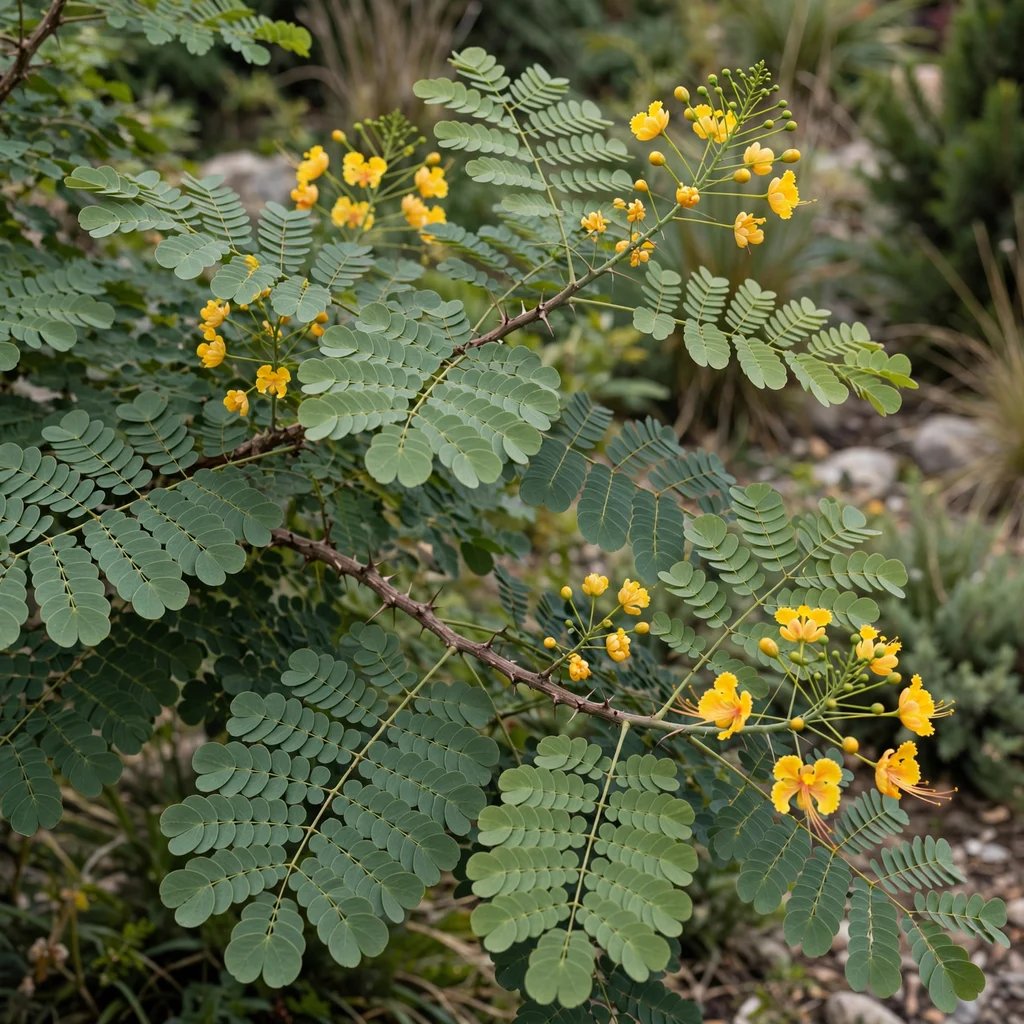
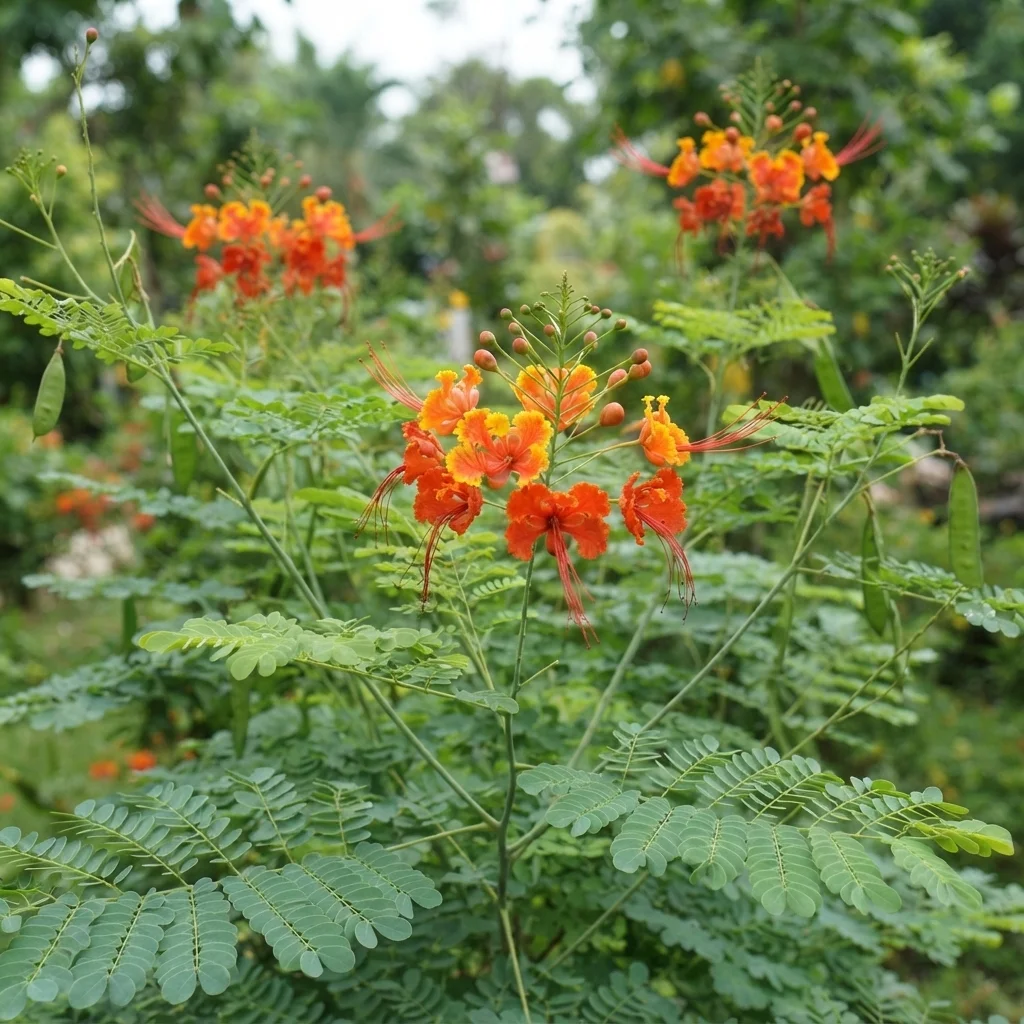
Tara cacalaco, still sold as Caesalpinia cacalaco, is a low-branching evergreen large shrub to small tree reaching 15 to 20 feet tall and wide with alternate bipinnate leaves of small rounded leaflets on thorny branches. Flowers are clear yellow in large upright spikes at the branch tips and open from late fall through winter when few other trees bloom.
Unlike summer-flowering bird of paradise types, it blooms in fall and winter and holds its bipinnate canopy through mild winters. Young growth carries curved rose-like thorns that remain on older limbs, and its flat tannin-rich pods persist after bloom; the selection 'Smoothie' grows thornless for paths and patios.
Uses & Benefits:
Essentials
At a Glance
Plant Type
Tree
Height
240"
Width
240"
Light
Full Sun
Zones
9, 10
Water
Low
Humidity
Unknown
Lifespan
Long-lived woody
Native To
Mexico
Toxicity
Toxic pods
Bloom period
Late fall – Early spring
In flower about 5 months of the year
Planting
How to Grow
- Plant in fall in full sun with room for a 15- to 20-foot canopy; reflected heat is tolerated.
- Dig into well-drained sandy soil and set the root ball level, watering deeply once to settle.
- Water deeply and infrequently the first year, then reduce to occasional deep soakings once established.
- Train to a single-trunk patio tree while young and remove frost-damaged wood in spring only.
- Feed little or not at all; add light slow-release fertilizer only if leaves pale despite proper watering.
Pro Tip
Leave frost-nipped branches until spring growth resumes, then cut back to live wood only and train young plants to a single trunk rather than shearing yearly.
Keep It Thriving
Care Guide
Do
- Give full sun and sharp drainage in sandy soil.
- Water deeply then let soil dry between soakings.
- Train early to a single trunk for a patio tree form.
- Leave frost-damaged wood until spring, then cut to live tissue.
Don't
- Do not shear or hard-prune every year.
- Do not overwater or keep soil constantly moist.
- Do not prune frost injury in fall or winter.
- Do not plant where children or pets chew the tannin-rich pods.
Seasonal Care Calendar
| Task | Jan | Feb | Mar | Apr | May | Jun | Jul | Aug | Sep | Oct | Nov | Dec |
|---|---|---|---|---|---|---|---|---|---|---|---|---|
| Fertilize | ||||||||||||
| Pest Check | ||||||||||||
| Plant | ||||||||||||
| Prune |
Watch Out For
Pests & Diseases
Common Pests
Common Diseases
In the Garden
Landscape Uses & Companions
Landscape Uses
Multiply
Propagation Methods
Good to Know
Common Questions
Cascalote questions
What zones can Cascalote grow in?
Cascalote is hardy in USDA Zones 9–10: in that range it survives winter in the ground. Colder than Zone 9, winters are too cold for it to survive outdoors.
When does Cascalote bloom?
Cascalote typically blooms from late fall to early spring. Exact timing shifts a week or two with your zone — Sow's bloom calendar maps it to your garden.
Does Cascalote need full sun?
Cascalote does best in full sun (6+ hours).
Is Cascalote drought tolerant?
Yes — once established (usually after the first full season), Cascalote handles dry spells with minimal watering. Water deeply its first year to build the root system that makes that possible.
More Caesalpinia to compare
Keep exploring
Explore the genus
Hardy in your zone?
Grow Cascalote with confidence
See it in a design of your actual yard, get zone-matched care reminders, and track it season by season in your garden journal.