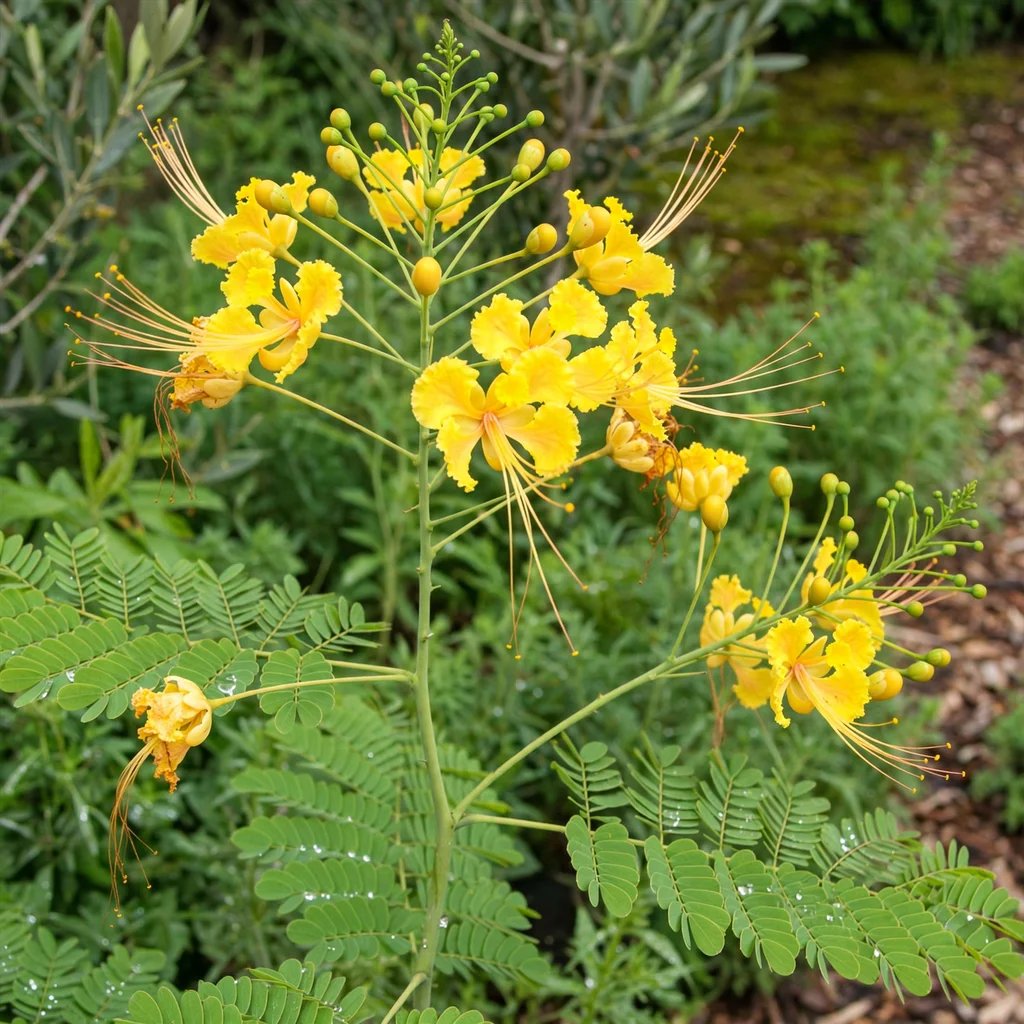
The Story
Plant Bio
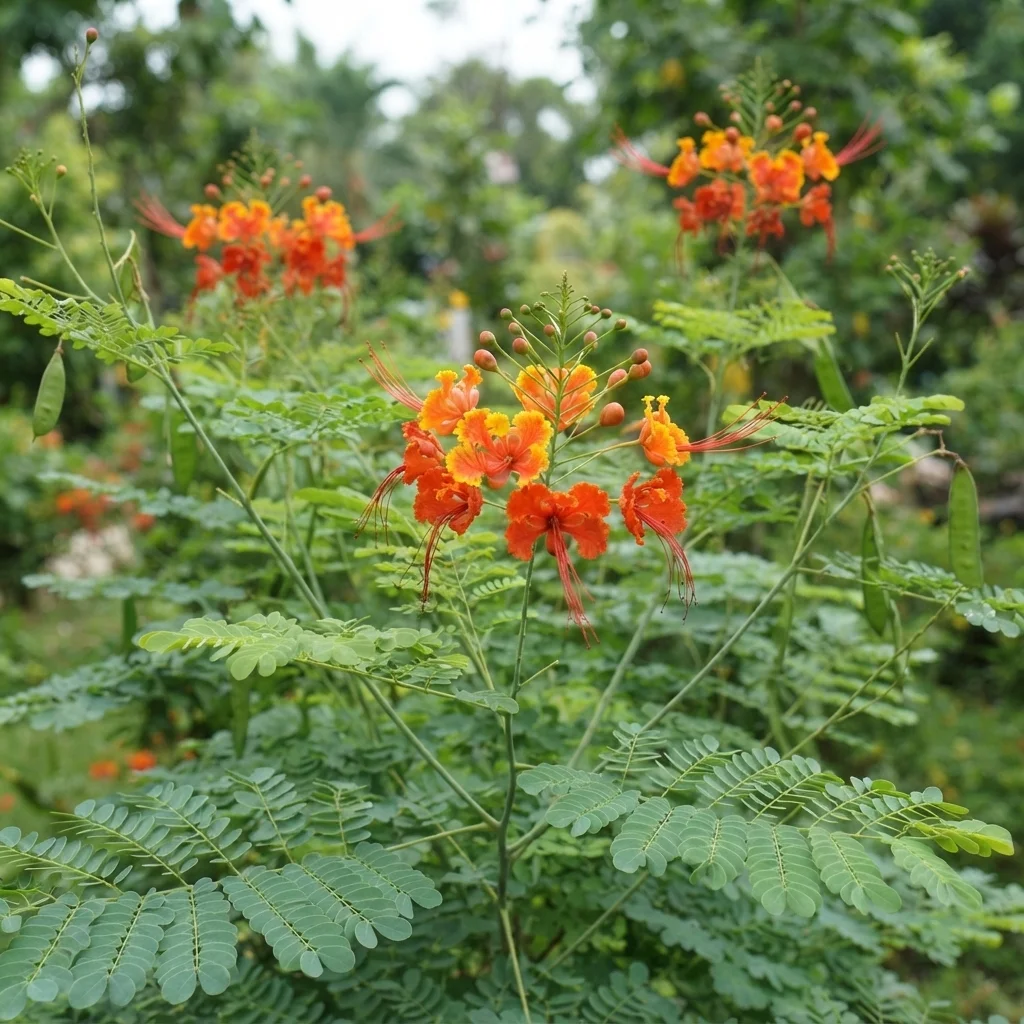
Caesalpinia pulcherrima is an open-branched evergreen shrub or multi-stemmed small tree reaching 8 to 12 foot in cultivation, with fernlike twice-pinnate leaves of small oval green leaflets under 2 inches long. The flowers are carried in upright terminal clusters to 10 inches with long protruding stamens, followed by flat brown pods 3 to 6 inches long that split to release the beans.
'Lutea' is the yellow-flowered form sold as Caesalpinia lutea, bearing clear yellow to yellow-orange blooms instead of the red, orange and scarlet of the species. It makes the same wide-spreading, spiny-branched shrub to 10 to 20 foot, deciduous where frost occurs and evergreen where winters stay frost-free.
Uses & Benefits:
Essentials
At a Glance
Plant Type
Shrub
Height
144"
Width
144"
Light
Full Sun, Partial Sun
Zones
9, 10
Water
Low once established
Humidity
Tolerant
Lifespan
Short-lived fast-growing shrub
Native To
Tropical America and West Indies
Toxicity
Unknown; sharp spines on stems
Bloom period
Summer – Fall
In flower about 6 months of the year
Planting
How to Grow
- Plant in full sun with at least 10 to 12 foot of room to spread, in well-drained sand, loam or clay.
- Set the rootball level with the soil and water in deeply, then water sparingly until new growth starts.
- Mulch lightly away from the stems and stake only if wind-rock is a risk.
- Tip-prune during the growing season for denser branching and cut back to the ground in late winter if renewal is needed.
Pro Tip
Give it full sun, sharp drainage and room to spread; tip-prune in the growing season and cut back hard once in late winter rather than shearing it.
Keep It Thriving
Care Guide
Do
- Plant in full sun for heaviest bloom
- Provide sharp drainage and avoid overwatering
- Allow room for the wide-spreading, spiny branches
Don't
- Do not plant in low, poorly drained soil
- Do not shear into a hedge through the season
- Do not crowd against walks where spines catch passersby
Seasonal Care Calendar
| Task | Jan | Feb | Mar | Apr | May | Jun | Jul | Aug | Sep | Oct | Nov | Dec |
|---|---|---|---|---|---|---|---|---|---|---|---|---|
| Mulch | ||||||||||||
| Pest Check | ||||||||||||
| Plant | ||||||||||||
| Prune | ||||||||||||
| Winter Prep |
Watch Out For
Pests & Diseases
Common Pests
Common Diseases
In the Garden
Landscape Uses & Companions
Landscape Uses
Multiply
Propagation Methods
Good to Know
Common Questions
Yellow Bird of Paradise questions
What zones can Yellow Bird of Paradise grow in?
Yellow Bird of Paradise is hardy in USDA Zones 9–10: in that range it survives winter in the ground. Colder than Zone 9, grow it in a container you can move to shelter for the winter.
When does Yellow Bird of Paradise bloom?
Yellow Bird of Paradise typically blooms from summer to fall. Exact timing shifts a week or two with your zone — Sow's bloom calendar maps it to your garden.
Does Yellow Bird of Paradise need full sun?
Yellow Bird of Paradise does best in full sun to part shade. In hot climates, afternoon shade keeps blooms fresher longer.
Is Yellow Bird of Paradise drought tolerant?
Yes — once established (usually after the first full season), Yellow Bird of Paradise handles dry spells with minimal watering. Water deeply its first year to build the root system that makes that possible.
More Caesalpinia to compare
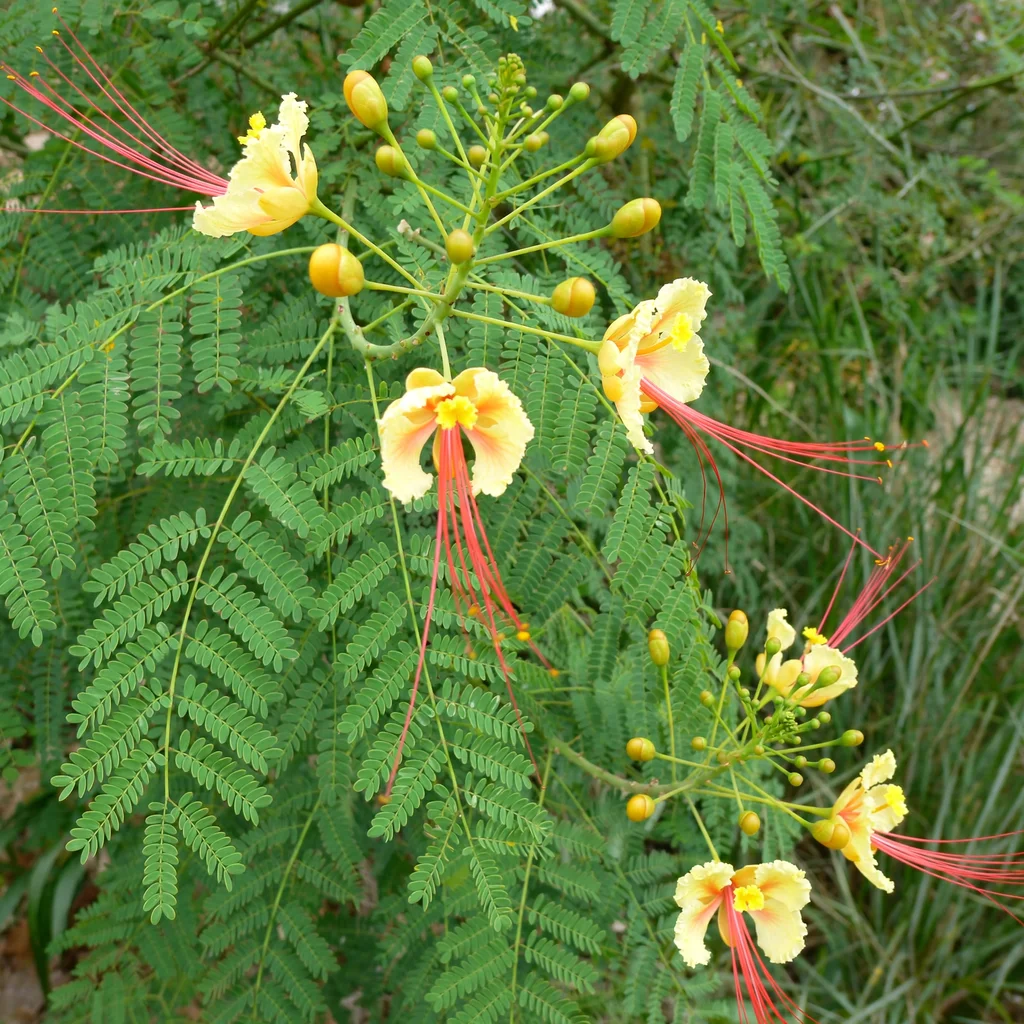
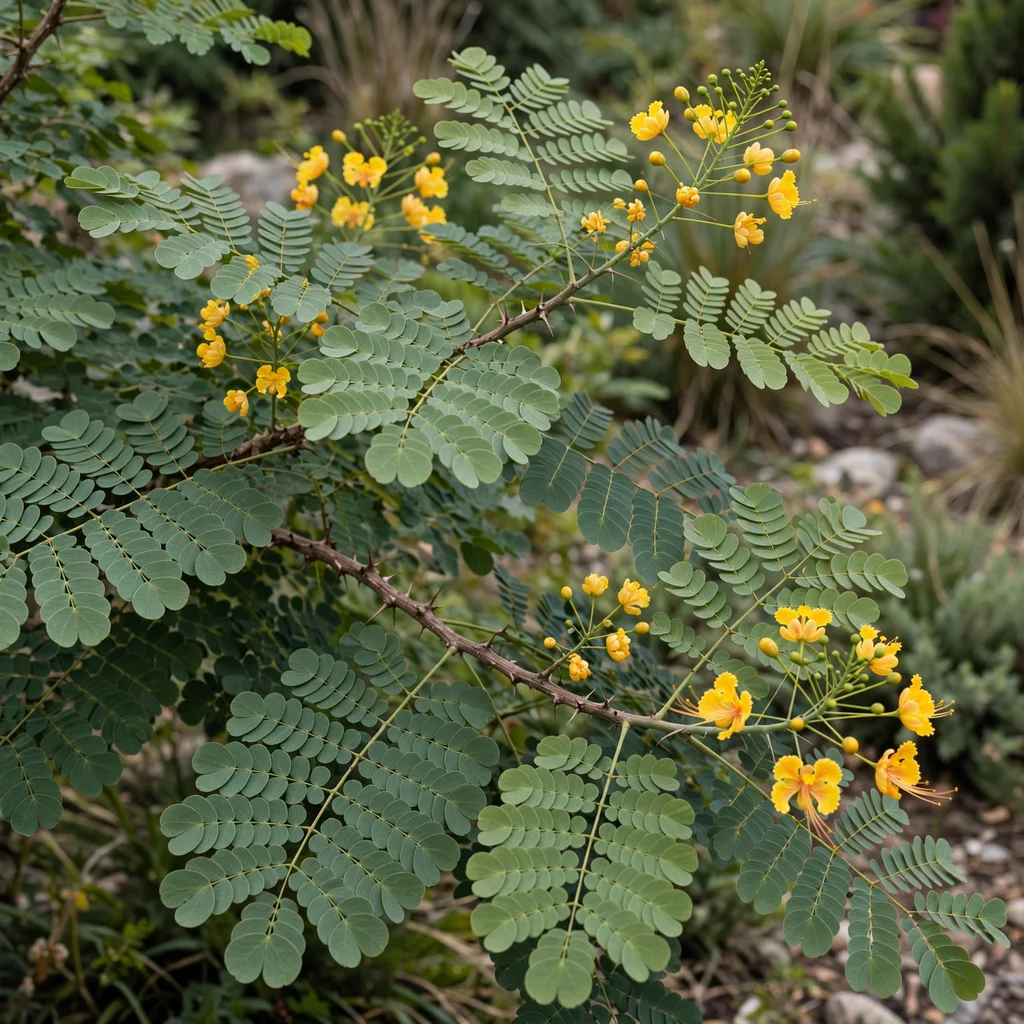
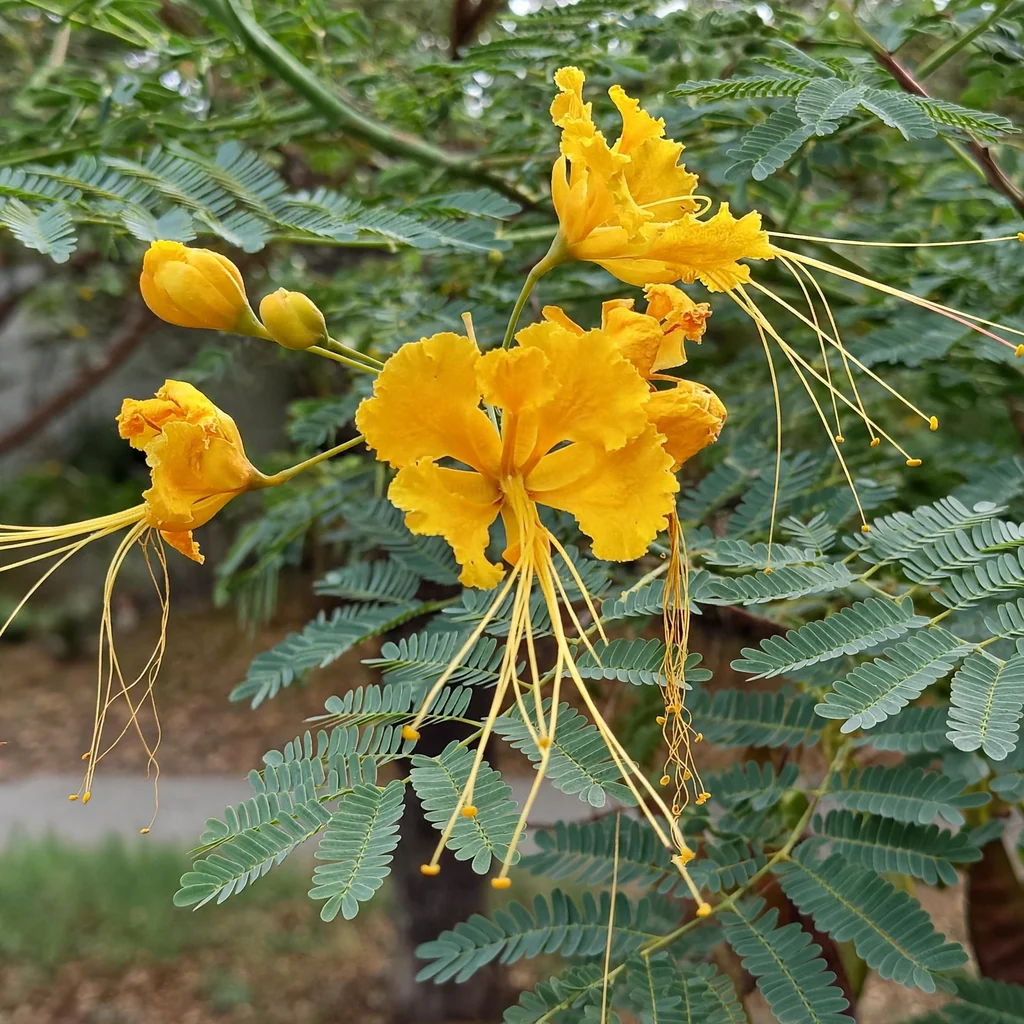
Keep exploring
Explore the genus
Hardy in your zone?
Grow Yellow Bird of Paradise with confidence
See it in a design of your actual yard, get zone-matched care reminders, and track it season by season in your garden journal.