The Story
Plant Bio
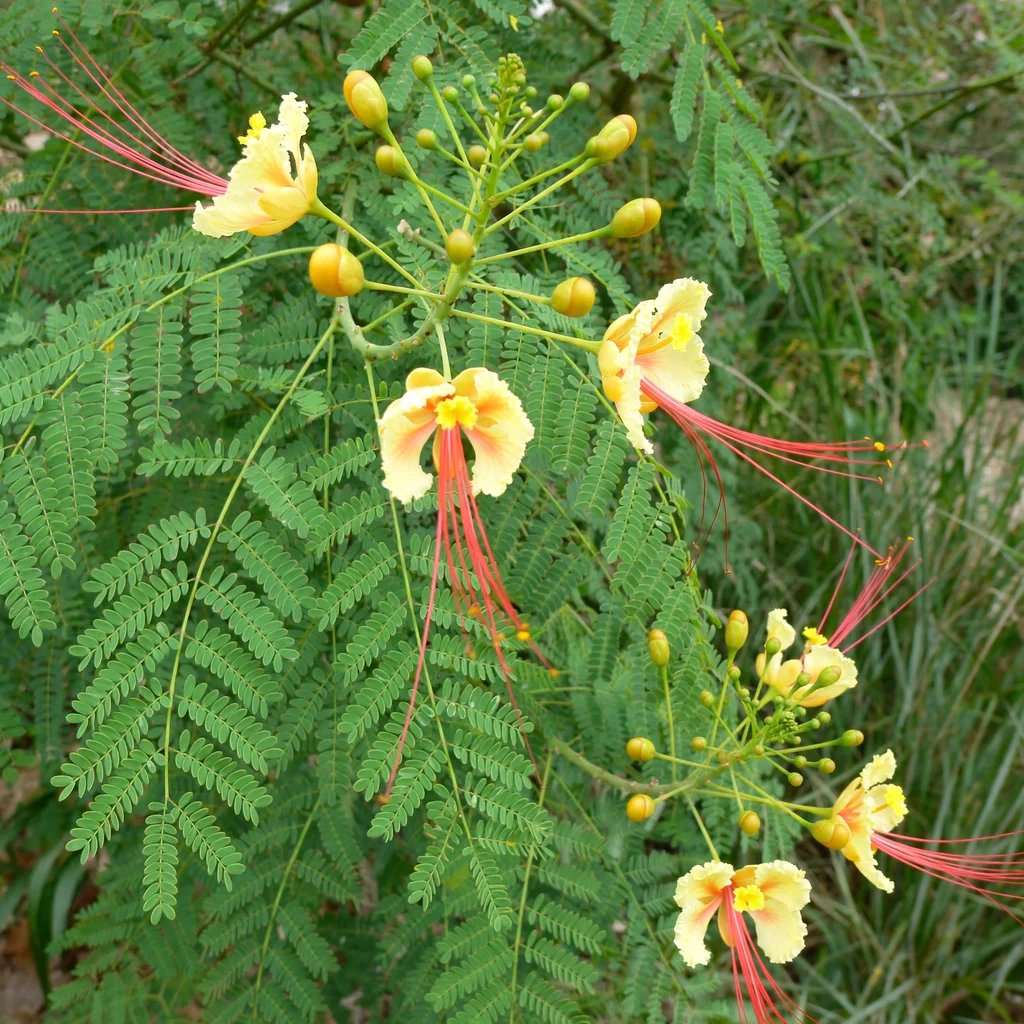
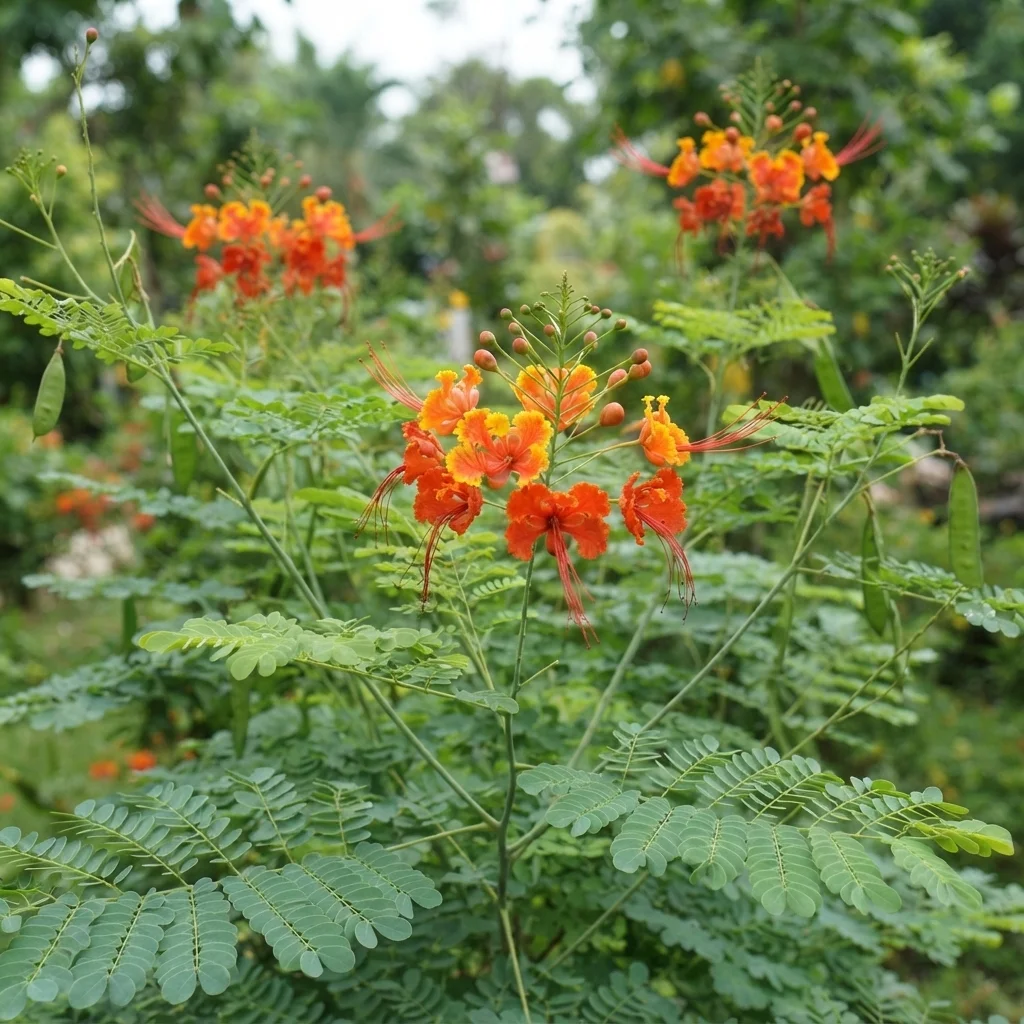
Erythrostemon gilliesii, still sold as Caesalpinia gilliesii, is an airy deciduous to semi-evergreen shrub from Argentina and Uruguay that reaches six to ten feet tall and wide in cultivation, sometimes trained as a small tree. It carries open feathery bipinnate leaves that fold at night and drops foliage in cold winters, regrowing quickly from the base after tip burn.
It is distinguished by airy terminal racemes of pale yellow petals set off by very long prominent red stamens that extend well beyond the petals. It is often confused with Caesalpinia pulcherrima, which bears red-orange flowers, while this species reads yellow from a distance with a red fringe.
Uses & Benefits:
Essentials
At a Glance
Plant Type
Shrub
Height
120"
Width
96"
Light
Full Sun
Zones
6, 7, 8, 9, 10
Water
Low
Humidity
Low
Lifespan
Long-lived woody shrub
Native To
Argentina, Uruguay
Toxicity
Toxic if ingested - seeds/pods suspected
Bloom period
Summer – Fall
In flower about 6 months of the year
Planting
How to Grow
- Plant in full sun in sharply well-drained soil after last frost, spacing 8 feet apart to allow the open canopy to develop.
- Dig the hole no deeper than the container and twice as wide, backfill with native soil and water in deeply.
- Water deeply the first summer to establish, then cut back to occasional deep soakings; established plants need only low water.
- Apply a light balanced fertilizer in spring on poor sand; avoid rich feeding that pushes soft growth.
- Leave seed pods off unless you want volunteers; mulch lightly with gravel, not deep bark against the stems.
Pro Tip
Clip spent racemes before pods ripen; plants bloom in the first year and self-sow freely in warm soils.
Keep It Thriving
Care Guide
Do
- Give it the hottest full-sun spot with fast drainage
- Deadhead racemes to limit self-seeding in Texas and the Southwest
- Cut frost-killed tips back to live wood in spring
Don't
- Do not plant in heavy clay that stays wet in winter
- Do not overwater in summer once established
- Do not let children or pets chew the seed pods
Seasonal Care Calendar
| Task | Jan | Feb | Mar | Apr | May | Jun | Jul | Aug | Sep | Oct | Nov | Dec |
|---|---|---|---|---|---|---|---|---|---|---|---|---|
| Deadhead | ||||||||||||
| Pest Check | ||||||||||||
| Plant | ||||||||||||
| Prune | ||||||||||||
| Winter Prep |
Watch Out For
Pests & Diseases
Common Pests
Common Diseases
In the Garden
Landscape Uses & Companions
Landscape Uses
Multiply
Propagation Methods
Good to Know
Common Questions
Desert Bird-of-Paradise questions
What zones can Desert Bird-of-Paradise grow in?
Desert Bird-of-Paradise is hardy in USDA Zones 6–10: in that range it survives winter in the ground. Colder than Zone 6, grow it in a container you can move to shelter for the winter.
When does Desert Bird-of-Paradise bloom?
Desert Bird-of-Paradise typically blooms from summer to fall. Exact timing shifts a week or two with your zone — Sow's bloom calendar maps it to your garden.
Does Desert Bird-of-Paradise need full sun?
Desert Bird-of-Paradise does best in full sun (6+ hours).
Is Desert Bird-of-Paradise drought tolerant?
Yes — once established (usually after the first full season), Desert Bird-of-Paradise handles dry spells with minimal watering. Water deeply its first year to build the root system that makes that possible.
More Caesalpinia to compare
Keep exploring
Explore the genus
Hardy in your zone?
Grow Desert Bird-of-Paradise with confidence
See it in a design of your actual yard, get zone-matched care reminders, and track it season by season in your garden journal.