The Story
Plant Bio
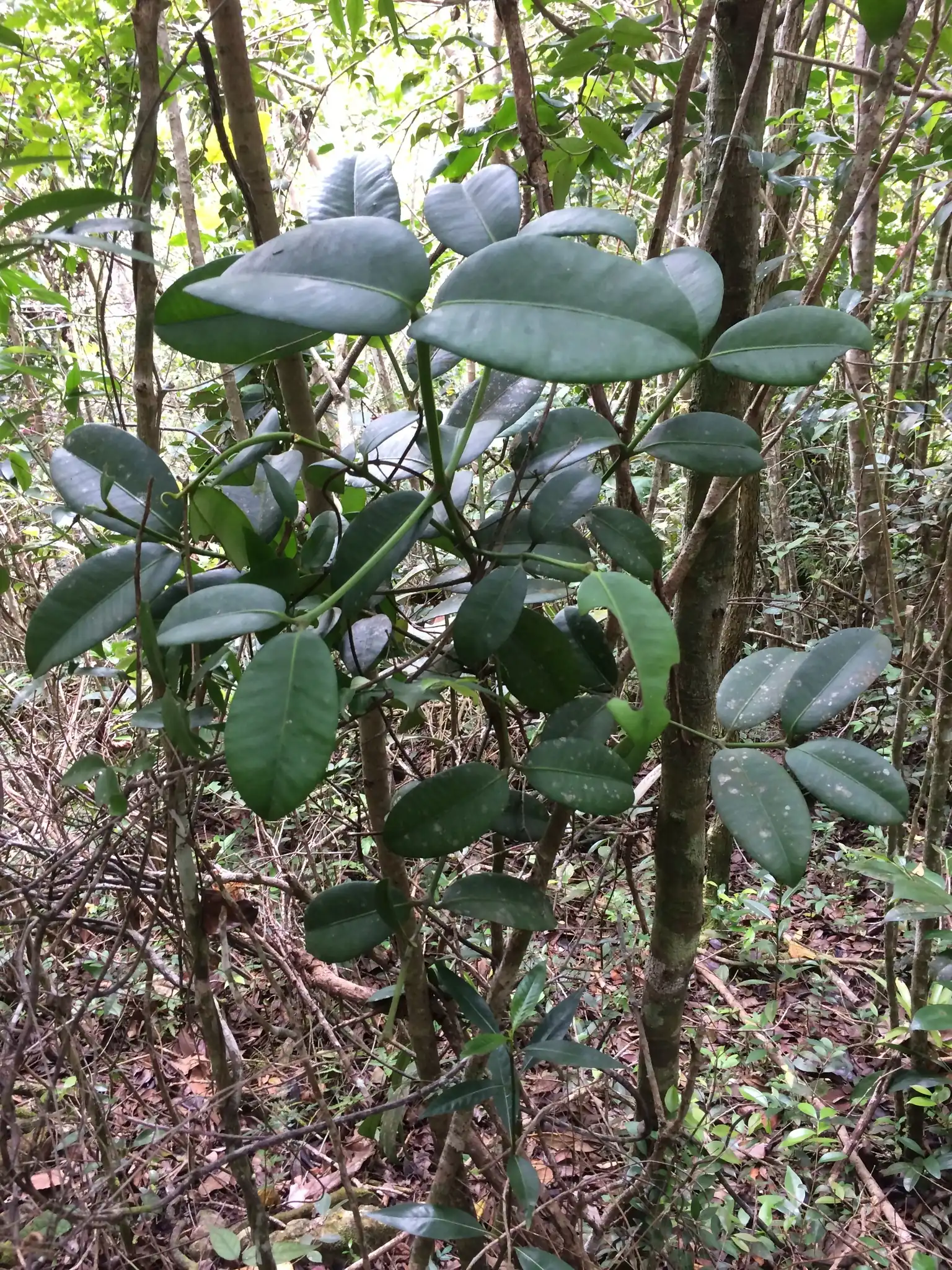
Garcinia humilis is an evergreen small tree with a dense pyramidal crown, opposite leathery dark-green leaves 6 to 10 inches long, and yellow latex in the bark. It bears creamy-white fragrant flowers about 1 inch across in clusters on older branches, mostly hermaphrodite with abundant nectar for insect pollinators.
True Achachairu ripens to an egg-shaped orange-red fruit about 2.5 inches long with white tangy pulp around one or two seeds, and it is non-climacteric so light-orange fruit stays sour and must be picked dark-orange. Seed is apomictic and grows true to the mother, while grafted plants on Garcinia madruno stay 10 to 13 feet and fruit years earlier than 24- to 30-foot seedlings.
Uses & Benefits:
Essentials
At a Glance
Plant Type
Tree
Height
354"
Width
312"
Light
Full Sun, Partial Sun
Zones
9, 10
Water
High
Humidity
High
Lifespan
Long-lived evergreen tree
Native To
Eastern Caribbean to Guyana and western Amazon
Toxicity
None known - fruit edible
Bloom period
Spring – Summer
In flower about 6 months of the year
Planting
How to Grow
- Plant in spring after last frost in fertile loamy soil pH 5.0 to 7.0, spacing trees 26 to 33 feet for the pyramidal crown.
- Shade first-year trees and water deeply year-round; new transplants need water every 2 to 3 days for 1 to 3 months and never dry out.
- Feed lightly through the warm season; no Florida rate is published so follow a litchi fertilizer program until growth shows need.
- Tip-prune young trees for shape and harvest height and remove only damaged or soil-level limbs on older trees.
- Bring container plants inside before frost and hold above 41F, with winter fruit harvest October to January.
Pro Tip
Give young trees light shade and constant moisture, then move to full sun for fruit; pick only fully dark-orange fruit, as undercolored fruit never sweetens off the tree.
Keep It Thriving
Care Guide
Do
- Water abundantly year-round and mulch to hold moisture; drought causes fast leaf wilt and stall.
- Give full sun for fruit but shade young foliage, which burns in strong sun.
- Inspect new growth weekly for aphids and remove fallen fruit promptly.
Don't
- Do not overwater into soggy soil; wet feet trigger root disease despite tolerance of brief flooding.
- Do not pick light-orange fruit expecting it to ripen indoors; it stays sour.
- Do not prune mature trees hard; they regrow slowly and fruit on older wood.
Seasonal Care Calendar
| Task | Jan | Feb | Mar | Apr | May | Jun | Jul | Aug | Sep | Oct | Nov | Dec |
|---|---|---|---|---|---|---|---|---|---|---|---|---|
| Fertilize | ||||||||||||
| Harvest | ||||||||||||
| Pest Check | ||||||||||||
| Prune | ||||||||||||
| Winter Prep |
Watch Out For
Pests & Diseases
Common Pests
Common Diseases
In the Garden
Landscape Uses & Companions
Landscape Uses
Companion Plants
Multiply
Propagation Methods
Good to Know
Common Questions
Achachairu questions
What zones can Achachairu grow in?
Achachairu is hardy in USDA Zones 9–10: in that range it survives winter in the ground. Colder than Zone 9, winters are too cold for it to survive outdoors.
When does Achachairu bloom?
Achachairu typically blooms from spring to summer. Exact timing shifts a week or two with your zone — Sow's bloom calendar maps it to your garden.
Does Achachairu need full sun?
Achachairu does best in full sun to part shade. In hot climates, afternoon shade keeps blooms fresher longer.
More Garcinia to compare
Keep exploring
Explore the genus
Hardy in your zone?
Grow Achachairu with confidence
See it in a design of your actual yard, get zone-matched care reminders, and track it season by season in your garden journal.