The Story
Plant Bio
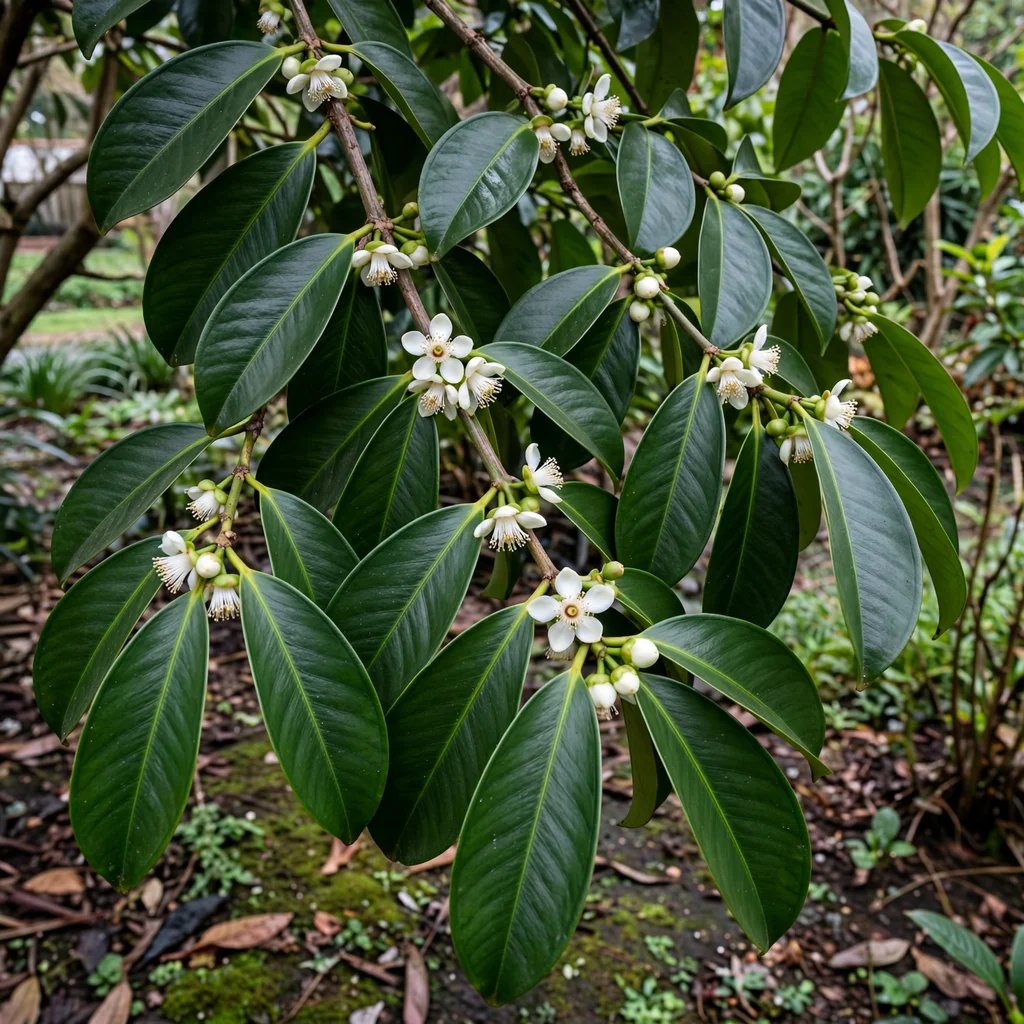
Garcinia edulis, sold as lemon drop mangosteen, is a very slow-growing evergreen small tree that reaches 10 to 20 feet in gardens with a dense conical crown of glossy dark green elliptic leaves. The bloom is borne in clusters of 1 to 15 small white four-petalled flowers with a yellow center on old wood, followed by small sweet-sour yellow fruit.
Plants are androdioecious, so fruit requires a male tree and a hermaphrodite tree flowering together for bee pollination, with seedlings bearing in two to three years and becoming prolific by year six. Nursery stock sold under this name is Central American Garcinia intermedia rather than the African forest species, and it holds only a brief light freeze to about 30F on mature wood, so northern growers keep it as a patio container.
Uses & Benefits:
Essentials
At a Glance
Plant Type
Tree
Height
240"
Width
144"
Light
Full Sun, Partial Sun
Zones
9, 10
Water
Regular, evenly moist
Humidity
High
Lifespan
Long-lived evergreen tree
Native To
S. Mexico to Panama as sold; true species W/C Africa
Toxicity
No known hazard, fruit edible
Bloom period
Winter – Spring
In flower about 6 months of the year
Planting
How to Grow
- Plant in spring after frost danger in full sun to part shade in rich loamy soil that drains freely but holds moisture.
- Dig the hole as deep as the pot and twice as wide, set the root ball level, backfill with native soil mixed with compost and water deeply.
- Mulch 2 to 3 inches with bark, keeping mulch off the trunk, and water regularly to keep soil evenly moist while the top inch dries.
- Move container plants outdoors in zones 10a to 11 and inside to a bright frost-free spot when nights fall near 32F.
Pro Tip
Plant a male and a hermaphrodite together in a frost-free humid pocket; elsewhere keep it potted so it can move inside before frost.
Keep It Thriving
Care Guide
Do
- Provide regular water and high humidity during establishment
- Mulch to conserve moisture and feed lightly with balanced fertilizer in spring
- Prune lightly after harvest to remove dead or crowded wood
Don't
- Do not expose young trees to frost or hard freezes
- Do not cut heavily into old flowering wood
- Do not let pots sit waterlogged or dry out completely
Seasonal Care Calendar
| Task | Jan | Feb | Mar | Apr | May | Jun | Jul | Aug | Sep | Oct | Nov | Dec |
|---|---|---|---|---|---|---|---|---|---|---|---|---|
| Harvest | ||||||||||||
| Pest Check | ||||||||||||
| Plant | ||||||||||||
| Prune | ||||||||||||
| Winter Prep |
Watch Out For
Pests & Diseases
Common Pests
Common Diseases
In the Garden
Landscape Uses & Companions
Landscape Uses
Multiply
Propagation Methods
Good to Know
Common Questions
Lemon Drop Mangosteen questions
What zones can Lemon Drop Mangosteen grow in?
Lemon Drop Mangosteen is hardy in USDA Zones 9–10: in that range it survives winter in the ground. Colder than Zone 9, winters are too cold for it to survive outdoors.
When does Lemon Drop Mangosteen bloom?
Lemon Drop Mangosteen typically blooms from winter to spring. Exact timing shifts a week or two with your zone — Sow's bloom calendar maps it to your garden.
Does Lemon Drop Mangosteen need full sun?
Lemon Drop Mangosteen does best in full sun to part shade. In hot climates, afternoon shade keeps blooms fresher longer.
More Garcinia to compare
Keep exploring
Explore the genus
Hardy in your zone?
Grow Lemon Drop Mangosteen with confidence
See it in a design of your actual yard, get zone-matched care reminders, and track it season by season in your garden journal.