The Story
Plant Bio
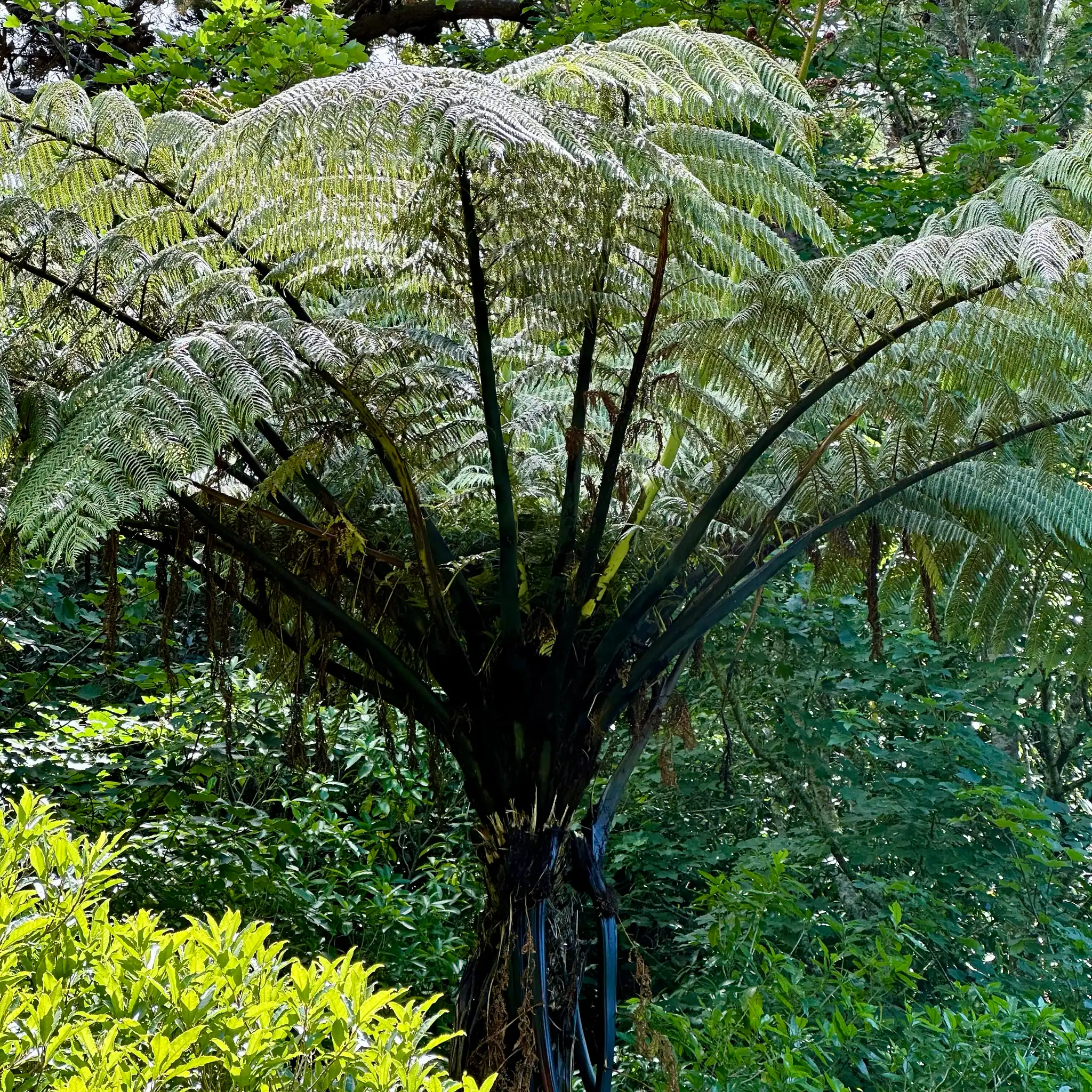
Cyathea medullaris is a massive evergreen tree fern native to the South Pacific, characterized by a single dark trunk covered in hexagonal frond scars. Its spreading canopy features arching multi-pinnate fronds up to sixteen feet long with distinctive jet-black stalks.
The emerging spring fiddleheads, known as koru, unroll from bright green central coils that contrast sharply against the dark stipes and black trunk. It is among the largest tree ferns in cultivation, requiring high humidity and wind protection to maintain its broad canopy.
Uses & Benefits:
Essentials
At a Glance
Plant Type
Fern
Height
354"
Width
197"
Light
Partial Sun, Shade
Zones
9, 10
Water
High
Humidity
High
Lifespan
Perennial
Native To
Oceania
Toxicity
Non-toxic
Planting
How to Grow
- Choose a sheltered site in dappled shade or partial morning sun protected from high winds.
- Enrich rich, humus-dense soil with generous leaf mold or compost to ensure moisture retention.
- Plant the trunk at its original container depth, firming soil gently without burying the trunk base too deeply.
- Water thoroughly around the base and overhead, keeping both soil and fibrous trunk continuously moist.
Pro Tip
Direct misting onto the fibrous trunk keeps the vital aerial root network hydrated during dry spells, preventing frond collapse.
Keep It Thriving
Care Guide
Do
- Keep root zone consistently damp without allowing the soil to dry out completely.
- Mist the fibrous trunk during dry weather to nourish aerial moisture absorption.
- Site in wind-sheltered positions to prevent frond tatter and desiccation.
Don't
- Do not trim dying fronds flush against the trunk surface, as stipe bases protect internal tissue.
- Do not expose the central crown to freezing winter temperatures.
- Do not allow heavy soil waterlogging, which starves roots of oxygen and induces rot.
Seasonal Care Calendar
| Task | Jan | Feb | Mar | Apr | May | Jun | Jul | Aug | Sep | Oct | Nov | Dec |
|---|---|---|---|---|---|---|---|---|---|---|---|---|
| Fertilize | ||||||||||||
| Mulch | ||||||||||||
| Pest Check | ||||||||||||
| Prune | ||||||||||||
| Winter Prep |
Watch Out For
Pests & Diseases
Common Pests
Common Diseases
In the Garden
Landscape Uses & Companions
Landscape Uses
Companion Plants
Multiply
Propagation Methods
Good to Know
Common Questions
Black Tree Fern questions
What zones can Black Tree Fern grow in?
Black Tree Fern is hardy in USDA Zones 9–10: in that range it survives winter in the ground. Colder than Zone 9, grow it in a container you can move to shelter for the winter, or as an annual.
Is Black Tree Fern deer resistant?
Not reliably. Deer may browse Black Tree Fern, especially tender spring growth — plan on repellents or fencing where pressure is high.
Does Black Tree Fern need full sun?
Black Tree Fern does best in part shade.
More Cyathea to compare
Keep exploring
Explore the genus
Hardy in your zone?
Grow Black Tree Fern with confidence
See it in a design of your actual yard, get zone-matched care reminders, and track it season by season in your garden journal.