The Story
Plant Bio
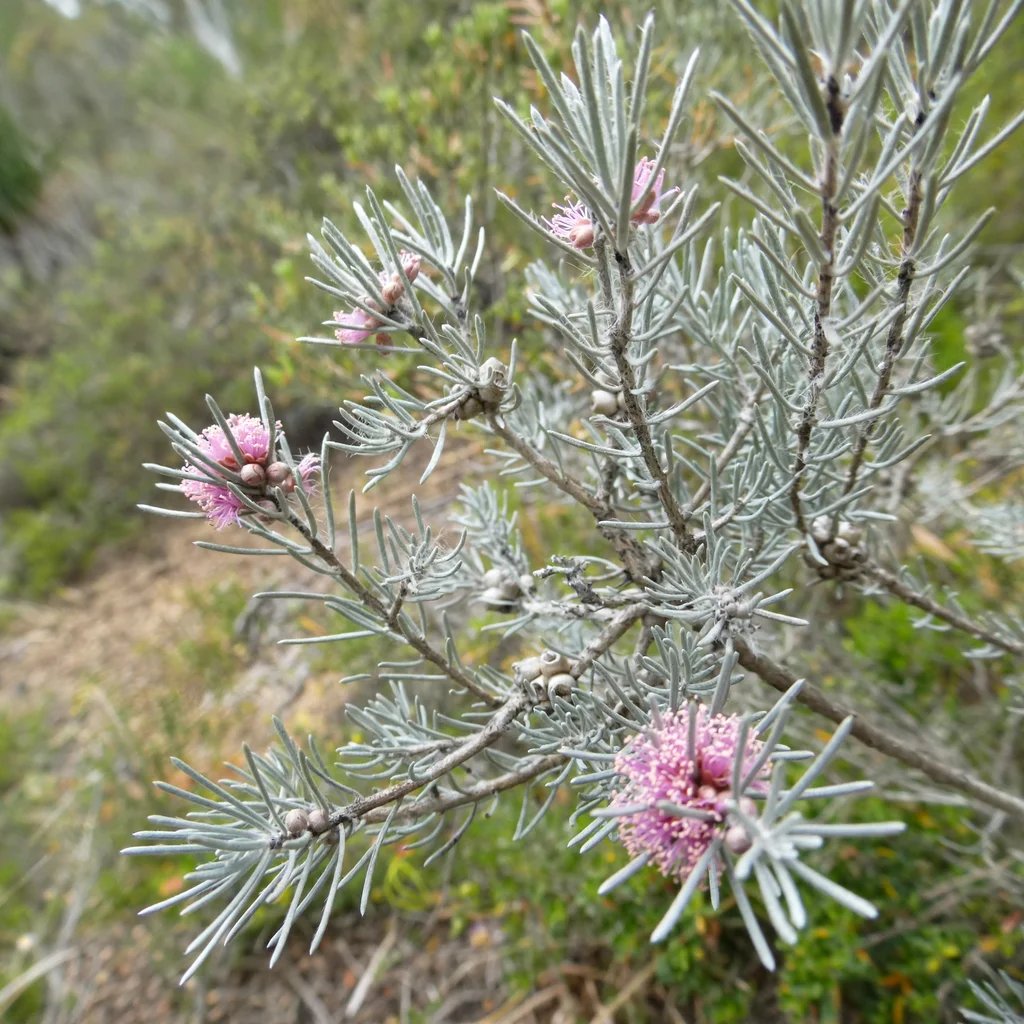
Melaleuca holosericea is a small evergreen shrub from south-west Western Australia with narrow linear leaves densely clothed in soft silky hairs. The flowers have little petal show; the display comes from tight globular heads of pink stamens borne at the shoot tips in early spring.
True plants stay near two feet high with leaves six to thirteen millimeters long and round in cross-section. Most stock sold under this name is the taller silvery garden shrub Melaleuca sapientes, which reaches three to seven feet with broader half-moon leaves and larger heads to twenty millimeters across.
Uses & Benefits:
Essentials
At a Glance
Plant Type
Shrub
Height
24"
Width
24"
Light
Full Sun
Zones
9, 10
Water
Low
Humidity
Low
Lifespan
Long-lived shrub
Native To
South-west Western Australia
Toxicity
Unknown
Bloom period
Spring – Early summer
In flower about 4 months of the year
Planting
How to Grow
- Plant in full sun in sandy, sharply well-drained soil with room for air movement.
- Water deeply through the first summer until established, then reduce to occasional deep soakings.
- Tip-prune young shoots to encourage dense branching.
- After flowering, shear spent heads back by about one-third, always leaving green leaves on the stem.
- Keep mulch back from the stem and avoid wet winter soil.
Pro Tip
Prune just behind each spent head after flowering; cutting back into old bare wood gives slow regrowth and loses the next flowers.
Keep It Thriving
Care Guide
Do
- Give full sun and sandy well-drained soil.
- Water regularly until established.
- Prune after flowering to keep plants dense and limit seed.
Don't
- Do not cut back into old leafless wood.
- Do not plant in soggy or poorly drained soil.
- Do not let new plantings dry out in their first summer.
Seasonal Care Calendar
| Task | Jan | Feb | Mar | Apr | May | Jun | Jul | Aug | Sep | Oct | Nov | Dec |
|---|---|---|---|---|---|---|---|---|---|---|---|---|
| Mulch | ||||||||||||
| Pest Check | ||||||||||||
| Plant | ||||||||||||
| Prune |
Watch Out For
Pests & Diseases
Common Pests
Common Diseases
In the Garden
Landscape Uses & Companions
Landscape Uses
Companion Plants
Multiply
Propagation Methods
Good to Know
Common Questions
Silky Honey Myrtle questions
What zones can Silky Honey Myrtle grow in?
Silky Honey Myrtle is hardy in USDA Zones 9–10: in that range it survives winter in the ground. Colder than Zone 9, grow it in a container you can move to shelter for the winter.
When does Silky Honey Myrtle bloom?
Silky Honey Myrtle typically blooms from early spring to early summer. Exact timing shifts a week or two with your zone — Sow's bloom calendar maps it to your garden.
Does Silky Honey Myrtle need full sun?
Silky Honey Myrtle does best in full sun (6+ hours).
Is Silky Honey Myrtle drought tolerant?
Yes — once established (usually after the first full season), Silky Honey Myrtle handles dry spells with minimal watering. Water deeply its first year to build the root system that makes that possible.
More Melaleuca to compare
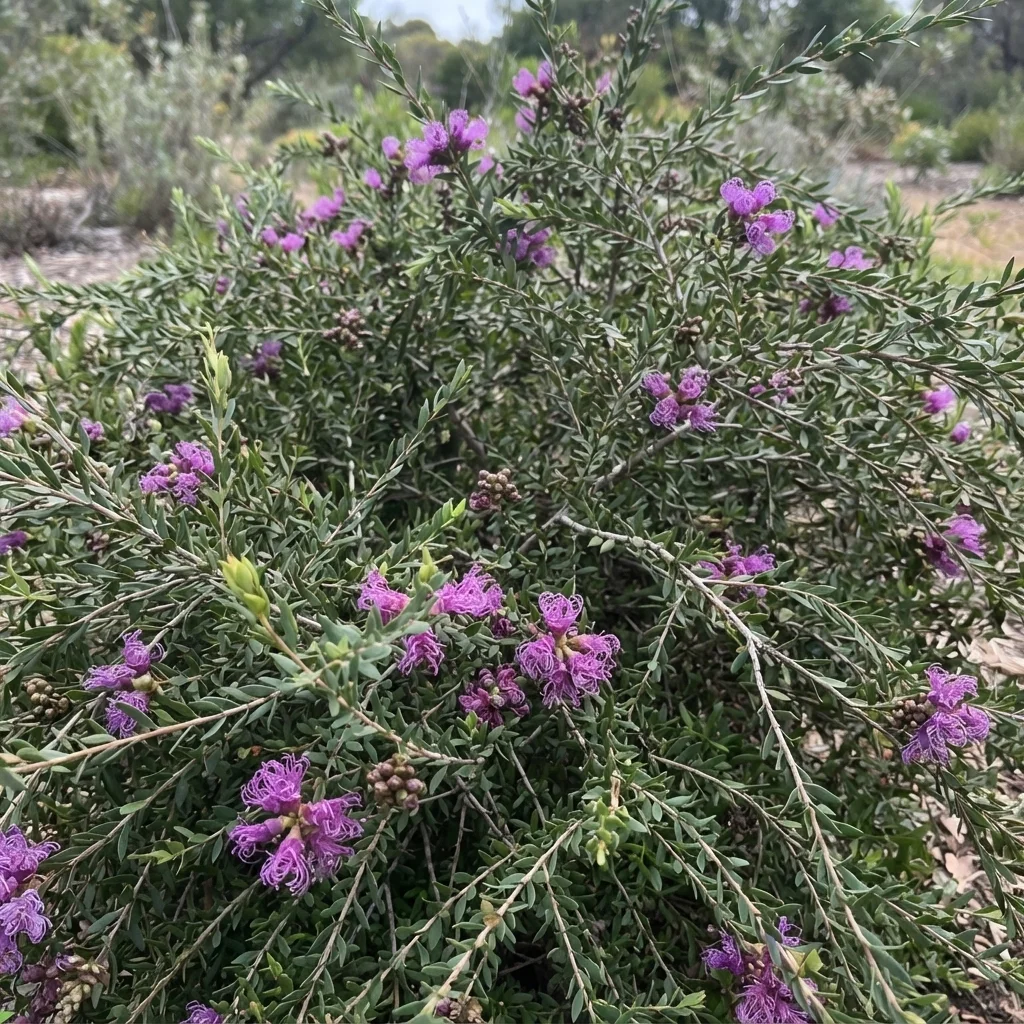
Thymeleaf Melaleuca
Melaleuca thymifolia
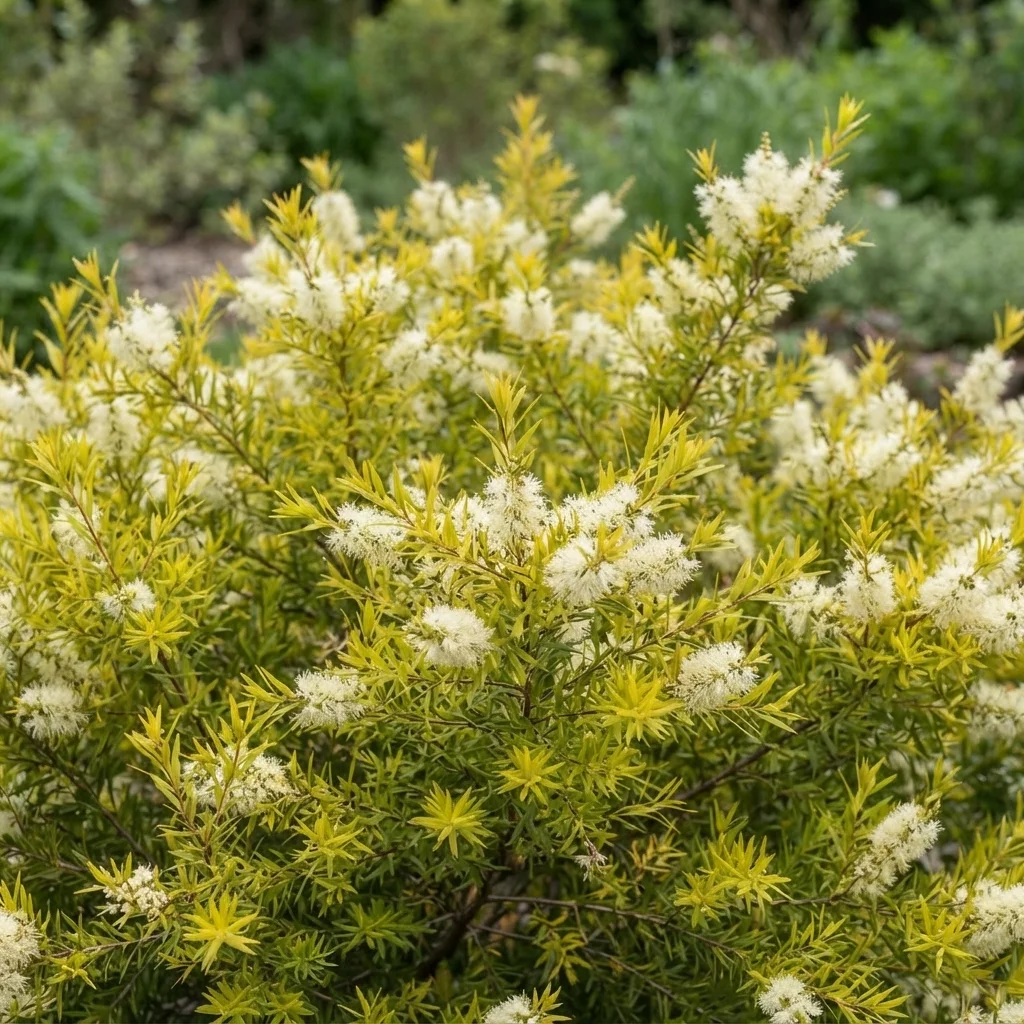
Golden Melaleuca
Melaleuca bracteata 'Golden Gem'
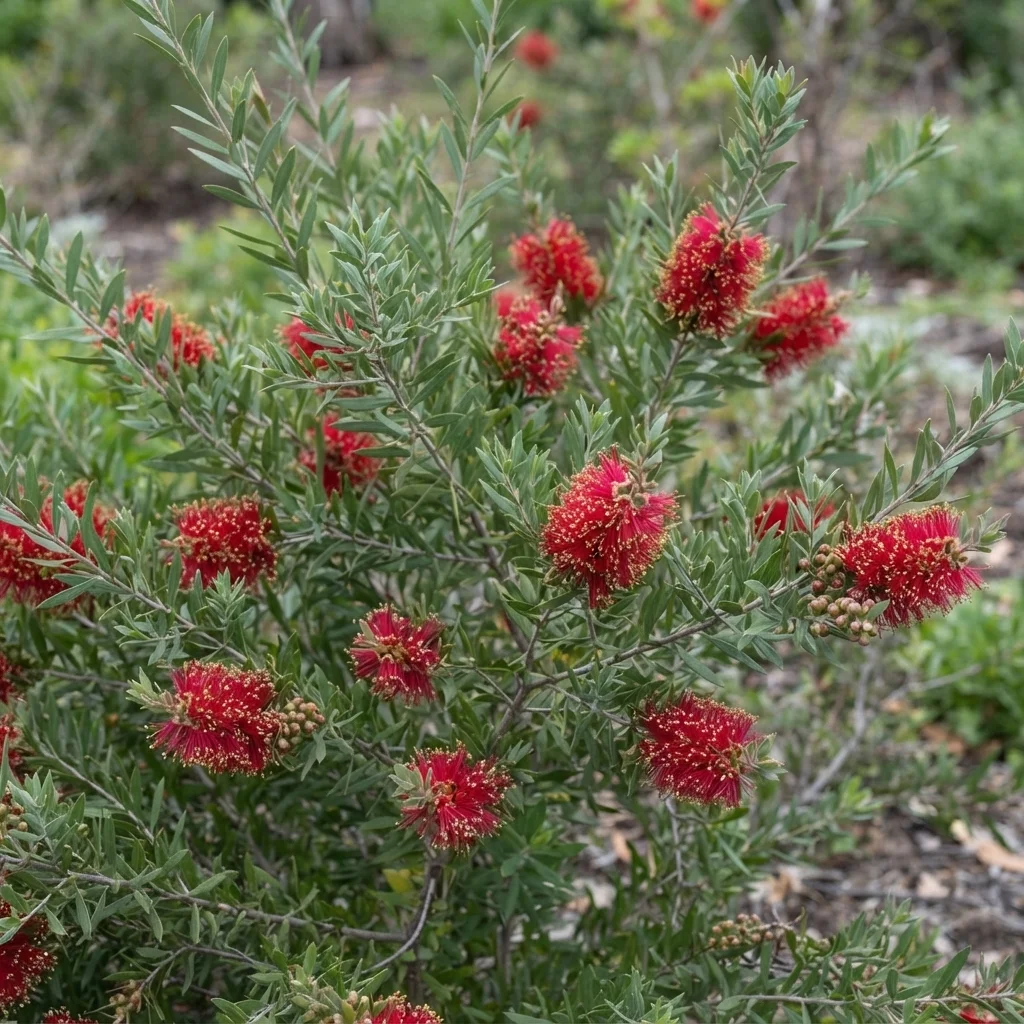
Scarlet Honey Myrtle
Melaleuca fulgens
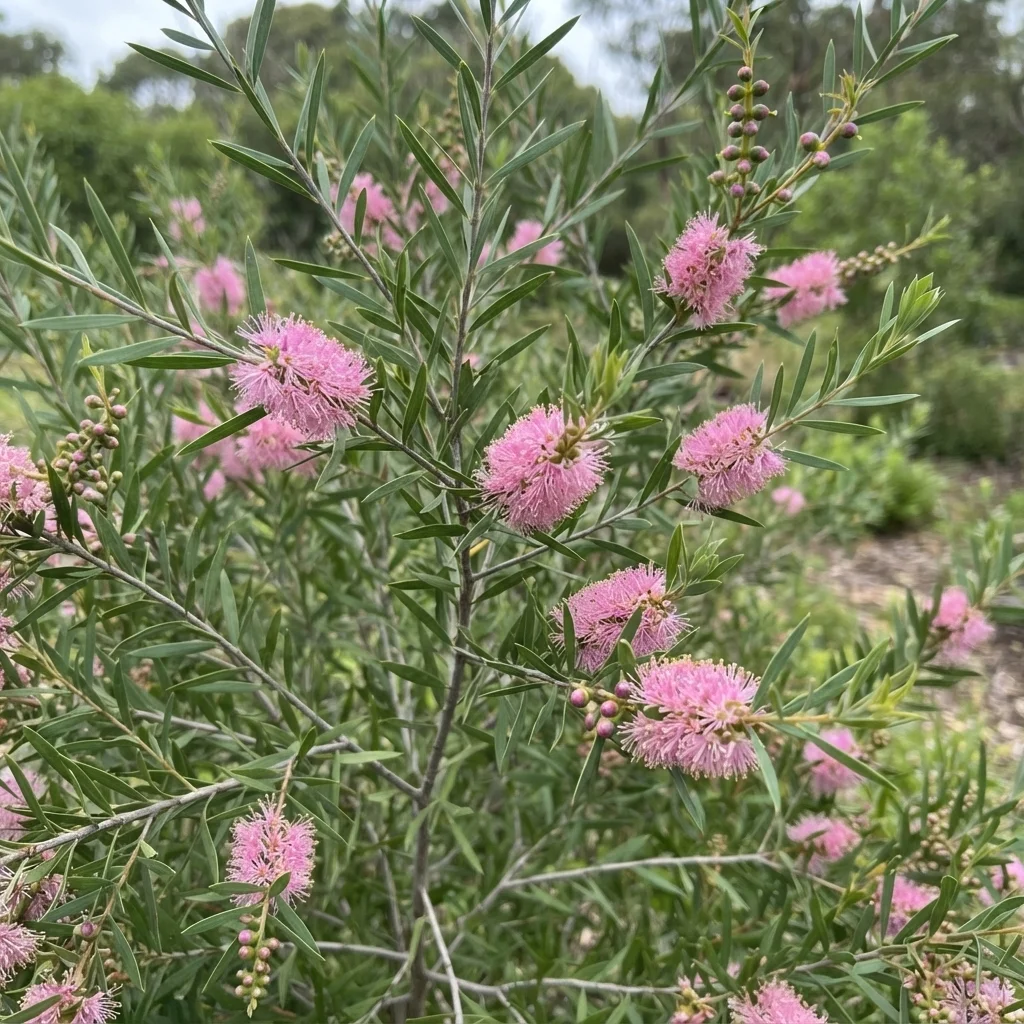
Graceful Honey-myrtle
Melaleuca radula
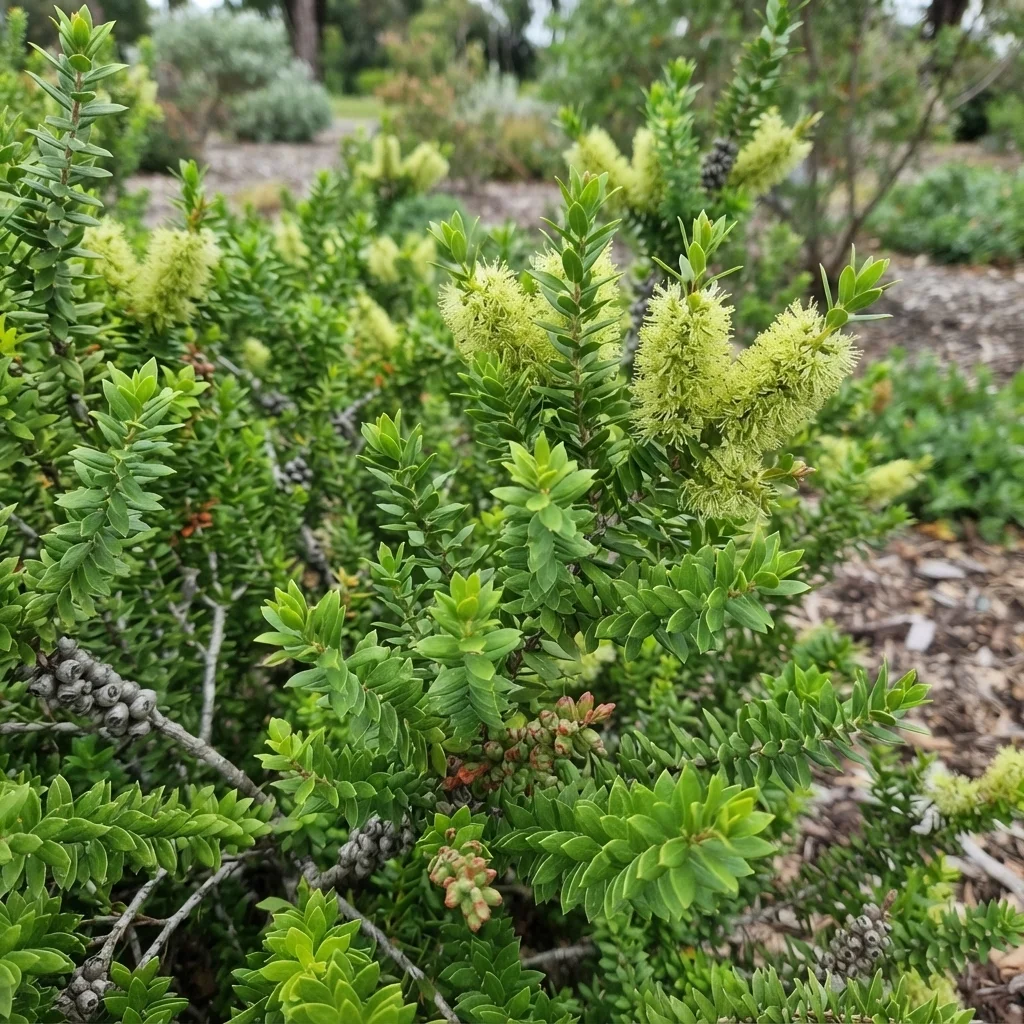
Green Honey Myrtle
Melaleuca diosmifolia
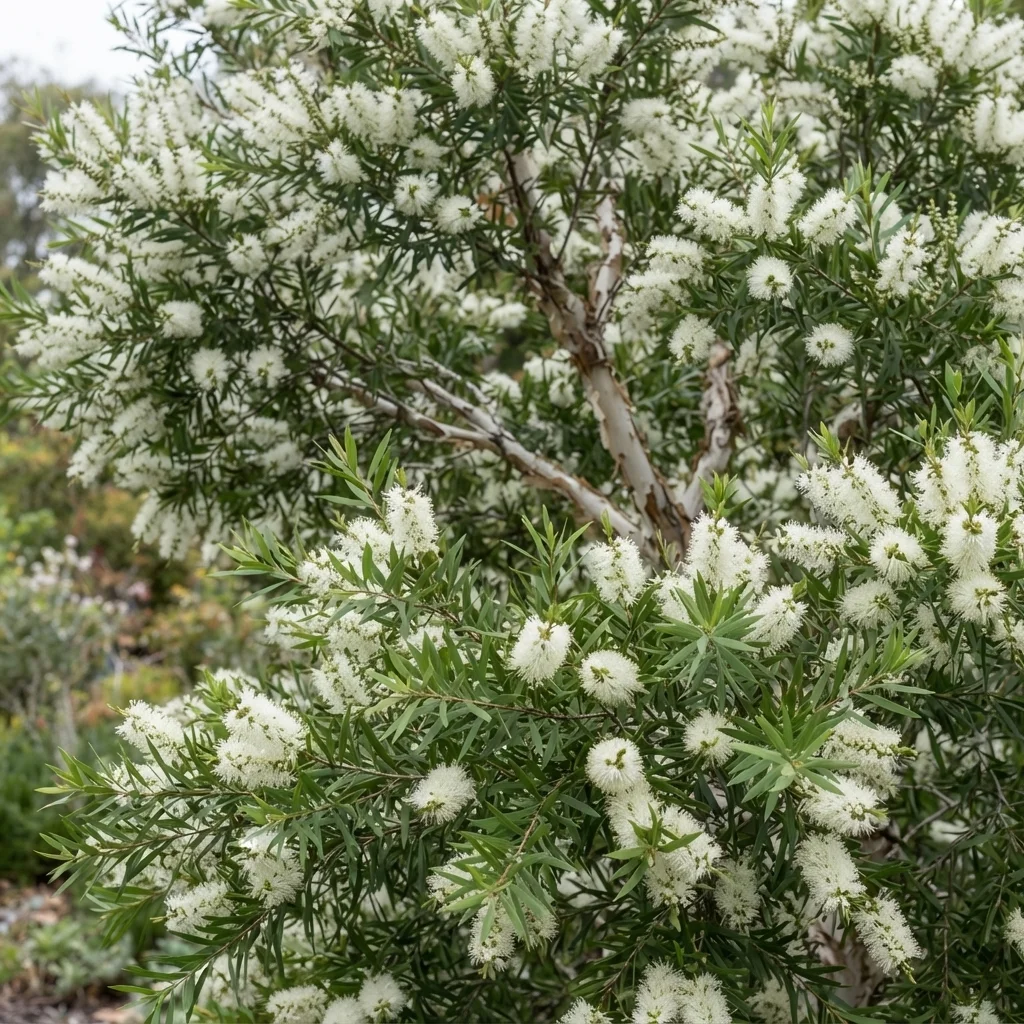
Snow-in-summer
Melaleuca linariifolia
Keep exploring
Explore the genus
Hardy in your zone?
Grow Silky Honey Myrtle with confidence
See it in a design of your actual yard, get zone-matched care reminders, and track it season by season in your garden journal.