
The Story
Plant Bio
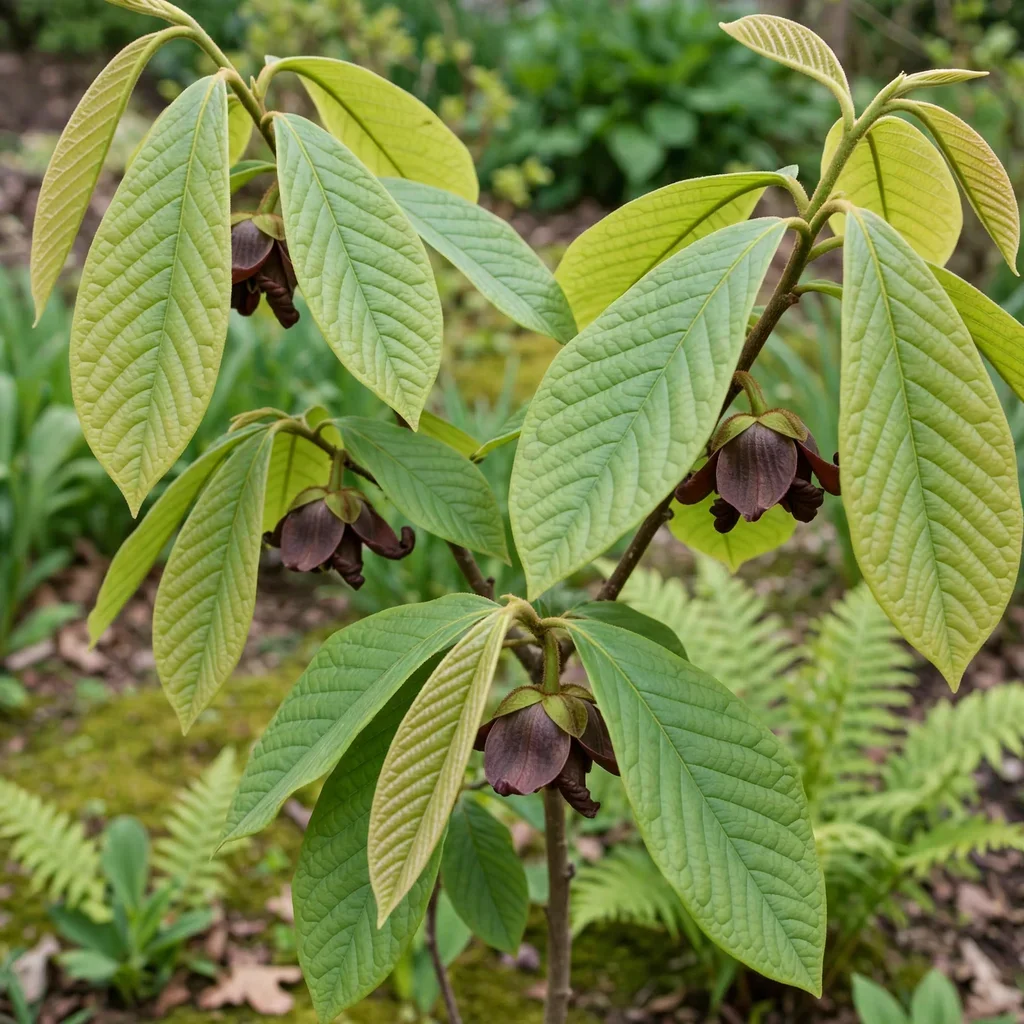
Asimina parviflora, the dwarf pawpaw, is a deciduous clumped shrub reaching six to eight feet in gardens, with thick alternate obovate leaves to eight inches that release a strong scent when crushed. In spring single maroon to brown-purple six-petaled flowers about one-half inch across open in the leaf axils, faintly fetid, followed by small edible pawpaw fruits in late summer.
It reads as a miniature version of common pawpaw, with smaller flowers, shoots and leaves on a low suckering frame that rarely makes a tree except in Florida karst. New shoots emerge coated in rusty down that wears off with age, and plants need pollen from a genetically different seedling to set fruit.
Uses & Benefits:
Essentials
At a Glance
Plant Type
Shrub
Height
96"
Width
72"
Light
Full Sun, Partial Sun, Shade
Zones
7, 8, 9, 10
Water
Medium
Humidity
Tolerant
Lifespan
Long-lived
Native To
Southeastern USA
Toxicity
Seeds harmful if chewed
Bloom period
Spring – Late spring
In flower about 3 months of the year
Planting
How to Grow
- Plant young container stock in fall or early spring in part shade into loose, acid sandy loam.
- Set at the same depth as in the pot without bending the taproot and water deeply.
- Spread 2-3 inches of leaf mulch over the root zone, keeping it off the stems.
- Water through the first two summers to keep soil evenly moist but never compacted or soggy.
Pro Tip
Set young container plants once and leave them alone; working the soil or moving the plant severs the taproot and sets it back for years.
Keep It Thriving
Care Guide
Do
- Plant two genetically different seedlings for cross-pollination and fruit set.
- Keep soil loose, acid and mulched with leaf litter.
- Water young plants steadily until the taproot is established.
Don't
- Do not move or divide established plants.
- Do not plant in compacted, alkaline or chronically dry soil.
- Do not chew seeds, which can cause nausea and vomiting.
Seasonal Care Calendar
| Task | Jan | Feb | Mar | Apr | May | Jun | Jul | Aug | Sep | Oct | Nov | Dec |
|---|---|---|---|---|---|---|---|---|---|---|---|---|
| Harvest | ||||||||||||
| Mulch | ||||||||||||
| Plant | ||||||||||||
| Prune |
Watch Out For
Pests & Diseases
Common Pests
Common Diseases
In the Garden
Landscape Uses & Companions
Landscape Uses
Multiply
Propagation Methods
Good to Know
Common Questions
Dwarf Pawpaw questions
What zones can Dwarf Pawpaw grow in?
Dwarf Pawpaw is hardy in USDA Zones 7–10: in that range it survives winter in the ground. Colder than Zone 7, grow it in a container you can move to shelter for the winter.
When does Dwarf Pawpaw bloom?
Dwarf Pawpaw typically blooms in spring. Exact timing shifts a week or two with your zone — Sow's bloom calendar maps it to your garden.
Does Dwarf Pawpaw need full sun?
Dwarf Pawpaw does best in full sun to part shade. In hot climates, afternoon shade keeps blooms fresher longer.
More Asimina to compare
Keep exploring
Explore the genus
Hardy in your zone?
Grow Dwarf Pawpaw with confidence
See it in a design of your actual yard, get zone-matched care reminders, and track it season by season in your garden journal.