The Story
Plant Bio
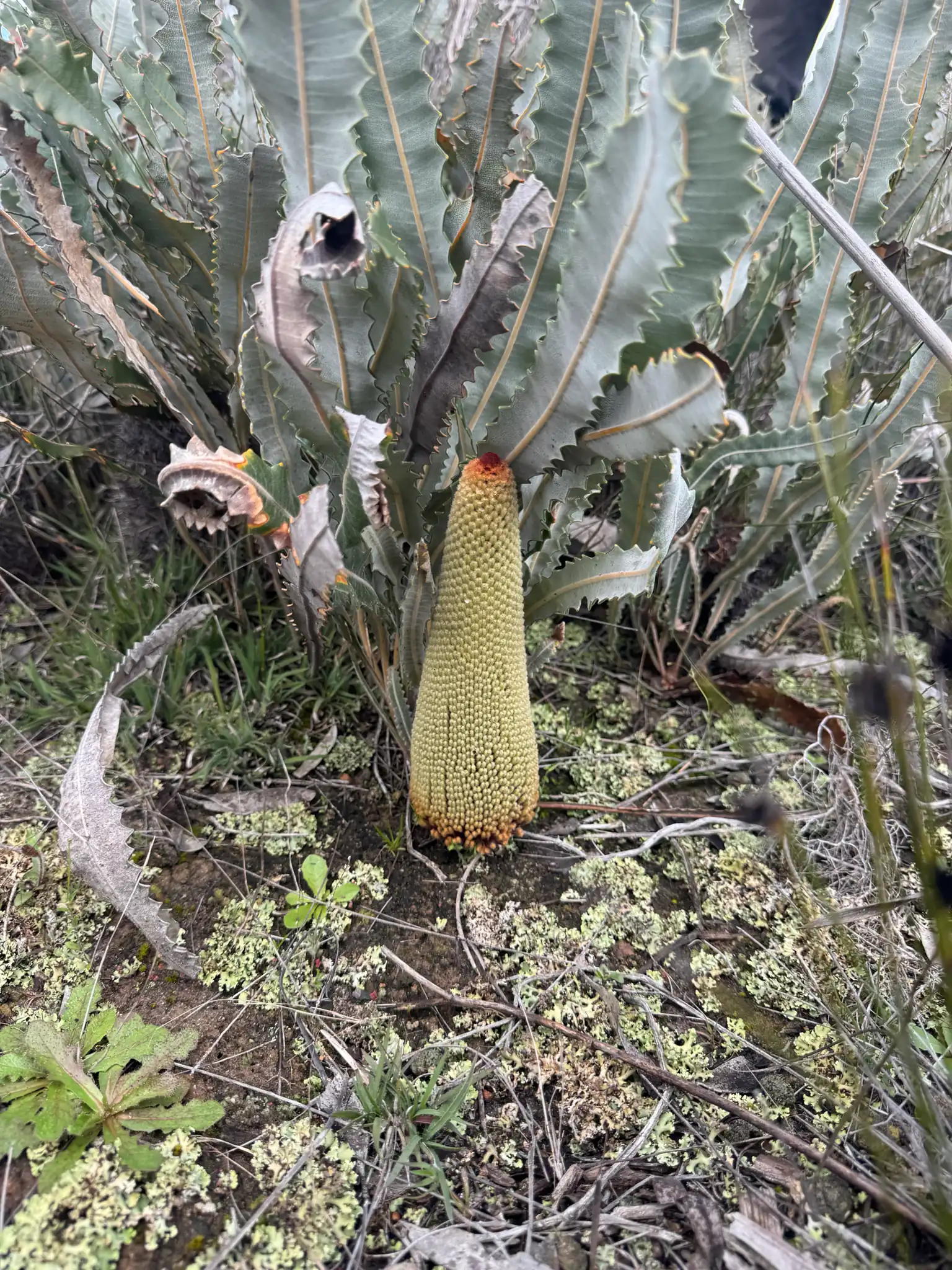
Banksia petiolaris, commonly known as creeping banksia, is a prostrate Australian shrub that forms a broad, ground-hugging mat up to ten feet wide and under one foot high. Its thick, leathery leaves stand upright along prostrate creeping stems, featuring deeply lobed edges and soft hairs on emerging new growth.
The cylindrical flower spikes bloom directly against the ground beneath the foliage, displaying shades of pink, yellow, and deep maroon. Lacking a lignotuber, the plant spreads continuously via creeping surface or subterranean stems rather than regrowing from a woody base.
Uses & Benefits:
Essentials
At a Glance
Plant Type
Groundcover
Height
12"
Width
118"
Light
Full Sun
Zones
9, 10
Water
Low
Humidity
Low to Moderate
Lifespan
Perennial
Native To
Western Australia
Toxicity
Non-toxic
Bloom period
Spring – Early summer
In flower about 4 months of the year
Planting
How to Grow
- Select a site in full sun with deep, highly permeable sandy soil or sharp-draining sandy loam.
- Build a raised mound or slope if planting in soil prone to retaining winter moisture.
- Set the root ball level with or slightly above the surrounding soil surface to protect the root crown.
- Water sparingly during establishment and avoid all standard phosphorus-bearing fertilizers.
Pro Tip
Plant on raised mounds or sloping sandy beds to guarantee sharp drainage, and never cut back past living leafy growth into bare wood.
Keep It Thriving
Care Guide
Do
- Plant in deep, fast-draining sandy soil in full sun.
- Mound the planting bed to prevent water pooling around the crown.
- Use only zero- or ultra-low-phosphorus native plant fertilizers if feeding.
Don't
- Do not apply standard complete or phosphorus-rich fertilizers.
- Do not cut hard into old, leafless woody stems.
- Do not allow the soil to remain soggy or wet.
Seasonal Care Calendar
| Task | Jan | Feb | Mar | Apr | May | Jun | Jul | Aug | Sep | Oct | Nov | Dec |
|---|---|---|---|---|---|---|---|---|---|---|---|---|
| Fertilize | ||||||||||||
| Mulch | ||||||||||||
| Pest Check | ||||||||||||
| Prune |
Watch Out For
Pests & Diseases
Common Pests
Common Diseases
In the Garden
Landscape Uses & Companions
Landscape Uses
Companion Plants
Multiply
Propagation Methods
Good to Know
Common Questions
Creeping Banksia questions
What zones can Creeping Banksia grow in?
Creeping Banksia is hardy in USDA Zones 9–10: in that range it survives winter in the ground. Colder than Zone 9, grow it in a container you can move to shelter for the winter, or as an annual.
Is Creeping Banksia deer resistant?
Not reliably. Deer may browse Creeping Banksia, especially tender spring growth — plan on repellents or fencing where pressure is high.
When does Creeping Banksia bloom?
Creeping Banksia typically blooms from early spring to early summer. Exact timing shifts a week or two with your zone — Sow's bloom calendar maps it to your garden.
Does Creeping Banksia need full sun?
Creeping Banksia does best in full sun (6+ hours).
Is Creeping Banksia drought tolerant?
Yes — once established (usually after the first full season), Creeping Banksia handles dry spells with minimal watering. Water deeply its first year to build the root system that makes that possible.
More Banksia to compare
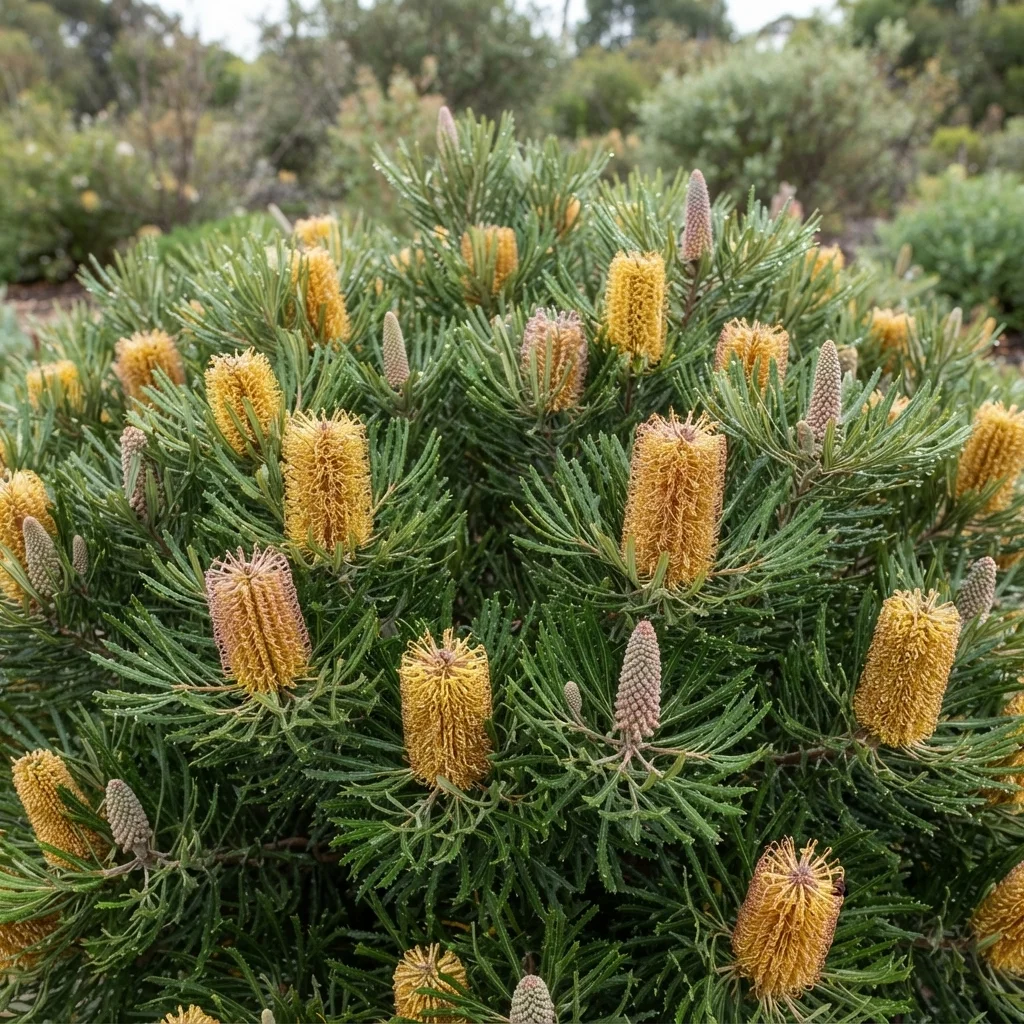
Birthday Candles Banksia
Banksia spinulosa 'Birthday Candles'
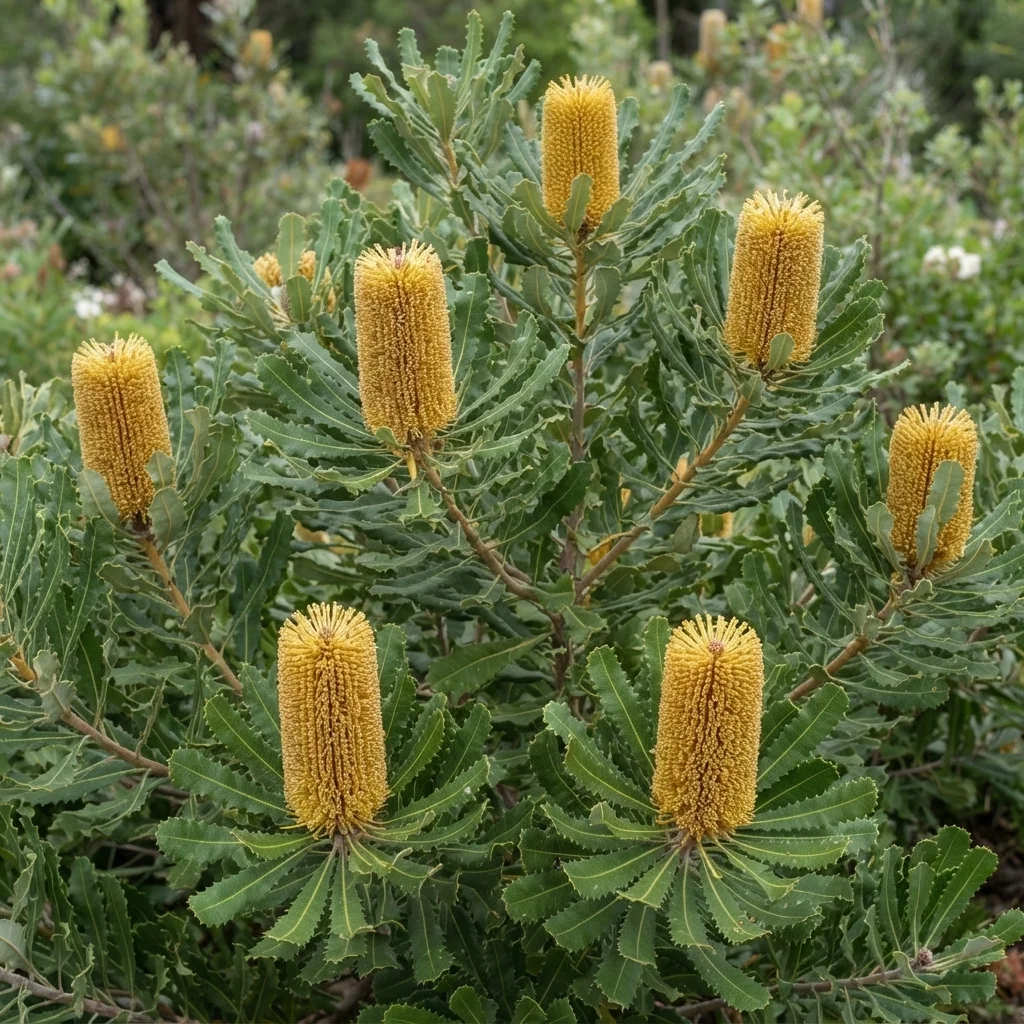
Southern Plains Banksia
Banksia media
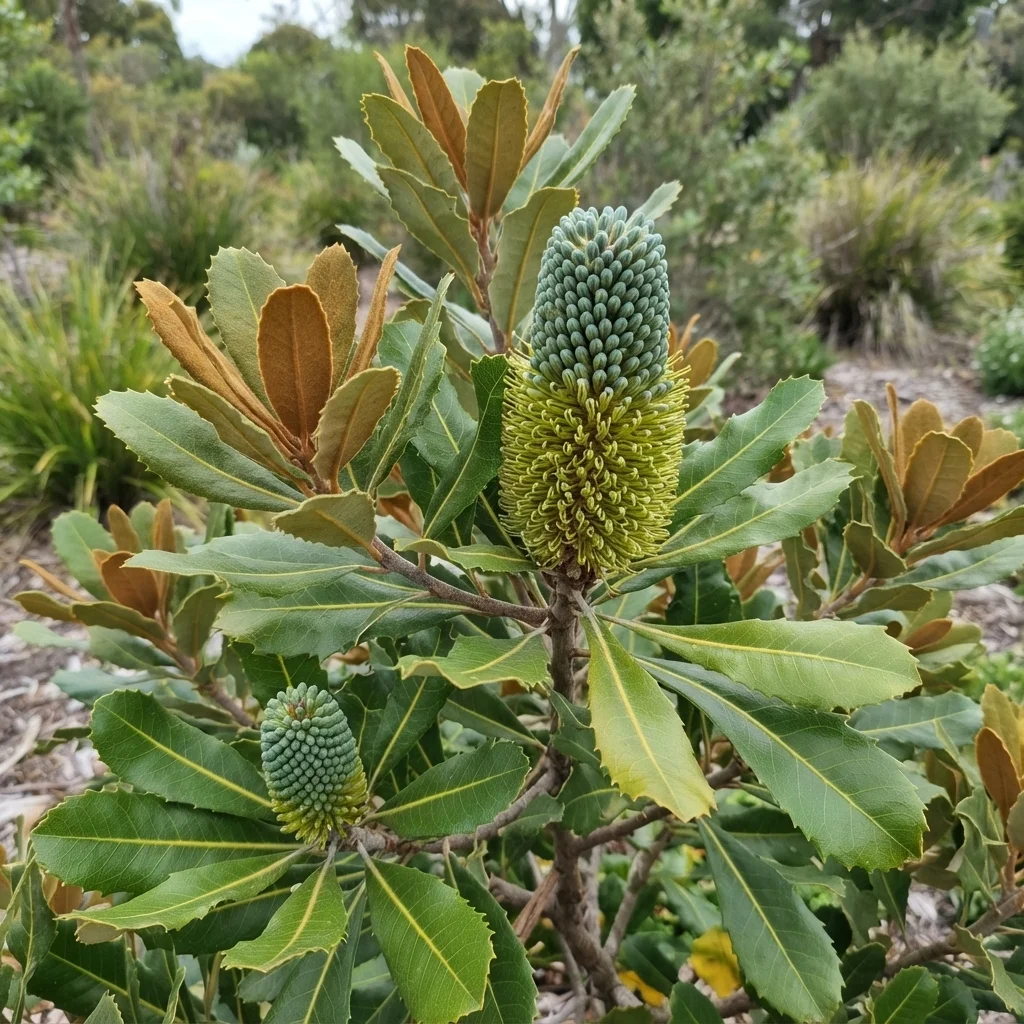
Swamp Banksia
Banksia robur
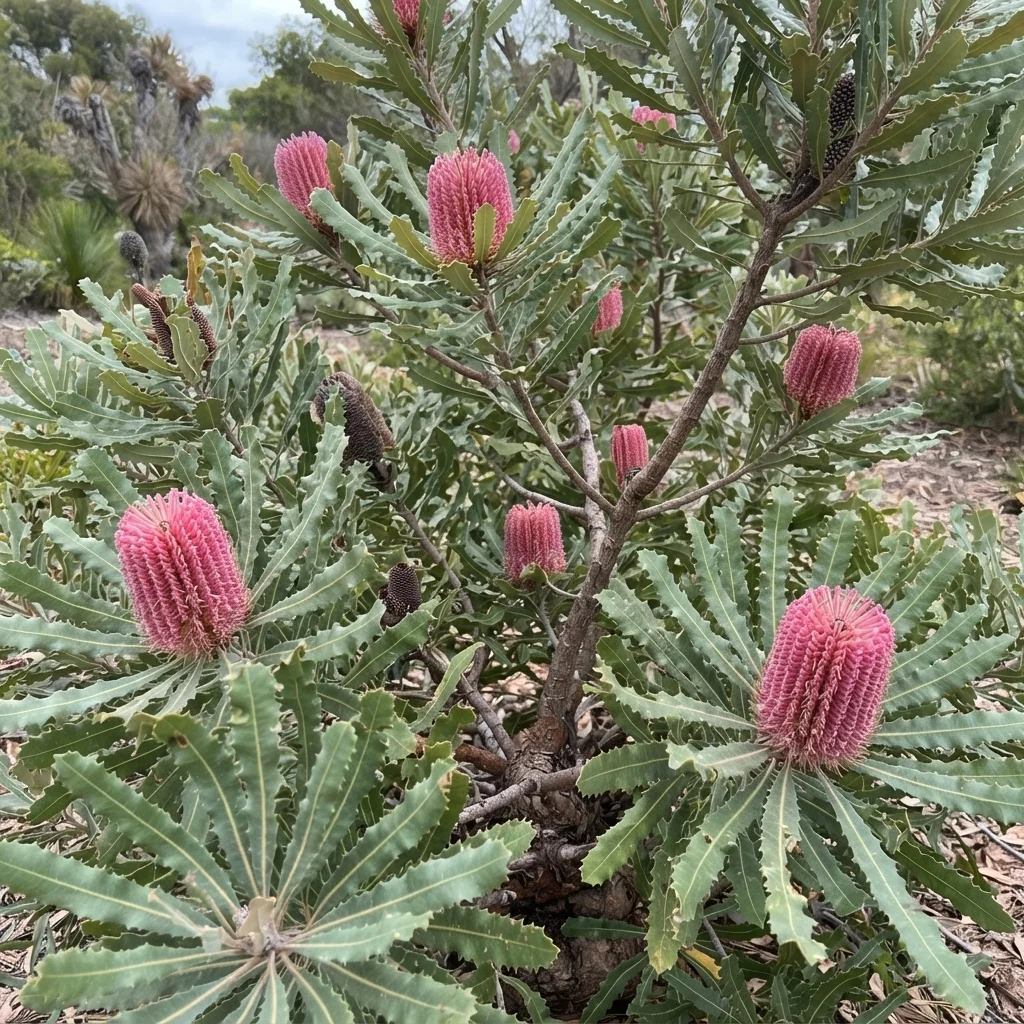
Menzies' Banksia
Banksia menziesii
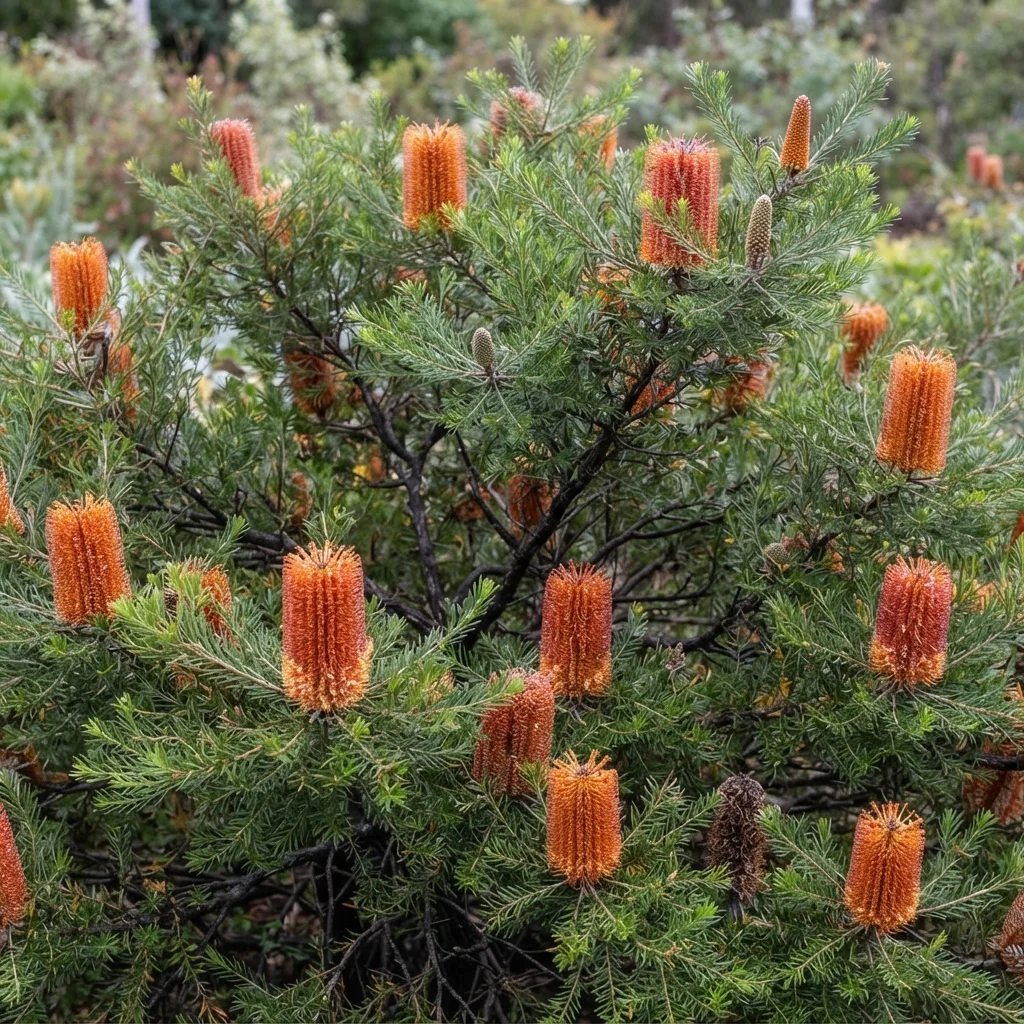
Heath Banksia
Banksia ericifolia
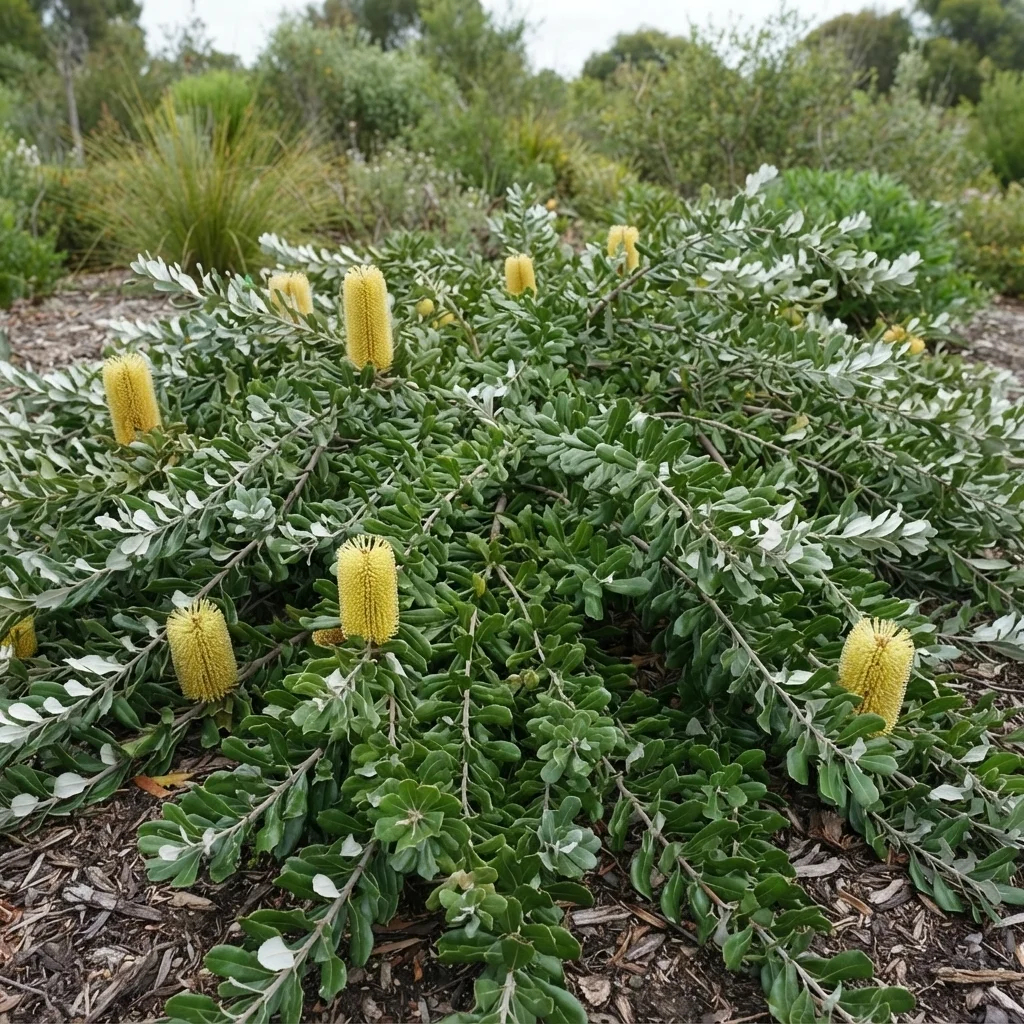
Prostrate Coast Banksia
Banksia integrifolia 'Roller Coaster'
Keep exploring
Explore the genus
Hardy in your zone?
Grow Creeping Banksia with confidence
See it in a design of your actual yard, get zone-matched care reminders, and track it season by season in your garden journal.