
The Story
Plant Bio
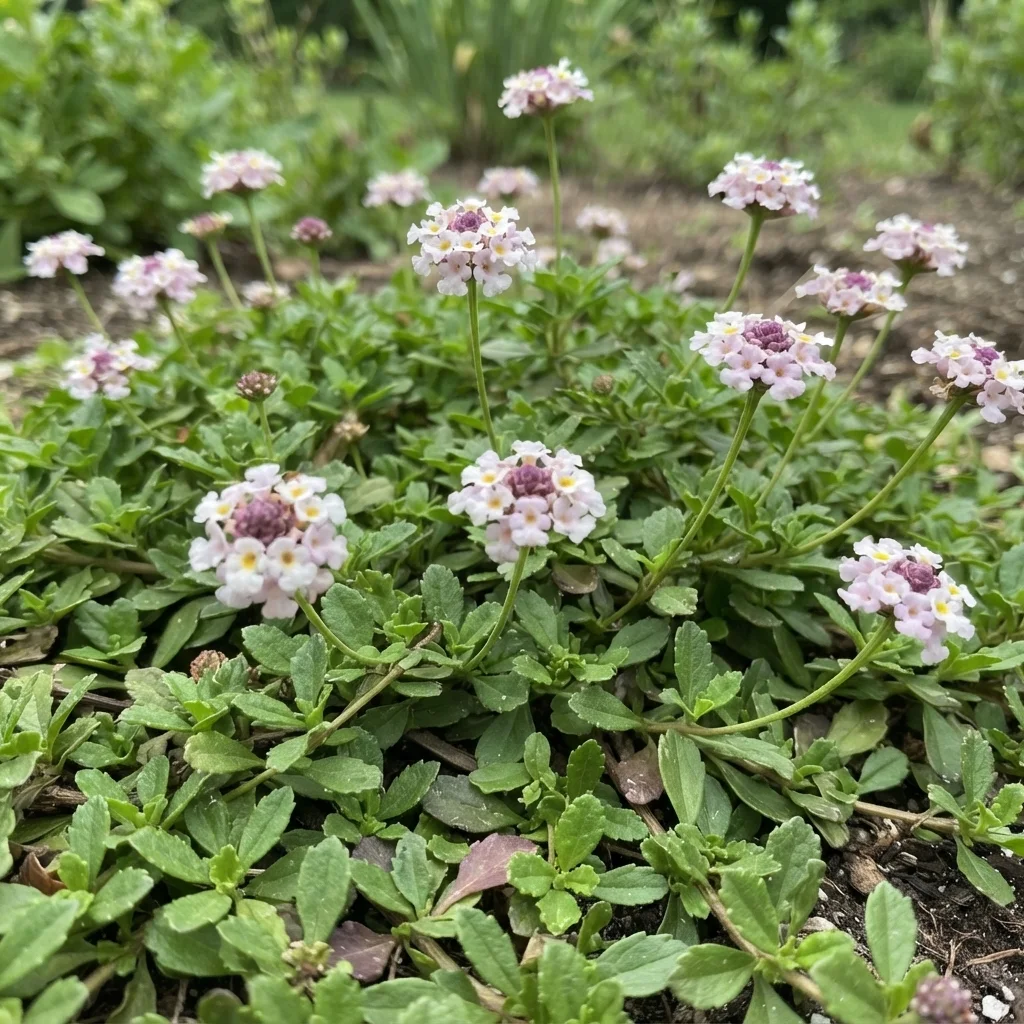
Lippia stoechadifolia, still sold as Phyla stoechadifolia, is a creeping perennial herb of wet limestone prairies and freshwater edges from Mexico through Central America and the Caribbean to southern Florida. It roots along woody stems to make open patches 6 to 18 inches high and wide, with thick opposite leaves and tiny purple to pink flowers packed in elongated heads that bloom through the year.
It grows larger and more upright than turkey-tangle frogfruit, with long narrow leaves marked by deep veins and sharp serrations along the edge. The flower heads are cylindrical and elongate rather than round, opening in purple, pink, and white tones that feed native butterflies.
Uses & Benefits:
Essentials
At a Glance
Plant Type
Groundcover
Height
18"
Width
18"
Light
Full Sun
Zones
10
Water
Wet to moist
Humidity
High
Lifespan
Perennial
Native To
Mexico, Central America, Caribbean, northern South America; southern Florida in USA
Toxicity
Unknown
Bloom period
Year round
In flower about 12 months of the year
Planting
How to Grow
- Plant in full sun in wet to moist limestone or marl soil that stays damp but drains.
- Space rooted sections 12 to 18 inches apart and water in to settle soil around stems.
- Keep soil consistently moist through establishment; do not let plants stay dry for long periods.
- Allow stems to root along the ground to close the patch; trim edges only to keep bounds.
Pro Tip
Set plants at the start of the wet season in full sun and let stems root out to knit the patch; replant rooted stem sections to fill gaps instead of shearing the top.
Keep It Thriving
Care Guide
Do
- Keep soil wet to moist year round.
- Give full sun.
- Propagate from rooted cuttings to expand planting.
Don't
- Do not expose to salt spray or brackish flooding.
- Do not let soil dry out for extended periods.
- Do not collect from the wild; buy only nursery-propagated stock.
Seasonal Care Calendar
| Task | Jan | Feb | Mar | Apr | May | Jun | Jul | Aug | Sep | Oct | Nov | Dec |
|---|---|---|---|---|---|---|---|---|---|---|---|---|
| Mulch | ||||||||||||
| Pest Check | ||||||||||||
| Plant | ||||||||||||
| Propagate | ||||||||||||
| Prune |
Watch Out For
Pests & Diseases
Common Pests
Common Diseases
In the Garden
Landscape Uses & Companions
Landscape Uses
Multiply
Propagation Methods
Good to Know
Common Questions
Southern Frogfruit questions
What zones can Southern Frogfruit grow in?
Southern Frogfruit is hardy in USDA Zone 10: in that range it survives winter in the ground. Colder than Zone 10, grow it in a container you can move to shelter for the winter, or as an annual.
When does Southern Frogfruit bloom?
Southern Frogfruit typically blooms year-round. Exact timing shifts a week or two with your zone — Sow's bloom calendar maps it to your garden.
Does Southern Frogfruit need full sun?
Southern Frogfruit does best in full sun (6+ hours).
More Phyla to compare
Keep exploring
Explore the genus
Hardy in your zone?
Grow Southern Frogfruit with confidence
See it in a design of your actual yard, get zone-matched care reminders, and track it season by season in your garden journal.