The Story
Plant Bio
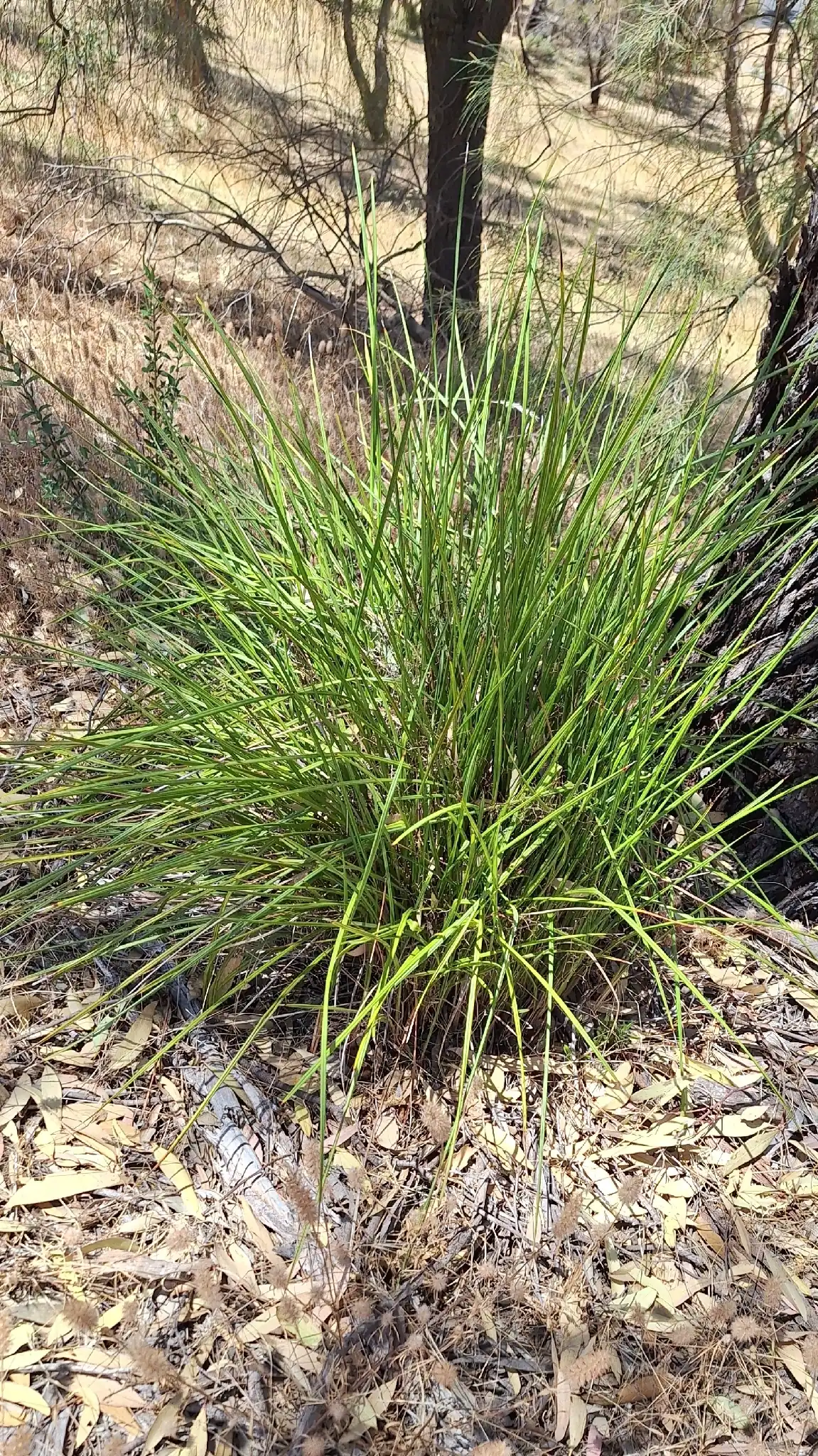
Dianella brevicaulis, commonly called coast flax-lily, is an evergreen rhizomatous perennial forming dense, arching tussocks of bright green, strap-like foliage up to 20 inches tall. Small, deep blue to violet flowers with yellow centers bloom among the leaves in spring and summer, followed by glossy purple berries.
Unlike taller flax-lilies, this species keeps its panicles nestled within or slightly below the foliage, maintaining a low, compact silhouette. Its extreme tolerance for direct salt spray and lean, sandy soil makes it ideally suited to exposed coastal gardens and dune stabilization.
Uses & Benefits:
Essentials
At a Glance
Plant Type
Grass
Height
20"
Width
60"
Light
Full Sun, Partial Sun
Zones
8, 9, 10
Water
Low
Humidity
Moderate
Lifespan
Perennial
Native To
Australia
Toxicity
Toxic if ingested
Bloom period
Spring – Summer
In flower about 6 months of the year
Planting
How to Grow
- Choose a location receiving full sun to partial shade with light, free-draining soil.
- Dig a hole twice as wide as the root ball and equal in depth.
- Set the plant into the hole so the crown sits level with the surrounding soil grade.
- Backfill with native soil mixed with sand if needed, firm gently, and water in thoroughly.
Pro Tip
Plant in fast-draining sandy or loamy soil and never scalp the plant down to old bare wood, which destroys its growth points.
Keep It Thriving
Care Guide
Do
- Provide high-drainage soil to protect roots from lingering moisture.
- Prune spent flower stalks and individual dead leaves out manually at ground level.
- Water regularly during the first season until roots establish deep in the soil.
Don't
- Do not shear or hedge plants down to woody basal wood.
- Do not plant in heavy, wet clay soils that retain standing water.
- Do not over-fertilize with high-phosphorus formulas.
Seasonal Care Calendar
| Task | Jan | Feb | Mar | Apr | May | Jun | Jul | Aug | Sep | Oct | Nov | Dec |
|---|---|---|---|---|---|---|---|---|---|---|---|---|
| Divide | ||||||||||||
| Fertilize | ||||||||||||
| Plant | ||||||||||||
| Prune |
Watch Out For
Pests & Diseases
Common Pests
Common Diseases
In the Garden
Landscape Uses & Companions
Landscape Uses
Multiply
Propagation Methods
Good to Know
Common Questions
Coast Flax-Lily questions
What zones can Coast Flax-Lily grow in?
Coast Flax-Lily is hardy in USDA Zones 8–10: in that range it survives winter in the ground. Colder than Zone 8, grow it in a container you can move to shelter for the winter, or as an annual.
Is Coast Flax-Lily deer resistant?
Not reliably. Deer may browse Coast Flax-Lily, especially tender spring growth — plan on repellents or fencing where pressure is high.
When does Coast Flax-Lily bloom?
Coast Flax-Lily typically blooms from spring to summer. Exact timing shifts a week or two with your zone — Sow's bloom calendar maps it to your garden.
Does Coast Flax-Lily need full sun?
Coast Flax-Lily does best in full sun to part shade. In hot climates, afternoon shade keeps blooms fresher longer.
Is Coast Flax-Lily drought tolerant?
Yes — once established (usually after the first full season), Coast Flax-Lily handles dry spells with minimal watering. Water deeply its first year to build the root system that makes that possible.
More Dianella to compare
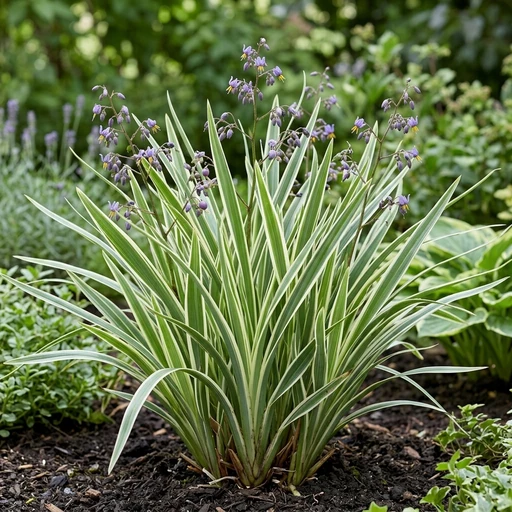
Variegated Flax Lily
Dianella caerulea 'Variegata'
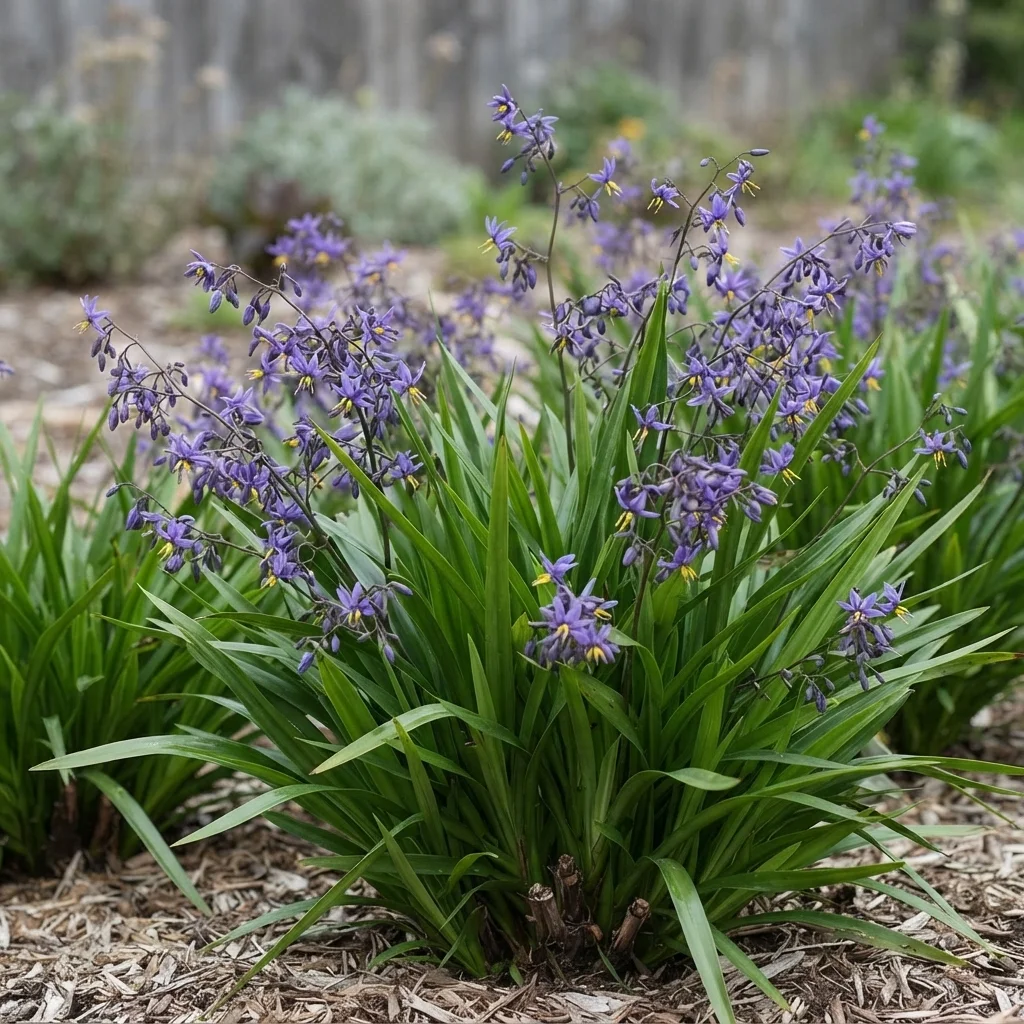
Little Jess Blue Flax-Lily
Dianella caerulea 'Little Jess'
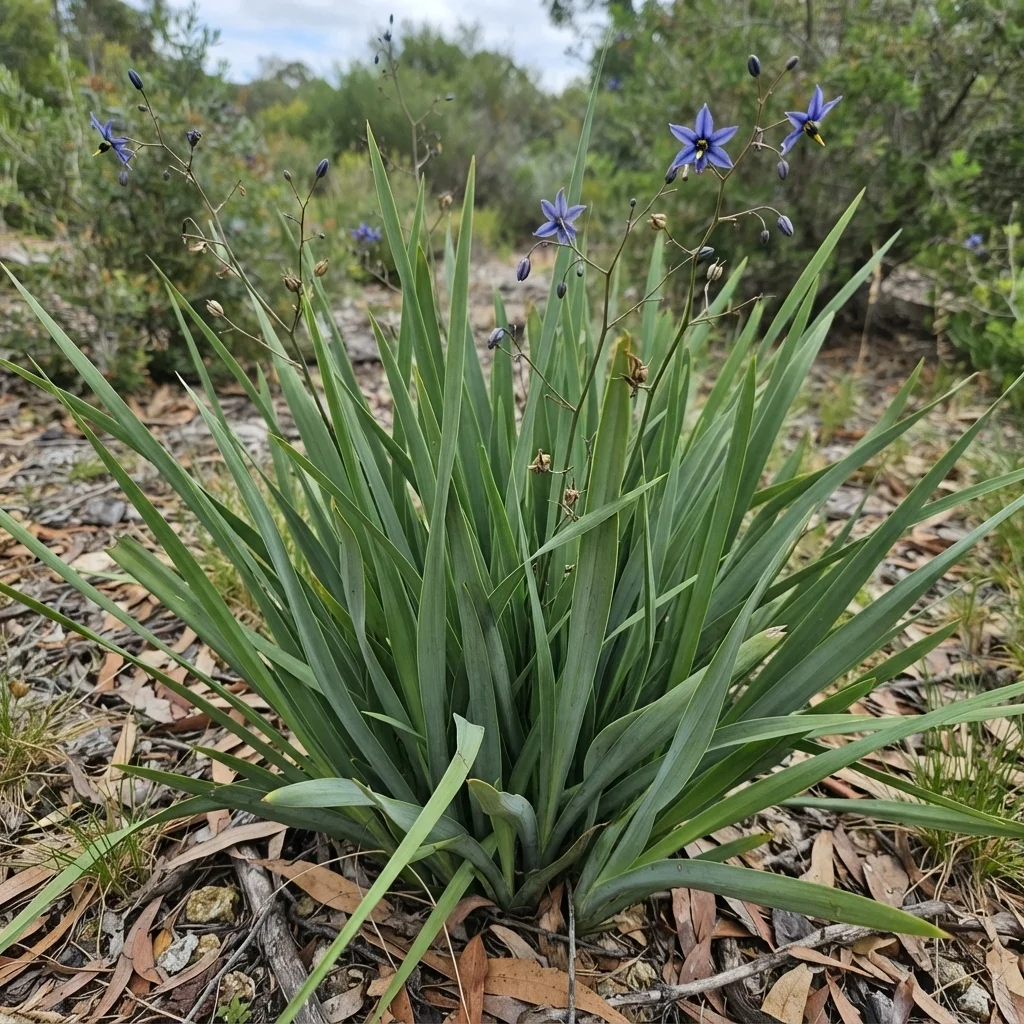
Blue Flax-Lily
Dianella revoluta
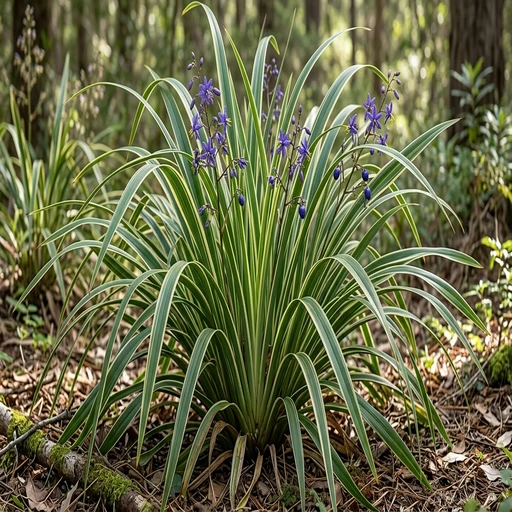
Tasmanian Flax Lily
Dianella tasmanica
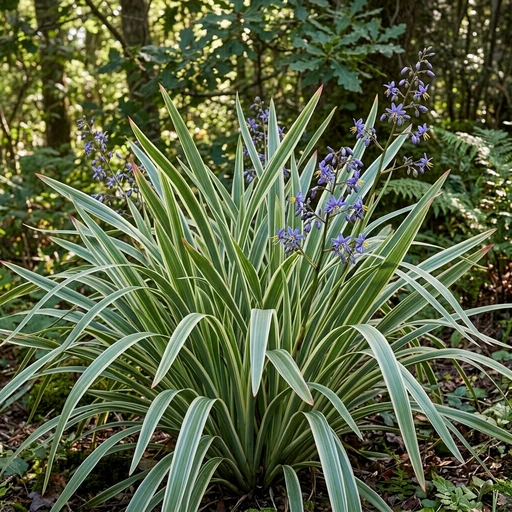
Blueberry Flax Lily 'Variegata'
Dianella tasmanica 'Variegata'
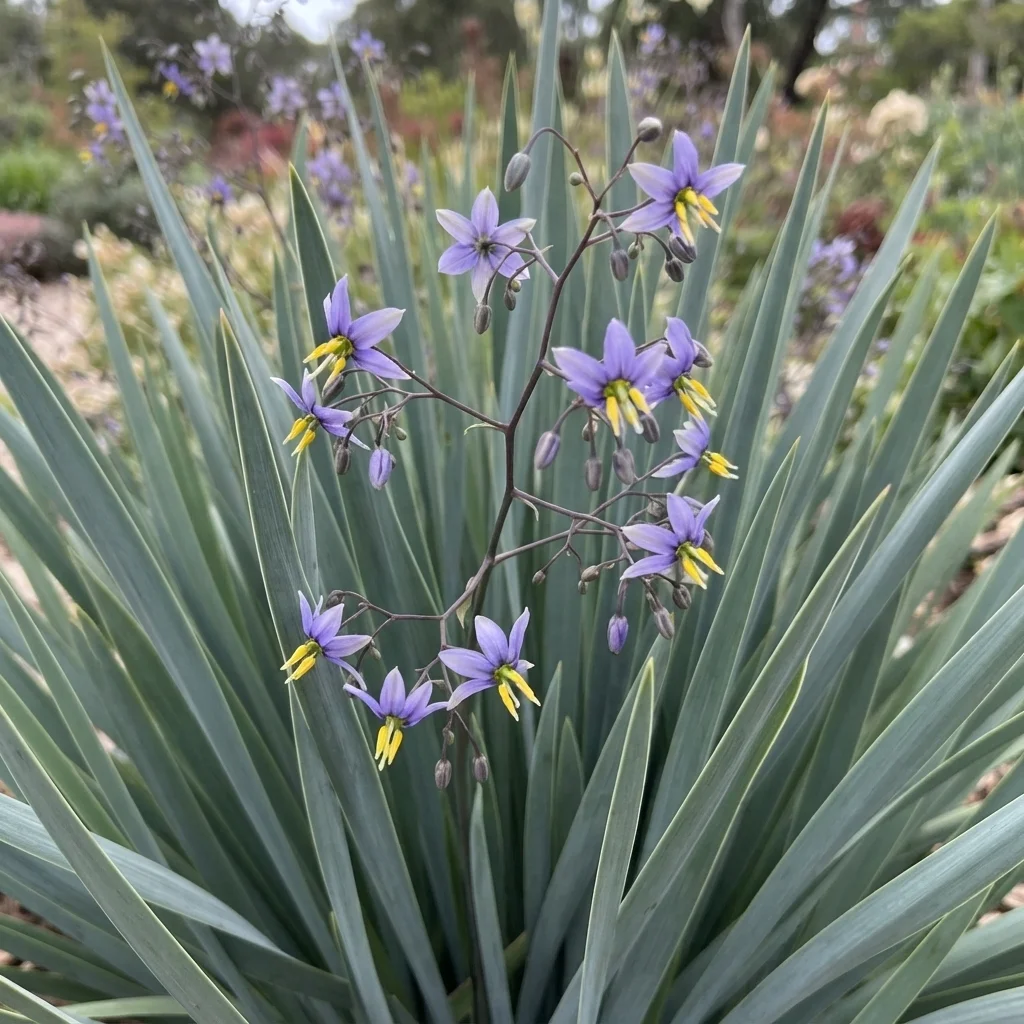
Baby Bliss Flax Lily
Dianella revoluta 'Baby Bliss'
Keep exploring
Explore the genus
Hardy in your zone?
Grow Coast Flax-Lily with confidence
See it in a design of your actual yard, get zone-matched care reminders, and track it season by season in your garden journal.