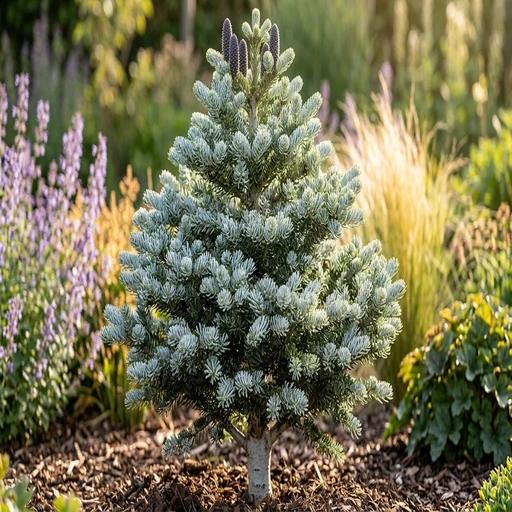
1 named cultivar
The Story
Plant Bio
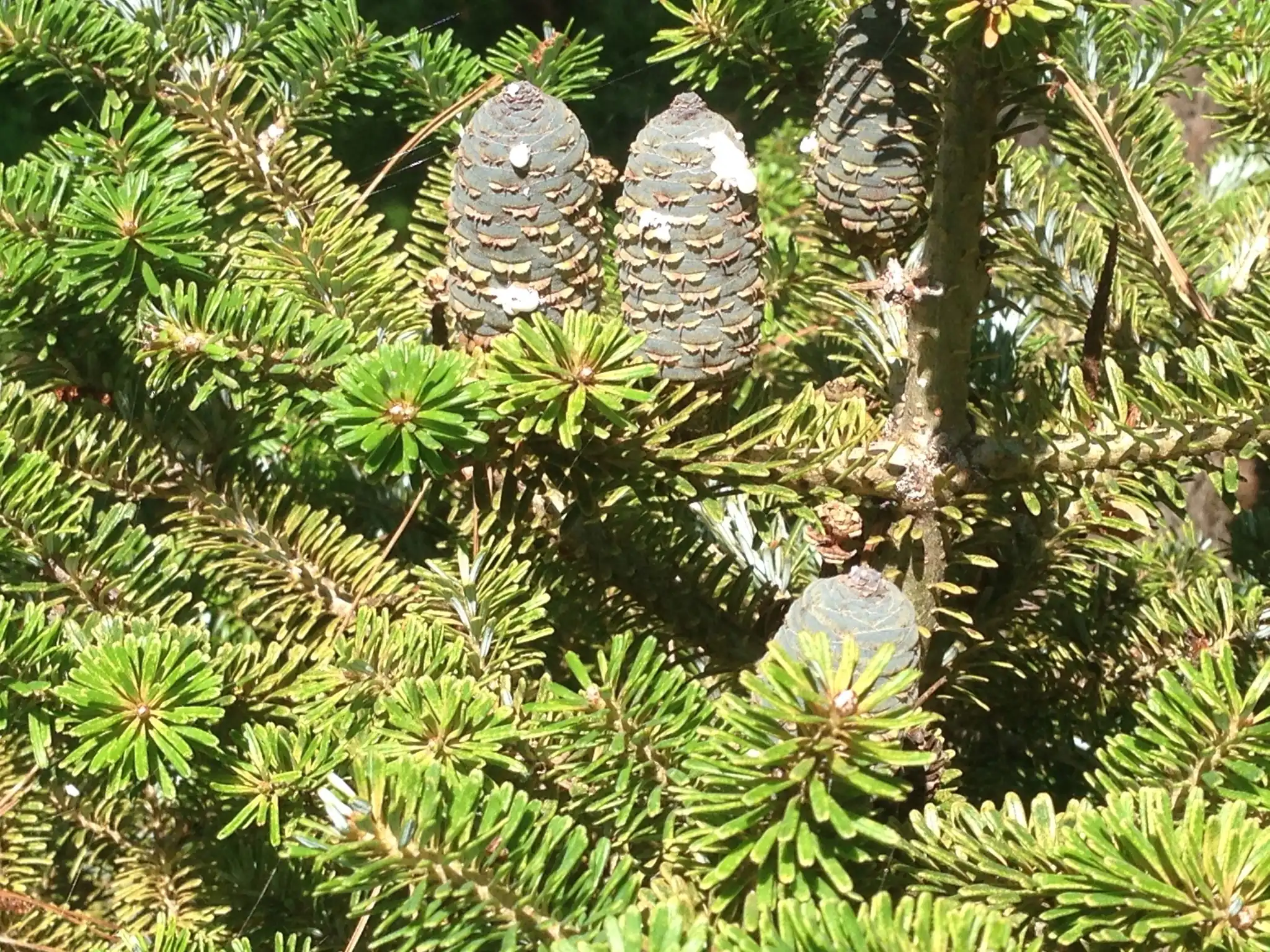
Abies koreana, Korean fir, is a slow-growing pyramidal evergreen conifer from South Korea, reaching fifteen to fifty feet with horizontal branches. Short needles half to three-quarters of an inch long are dark green above with two vivid white bands beneath, and smooth grey bark carries resin blisters.
It produces upright violet-purple cones while still young and small, which almost no other fir does — most need decades and real height before coning. The cones stand along the upper branches like candles and are the main reason it is planted. It is also more heat tolerant than most firs, which extends its usable range southward.
Uses & Benefits:
Essentials
At a Glance
Plant Type
Tree
Height
390"
Width
108"
Light
Full Sun, Partial Sun
Zones
5, 6, 7
Water
Moderate
Humidity
Moderate
Lifespan
Perennial
Native To
South Korea
Toxicity
Non-toxic
Planting
How to Grow
- Plant in full sun to partial shade in moist, drained soil.
- Give it acid to neutral soil; it dislikes alkaline ground.
- Allow six to twelve feet of spread.
- Water through the first few summers.
- Avoid hot dry sites despite its heat tolerance.
- Do not prune the leader or the shape is lost.
Pro Tip
It cones while young and small, unlike other firs — so the purple candles arrive on a garden-sized plant rather than after decades.
Keep It Thriving
Care Guide
Do
- Give it moist, well-drained acid soil 🌱
- Let the purple cones develop 🍇
- Water it while establishing 💧
- Leave the leading shoot alone ✂️
Don't
- Plant it in alkaline or dry soil ❌
- Cut the leader ❌
- Expect fast growth ❌
Seasonal Care Calendar
| Task | Jan | Feb | Mar | Apr | May | Jun | Jul | Aug | Sep | Oct | Nov | Dec |
|---|---|---|---|---|---|---|---|---|---|---|---|---|
| Enjoy | ||||||||||||
| Plant |
Watch Out For
Pests & Diseases
Common Pests
Common Diseases
In the Garden
Landscape Uses & Companions
Landscape Uses
Multiply
Propagation Methods
Good to Know
Common Questions
Korean Fir questions
What zones can Korean Fir grow in?
Korean Fir is hardy in USDA Zones 5–7. Inside that range it survives winter in the ground; outside it, grow it as an annual or a container plant you protect.
Is Korean Fir deer resistant?
Yes — Korean Fir is rated deer-resistant. Deer typically pass it over, though extreme hunger can override any plant's defenses.
When does Korean Fir bloom?
Korean Fir typically blooms in does not flower through mid-spring. Exact timing shifts a week or two with your zone — Sow's bloom calendar maps it to your garden.
Does Korean Fir need full sun?
Korean Fir does best in full sun to part shade. In hot climates, afternoon shade keeps blooms fresher longer.
More Abies to compare
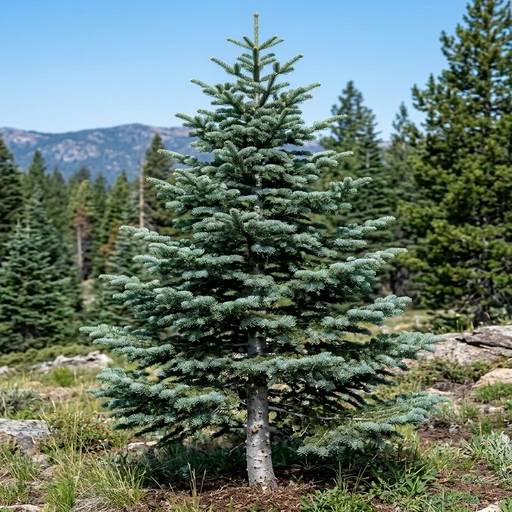
White Fir
Abies concolor
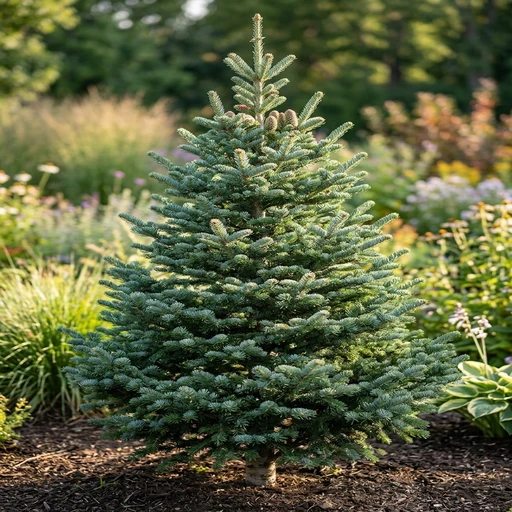
Fraser Fir
Abies fraseri
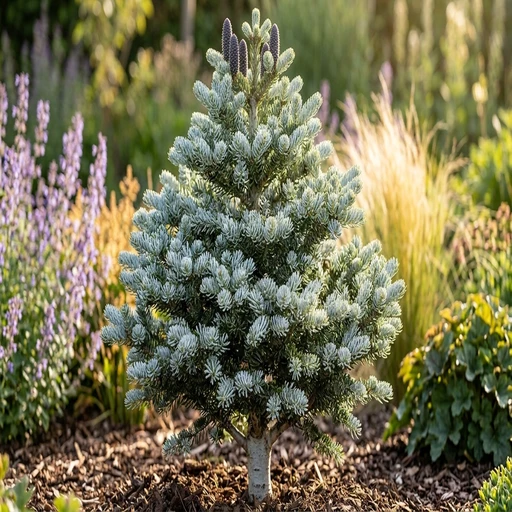
Horstmann's Silberlocke Korean Fir
Abies koreana 'Horstmann Silberlocke'
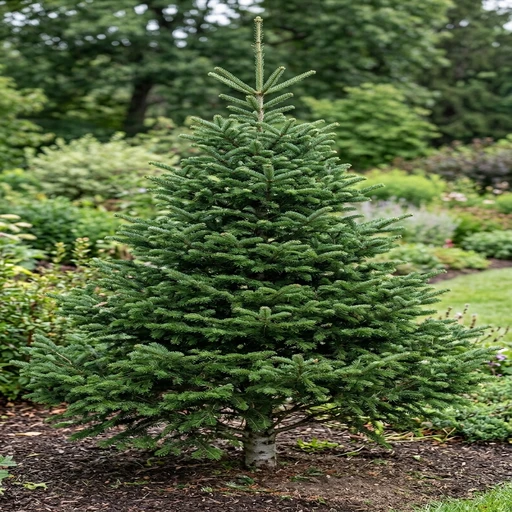
Balsam Fir
Abies balsamea
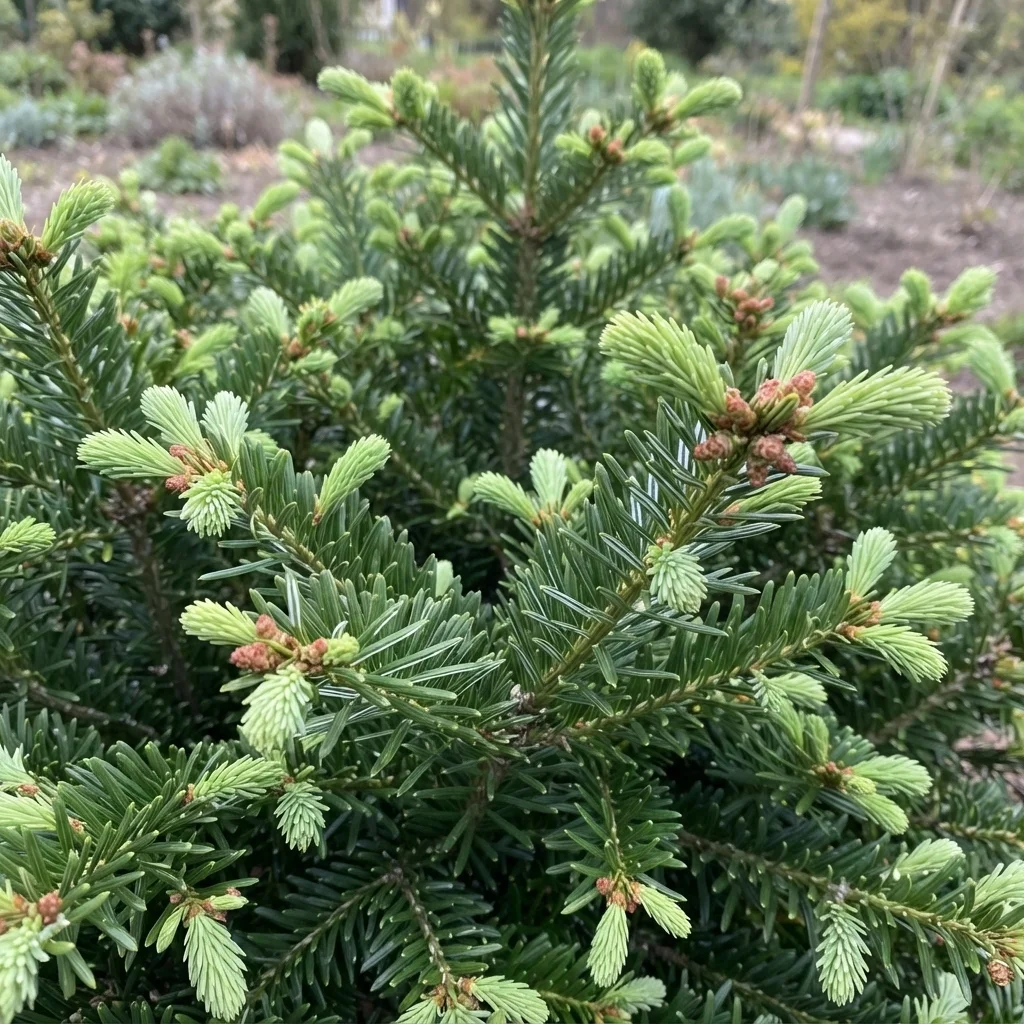
Nordmann Fir
Abies nordmanniana
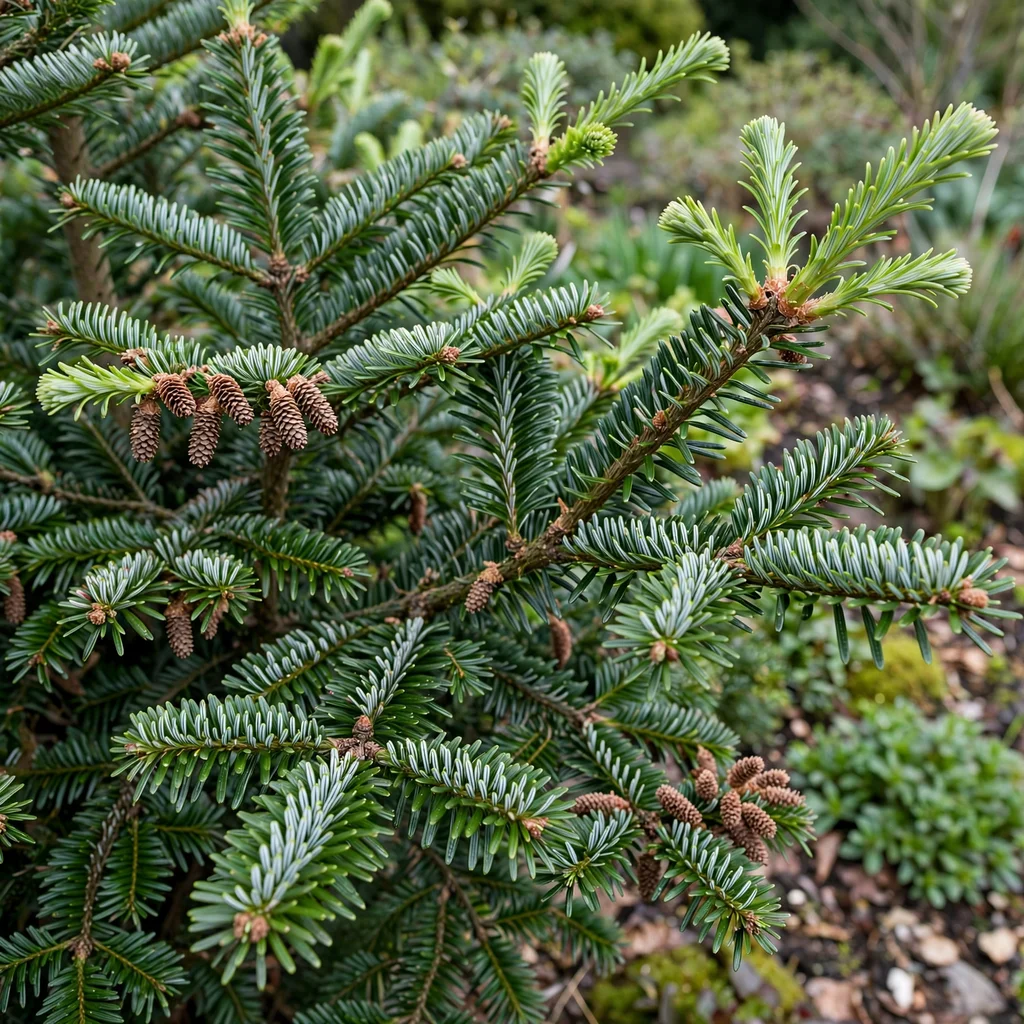
European Silver Fir
Abies alba
Keep exploring
Explore the genus
Hardy in your zone?
Grow Korean Fir with confidence
See it in a design of your actual yard, get zone-matched care reminders, and track it season by season in your garden journal.