The Story
Plant Bio
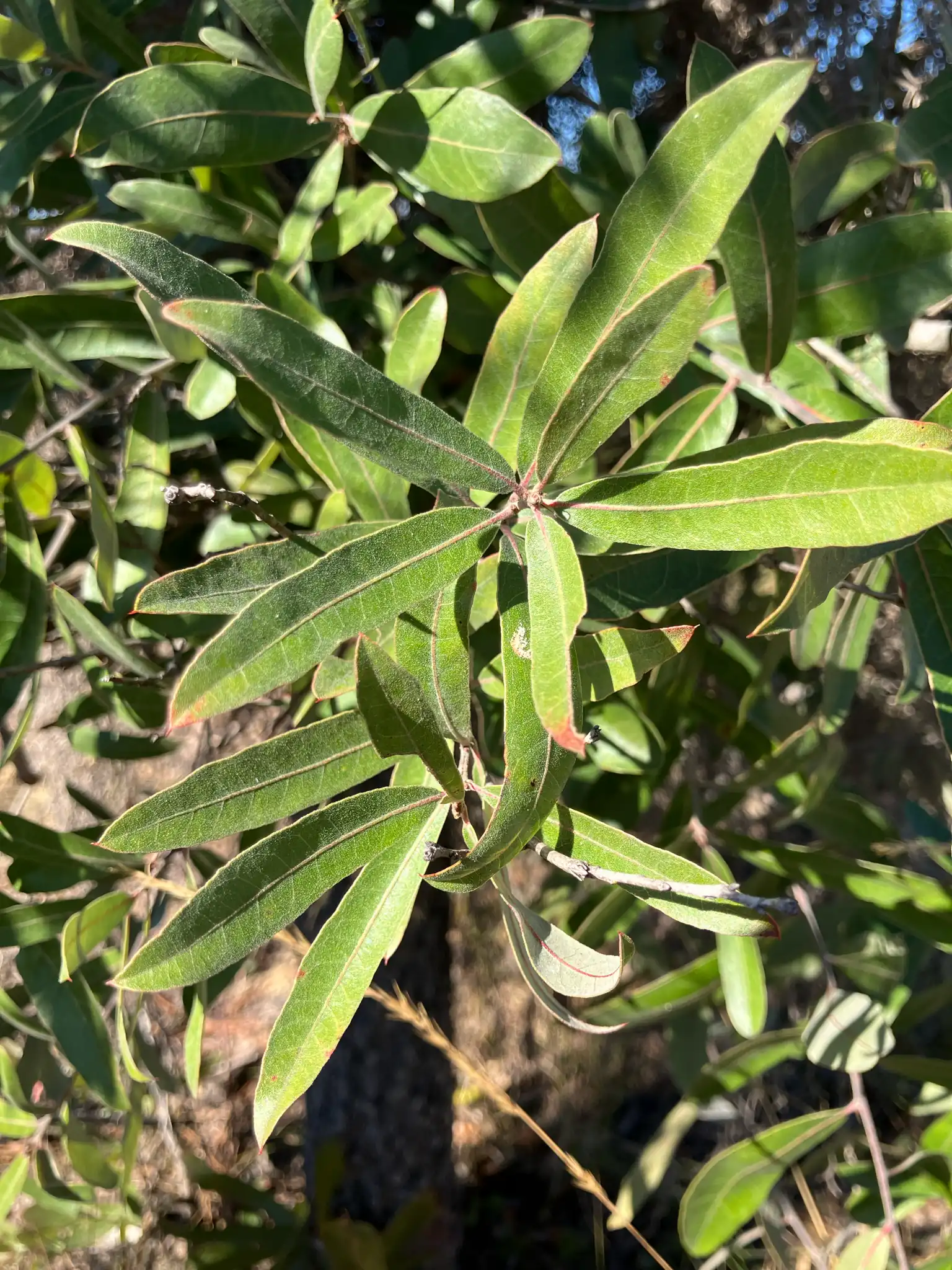
Quercus incana, the bluejack oak, is a deciduous shrub or small tree of the southeastern coastal plain, reaching about 35 feet with an open irregular crown, short trunk and stout crooked branches. The alternate leaves are narrow elliptic to lanceolate, 1 to 4 inches long with an entire margin and bristle tip, glossy bluish green above and silvery hairy beneath.
It is built for xeric deep sands, ridges and sandhills, where it suckers from the root crown to form thickets and resprouts after fire. Acorns mature in fall of the second year and, with its brushy cover, feed fox squirrels, raccoons, white-tailed deer, wild turkey and quail.
Uses & Benefits:
Essentials
At a Glance
Plant Type
Tree
Height
417"
Width
669"
Light
Full Sun, Partial Sun
Zones
7, 8, 9
Water
Low
Humidity
Unknown
Lifespan
Woody perennial
Native To
Southeastern U.S. coastal plain
Toxicity
Highly allergenic pollen; leaves and acorns high in tannin
Bloom period
Spring – Late spring
In flower about 3 months of the year
Planting
How to Grow
- Plant in fall or early spring in full sun in deep, dry, well-drained sand or sandy loam.
- Dig a hole no deeper than the root ball and twice as wide, set the crown level and backfill with native sand.
- Water deeply at planting and through the first season to prevent complete dryness, then taper to rainfall only.
- Mulch lightly with pine straw kept off the trunk and avoid rich amendments.
- Prune only in dormancy to maintain shape and remove crossing limbs.
Pro Tip
Set it in full sun in deep dry sand and water only to keep young roots from drying completely; prune only to shape, since fire-adapted plants resprout vigorously from the root crown.
Keep It Thriving
Care Guide
Do
- Plant in full sun in deep dry sand
- Water young trees until established then taper off
- Leave second-year acorns for wildlife
Don't
- Do not plant in heavy clay or wet ground
- Do not overwater or over-fertilize once established
- Do not plant where pine-oak rust pressure is high
Seasonal Care Calendar
| Task | Jan | Feb | Mar | Apr | May | Jun | Jul | Aug | Sep | Oct | Nov | Dec |
|---|---|---|---|---|---|---|---|---|---|---|---|---|
| Fertilize | ||||||||||||
| Pest Check | ||||||||||||
| Plant | ||||||||||||
| Propagate | ||||||||||||
| Prune |
Watch Out For
Pests & Diseases
Common Pests
Common Diseases
In the Garden
Landscape Uses & Companions
Landscape Uses
Companion Plants
Multiply
Propagation Methods
Good to Know
Common Questions
Bluejack Oak questions
What zones can Bluejack Oak grow in?
Bluejack Oak is hardy in USDA Zones 7–9: in that range it survives winter in the ground. Colder than Zone 7, winters are too cold for it to survive outdoors. Warmer than Zone 9, winter isn't the problem: it prefers colder winters, and summer heat can shorten its life.
Is Bluejack Oak deer resistant?
Not reliably. Deer may browse Bluejack Oak, especially tender spring growth — plan on repellents or fencing where pressure is high.
When does Bluejack Oak bloom?
Bluejack Oak typically blooms in spring. Exact timing shifts a week or two with your zone — Sow's bloom calendar maps it to your garden.
Does Bluejack Oak need full sun?
Bluejack Oak does best in full sun to part shade. In hot climates, afternoon shade keeps blooms fresher longer.
Is Bluejack Oak drought tolerant?
Yes — once established (usually after the first full season), Bluejack Oak handles dry spells with minimal watering. Water deeply its first year to build the root system that makes that possible.
More Quercus to compare
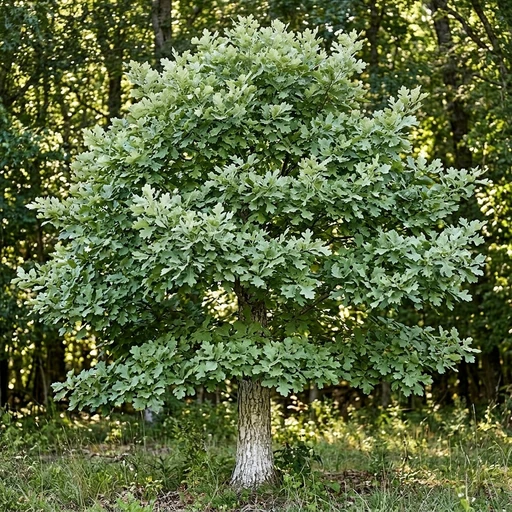
White Oak
Quercus alba
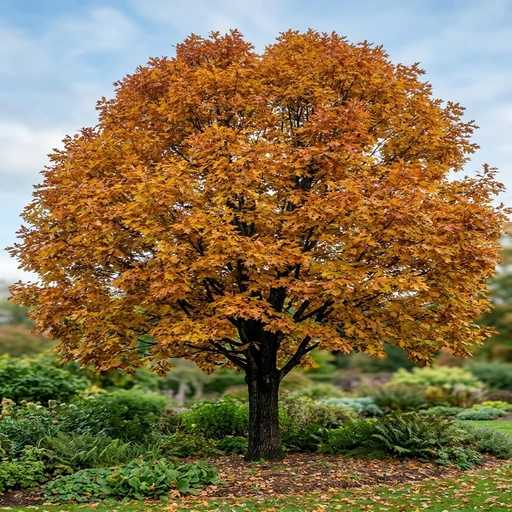
Black Oak
Quercus velutina
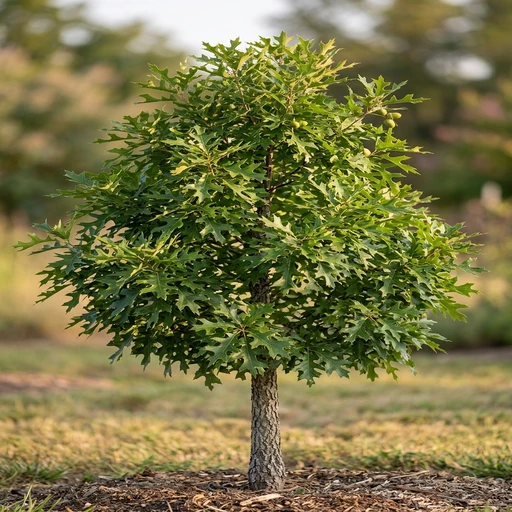
Nuttall Oak
Quercus texana
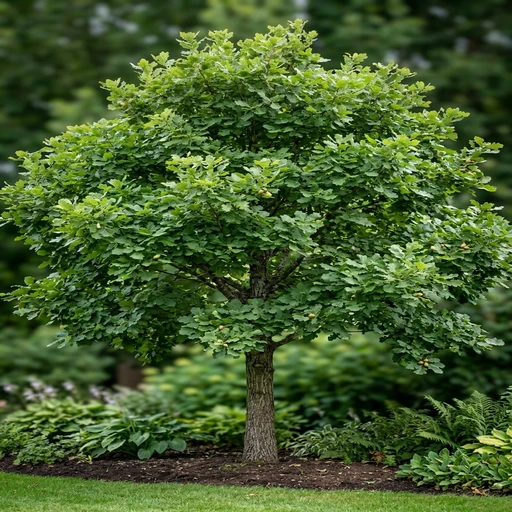
English Oak
Quercus robur
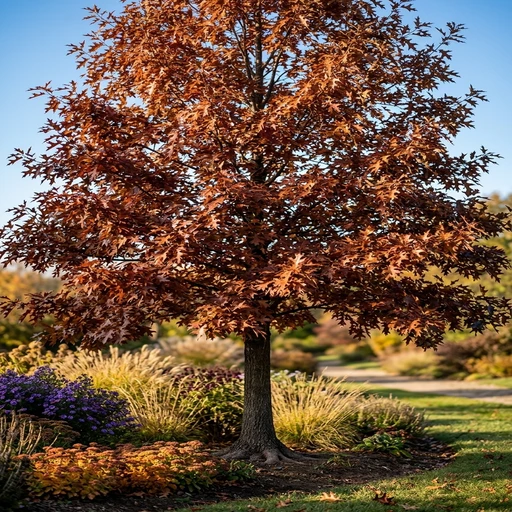
Pin Oak
Quercus palustris
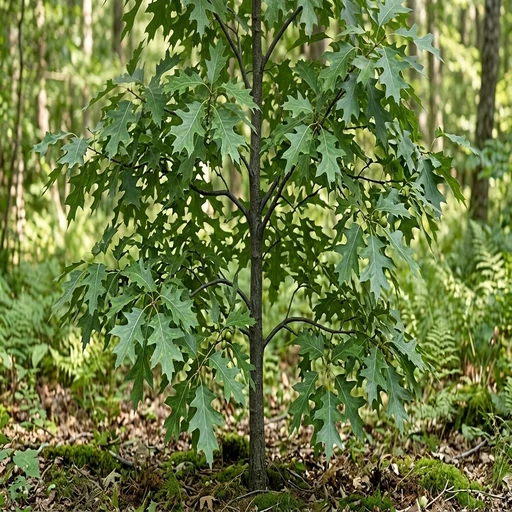
Scarlet Oak
Quercus coccinea
Keep exploring
Explore the genus
Hardy in your zone?
Grow Bluejack Oak with confidence
See it in a design of your actual yard, get zone-matched care reminders, and track it season by season in your garden journal.