The Story
Plant Bio
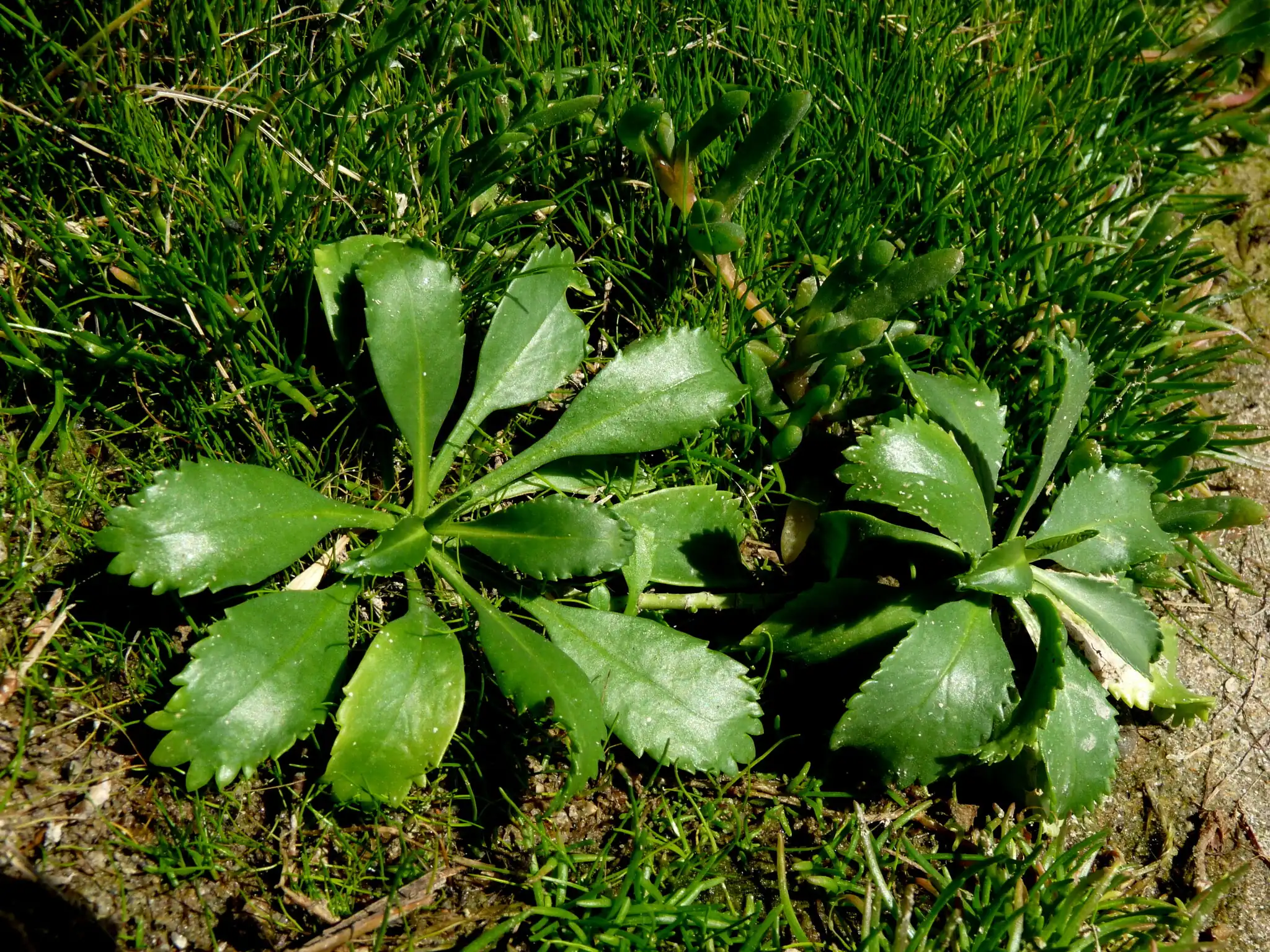
Lepidium oleraceum is a fast-growing, much-branched coastal perennial with fleshy, bright green leaves that feature distinct serrated margins. Small, four-petaled white flowers bloom in terminal clusters, followed by small rounded seedpods along the upper stems.
Native exclusively to New Zealand's maritime cliffs and offshore islets, this species is adapted to guano-enriched, high-fertility soils and intense ocean spray. The pungent foliage contains sharp mustard oils and served historically as a wild salad green to combat scurvy.
Uses & Benefits:
Essentials
At a Glance
Plant Type
Perennial
Height
20"
Width
36"
Light
Full Sun
Zones
9, 10
Water
Moderate
Humidity
High
Lifespan
Short-lived Perennial
Native To
New Zealand
Toxicity
Non-toxic
Bloom period
Spring – Summer
In flower about 6 months of the year
Planting
How to Grow
- Select a site in full sun with gritty, exceptionally well-draining soil.
- Amend the planting hole with organic compost or poultry manure to mimic nutrient-dense guano soil.
- Plant seedlings or young starts level with the surrounding soil and water in gently.
- Apply high-nitrogen organic fertilizer regularly during active growth to prevent rapid yellowing.
Pro Tip
Never cut back into old, leafless woody stems at the plant's base, as older wood fails to regenerate and hard severe cuts can kill the stem.
Keep It Thriving
Care Guide
Do
- Provide exceptionally fast-draining soil mixed with plentiful organic matter.
- Feed regularly with high-nitrogen fertilizer or compost to support foliage growth.
- Ensure maximum sun exposure and open air movement to prevent fungal rust.
Don't
- Do not allow roots to sit in stagnant or heavy, waterlogged soils.
- Do not cut back into old, bare woody stems when trimming.
- Do not neglect soil nutrition, as plants quickly starve in depleted soils.
Seasonal Care Calendar
| Task | Jan | Feb | Mar | Apr | May | Jun | Jul | Aug | Sep | Oct | Nov | Dec |
|---|---|---|---|---|---|---|---|---|---|---|---|---|
| Fertilize | ||||||||||||
| Pest Check | ||||||||||||
| Propagate | ||||||||||||
| Prune |
Watch Out For
Pests & Diseases
Common Pests
Common Diseases
In the Garden
Landscape Uses & Companions
Landscape Uses
Companion Plants
Multiply
Propagation Methods
Good to Know
Common Questions
Cook's Scurvy Grass questions
What zones can Cook's Scurvy Grass grow in?
Cook's Scurvy Grass is hardy in USDA Zones 9–10: in that range it survives winter in the ground. Colder than Zone 9, grow it in a container you can move to shelter for the winter, or as an annual.
When does Cook's Scurvy Grass bloom?
Cook's Scurvy Grass typically blooms from spring to summer. Exact timing shifts a week or two with your zone — Sow's bloom calendar maps it to your garden.
Does Cook's Scurvy Grass need full sun?
Cook's Scurvy Grass does best in full sun (6+ hours).
More Lepidium to compare
Keep exploring
Explore the genus
Hardy in your zone?
Grow Cook's Scurvy Grass with confidence
See it in a design of your actual yard, get zone-matched care reminders, and track it season by season in your garden journal.