The Story
Plant Bio
Magnolia laevifolia, still sold as Michelia yunnanensis, is a dense evergreen shrub to small tree reaching fifteen feet in cultivation, with small glossy leaves held year-round. Growth is slow and tightly branched, so plants fill in as a screen or clipped hedge without splitting open.
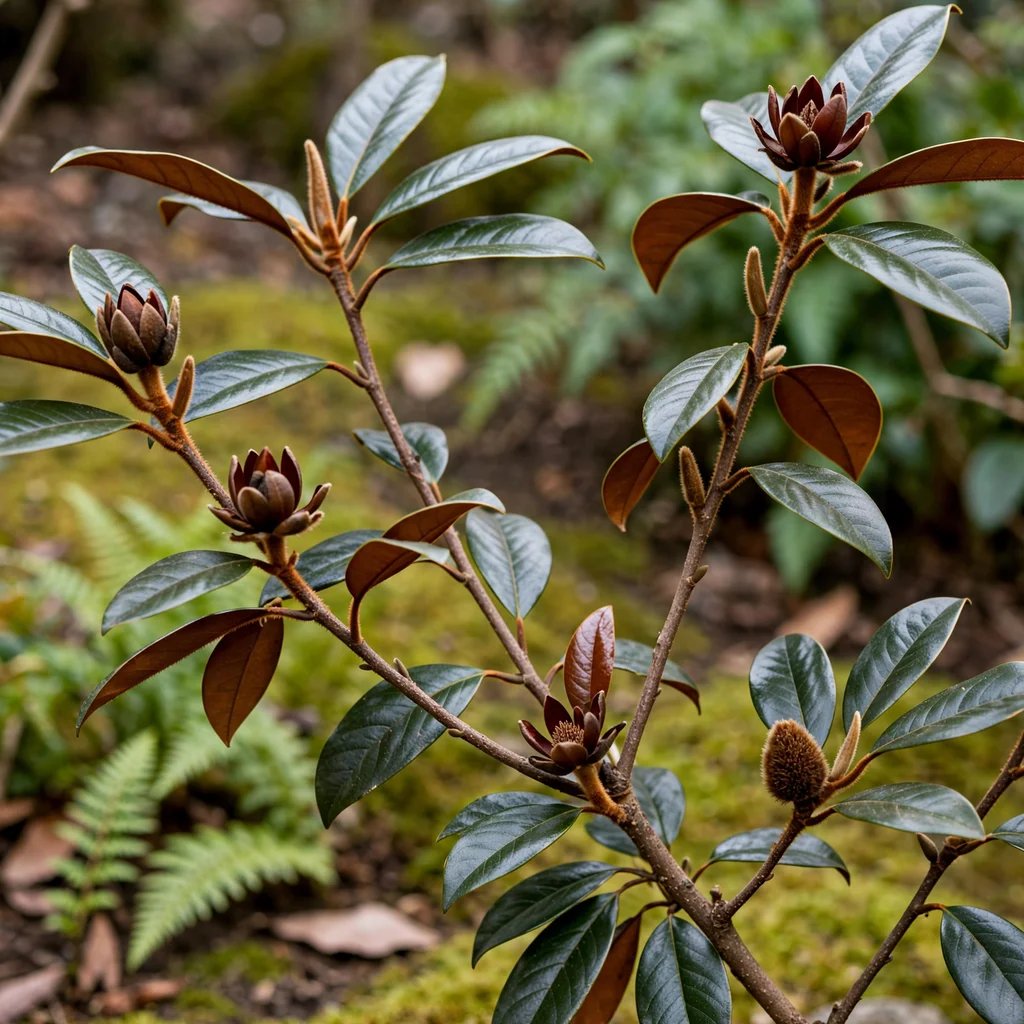
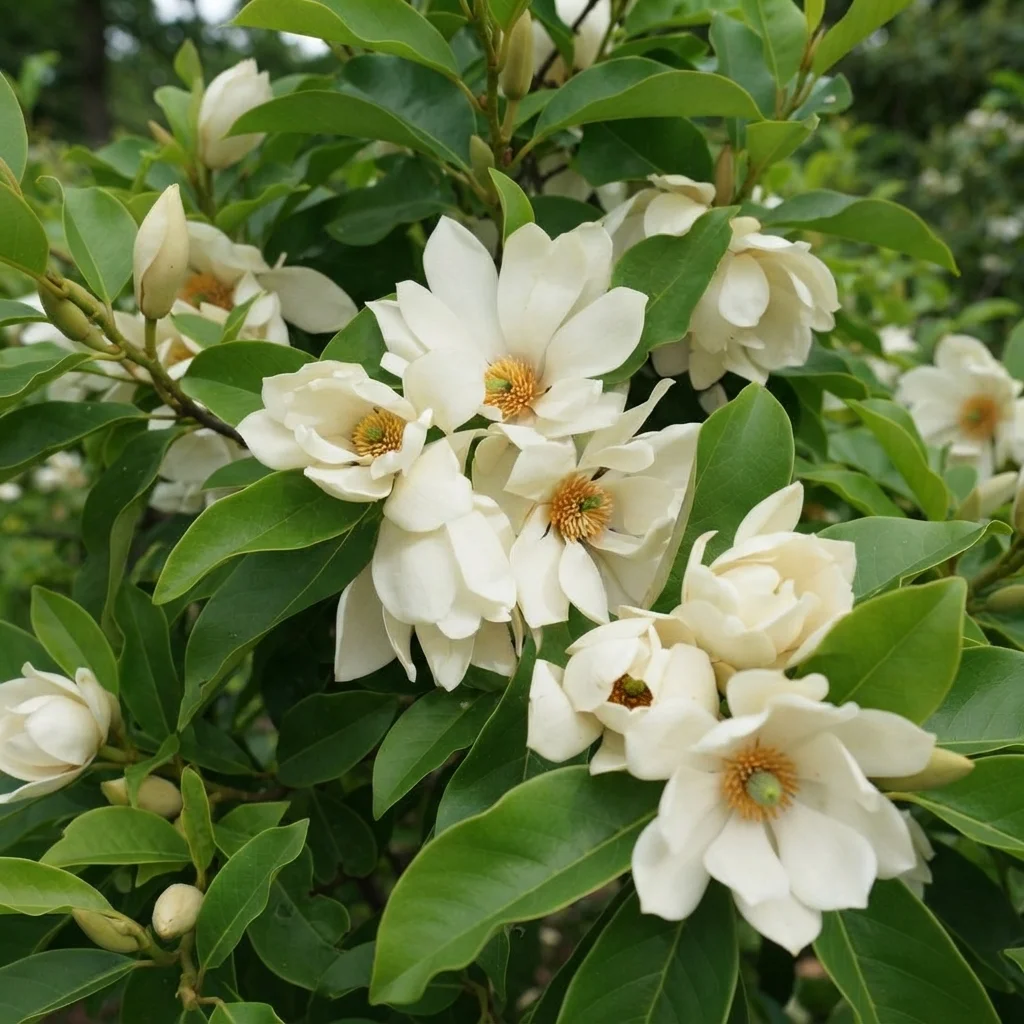
Leaves are two to three inches long, dark green above with copper-toned undersides, and new stems and velvet-brown buds carry copper hairs. Solitary cupped white flowers to four inches open in late winter to early spring and release a lemon-citrus fragrance; a late frost browns open blooms, so sheltered planting flowers best.
Uses & Benefits:
Essentials
At a Glance
Plant Type
Shrub
Height
180"
Width
180"
Light
Full Sun, Partial Sun
Zones
8, 9, 10
Water
Evenly moist
Humidity
Moderate
Lifespan
Long-lived evergreen shrub
Native To
Yunnan, China to Vietnam
Toxicity
Genus considered non-toxic; do not ingest seeds
Bloom period
Late winter – Early spring
In flower about 2 months of the year
Planting
How to Grow
- Plant in sheltered full sun to part shade in evenly moist, slightly acidic, well-draining humusy loam.
- Set at nursery depth, backfill with native soil plus compost, and water in deep.
- Mulch 2-3 inches to hold moisture, keeping mulch off the stems.
- Water to keep soil evenly moist through the first two summers; feed lightly in early spring.
Pro Tip
Prune immediately after flowering to set next year's buds; late frost ruins open blooms so plant it sheltered.
Keep It Thriving
Care Guide
Do
- Plant sheltered from late frost and cold wind to protect early flowers.
- Keep soil evenly moist with mulch and compost.
- Prune lightly right after flowering to shape and encourage flowering wood.
Don't
- Do not cut back into old leafless wood; regrowth is slow and patchy.
- Do not let soil dry out or sit waterlogged.
- Do not plant in exposed frost pockets where buds freeze.
Seasonal Care Calendar
| Task | Jan | Feb | Mar | Apr | May | Jun | Jul | Aug | Sep | Oct | Nov | Dec |
|---|---|---|---|---|---|---|---|---|---|---|---|---|
| Fertilize | ||||||||||||
| Mulch | ||||||||||||
| Pest Check | ||||||||||||
| Prune | ||||||||||||
| Winter Prep |
Watch Out For
Pests & Diseases
Common Pests
Common Diseases
In the Garden
Landscape Uses & Companions
Landscape Uses
Companion Plants
Multiply
Propagation Methods
Good to Know
Common Questions
Fragrant Magnolia questions
What zones can Fragrant Magnolia grow in?
Fragrant Magnolia is hardy in USDA Zones 8–10: in that range it survives winter in the ground. Colder than Zone 8, grow it in a container you can move to shelter for the winter.
When does Fragrant Magnolia bloom?
Fragrant Magnolia typically blooms from late winter to early spring. Exact timing shifts a week or two with your zone — Sow's bloom calendar maps it to your garden.
Does Fragrant Magnolia need full sun?
Fragrant Magnolia does best in full sun to part shade. In hot climates, afternoon shade keeps blooms fresher longer.
More Michelia to compare
Keep exploring
Explore the genus
Hardy in your zone?
Grow Fragrant Magnolia with confidence
See it in a design of your actual yard, get zone-matched care reminders, and track it season by season in your garden journal.