The Story
Plant Bio
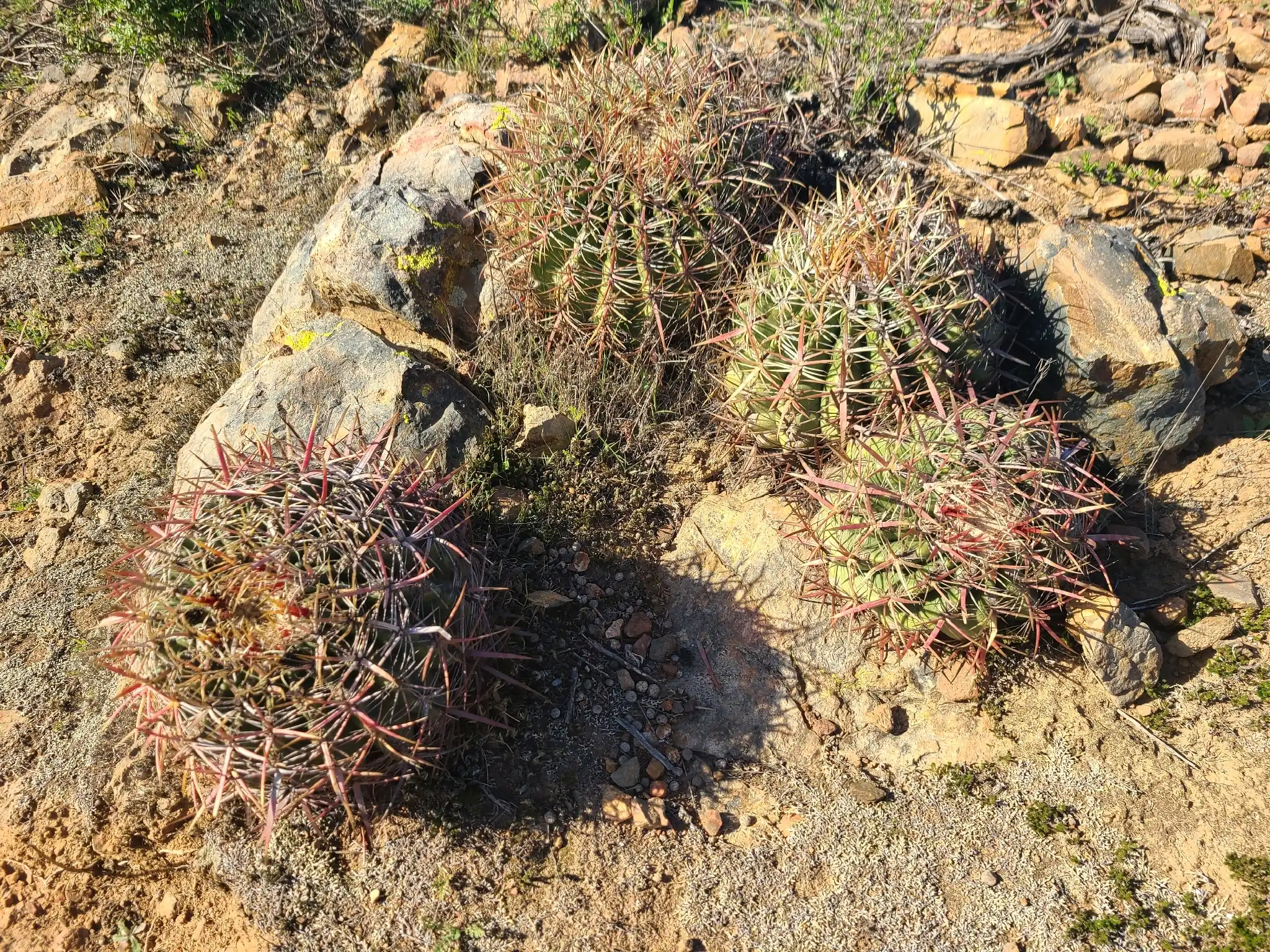
Ferocactus viridescens, commonly known as the coast barrel cactus, is a low-growing succulent native to coastal sage scrub and rocky hillsides in southern California and Baja California. It forms a solitary, depressed-globose stem reaching up to fourteen inches wide with thick, bumpy ribs armed with heavy, curving spines.
This species is distinguished by its compact, flattened spherical form and crown of greenish-yellow, bell-shaped flowers produced in spring and early summer. The petals feature subtle reddish-brown striping, followed by fleshy yellow fruits that provide food for native birds and small mammals.
Uses & Benefits:
Essentials
At a Glance
Plant Type
Cactus Succulent
Height
14"
Width
18"
Light
Full Sun, Partial Sun
Zones
9, 10
Water
Low
Humidity
Low
Lifespan
Perennial
Native To
North America (California, Baja California)
Toxicity
Non-toxic (spiny)
Bloom period
Spring – Early summer
In flower about 4 months of the year
Planting
How to Grow
- Select a container with prominent drainage holes and fill it with a fast-draining cactus mix high in pumice or perlite.
- Position the cactus in a location that receives full sun, providing light afternoon shade in hot inland climates.
- Water deeply during the spring and summer growing season only when the soil has completely dried out.
- Cease watering entirely during late fall and winter to prevent moisture accumulation around dormant roots.
Pro Tip
Plant in a gritty substrate composed of seventy to eighty percent mineral material like pumice or coarse sand, and keep the plant completely dry throughout winter dormancy.
Keep It Thriving
Care Guide
Do
- Provide max sunlight and sharp soil drainage.
- Allow soil to dry thoroughly between deep waterings during warm weather.
- Keep roots completely dry during winter dormancy.
Don't
- Do not water on a regular calendar schedule or during cold winter months.
- Do not plant in organic, peat-heavy potting soils that retain moisture.
- Do not cut into old stem tissue when clearing dead spines or debris.
Seasonal Care Calendar
| Task | Jan | Feb | Mar | Apr | May | Jun | Jul | Aug | Sep | Oct | Nov | Dec |
|---|---|---|---|---|---|---|---|---|---|---|---|---|
| Fertilize | ||||||||||||
| Pest Check | ||||||||||||
| Propagate | ||||||||||||
| Winter Prep |
Watch Out For
Pests & Diseases
Common Pests
Common Diseases
In the Garden
Landscape Uses & Companions
Landscape Uses
Multiply
Propagation Methods
Good to Know
Common Questions
Coast Barrel Cactus questions
What zones can Coast Barrel Cactus grow in?
Coast Barrel Cactus is hardy in USDA Zones 9–10: in that range it survives winter in the ground. Colder than Zone 9, grow it in a container you can move to shelter for the winter, or as an annual.
When does Coast Barrel Cactus bloom?
Coast Barrel Cactus typically blooms from early spring to early summer. Exact timing shifts a week or two with your zone — Sow's bloom calendar maps it to your garden.
Does Coast Barrel Cactus need full sun?
Coast Barrel Cactus does best in full sun to part shade. In hot climates, afternoon shade keeps blooms fresher longer.
Is Coast Barrel Cactus drought tolerant?
Yes — once established (usually after the first full season), Coast Barrel Cactus handles dry spells with minimal watering. Water deeply its first year to build the root system that makes that possible.
More Ferocactus to compare
Keep exploring
Explore the genus
Hardy in your zone?
Grow Coast Barrel Cactus with confidence
See it in a design of your actual yard, get zone-matched care reminders, and track it season by season in your garden journal.