The Story
Plant Bio
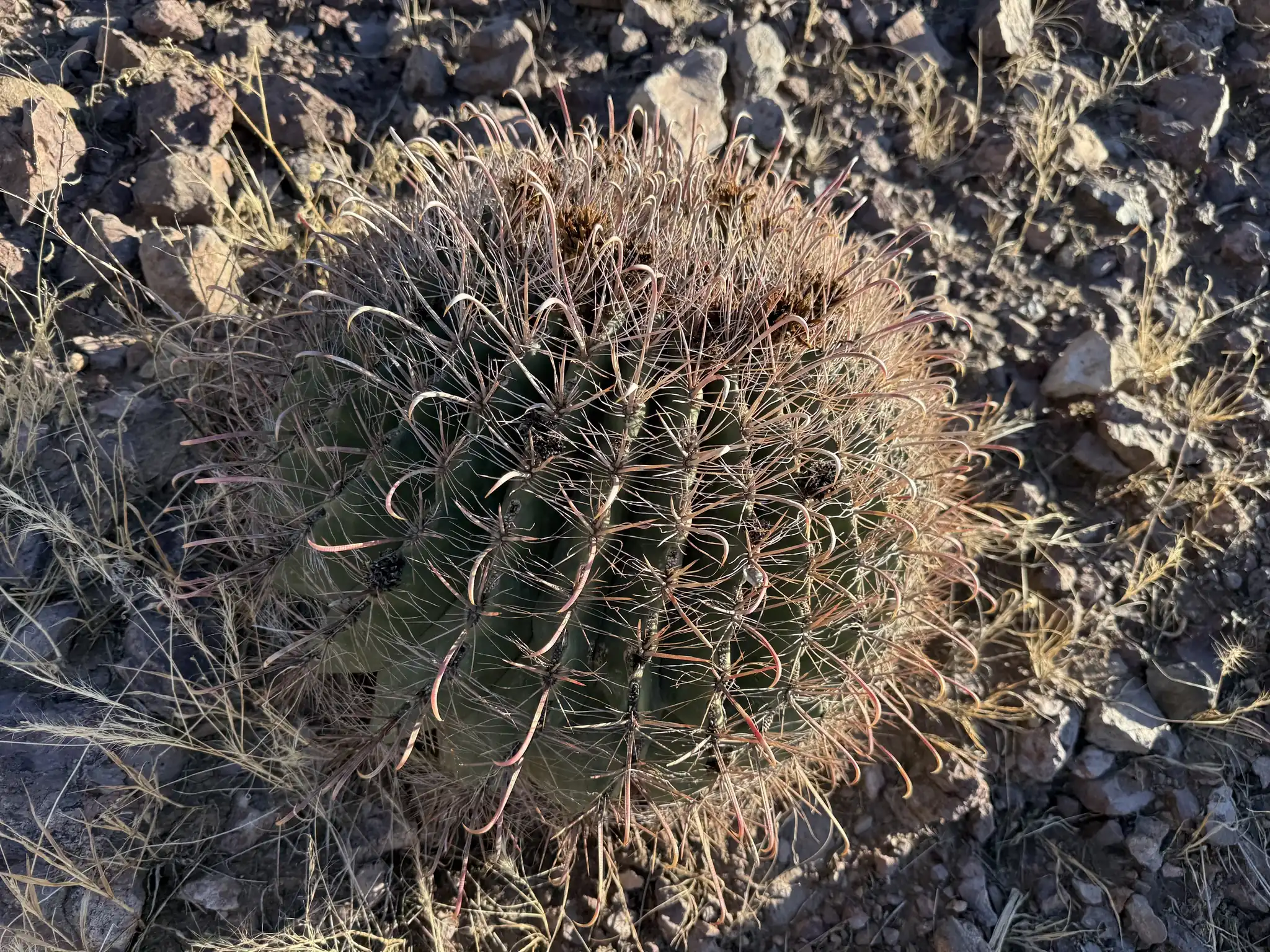
Ferocactus wislizeni is a solitary barrel from Sonoran and Chihuahuan desert scrub that grows from a flattened sphere to an ovoid column reaching three to six feet tall in garden soil. The green stem bears twenty to twenty-eight ribs crowded with dense spines that shade the surface and slow water loss while deterring browsing.
This species is distinguished by four stout centrals to two inches long with the lower one strongly hooked like a fishhook, backed by twelve to twenty straight radials to nearly two inches. Mature crowns often lean southward as they grow, and rings of orange to yellow funnels with a red midstripe open near the apex on current-season growth from summer into fall.
Uses & Benefits:
Essentials
At a Glance
Plant Type
Cactus Succulent
Height
71"
Width
33"
Light
Full Sun
Zones
8, 9, 10
Water
Low
Humidity
Low
Lifespan
50-130 years
Native To
Arizona, New Mexico, Texas and northern Mexico
Toxicity
Non-toxic but heavily spined
Bloom period
Summer – Fall
In flower about 6 months of the year
Planting
How to Grow
- Choose a full-sun spot with six or more hours of sun and fast-draining rocky or sandy soil away from sprinklers and low spots where water pools.
- Dig a shallow wide hole and set the barrel so the root crown sits slightly above grade, backfilling with native sandy soil mixed with gravel.
- Water in lightly once to settle soil, then withhold water until the soil is dry several inches down; established plants need only rare deep soakings.
- Keep mulch and organic matter away from the stem and do not fertilize routinely; good air flow and no overhead watering keep the crown dry.
- Protect below about 20 degrees Fahrenheit with frost cloth and keep winter-dry; plants under one foot tall need extra cover because small stems freeze first.
Pro Tip
Set the barrel with the base above grade in coarse gravelly sand in full sun and keep irrigation off the crown; a soft yellowing base signals root rot from water sitting around the roots.
Keep It Thriving
Care Guide
Do
- Plant in full sun with excellent drainage on a mound or slope
- Water deeply but rarely only when soil is fully dry
- Inspect the crown yearly for drainage, mealybugs and scale
Don't
- Do not plant in heavy clay or beside irrigation that keeps roots wet
- Do not cut into the stem or expect offsets - it grows from seed only and branches only after apex injury
- Do not overwater in winter or use overhead watering that wets the crown
Seasonal Care Calendar
| Task | Jan | Feb | Mar | Apr | May | Jun | Jul | Aug | Sep | Oct | Nov | Dec |
|---|---|---|---|---|---|---|---|---|---|---|---|---|
| Harvest | ||||||||||||
| Pest Check | ||||||||||||
| Plant | ||||||||||||
| Propagate | ||||||||||||
| Winter Prep |
Watch Out For
Pests & Diseases
Common Pests
Common Diseases
In the Garden
Landscape Uses & Companions
Landscape Uses
Multiply
Propagation Methods
Good to Know
Common Questions
Fishhook Barrel Cactus questions
What zones can Fishhook Barrel Cactus grow in?
Fishhook Barrel Cactus is hardy in USDA Zones 8–10: in that range it survives winter in the ground. Colder than Zone 8, grow it in a container you can move to shelter for the winter, or as an annual.
Is Fishhook Barrel Cactus deer resistant?
Yes — Fishhook Barrel Cactus is rated deer-resistant. Deer typically pass it over, though extreme hunger can override any plant's defenses.
When does Fishhook Barrel Cactus bloom?
Fishhook Barrel Cactus typically blooms from summer to fall. Exact timing shifts a week or two with your zone — Sow's bloom calendar maps it to your garden.
Does Fishhook Barrel Cactus need full sun?
Fishhook Barrel Cactus does best in full sun (6+ hours).
Is Fishhook Barrel Cactus drought tolerant?
Yes — once established (usually after the first full season), Fishhook Barrel Cactus handles dry spells with minimal watering. Water deeply its first year to build the root system that makes that possible.
More Ferocactus to compare
Keep exploring
Explore the genus
Hardy in your zone?
Grow Fishhook Barrel Cactus with confidence
See it in a design of your actual yard, get zone-matched care reminders, and track it season by season in your garden journal.