The Story
Plant Bio
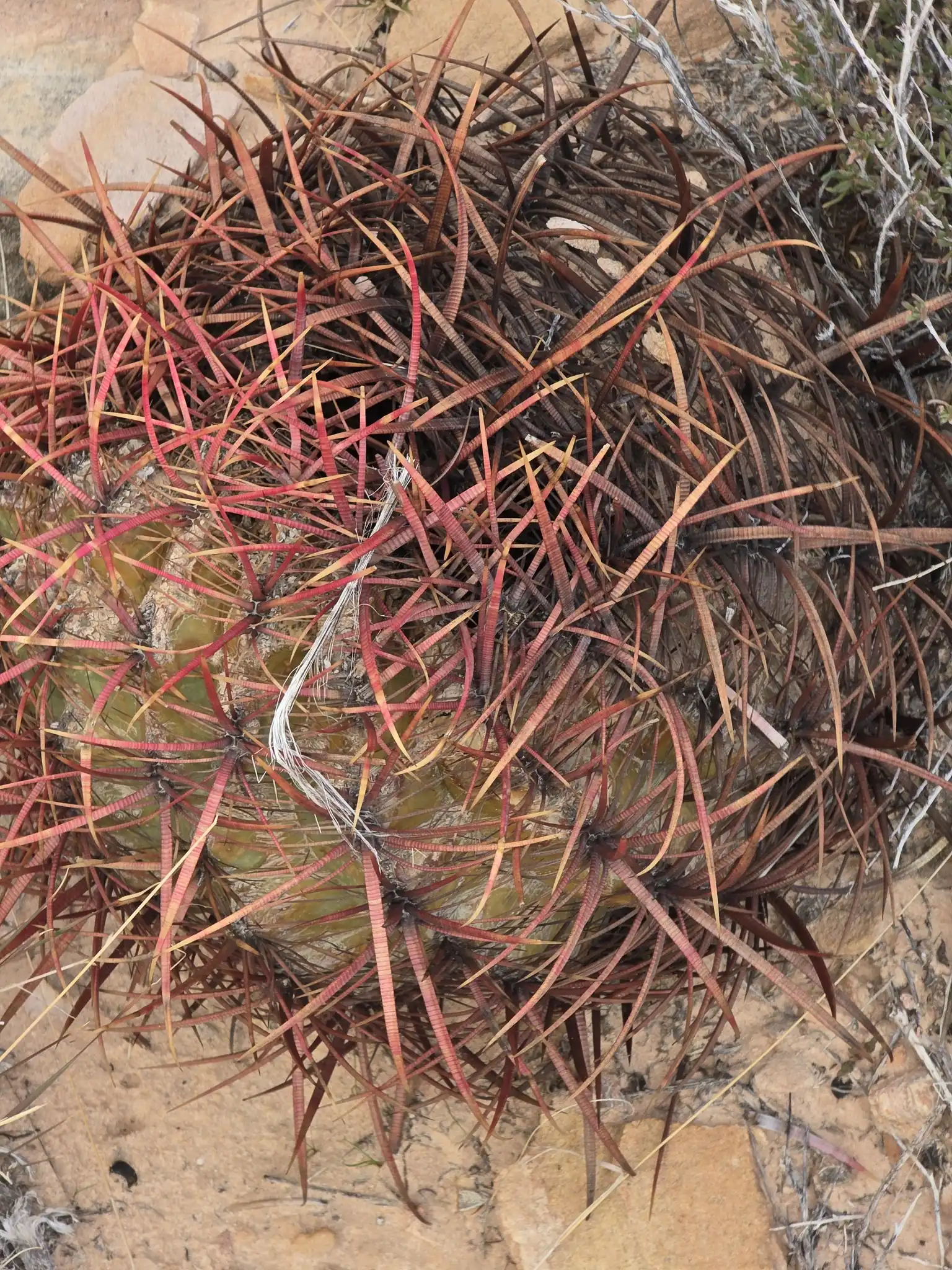
Ferocactus cylindraceus is a solitary desert cactus native to gravelly slopes and canyon walls across the southwestern United States and northwestern Mexico. It forms a deeply ribbed cylindrical column heavily protected by a dense lattice of long, curved spines that emerge bright red or yellow before aging to dull gray.
Funnel-shaped yellow flowers form a distinct ring around the growing tip in late spring, followed by fleshy, hollow yellow fruits that feed desert birds and mammals. Mature plants gradually tilt toward the south as they grow, shielding their apical meristem from extreme midday sun.
Uses & Benefits:
Essentials
At a Glance
Plant Type
Cactus Succulent
Height
118"
Width
20"
Light
Full Sun
Zones
9, 10
Water
Low
Humidity
Low
Lifespan
Perennial
Native To
North America
Toxicity
Non-toxic (Physical Hazard)
Bloom period
Late spring – Early summer
In flower about 2 months of the year
Planting
How to Grow
- Plant in a location receiving uninterrupted full sun in coarse, mineral-rich soil with sharp drainage.
- Water deeply during warm spring and summer months, allowing the soil to dry out completely between applications.
- Cease watering entirely from autumn through winter during the plant's dormant period.
- Apply a low-nitrogen cactus fertilizer once in early spring as active growth resumes.
Pro Tip
Withhold all irrigation completely from late fall through winter; combining cold winter temperatures with damp soil induces swift stem rot.
Keep It Thriving
Care Guide
Do
- Provide intense, direct sunlight to encourage dense spine lattice development.
- Use coarse sand, pumice, or fine gravel to maintain rapid soil drainage.
- Keep soil completely dry during cold winter freezes.
Don't
- Do not overwater or allow pots to sit in standing water trays.
- Do not cut into woody column tissue or prune off living spines.
- Do not attempt outdoor cultivation in wet, highly humid summer climates.
Seasonal Care Calendar
| Task | Jan | Feb | Mar | Apr | May | Jun | Jul | Aug | Sep | Oct | Nov | Dec |
|---|---|---|---|---|---|---|---|---|---|---|---|---|
| Fertilize | ||||||||||||
| Pest Check | ||||||||||||
| Plant | ||||||||||||
| Winter Prep |
Watch Out For
Pests & Diseases
Common Pests
Common Diseases
In the Garden
Landscape Uses & Companions
Landscape Uses
Multiply
Propagation Methods
Good to Know
Common Questions
California Barrel Cactus questions
What zones can California Barrel Cactus grow in?
California Barrel Cactus is hardy in USDA Zones 9–10: in that range it survives winter in the ground. Colder than Zone 9, grow it in a container you can move to shelter for the winter, or as an annual.
Is California Barrel Cactus deer resistant?
Yes — California Barrel Cactus is rated deer-resistant. Deer typically pass it over, though extreme hunger can override any plant's defenses.
When does California Barrel Cactus bloom?
California Barrel Cactus typically blooms from late spring to early summer. Exact timing shifts a week or two with your zone — Sow's bloom calendar maps it to your garden.
Does California Barrel Cactus need full sun?
California Barrel Cactus does best in full sun (6+ hours).
Is California Barrel Cactus drought tolerant?
Yes — once established (usually after the first full season), California Barrel Cactus handles dry spells with minimal watering. Water deeply its first year to build the root system that makes that possible.
More Ferocactus to compare
Keep exploring
Explore the genus
Hardy in your zone?
Grow California Barrel Cactus with confidence
See it in a design of your actual yard, get zone-matched care reminders, and track it season by season in your garden journal.