The Story
Plant Bio
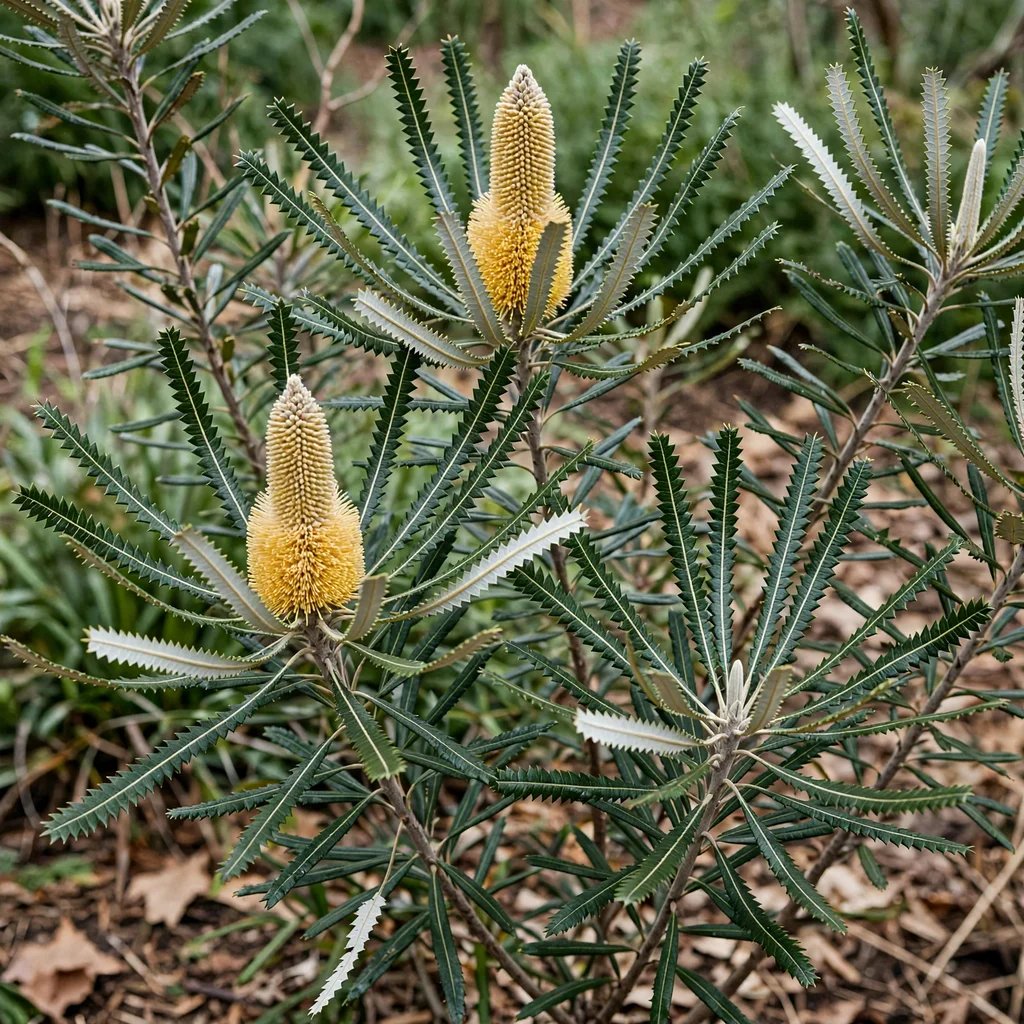
Banksia collina, commonly known as Hill Banksia, is an upright to spreading multi-stemmed evergreen shrub growing five to ten feet high in garden cultivation. It produces cylindrical, golden-yellow flower spikes up to eight inches long that bloom from fall into winter, set against narrow foliage with pale, hairy undersides.
This species develops a woody lignotuber at its base, allowing it to recover after mechanical damage if top growth is managed properly. The linear leaves feature fine teeth along most of their margins and contrast dark green upper surfaces with silver-toned undersides.
Uses & Benefits:
Essentials
At a Glance
Plant Type
Shrub
Height
118"
Width
98"
Light
Full Sun, Partial Sun
Zones
9, 10
Water
Low
Humidity
Moderate
Lifespan
Perennial
Native To
Australia
Toxicity
Non-Toxic
Bloom period
Fall – Winter
In flower about 6 months of the year
Planting
How to Grow
- Select a planting site in full sun to partial shade with sharply draining, lean soil.
- Dig a planting hole twice as wide as the root ball and equal in depth, avoiding organic soil amendments.
- Position the plant so the root crown sits level with or slightly above the surrounding soil grade.
- Water thoroughly at installation, then irrigate deeply only until established, allowing the soil to dry between waterings.
Pro Tip
Prune lightly just behind spent flower spikes within the green foliage zone; cutting back into bare, leafless timber can prevent shoots from regenerating.
Keep It Thriving
Care Guide
Do
- Plant in sharply draining sandy or sandstone-derived soils.
- Use only low-phosphorus or specialty native plant fertilizers.
- Prune lightly after flowering to maintain a dense habit.
Don't
- Do not apply standard general-purpose fertilizers high in phosphorus.
- Do not overwater or allow soil to sit saturated.
- Do not prune hard into bare, leafless wood below the foliage canopy.
Seasonal Care Calendar
| Task | Jan | Feb | Mar | Apr | May | Jun | Jul | Aug | Sep | Oct | Nov | Dec |
|---|---|---|---|---|---|---|---|---|---|---|---|---|
| Fertilize | ||||||||||||
| Mulch | ||||||||||||
| Pest Check | ||||||||||||
| Prune |
Watch Out For
Pests & Diseases
Common Pests
Common Diseases
In the Garden
Landscape Uses & Companions
Landscape Uses
Companion Plants
Multiply
Propagation Methods
Good to Know
Common Questions
Hill Banksia questions
What zones can Hill Banksia grow in?
Hill Banksia is hardy in USDA Zones 9–10: in that range it survives winter in the ground. Colder than Zone 9, grow it in a container you can move to shelter for the winter.
Is Hill Banksia deer resistant?
Not reliably. Deer may browse Hill Banksia, especially tender spring growth — plan on repellents or fencing where pressure is high.
When does Hill Banksia bloom?
Hill Banksia typically blooms from fall to winter. Exact timing shifts a week or two with your zone — Sow's bloom calendar maps it to your garden.
Does Hill Banksia need full sun?
Hill Banksia does best in full sun to part shade. In hot climates, afternoon shade keeps blooms fresher longer.
Is Hill Banksia drought tolerant?
Yes — once established (usually after the first full season), Hill Banksia handles dry spells with minimal watering. Water deeply its first year to build the root system that makes that possible.
More Banksia to compare
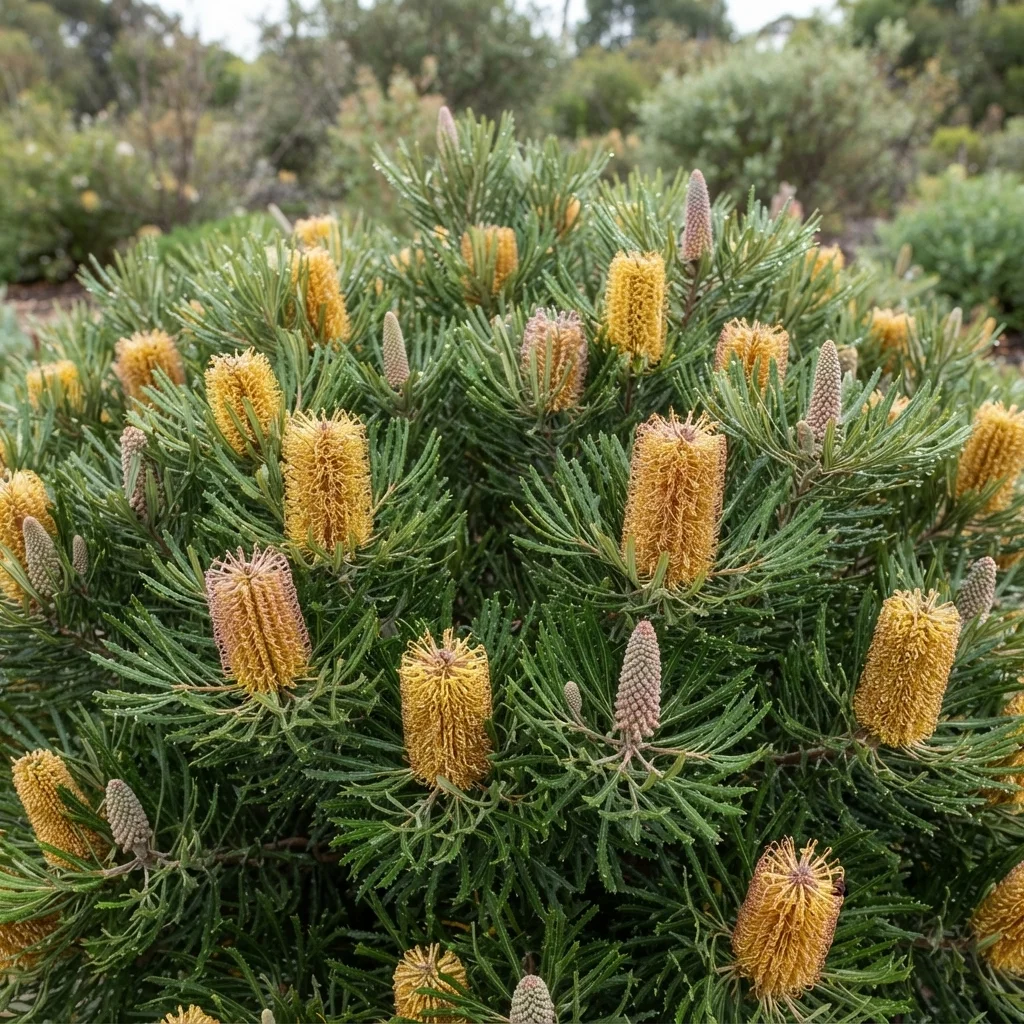
Birthday Candles Banksia
Banksia spinulosa 'Birthday Candles'
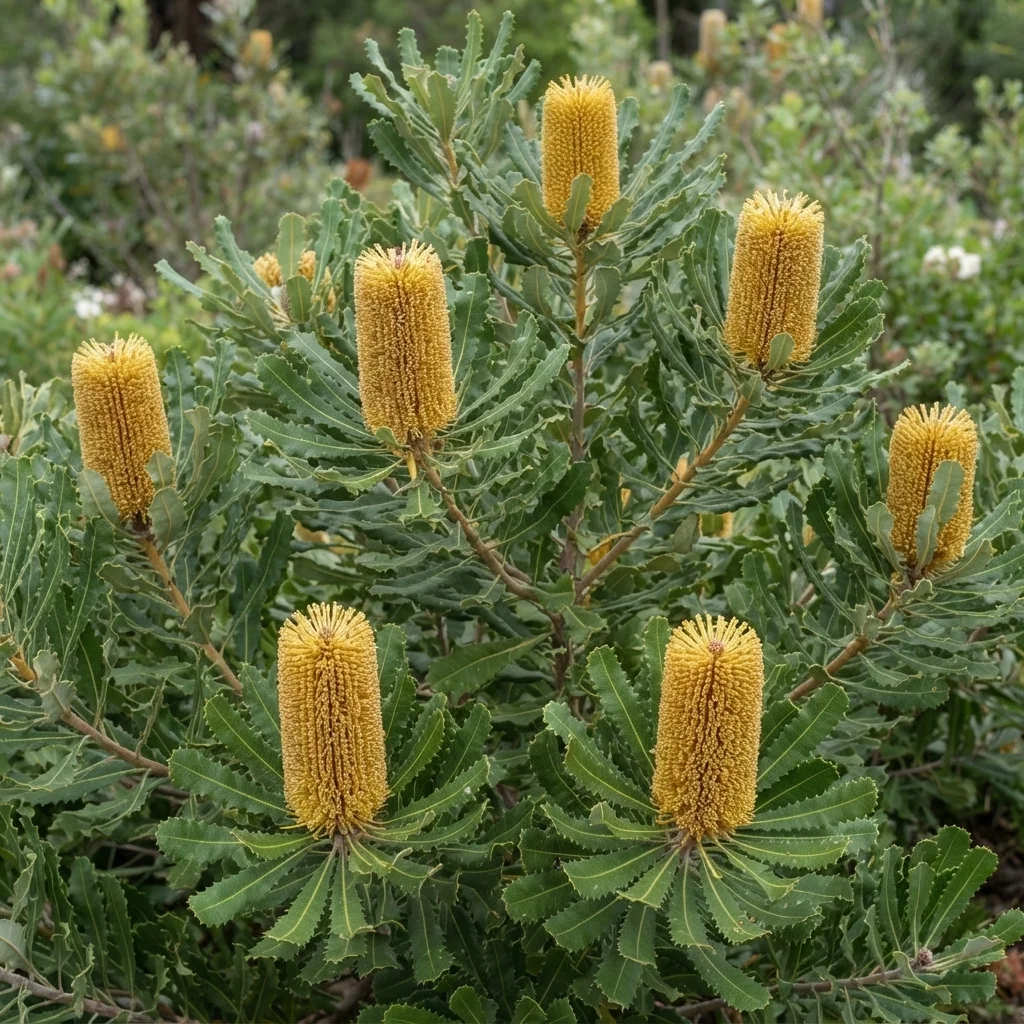
Southern Plains Banksia
Banksia media
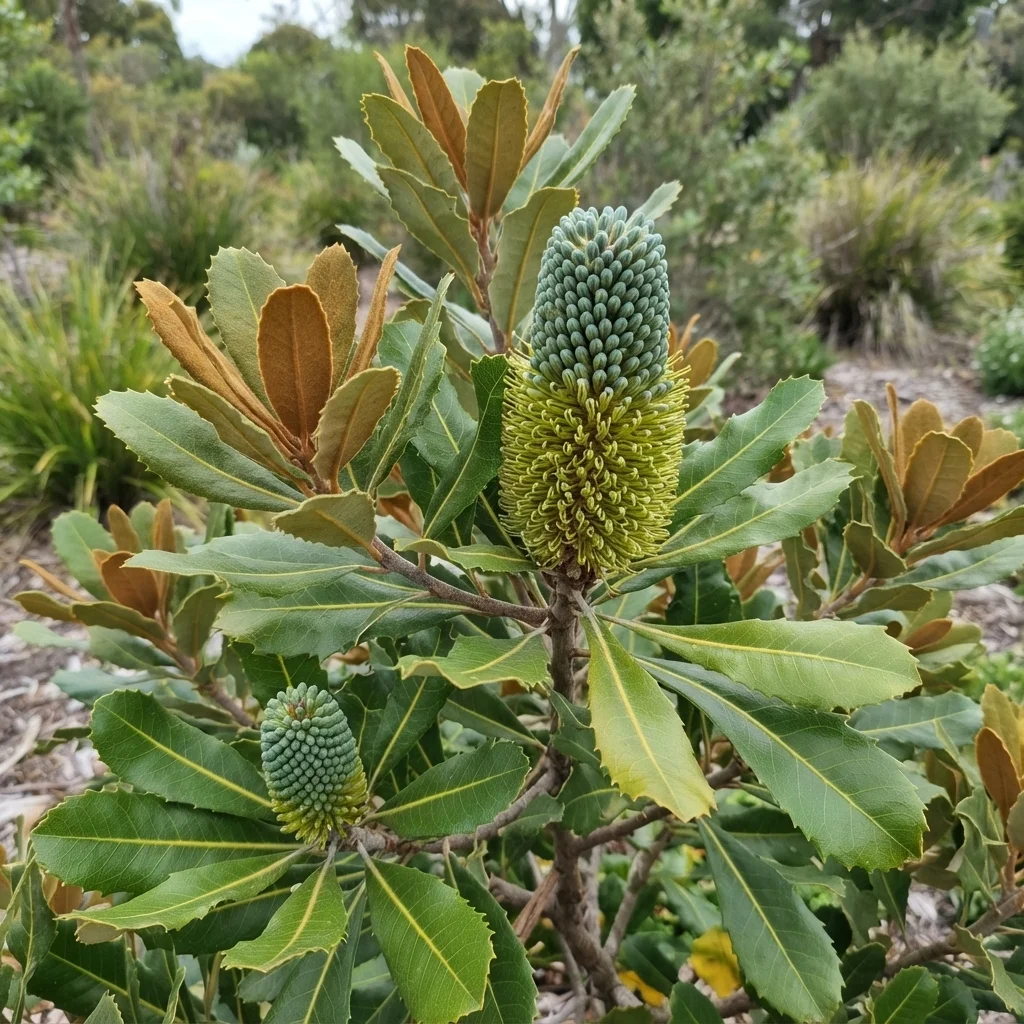
Swamp Banksia
Banksia robur
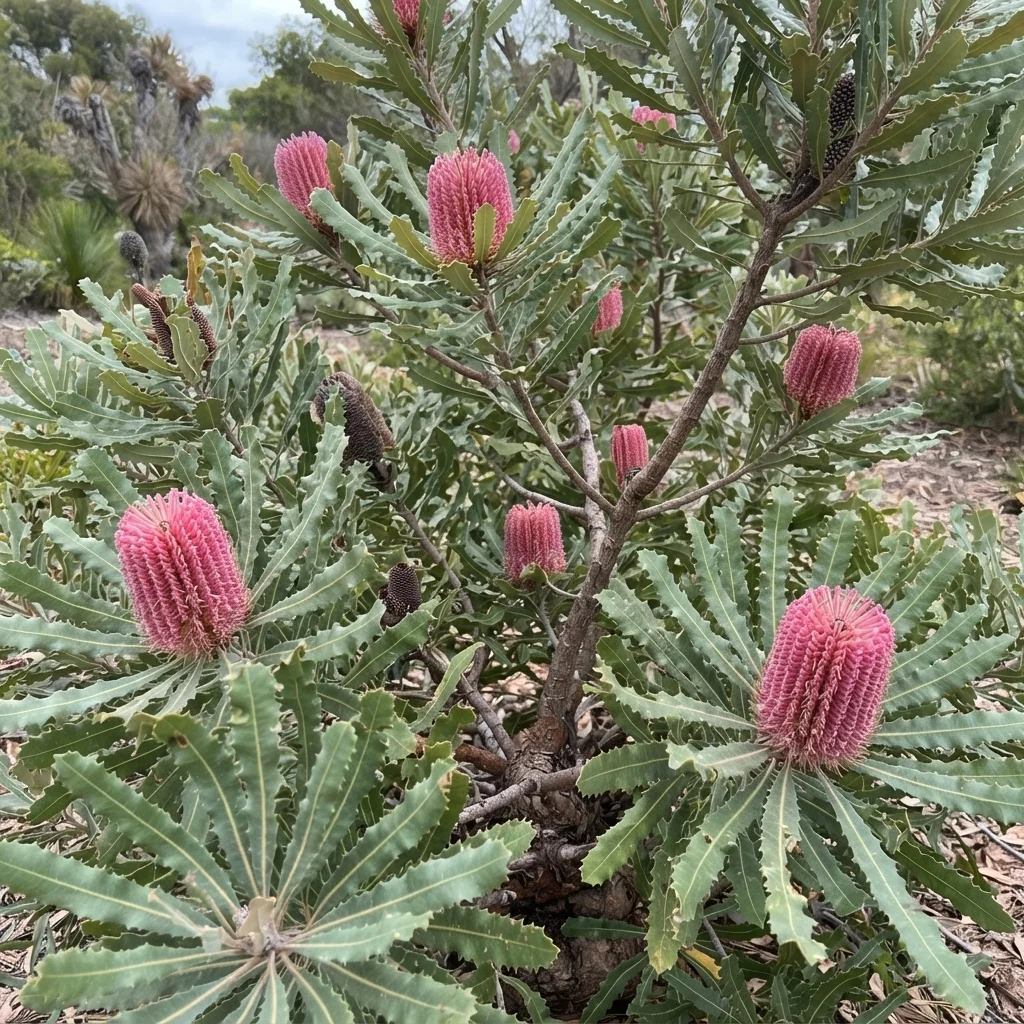
Menzies' Banksia
Banksia menziesii
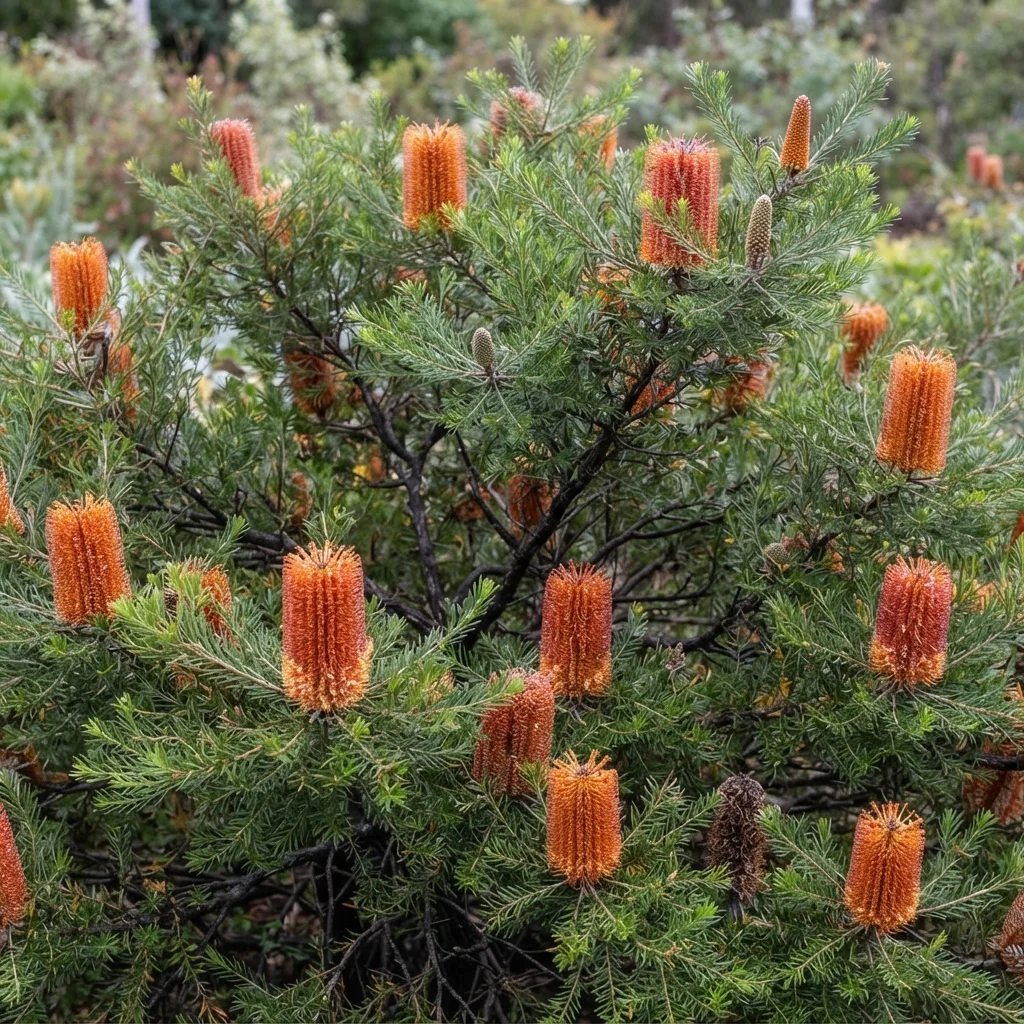
Heath Banksia
Banksia ericifolia
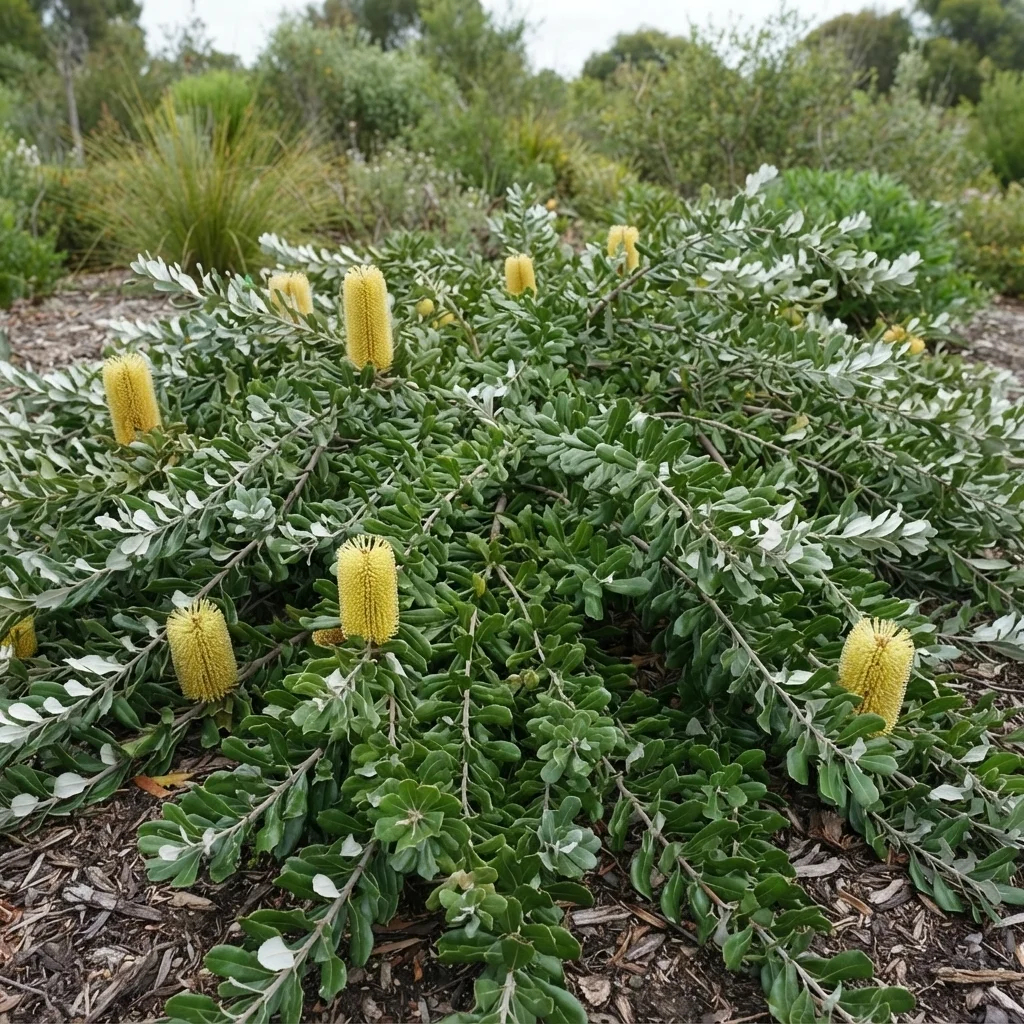
Prostrate Coast Banksia
Banksia integrifolia 'Roller Coaster'
Keep exploring
Explore the genus
Hardy in your zone?
Grow Hill Banksia with confidence
See it in a design of your actual yard, get zone-matched care reminders, and track it season by season in your garden journal.