The Story
Plant Bio
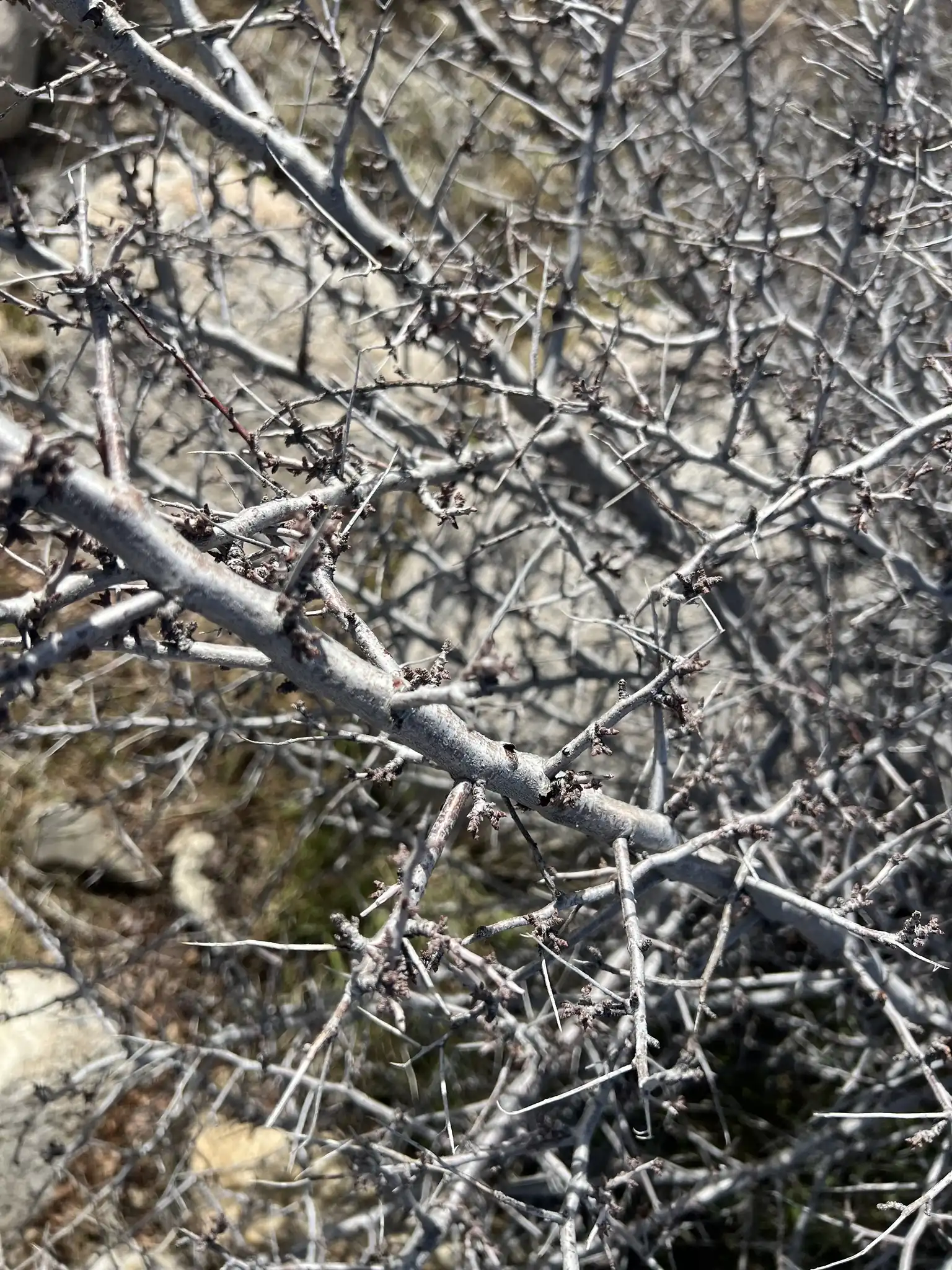
Prunus andersonii is a deciduous shrub in the rose family that reaches three to seven feet tall and wide, forming a dense tangle of rigid branches that narrow to spine-tipped twigs. The small elliptic to oblanceolate leaves are finely serrate and emerge after the flowers, which open in ones and twos with five concave pink petals under one centimeter long and many whisker-like stamens.
Unlike orchard peaches, this Great Basin species blooms on bare thorny wood in early to mid-spring, with pink to rose-pink flowers that precede leaves only nine to thirty millimeters long. It is built for dry rocky slopes, washes, and sagebrush scrub at 900 to 2600 meters, where it endures cold to minus 20F and survives on low to very low water.
Uses & Benefits:
Essentials
At a Glance
Plant Type
Shrub
Height
72"
Width
72"
Light
Full Sun, Partial Sun
Zones
5, 6, 7, 8, 9, 10
Water
Low
Humidity
Prefers dry air; fails in humid summer soils
Lifespan
Long-lived woody shrub
Native To
Eastern California to central Nevada, USA
Toxicity
Seeds and leaves contain cyanide compounds; thorns injure skin
Bloom period
Early spring – Mid spring
In flower about 2 months of the year
Planting
How to Grow
- Choose a full-sun site with fast-draining sandy or gravelly soil and room for a 6-foot thorny mound.
- Dig a shallow, wide hole and set the crown slightly high so water drains away from the stem.
- Backfill with native soil mixed with grit or decomposed granite; do not enrich with rich compost.
- Water once to settle, then water sparingly and allow the soil to dry completely between waterings.
Pro Tip
Plant it high in sand or decomposed granite and keep summer water off the crown; wet soil kills it faster than drought ever will.
Keep It Thriving
Care Guide
Do
- Give 6 to 8 hours of sun and sharp drainage.
- Allow soil to dry between waterings; keep water low to very low once established.
- Leave spent flowers and developing fruit for bees, butterflies, and rodents.
Don't
- Do not plant in clay, low spots, or irrigated beds that stay wet in summer.
- Do not overwater or fertilize richly.
- Do not shear into soft shapes; the value is the open thorny structure.
Seasonal Care Calendar
| Task | Jan | Feb | Mar | Apr | May | Jun | Jul | Aug | Sep | Oct | Nov | Dec |
|---|---|---|---|---|---|---|---|---|---|---|---|---|
| Mulch | ||||||||||||
| Pest Check | ||||||||||||
| Plant | ||||||||||||
| Prune |
Watch Out For
Pests & Diseases
Common Pests
Common Diseases
In the Garden
Landscape Uses & Companions
Landscape Uses
Multiply
Propagation Methods
Good to Know
Common Questions
Desert Peach questions
What zones can Desert Peach grow in?
Desert Peach is hardy in USDA Zones 5–10: in that range it survives winter in the ground. Colder than Zone 5, grow it in a container you can move to shelter for the winter.
Is Desert Peach deer resistant?
Yes — Desert Peach is rated deer-resistant. Deer typically pass it over, though extreme hunger can override any plant's defenses.
When does Desert Peach bloom?
Desert Peach typically blooms in early to mid-spring. Exact timing shifts a week or two with your zone — Sow's bloom calendar maps it to your garden.
Does Desert Peach need full sun?
Desert Peach does best in full sun to part shade. In hot climates, afternoon shade keeps blooms fresher longer.
Is Desert Peach drought tolerant?
Yes — once established (usually after the first full season), Desert Peach handles dry spells with minimal watering. Water deeply its first year to build the root system that makes that possible.
More Prunus to compare
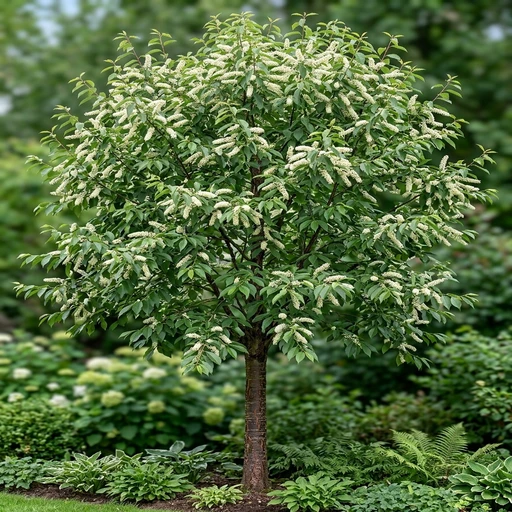
Black Cherry
Prunus serotina
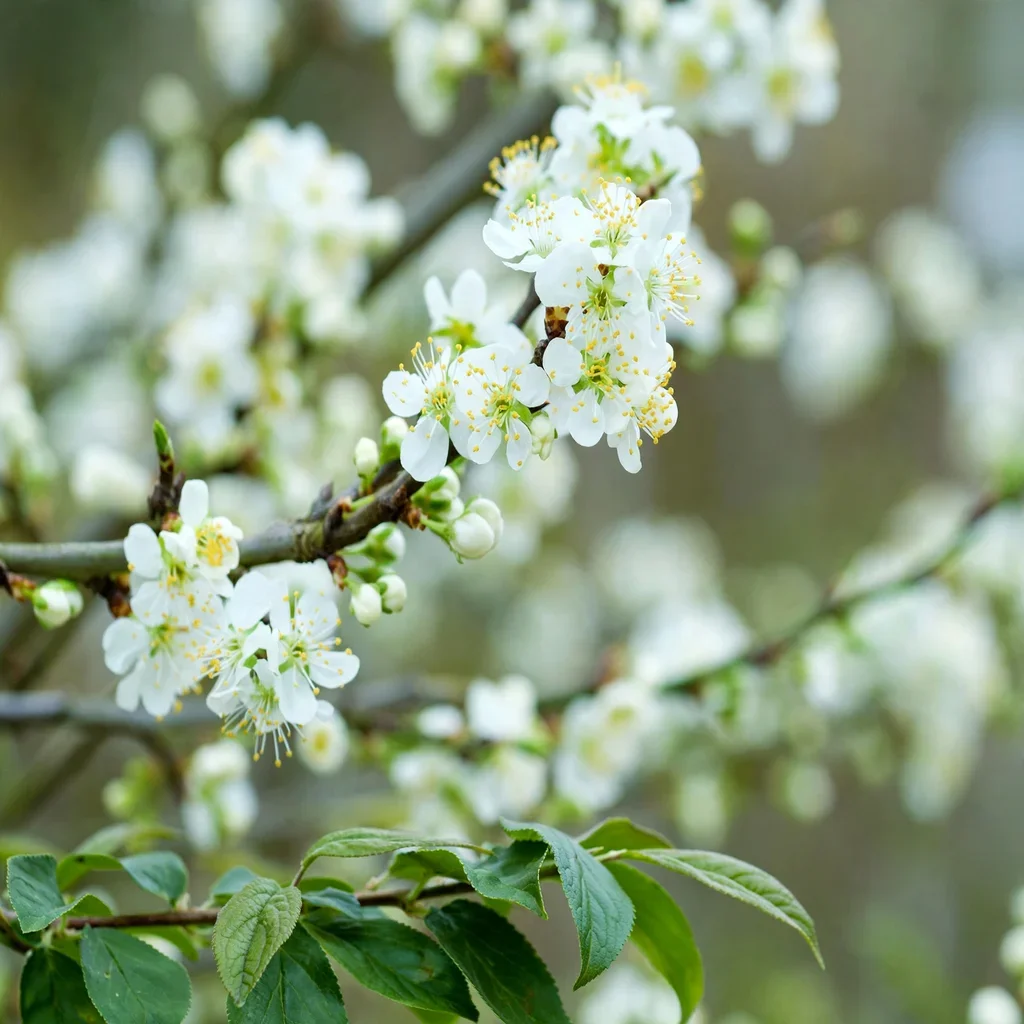
Sugar Plum
Prunus domestica 'Sugar Plum'
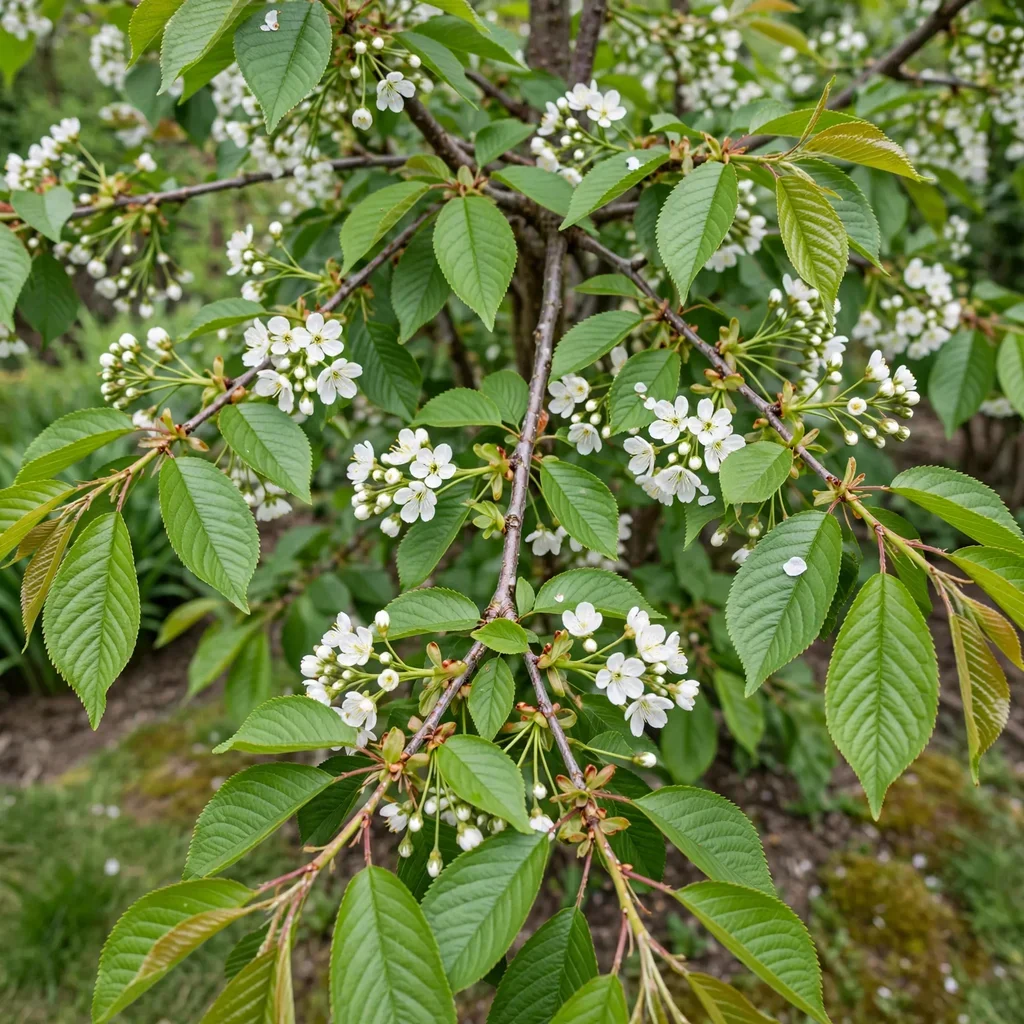
Sweet Cherry Mix
Prunus avium 'Mix'
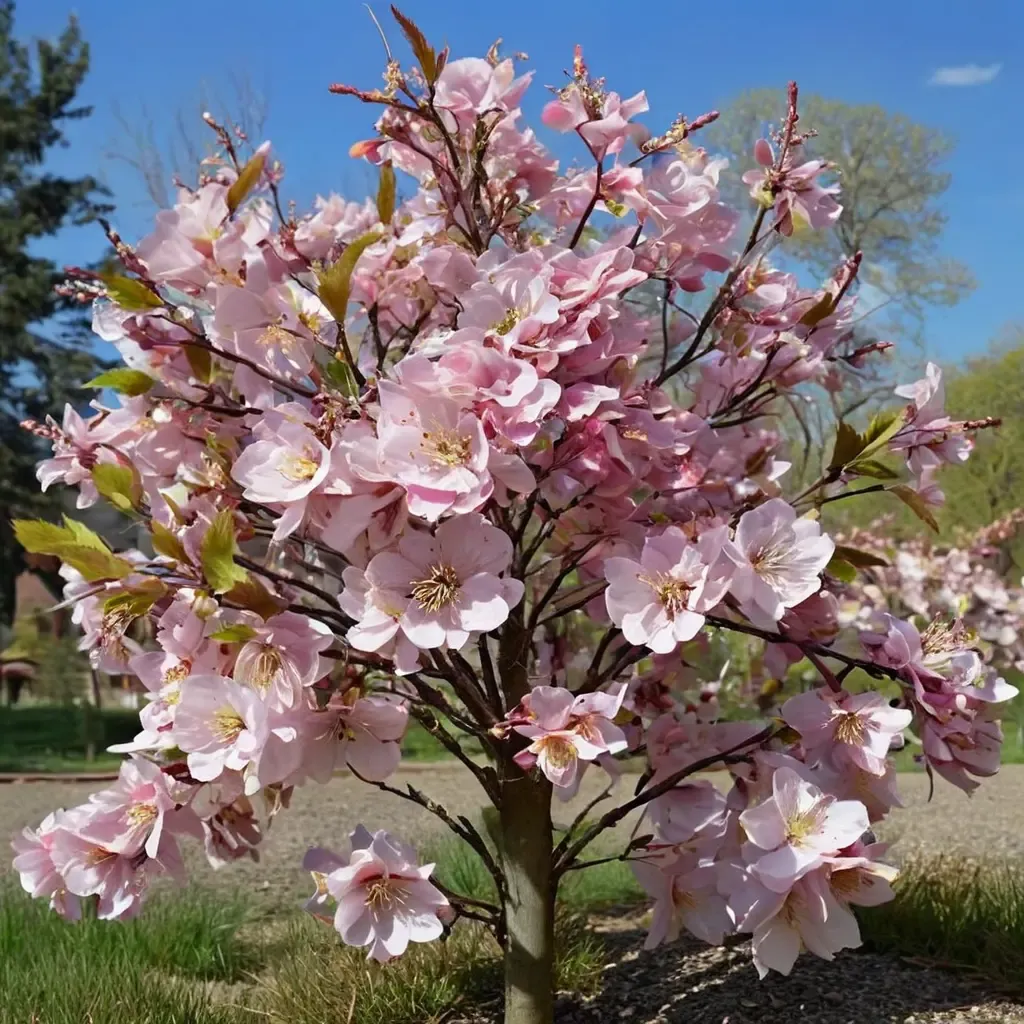
Japanese Flowering Cherry
Prunus serrulata
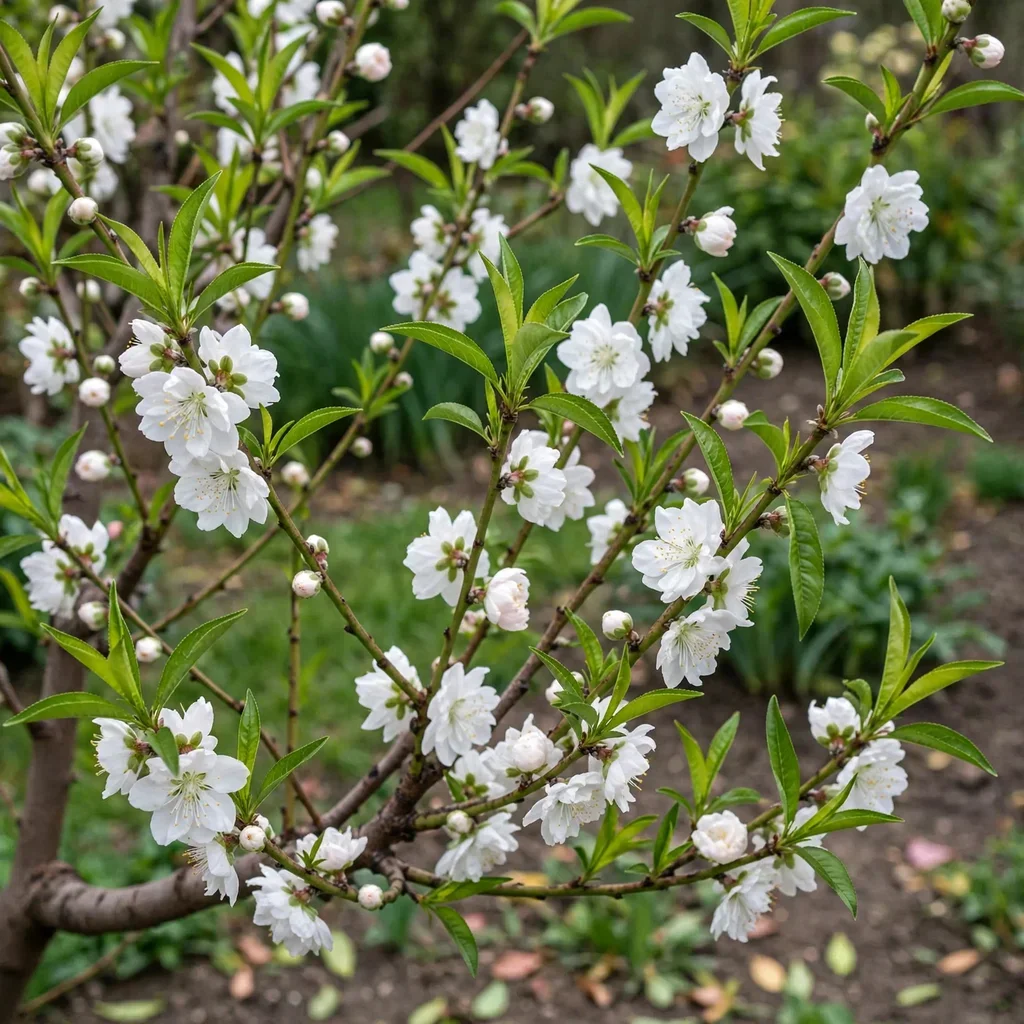
Feiching Tao White Peach
Prunus persica 'Feiching Tao White'
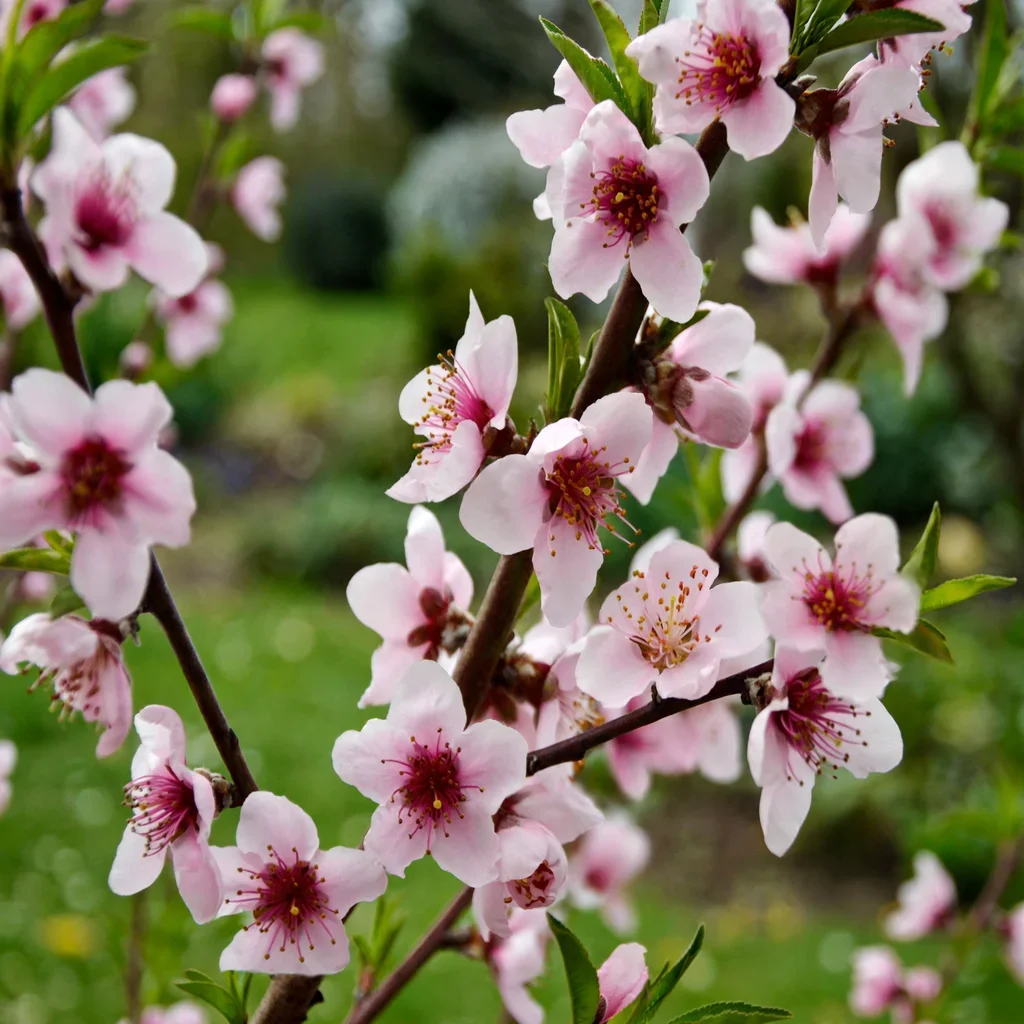
Hale Haven Peach
Prunus persica 'Hale Haven'
Keep exploring
Explore the genus
Grow Desert Peach with confidence
See it in a design of your actual yard, get zone-matched care reminders, and track it season by season in your garden journal.