The Story
Plant Bio
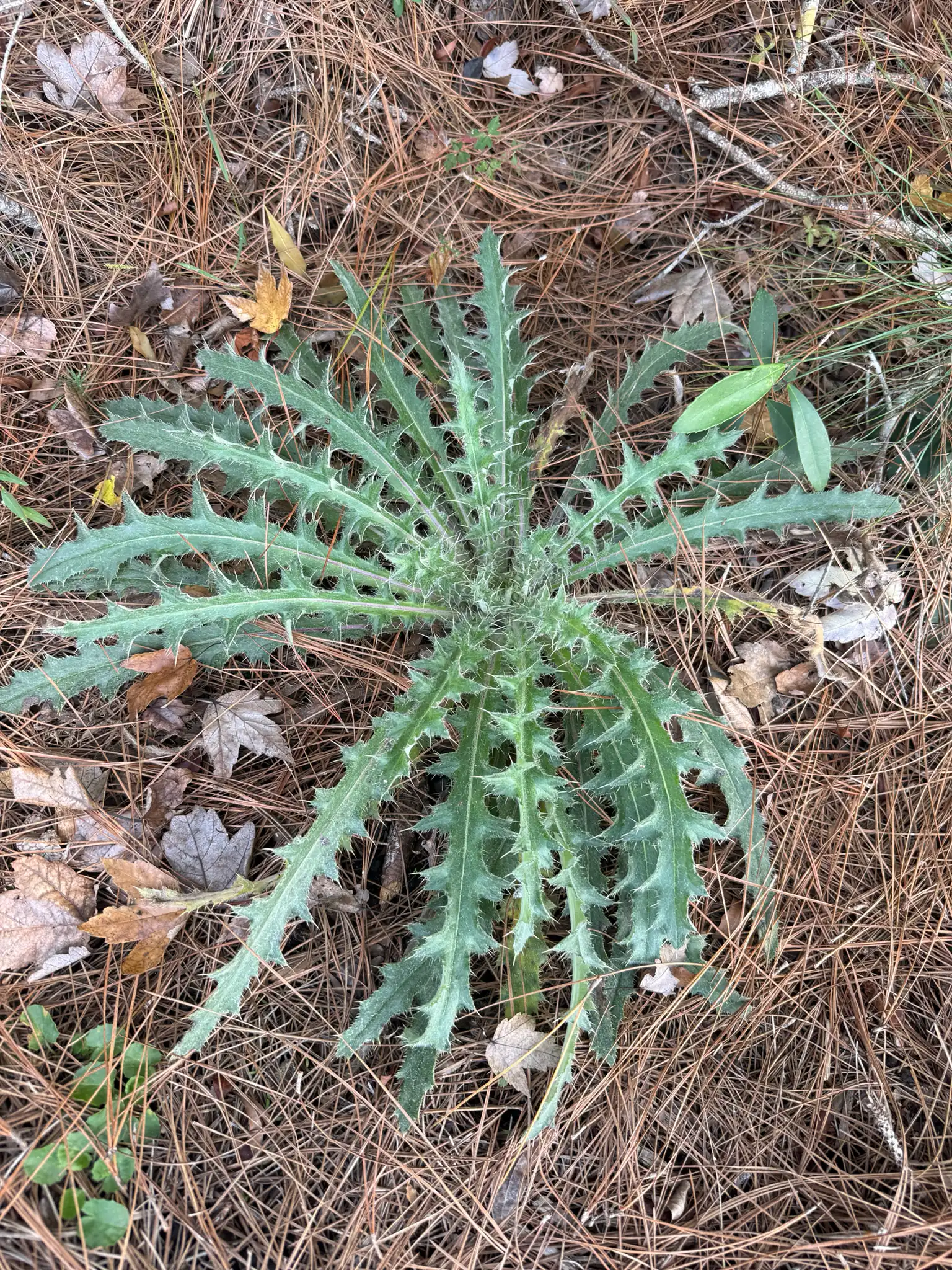
Cirsium horridulum is a tall branching thistle grown as an annual, biennial or short-lived perennial, reaching 2 to 5 feet in bloom with stout stems armed at every joint. Its clasping leaves run 8 to 24 inches long, edged with stiff spines and white woolly beneath, with spines continuing onto stems and flower bracts.
Heads are large disc-only thistle heads in pale yellow or pink-purple, each cupped by a collar of spiny bracts that reads as a second involucre around the head. Southern populations produce yellow and purple-pink flower forms on otherwise identical plants, which gardeners often mistake for different species.
Uses & Benefits:
Essentials
At a Glance
Plant Type
Perennial
Height
66"
Width
24"
Light
Full Sun, Partial Sun
Zones
4, 5, 6, 7, 8
Water
Low to medium
Humidity
Tolerant
Lifespan
Annual, biennial or short-lived perennial
Native To
Eastern and southern U.S. Coastal Plain to Texas, Mexico and Central America
Toxicity
Unknown; very spiny - handle with gloves
Bloom period
Late spring – Summer
In flower about 4 months of the year
Planting
How to Grow
- Plant in full sun in an open meadow, border back, or naturalized strip with room for a 2-foot-wide rosette.
- Sow seed in fall or early spring directly on the soil surface, press in without covering, and keep evenly moist until germination.
- Thin seedlings to 18 to 24 inches apart to allow air flow around the spiny foliage.
- Water through the first summer; established plants tolerate drought and need no fertilizer.
- Leave hollow winter stems standing for bees and allow some heads to ripen seed for birds and self-sowing.
Pro Tip
Cut dead stems back to 12 to 24 inches and leave them standing until they crumble for stem-nesting bees; plants reseed freely, so site them where seedlings are welcome.
Keep It Thriving
Care Guide
Do
- Give full sun and sandy to loamy soil that drains freely.
- Wear heavy gloves and long sleeves when weeding or cutting near spines.
- Leave a portion of dead hollow stems standing for native-bee nesting.
Don't
- Do not bury seed; light is required for germination.
- Do not plant beside paths, play areas, or tight flower beds where spines contact skin.
- Do not overwater or fertilize to push growth; soft rank growth flops.
Seasonal Care Calendar
| Task | Jan | Feb | Mar | Apr | May | Jun | Jul | Aug | Sep | Oct | Nov | Dec |
|---|---|---|---|---|---|---|---|---|---|---|---|---|
| Deadhead | ||||||||||||
| Pest Check | ||||||||||||
| Plant | ||||||||||||
| Propagate | ||||||||||||
| Winter Prep |
Watch Out For
Pests & Diseases
Common Pests
Common Diseases
In the Garden
Landscape Uses & Companions
Landscape Uses
Multiply
Propagation Methods
Good to Know
Common Questions
Bristly Thistle questions
What zones can Bristly Thistle grow in?
Bristly Thistle is an annual: it grows, flowers and sets seed in one season, so winter cold doesn't limit where it grows. Gardeners in any zone can grow it by planting at the right time, usually after the last spring frost.
Is Bristly Thistle deer resistant?
Yes — Bristly Thistle is rated deer-resistant. Deer typically pass it over, though extreme hunger can override any plant's defenses.
When does Bristly Thistle bloom?
Bristly Thistle typically blooms from late spring to late summer. Exact timing shifts a week or two with your zone — Sow's bloom calendar maps it to your garden.
Does Bristly Thistle need full sun?
Bristly Thistle does best in full sun to part shade. In hot climates, afternoon shade keeps blooms fresher longer.
Is Bristly Thistle drought tolerant?
Yes — once established (usually after the first full season), Bristly Thistle handles dry spells with minimal watering. Water deeply its first year to build the root system that makes that possible.
More Cirsium to compare
Atropurpureum Brook Thistle
Cirsium rivulare 'Atropurpureum'
Brook Thistle
Cirsium rivulare
Western Thistle
Cirsium occidentale
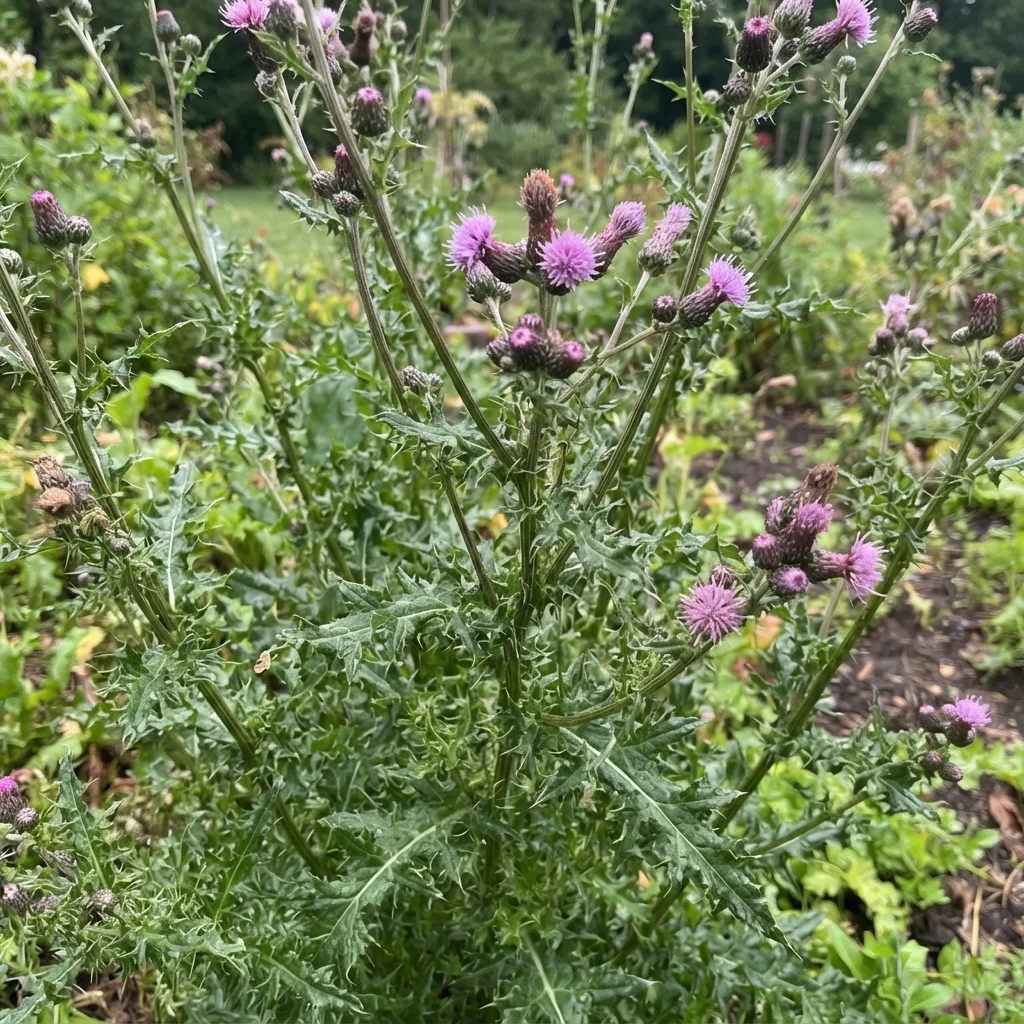
Canada Thistle
Cirsium arvense
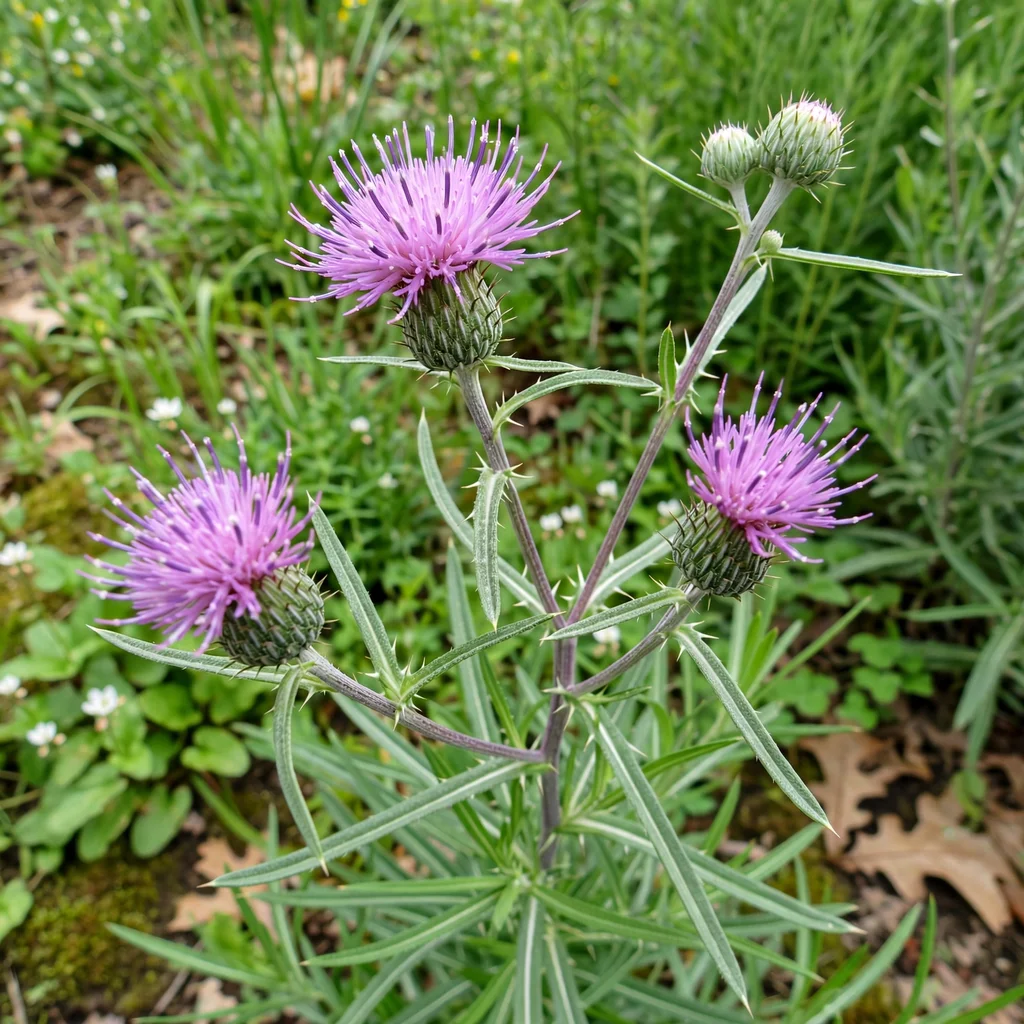
Carolina Thistle
Cirsium carolinianum
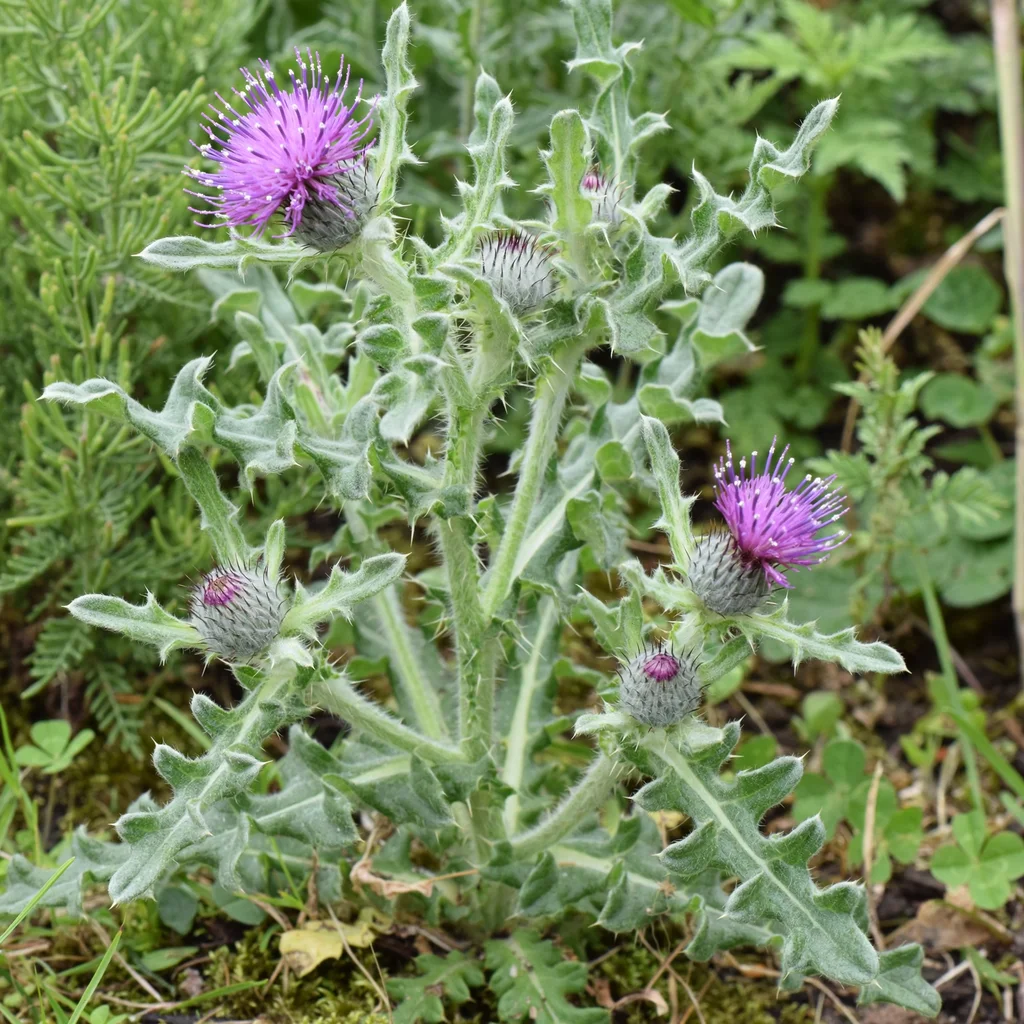
Edible Thistle
Cirsium edule
Keep exploring
Explore the genus
Hardy in your zone?
Grow Bristly Thistle with confidence
See it in a design of your actual yard, get zone-matched care reminders, and track it season by season in your garden journal.