The Story
Plant Bio
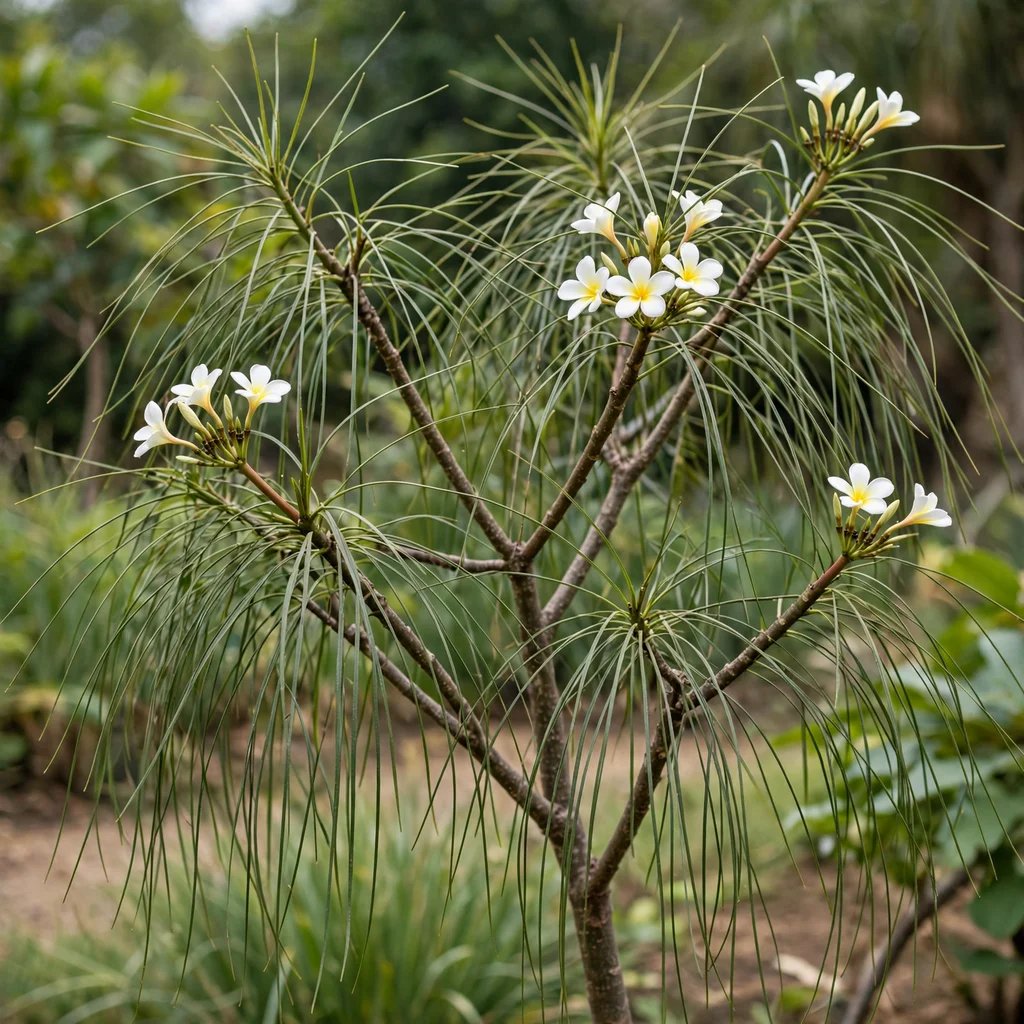
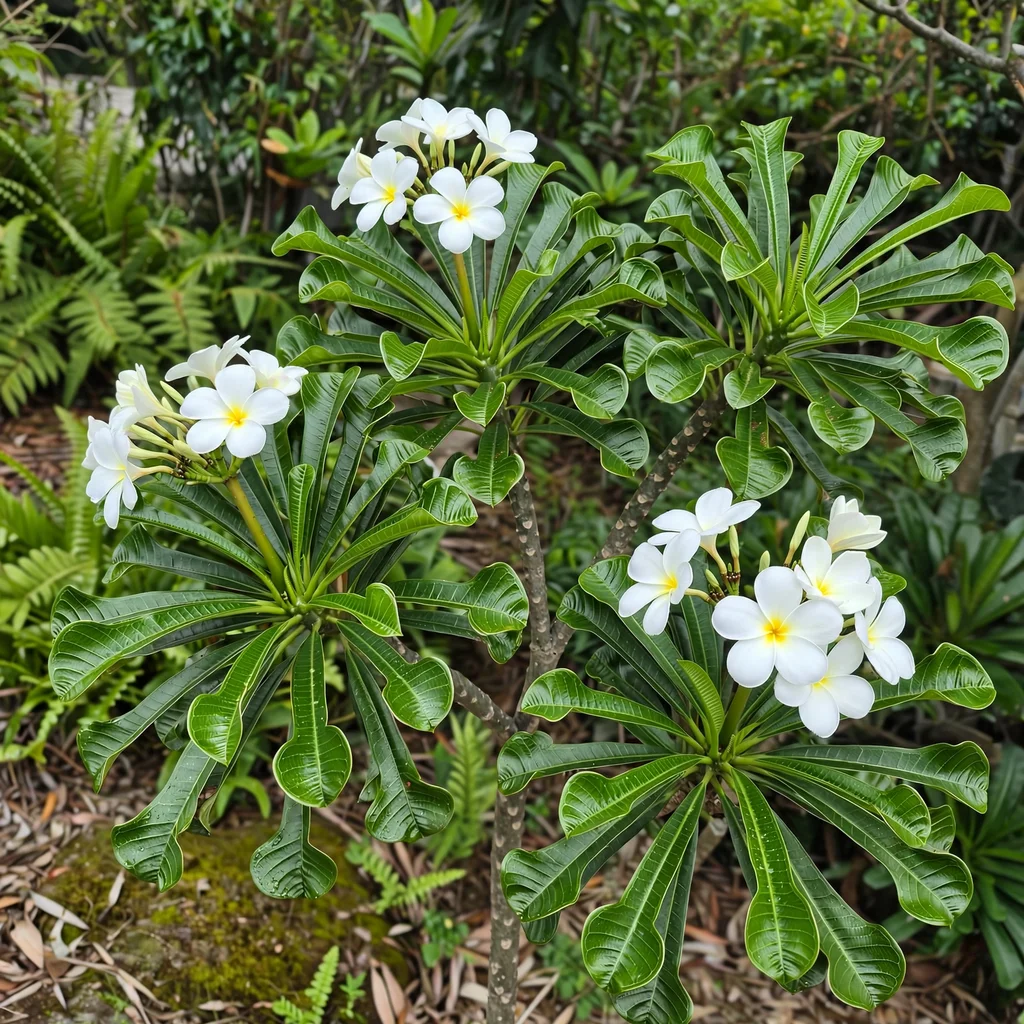
Plumeria filifolia is a deciduous succulent shrub or small tree from dry calcareous slopes in eastern Cuba, reaching 6 to 10 feet in gardens with thick fleshy branches in a vase-shaped crown. It drops its leaves in winter dormancy and carries terminal clusters of white five-petaled flowers with a soft yellow throat through spring and summer.
What separates it from every other frangipani is the foliage: narrow linear leaves 5 to 10 inches long, almost thread-like and membranous rather than broad and leathery. The blooms are small white funnels about 2 inches across with a half-inch tube, sweetly perfumed in the evening and held at the branch tips.
Uses & Benefits:
Essentials
At a Glance
Plant Type
Shrub
Height
120"
Width
72"
Light
Full Sun, Partial Sun
Zones
9, 10
Water
Low
Humidity
Low
Lifespan
Long-lived shrub
Native To
Cuba
Toxicity
Toxic if ingested
Bloom period
Spring – Summer
In flower about 6 months of the year
Planting
How to Grow
- Set in full sun with 6 or more hours for best bloom, in a frost-free spot.
- Plant in rich but sharply drained loam, in a raised bed or container with drainage holes.
- Water deeply then let the soil dry between waterings; keep almost dry after leaf drop in winter.
- Feed with high-phosphorus fertilizer before summer growth to promote bloom.
- Move containers indoors before first frost and hold dry until spring leaf-out.
Pro Tip
Keep it hot, sunny and sharply drained, then leave it almost dry once leafless; winter leaf drop is dormancy, not death, and watering it awake rots the roots.
Keep It Thriving
Care Guide
Do
- Give full sun and open air flow around the branches.
- Use fast-draining soil and let it dry between waterings.
- Feed with high-phosphorus fertilizer before summer.
- Pick up and dispose of fallen rusted leaves.
Don't
- Do not plant in wet or compacted soil.
- Do not water heavily during leafless winter dormancy.
- Do not cut hard back into old bare wood each year.
- Do not handle sap without skin and eye protection.
Seasonal Care Calendar
| Task | Jan | Feb | Mar | Apr | May | Jun | Jul | Aug | Sep | Oct | Nov | Dec |
|---|---|---|---|---|---|---|---|---|---|---|---|---|
| Fertilize | ||||||||||||
| Pest Check | ||||||||||||
| Plant | ||||||||||||
| Propagate | ||||||||||||
| Winter Prep |
Watch Out For
Pests & Diseases
Common Pests
Common Diseases
In the Garden
Landscape Uses & Companions
Landscape Uses
Multiply
Propagation Methods
Good to Know
Common Questions
Needle-Leaf Plumeria questions
What zones can Needle-Leaf Plumeria grow in?
Needle-Leaf Plumeria is hardy in USDA Zones 9–10: in that range it survives winter in the ground. Colder than Zone 9, grow it in a container you can move to shelter for the winter.
When does Needle-Leaf Plumeria bloom?
Needle-Leaf Plumeria typically blooms from spring to summer. Exact timing shifts a week or two with your zone — Sow's bloom calendar maps it to your garden.
Does Needle-Leaf Plumeria need full sun?
Needle-Leaf Plumeria does best in full sun to part shade. In hot climates, afternoon shade keeps blooms fresher longer.
Is Needle-Leaf Plumeria drought tolerant?
Yes — once established (usually after the first full season), Needle-Leaf Plumeria handles dry spells with minimal watering. Water deeply its first year to build the root system that makes that possible.
More Plumeria to compare
Keep exploring
Explore the genus
Hardy in your zone?
Grow Needle-Leaf Plumeria with confidence
See it in a design of your actual yard, get zone-matched care reminders, and track it season by season in your garden journal.