The Story
Plant Bio
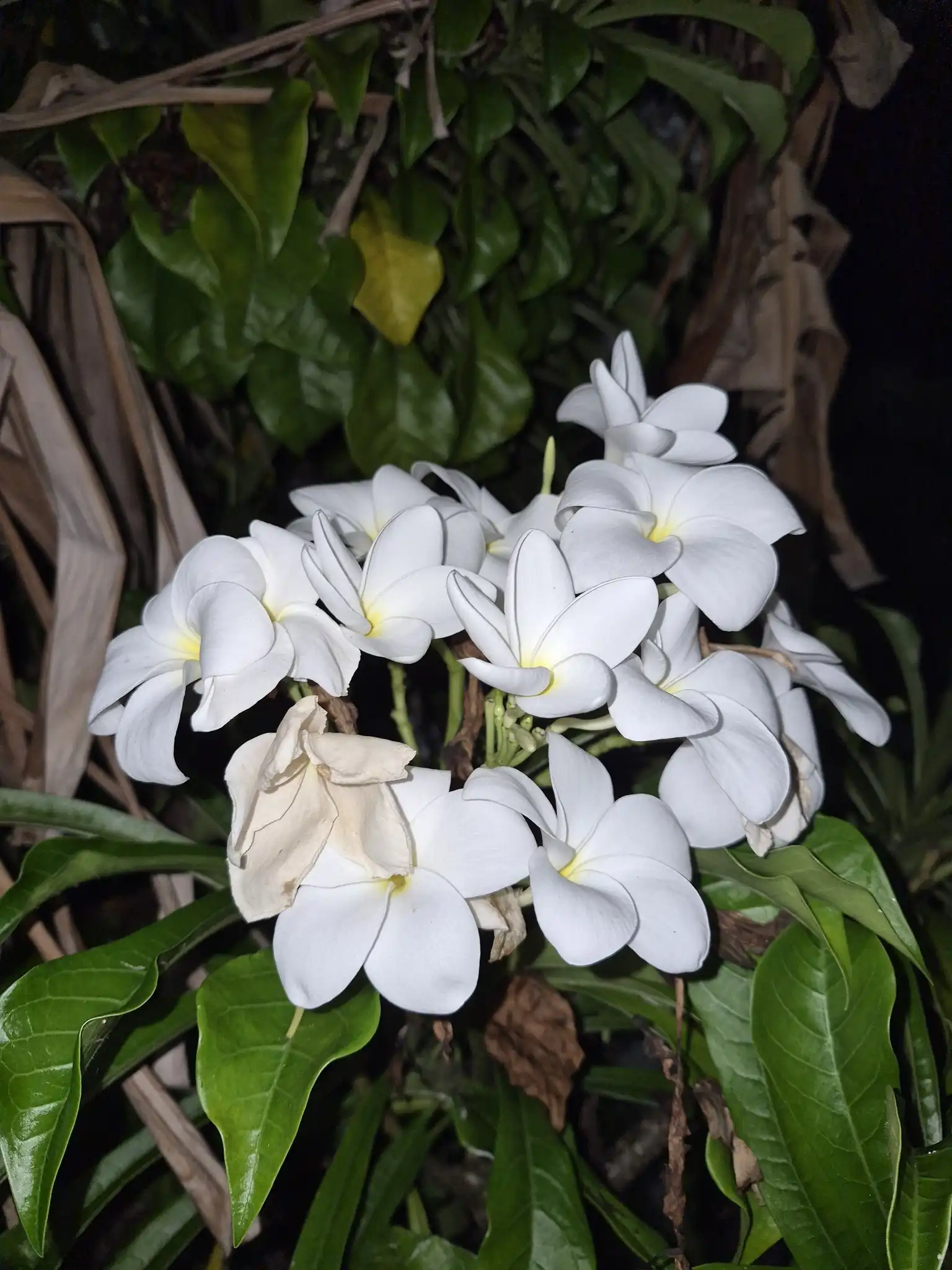
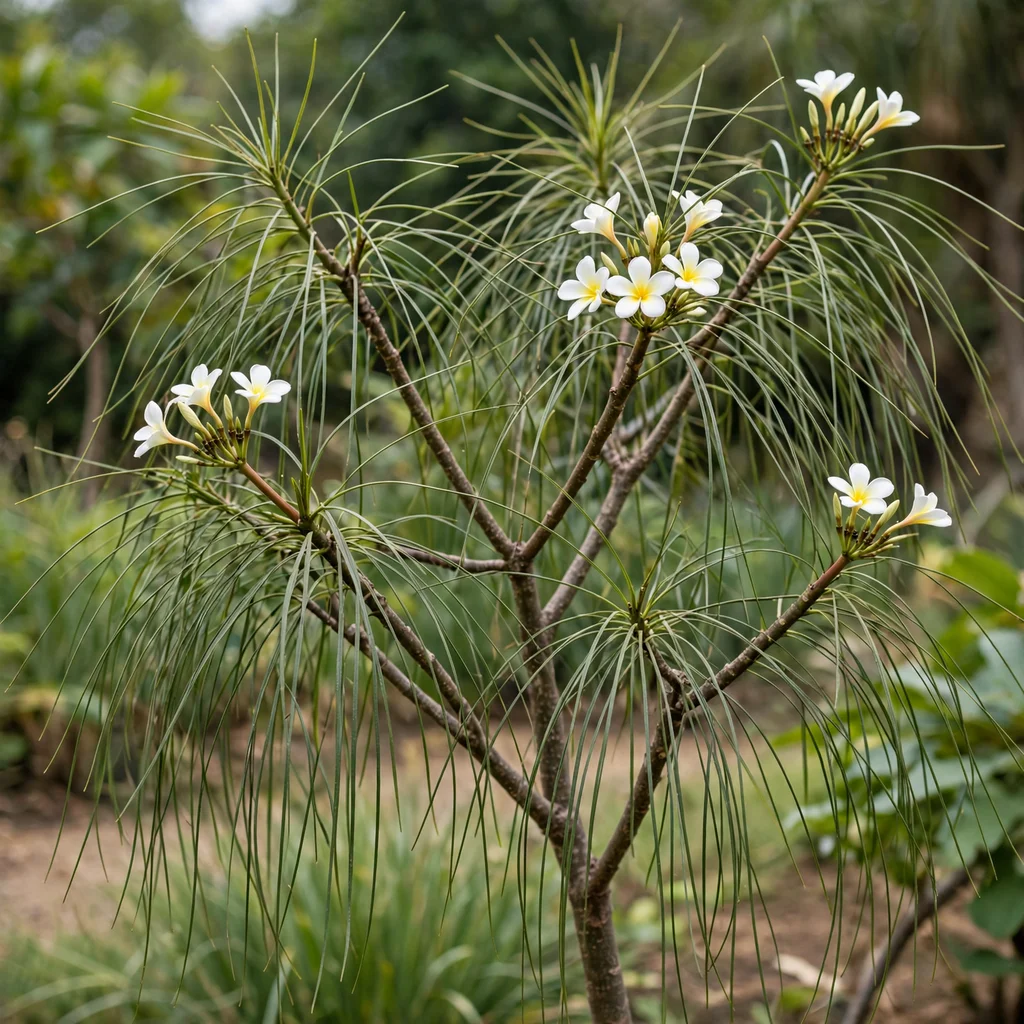
Plumeria pudica is an evergreen to semi-evergreen shrub to small tree from the Caribbean lowlands of Panama, Colombia and Venezuela, reaching 5 to 13 feet in gardens and to 20 feet in frost-free tropics. It holds glossy dark green spoon-shaped leaves year-round in warm climates and bears clusters of pure white flowers with a yellow throat from spring through fall.
Unlike Plumeria rubra and obtusa that drop to bare winter sticks, pudica keeps its foliage and keeps producing fragrant long-lasting flower clusters through the warm months. It forms a dense bushy crown that can be pruned to shape, and it flowers only with at least six hours of sun and sharp drainage with no standing water.
Uses & Benefits:
Essentials
At a Glance
Plant Type
Shrub
Height
144"
Width
96"
Light
Full Sun, Partial Sun
Zones
9, 10
Water
Low to moderate once established
Humidity
Moderate; humid foliage stays wet and favors disease
Lifespan
Long-lived shrub
Native To
Panama, Colombia, Venezuela
Toxicity
Toxic if ingested; milky sap is a skin irritant
Bloom period
Spring – Fall
In flower about 9 months of the year
Planting
How to Grow
- Plant in full sun with at least 6 hours direct sun in well-drained, slightly acidic soil.
- Water regularly to establish, then water sparingly and keep dry in winter in cold climates.
- Feed lightly in the growing season and keep high-nitrogen lawn fertilizer off the plant to favor flowers over leaves.
- Shelter from frost and wind; grow in containers and move indoors where temperatures fall below freezing.
Pro Tip
Prune lightly to shape after flowering and keep the crown dry through cold spells; cold plus wet soil rots the stem tips.
Keep It Thriving
Care Guide
Do
- Give full sun and sharp drainage with no standing water.
- Water at the base and avoid wetting the foliage.
- Remove fallen leaves with rust spots to reduce reinfection.
Don't
- Do not overwater or leave pots sitting wet in winter cold.
- Do not plant in shade if you want flowers.
- Do not overfertilize with high-nitrogen fertilizer.
- Do not handle milky sap without gloves; it irritates skin and eyes.
Seasonal Care Calendar
| Task | Jan | Feb | Mar | Apr | May | Jun | Jul | Aug | Sep | Oct | Nov | Dec |
|---|---|---|---|---|---|---|---|---|---|---|---|---|
| Fertilize | ||||||||||||
| Pest Check | ||||||||||||
| Plant | ||||||||||||
| Prune | ||||||||||||
| Winter Prep |
Watch Out For
Pests & Diseases
Common Pests
Common Diseases
In the Garden
Landscape Uses & Companions
Landscape Uses
Multiply
Propagation Methods
Good to Know
Common Questions
Bridal Bouquet questions
What zones can Bridal Bouquet grow in?
Bridal Bouquet is hardy in USDA Zones 9–10: in that range it survives winter in the ground. Colder than Zone 9, grow it in a container you can move to shelter for the winter.
When does Bridal Bouquet bloom?
Bridal Bouquet typically blooms from spring to fall. Exact timing shifts a week or two with your zone — Sow's bloom calendar maps it to your garden.
Does Bridal Bouquet need full sun?
Bridal Bouquet does best in full sun to part shade. In hot climates, afternoon shade keeps blooms fresher longer.
Is Bridal Bouquet drought tolerant?
Yes — once established (usually after the first full season), Bridal Bouquet handles dry spells with minimal watering. Water deeply its first year to build the root system that makes that possible.
More Plumeria to compare
Keep exploring
Explore the genus
Hardy in your zone?
Grow Bridal Bouquet with confidence
See it in a design of your actual yard, get zone-matched care reminders, and track it season by season in your garden journal.